
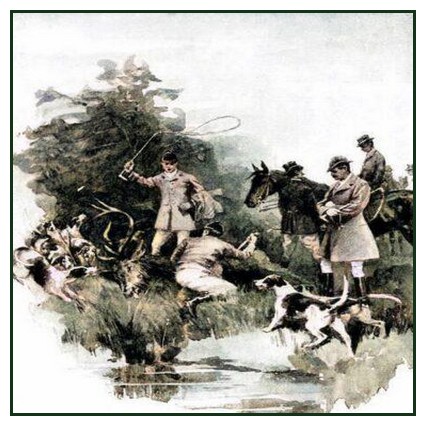
In the annals of history, certain events stand out not merely for their intrinsic significance but for the stark contrast they present against the backdrop of their times. The arson at the Fox covert in Rockbarton, County Limerick, in March 1900 is one such event. While Ireland’s hunting season was described as “dying brilliantly” that year, enthusiasts passionately discussed their hunting exploits, celebrating the excitement and camaraderie of the sport. Yet, amidst this fervour, an act of deliberate arson occurred that would leave an indelible mark on Limerick’s history. This article delves into the Rockbarton arson of 1900, its aftermath, and its impact on the local community and the broader Irish context.
On a fateful March day in 1900, a blaze ignited in Rockbarton, a picturesque corner of County Limerick. The flames, however, were not the result of an accidental fire or a natural disaster; they were the outcome of a deliberate act of arson. The fire raged through the fox covert on the property of Lord Fermoy, a prominent local figure and left a trail of destruction in its wake. This audacious act of vandalism sent shockwaves through the community, leaving its residents in disbelief and apprehension.
The timing of the arson was curious, coinciding with the height of the hunting season in Ireland. As enthusiasts revelled in their equestrian pursuits, the malicious intent of the arsonists cast a dark shadow over the otherwise jubilant atmosphere. To compound matters, the arson occurred against a backdrop of exceptional hunting experiences, where tales of daring runs and memorable days were the talk of the town. The contrast between the excitement of the hunting season and the sinister act of arson could not have been more pronounced.
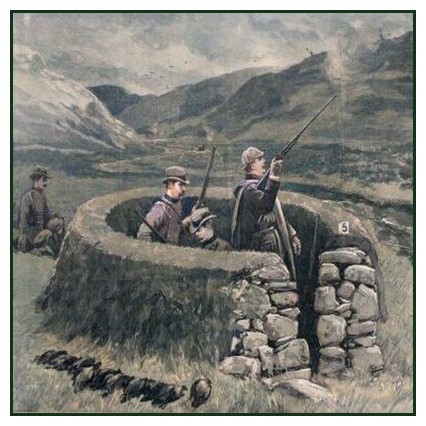
To understand the impact of the Rockbarton arson, one must first grasp the significance of hunting in Ireland during the late 19th and early 20th centuries. Fox hunting had evolved into a cherished tradition, deeply ingrained in the social fabric of the country. It was more than just a sport; it was a way of life for many. The pursuit of the elusive quarry on horseback fostered a sense of camaraderie, transcending class barriers and bringing people together in pursuit of a common passion.
The hunting season was a time of excitement and anticipation. Enthusiasts from all walks of life eagerly awaited the opening of the season, and as the days grew longer and the weather milder, the countryside came alive with the sounds of hounds, horses, and the occasional hunting horn. The thrill of the chase, the adrenaline rush of galloping through open fields, and the camaraderie among fellow riders made fox hunting an intoxicating experience.
In 1900, Ireland’s hunting scene was thriving, with well-established hunts across the country. The thrill of the hunt was a topic of animated discussion in newspapers and social gatherings alike. Enthusiasts eagerly recounted their adventures, reliving the exhilarating moments when hounds picked up the scent and the chase began in earnest. It was against this backdrop of fervent enthusiasm that the Rockbarton arson unfolded.
The deliberate arson at Rockbarton struck at the heart of this vibrant hunting culture. Lord Fermoy, the owner of the property, was quick to respond to the heinous act. In a move that captured the attention of the entire community, he offered a substantial reward of £25 for the conviction of the culprits responsible for the crime. This was no trivial sum; in the context of the time, it represented a significant financial incentive.
Lord Fermoy’s reward offer was not only an attempt to bring the perpetrators to justice but also a statement of defiance against those who sought to disrupt the traditional pursuits of the community. It was a clear indication that the aristocracy, who often played central roles in hunting circles, were not going to let such acts go unpunished. The arson had not only destroyed property but also shaken the sense of security that had long prevailed in the region.

The Rockbarton arson sent shockwaves through the local community. In a predominantly agrarian society, where rural life revolved around agriculture and traditions, such an act of arson was an affront to the very fabric of daily existence. The immediate impact was the loss of property, as the fox covert, an essential component of the hunting landscape, was reduced to ashes. Its destruction meant that hunting in the area would never be the same again.
Furthermore, the arson exposed the vulnerability of even the most privileged members of society to acts of criminality. Lord Fermoy, as a prominent landowner, was a symbol of authority and influence in the region. The attack on his property shattered the illusion of security, forcing the local elite to confront the unsettling reality that their estates were not immune to such threats.
In response to the arson, the local community rallied together. Residents, whether directly involved in hunting or not, were united in their condemnation of the act. It was a stark reminder that, despite the apparent divisions in society, shared values and traditions could bridge gaps and foster unity in times of adversity. The hunt, which had been a source of joy and togetherness, now became a symbol of resilience in the face of adversity.
Lord Fermoy’s offer of a £25 reward for the capture of the arsonists galvanised efforts to bring the culprits to justice. The reward was a substantial sum, and it drew the attention of both law enforcement and the public. The investigation into the arson was thorough and determined, as authorities sought to uncover the individuals responsible for the crime.
However, as the investigation unfolded, it became evident that the Rockbarton arson was more than just an isolated act of vandalism. It was, in fact, part of a broader pattern of agrarian unrest and discontent that had been simmering in Ireland for years. The perpetrators were not mere hooligans; they were individuals who felt marginalised and dispossessed, driven to desperate acts in the face of economic hardship and social inequality.
The arsonists were ultimately apprehended and brought to trial. Their motives and circumstances painted a complex picture of rural Ireland at the turn of the century. While their actions were condemned, the trial also shed light on the underlying issues of landownership, access to resources, and the profound disparities in Irish society.
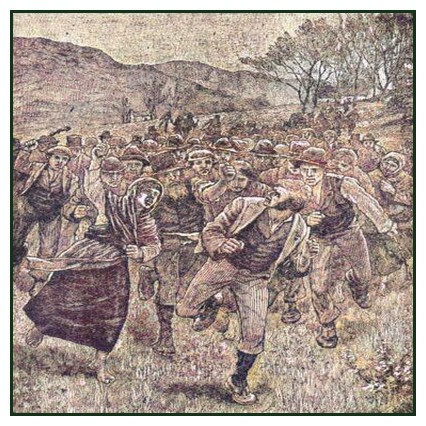
The Rockbarton arson of 1900 did not occur in isolation. It was part of a larger narrative of agrarian unrest and discontent that had plagued Ireland for decades. The late 19th and early 20th centuries were marked by significant social and political changes, and the Irish countryside was not immune to these transformations.
Landownership was at the heart of many grievances. The majority of Irish land was owned by a small number of wealthy landlords, while the majority of the population were tenant farmers who often struggled to make ends meet. This stark economic disparity fueled resentment and unrest, leading to sporadic outbreaks of violence and agrarian crime.
The agrarian unrest in Ireland had deep historical roots, dating back to the Land War of the 1880s, when tenants organised and protested against unfair rent practices and evictions. The emergence of agrarian societies and the Land League represented the grievances of the rural poor, who sought to secure better living conditions and land reforms.
The Rockbarton arson occurred within this broader context of social and economic inequality. While the arsonists were individuals who took the law into their own hands, their actions were driven by a sense of frustration and powerlessness in the face of a system that favoured the privileged few.
The Rockbarton arson of 1900 remains a poignant chapter in Limerick’s history, serving as a microcosm of the larger issues facing Ireland at the time. It highlights the collision of tradition and unrest, the juxtaposition of the joyous pursuit of the hunt with the despair of those who felt excluded from the benefits of the land.
In the aftermath of the arson, efforts were made to address some of the underlying issues. Land reforms and legislative changes sought to redress the grievances of tenant farmers and improve their living conditions. The emergence of nationalist movements, such as Sinn Féin, also sought to address the broader question of Irish self-determination, which would ultimately lead to the Irish War of Independence and the establishment of the Irish Free State.
The Rockbarton arson serves as a reminder that history is often shaped by both grand political movements and the actions of individuals on the ground. It was an act that reverberated through the local community and beyond, highlighting the need for social justice and reform.
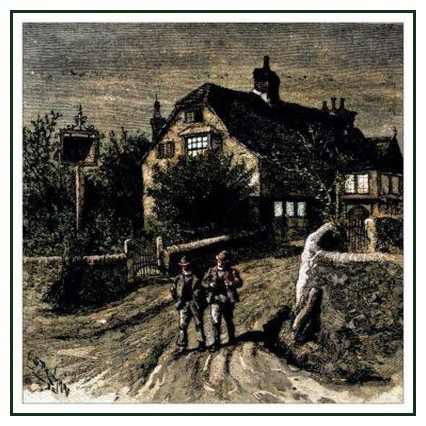
The Rockbarton arson of 1900 stands as a moment of stark contrast in Limerick’s history. In a time when the pursuit of the fox hunt was at its zenith, an act of deliberate arson shattered the idyllic landscape. Lord Fermoy’s reward offer and the subsequent pursuit of justice underscored the importance of tradition and the unity of the local community in the face of adversity.
However, the arson also revealed the deeper fissures in Irish society, where economic inequality and land ownership disputes had festered for decades. It was a symptom of larger agrarian unrest that would continue to shape Ireland’s history in the years to come.
As we reflect on the Rockbarton arson of 1900, we are reminded that history is not just a collection of grand events and political movements; it is also the stories of individuals and communities grappling with their own challenges and aspirations. The arson remains a poignant reminder of the complexities of Irish history and the resilience of its people in the face of adversity.
Manchester Courier – Friday 16 March 1900

