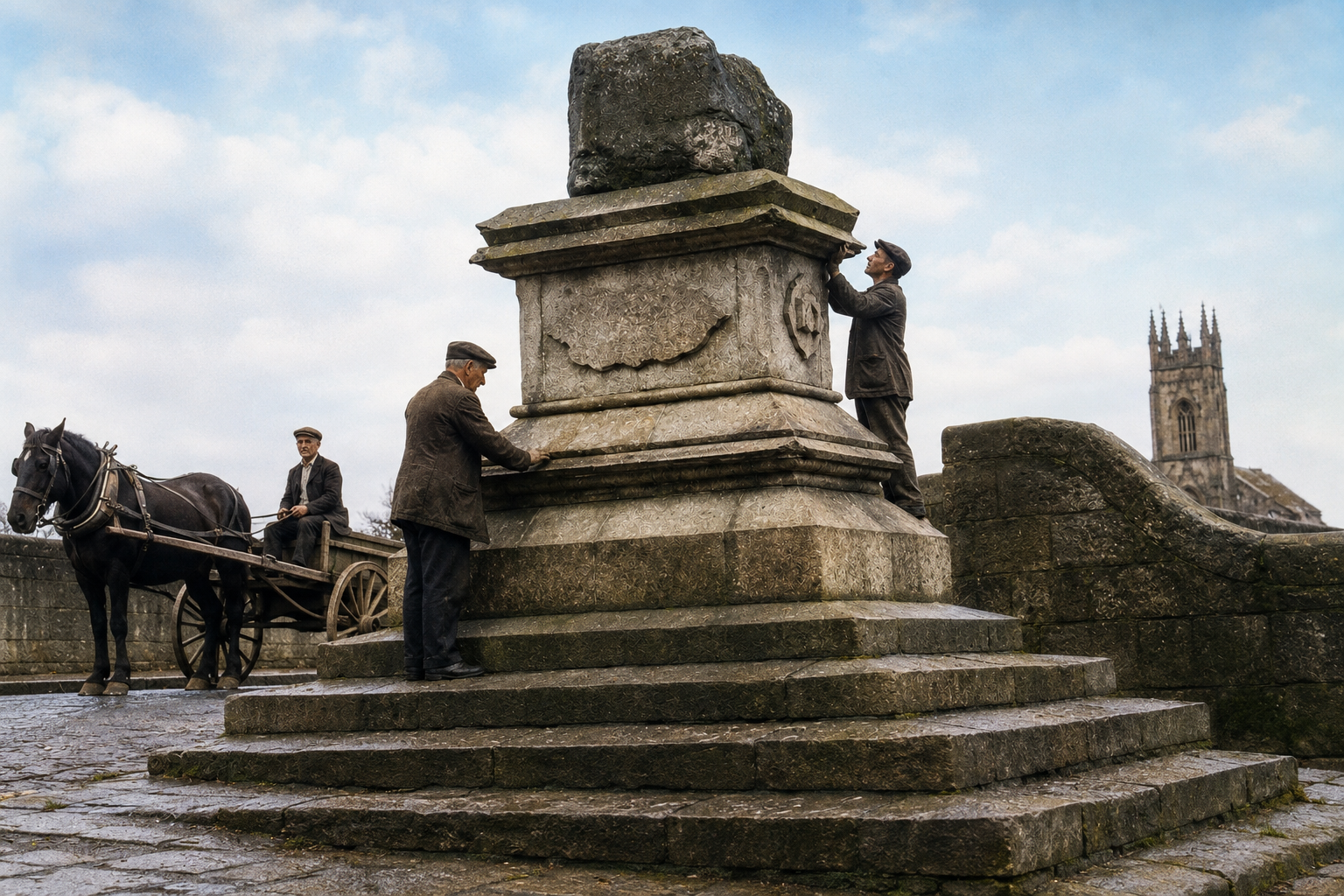
The Treaty Stone stands prominently beside the River Shannon on.
LA-PH-000640
The Treaty Stone stands prominently beside the River Shannon on Limerick’s North Strand during the early 1920s, overlooking the historic approach to Thomond Bridge. The riverside road retained that name until 1934, when it was renamed Clancy’s Strand in memory of George Clancy, Mayor of Limerick, who was murdered in 1921. At the same time, the adjoining O’Callaghan Strand commemorated former mayor Michael O’Callaghan, also assassinated during the War of Independence. The scene therefore captures both a familiar landmark and a district whose later street names would preserve the memory of two civic leaders killed during Ireland’s turbulent revolutionary period.
View Record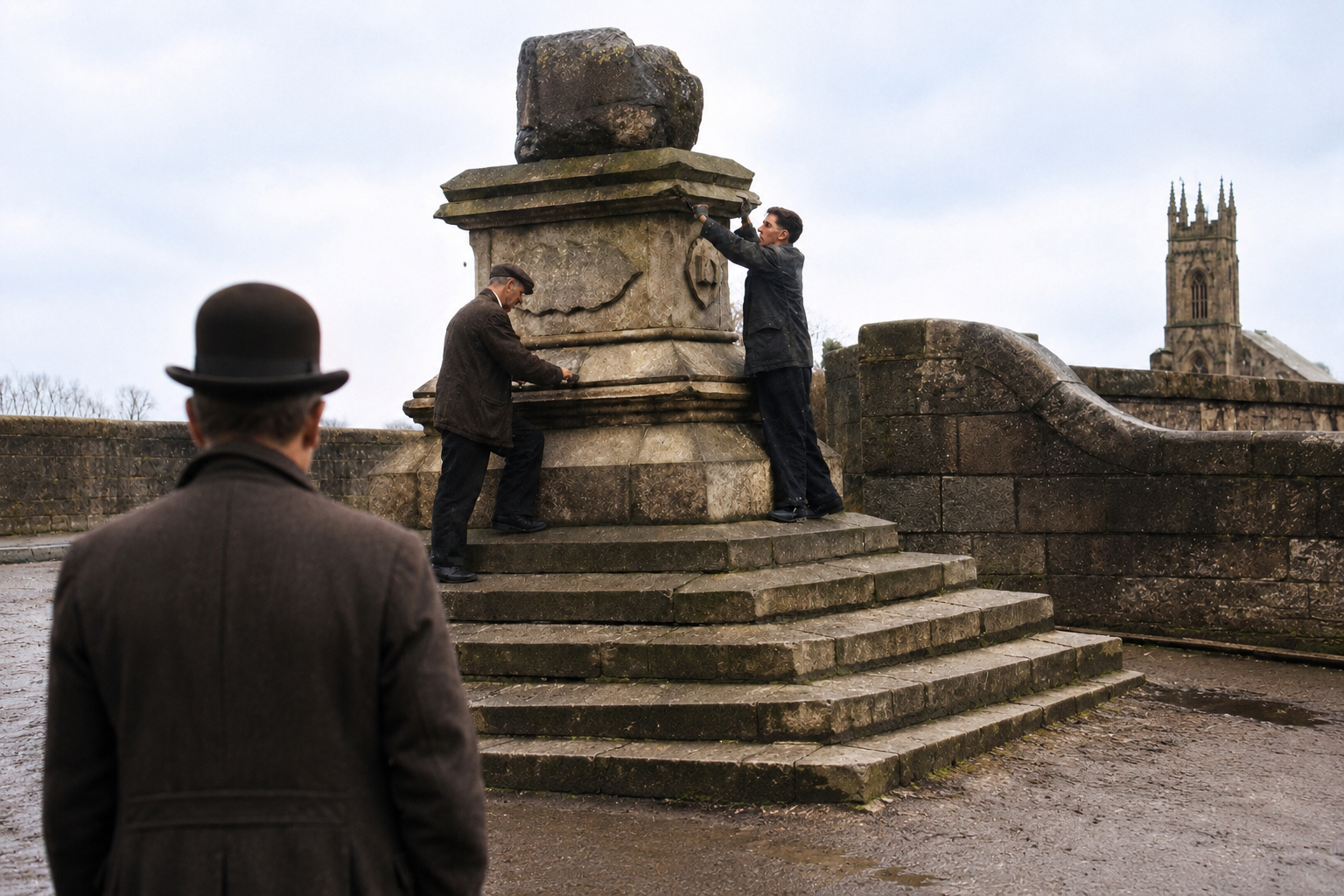
The Treaty Stone stands prominently beside the River Shannon on.
LA-PH-000638
The Treaty Stone stands prominently beside the River Shannon on Limerick’s North Strand during the early 1920s, overlooking the historic approach to Thomond Bridge. The riverside road retained that name until 1934, when it was renamed Clancy’s Strand in memory of George Clancy, Mayor of Limerick, who was murdered in 1921. At the same time, the adjoining O’Callaghan Strand commemorated former mayor Michael O’Callaghan, also assassinated during the War of Independence. The scene therefore captures both a familiar landmark and a district whose later street names would preserve the memory of two civic leaders killed during Ireland’s turbulent revolutionary period.
View Record
The Treaty Stone stands prominently beside the River Shannon on.
LA-PH-000637
The Treaty Stone stands prominently beside the River Shannon on Limerick’s North Strand during the early 1920s, overlooking the historic approach to Thomond Bridge. The riverside road retained that name until 1934, when it was renamed Clancy’s Strand in memory of George Clancy, Mayor of Limerick, who was murdered in 1921. At the same time, the adjoining O’Callaghan Strand commemorated former mayor Michael O’Callaghan, also assassinated during the War of Independence. The scene therefore captures both a familiar landmark and a district whose later street names would preserve the memory of two civic leaders killed during Ireland’s turbulent revolutionary period.
View Record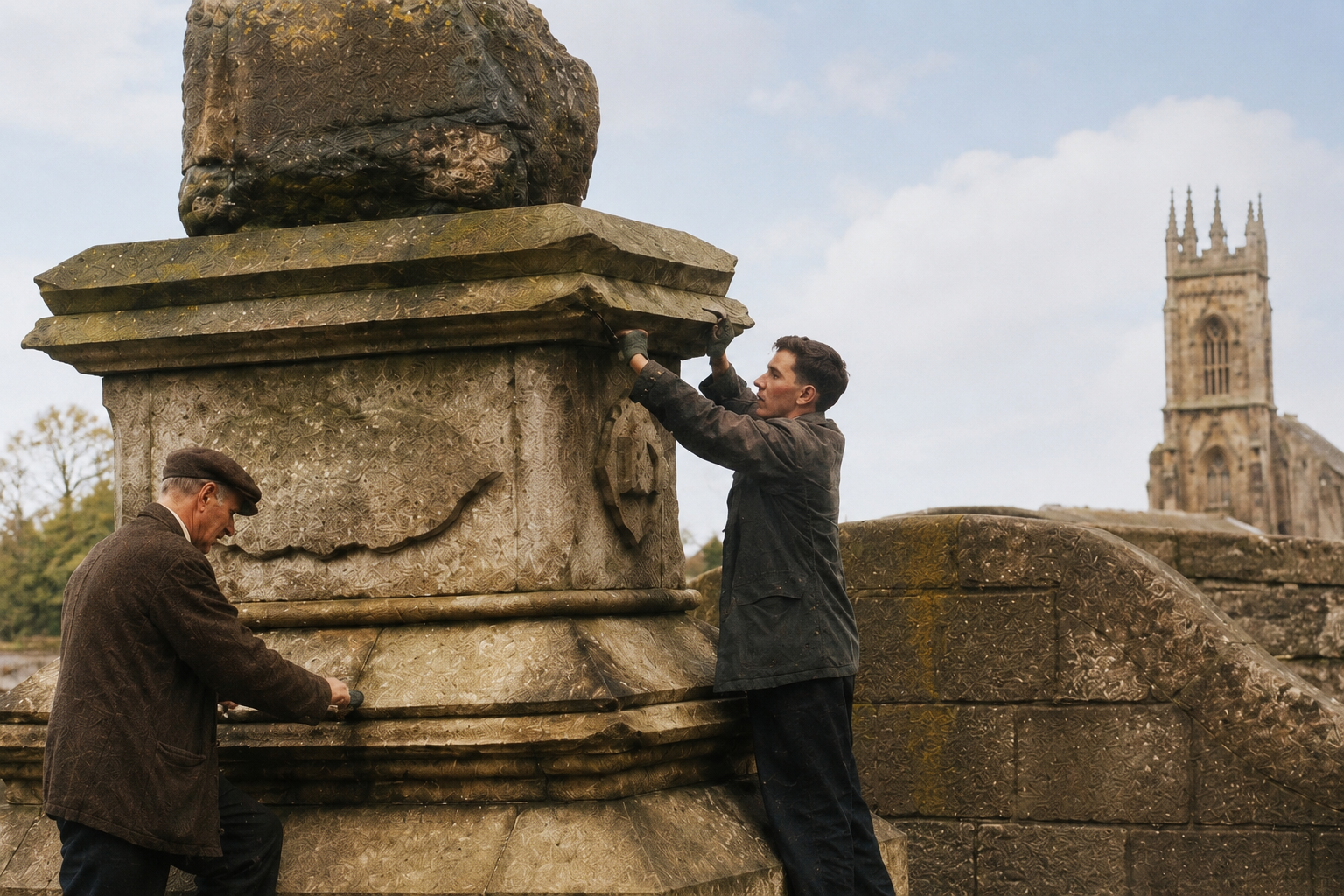
The Treaty Stone stands prominently beside the River Shannon on.
LA-PH-000643
The Treaty Stone stands prominently beside the River Shannon on Limerick’s North Strand during the early 1920s, overlooking the historic approach to Thomond Bridge. The riverside road retained that name until 1934, when it was renamed Clancy’s Strand in memory of George Clancy, Mayor of Limerick, who was murdered in 1921. At the same time, the adjoining O’Callaghan Strand commemorated former mayor Michael O’Callaghan, also assassinated during the War of Independence. The scene therefore captures both a familiar landmark and a district whose later street names would preserve the memory of two civic leaders killed during Ireland’s turbulent revolutionary period.
View Record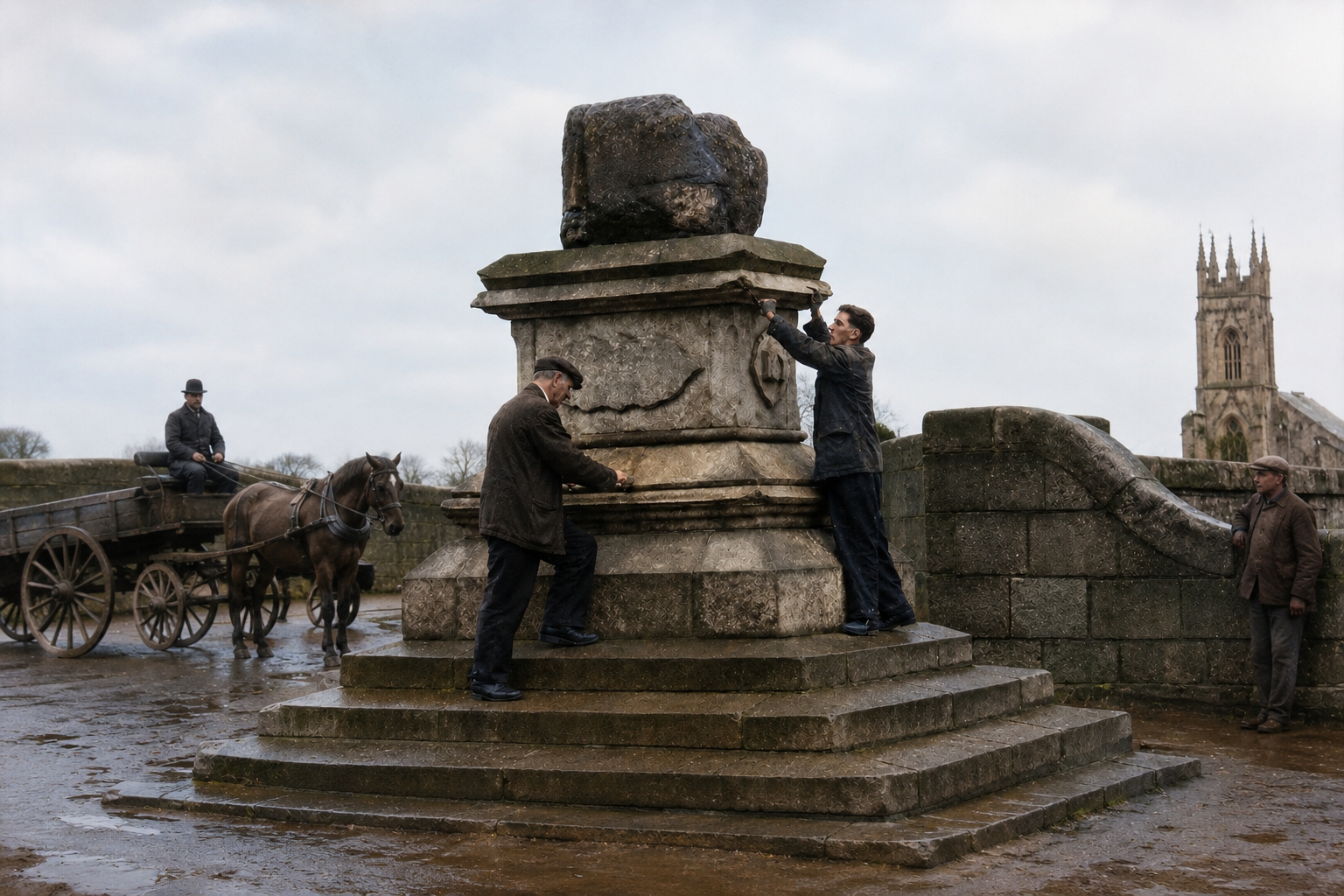
The Treaty Stone stands prominently beside the River Shannon on.
LA-PH-000642
The Treaty Stone stands prominently beside the River Shannon on Limerick’s North Strand during the early 1920s, overlooking the historic approach to Thomond Bridge. The riverside road retained that name until 1934, when it was renamed Clancy’s Strand in memory of George Clancy, Mayor of Limerick, who was murdered in 1921. At the same time, the adjoining O’Callaghan Strand commemorated former mayor Michael O’Callaghan, also assassinated during the War of Independence. The scene therefore captures both a familiar landmark and a district whose later street names would preserve the memory of two civic leaders killed during Ireland’s turbulent revolutionary period.
View Record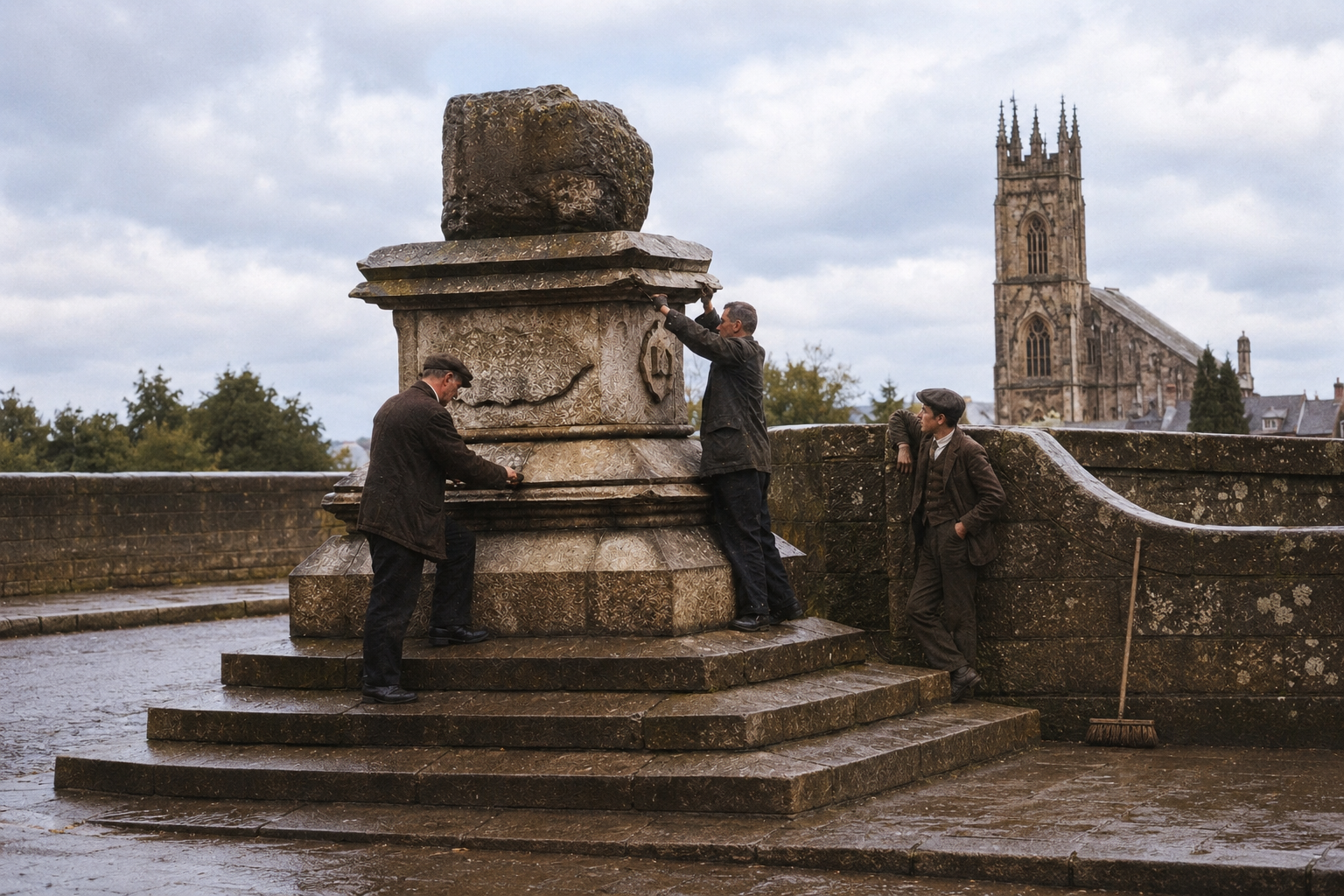
The Treaty Stone stands prominently beside the River Shannon on.
LA-PH-000641
The Treaty Stone stands prominently beside the River Shannon on Limerick’s North Strand during the early 1920s, overlooking the historic approach to Thomond Bridge. The riverside road retained that name until 1934, when it was renamed Clancy’s Strand in memory of George Clancy, Mayor of Limerick, who was murdered in 1921. At the same time, the adjoining O’Callaghan Strand commemorated former mayor Michael O’Callaghan, also assassinated during the War of Independence. The scene therefore captures both a familiar landmark and a district whose later street names would preserve the memory of two civic leaders killed during Ireland’s turbulent revolutionary period.
View Record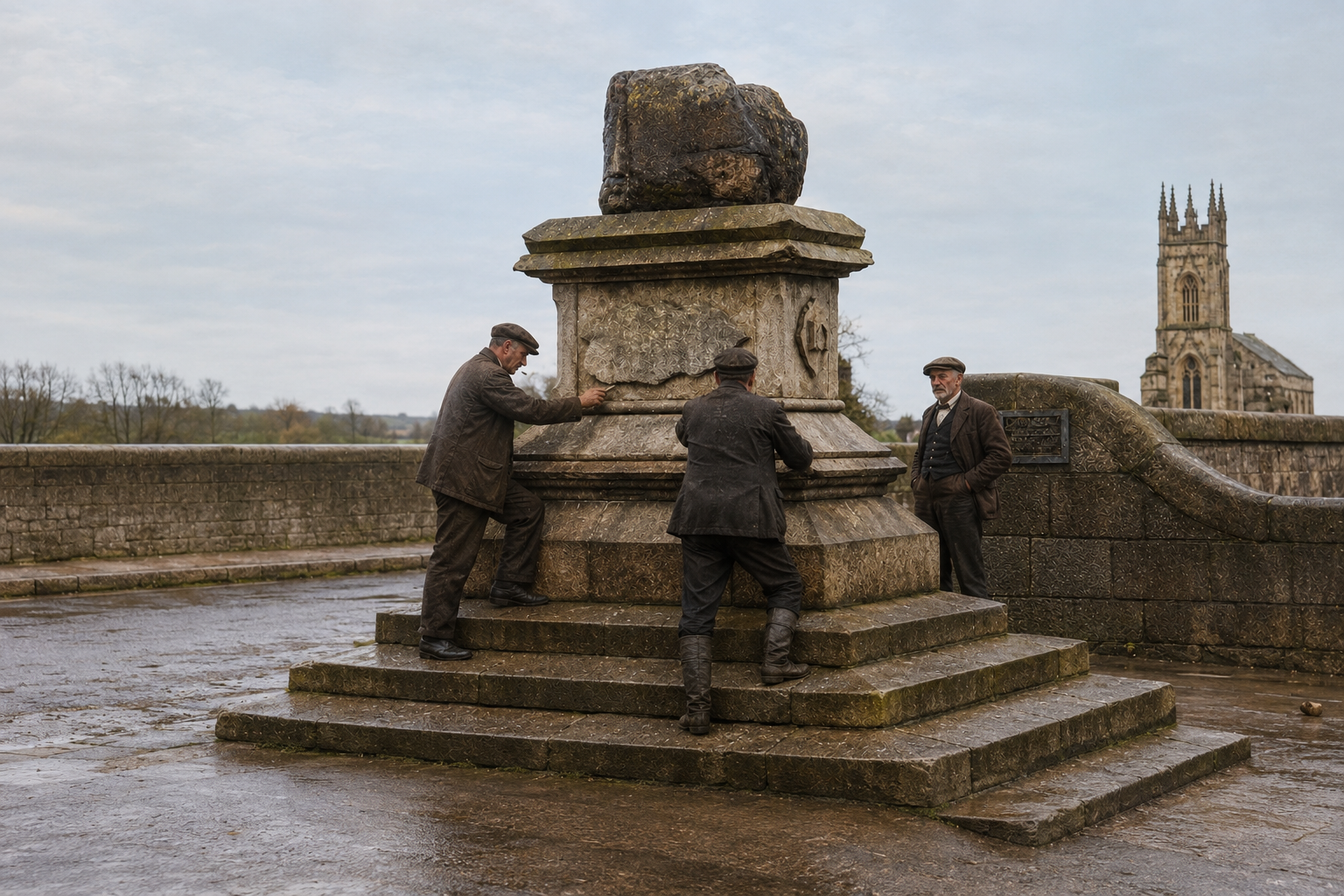
The Treaty Stone stands prominently beside the River Shannon on.
LA-PH-000639
The Treaty Stone stands prominently beside the River Shannon on Limerick’s North Strand during the early 1920s, overlooking the historic approach to Thomond Bridge. The riverside road retained that name until 1934, when it was renamed Clancy’s Strand in memory of George Clancy, Mayor of Limerick, who was murdered in 1921. At the same time, the adjoining O’Callaghan Strand commemorated former mayor Michael O’Callaghan, also assassinated during the War of Independence. The scene therefore captures both a familiar landmark and a district whose later street names would preserve the memory of two civic leaders killed during Ireland’s turbulent revolutionary period.
View Record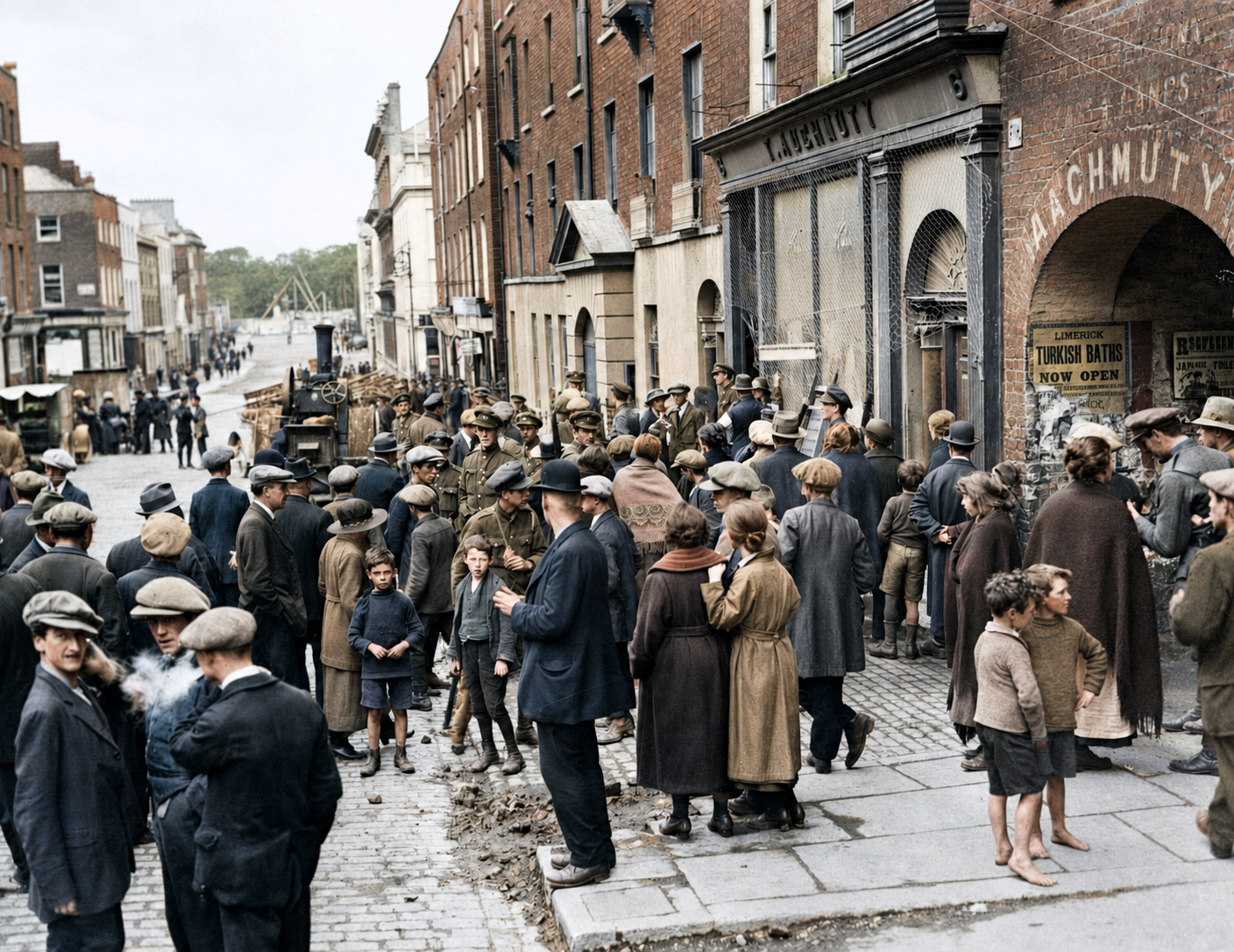
This scene depicts civilians and National Army soldiers gathering openly.
LA-PH-000636
This scene depicts civilians and National Army soldiers gathering openly in a Limerick street after a period of siege, fighting and local unrest. With the Free State forces now controlling the city, residents move freely among the troops and appear calm, curious and cooperative. Men, women and children fill the roadway and pavements, while soldiers maintain an orderly presence beside the surrounding shops and buildings. The image reflects a fragile return to normal life as the population supports efforts to restore law, security and civic stability. It captures an important moment of transition during Ireland’s revolutionary and Civil War era.
View Record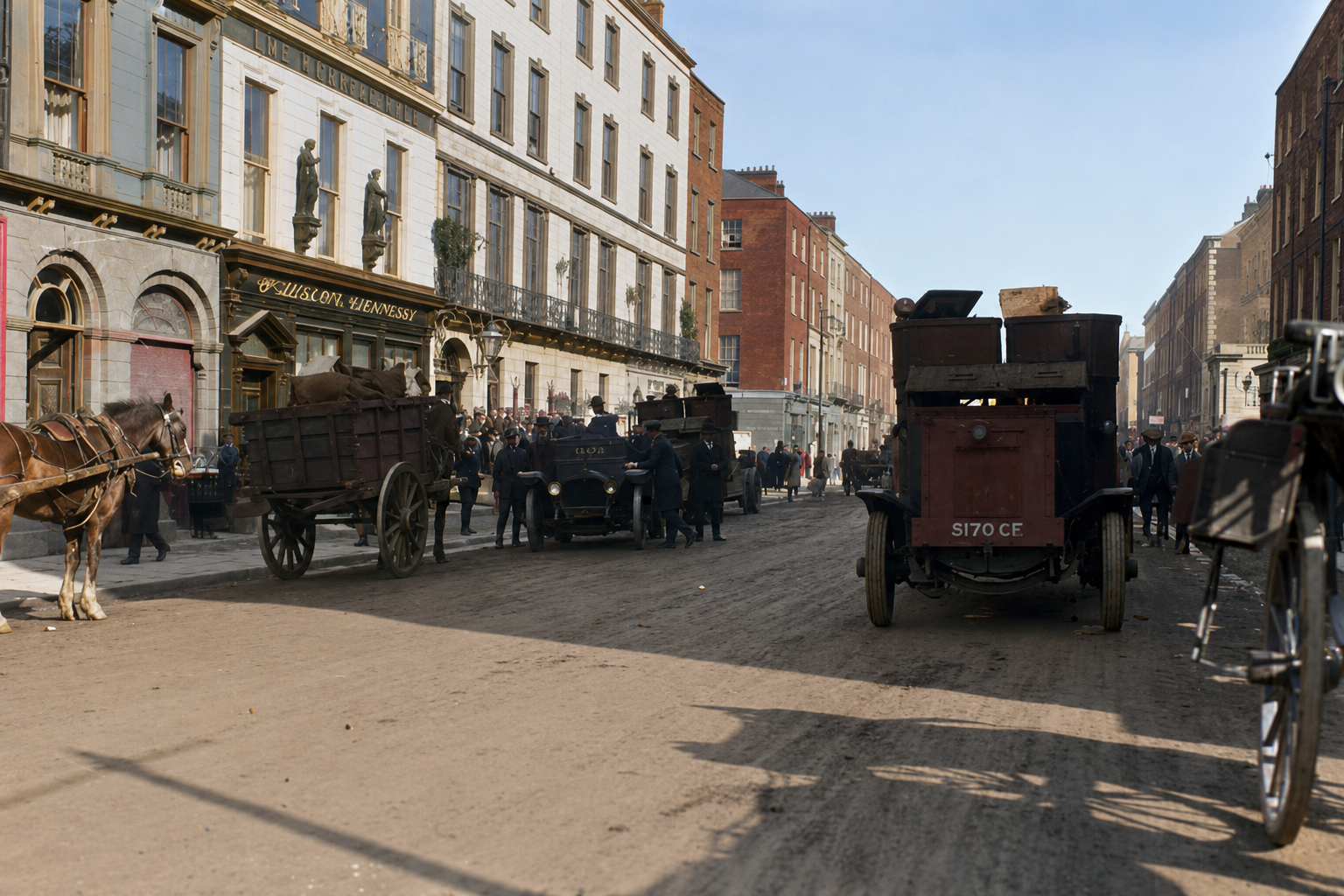
During the Irish Civil War, armoured cars operated by Republican.
LA-PH-000633
During the Irish Civil War, armoured cars operated by Republican forces patrol a Limerick street as civilians watch cautiously from the roadside. The arrival of troops has created a tense and uncertain atmosphere, with local people anxious to avoid any action that might provoke violence or heavy bloodshed. The vehicles move through the city as a visible display of military control, while horse-drawn transport and early motor traffic share the roadway. This striking scene records the growing presence of armed forces in Limerick and the apprehension felt by residents as conflict reached the streets and disrupted ordinary daily urban life.
View Record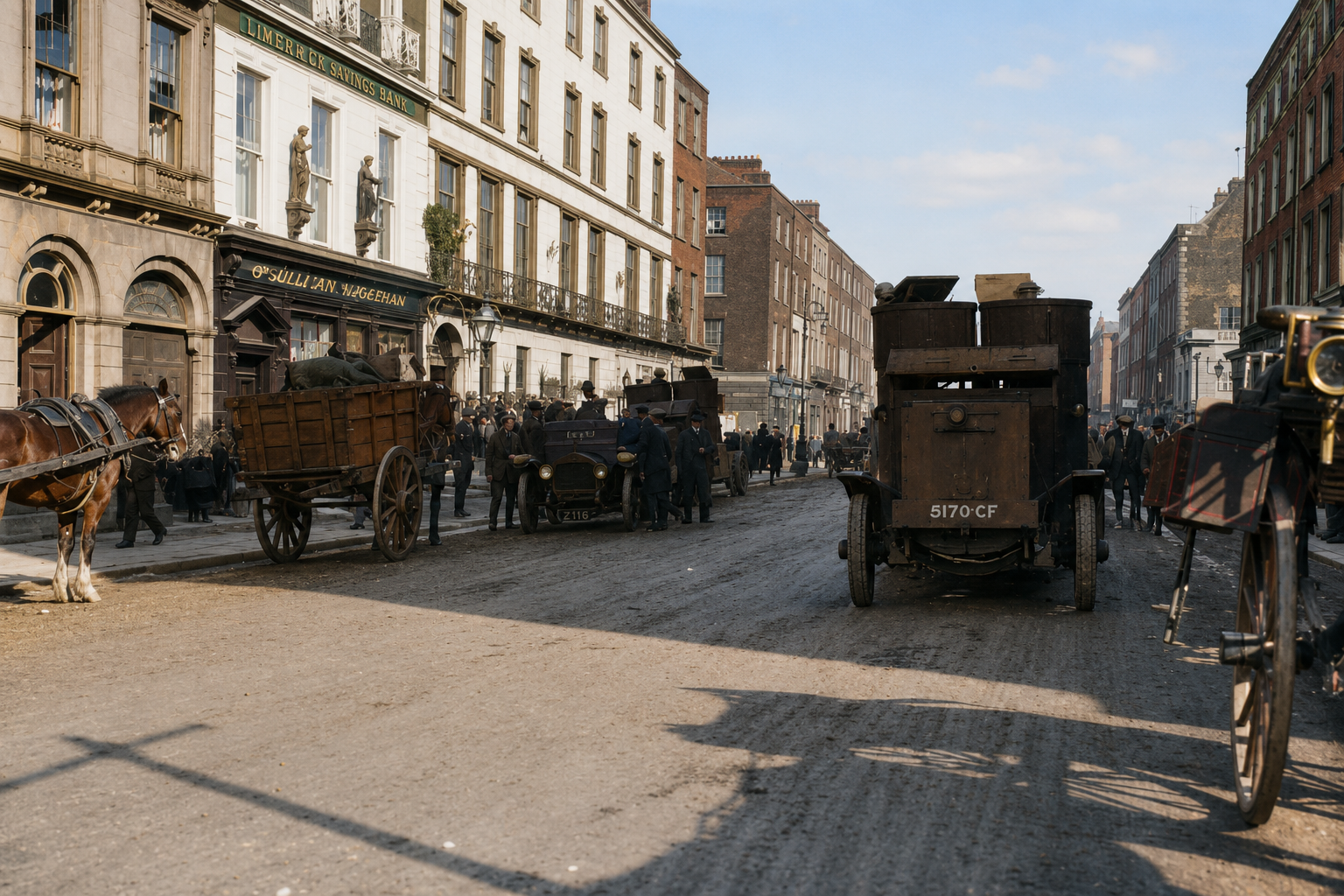
During the Irish Civil War, armoured cars operated by Republican.
LA-PH-000627
During the Irish Civil War, armoured cars operated by Republican forces patrol a Limerick street as civilians watch cautiously from the roadside. The arrival of troops has created a tense and uncertain atmosphere, with local people anxious to avoid any action that might provoke violence or heavy bloodshed. The vehicles move through the city as a visible display of military control, while horse-drawn transport and early motor traffic share the roadway. This striking scene records the growing presence of armed forces in Limerick and the apprehension felt by residents as conflict reached the streets and disrupted ordinary daily urban life.
View Record