
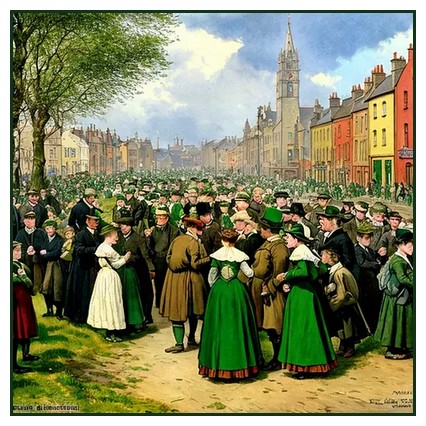
Limerick Gaelic Leaguers, joined by other Nationalist organizations in the city, initiated a significant movement three years ago to establish St. Patrick’s Day as a National Holiday in Ireland. As discussions on encouraging trade participation in the observance of the holiday take place in Dublin and throughout the country, it is worth noting the progress made by the pioneers of this movement in Limerick.
In 1902, the idea of a National Holiday faced resistance from both licensed and non-licensed traders, especially the large drapery houses. However, in the following years, the opposition lessened, though some agitation was still necessary to ensure compliance. The Gaelic League begins the preparations in mid-February, seeking the cooperation of Temperance and other National Societies. Deputations are formed to canvass traders, while the local newspapers advertise the movement and also observe the holiday by suspending their publications for the day.
To extend the reach of the movement, the Gaelic League informs parish priests in Limerick and neighboring dioceses about the holiday, urging them to encourage their parishioners to conduct their business in Limerick on the days before the holiday to avoid any inconvenience. Shopkeepers display window bills supplied by the Holiday Committee weeks before the event, and handbills are distributed during the market days preceding the holiday, advising country people to observe the holiday and refrain from coming into town on that day.
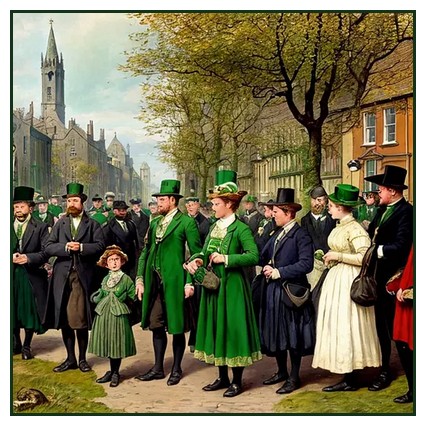
An essential aspect of the organization is the cooperation of the railway company, which has been asked to refrain from running excursions into town on St. Patrick’s Day. This measure aims to prevent an influx of visitors, as their presence might tempt traders to open their businesses, contrary to the intention of the holiday.
Though the organization and execution of these plans require effort and some expenses, they are necessary to remind some traders of the significance of St. Patrick’s Day. While many Catholics and Nationalists eagerly observe English Bank Holidays, they need the influence of a popular agitation to recognize the importance of their own national holiday. The movement serves as a reminder of the enduring spirit and dedication to faith and country, even as some individuals may find it challenging to forgo a pint of porter on this special day.
Dublin Leader – Saturday 11 March 1905

