
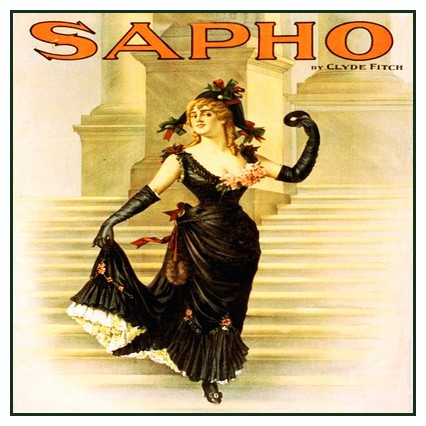
The recent issues of the “Echo” have highlighted the profound justification and necessity behind the protests against the staging of “Sapho” in Limerick. This sentiment has been further solidified by a compelling and unequivocal letter from the Most Reverend Dr O’Dwyer, the Lord Bishop, which was read aloud in all of the city’s Catholic churches last Sunday. In his letter, the Bishop firmly cautions the community against engaging with plays that may not be openly indecent but carry suggestive undertones of evil. He takes a decisive stance against productions that delve into facets of life better left unexplored on stage, especially when they serve to cater to prurient and corrupt tendencies.
His Lordship exhorts the Catholic populace to take definitive action against these moral transgressions by shunning representations that aim to glorify vice in all its unadorned repulsiveness. He emphasizes that such depictions are at odds with the pure and powerful emotions that have inspired the finest achievements of dramatic genius. Of notable mention is the Bishop’s address to the women and girls of the city who, it’s reported, attend such plays. His Lordship underscores that their self-respect should prevent them from witnessing scenes that are not only demeaning but would be considered an affront if described to them in words by any man.
Indeed, the allure of such performances draws women away from the modesty that inherently defines their gender’s charm. His Lordship contends that the strength to uphold one’s principles and ethical standards should prevail, and that the pursuit of higher education or broadened horizons should not mean accepting the shallow vulgarity of English “musical comedies” devoid of wit or originality, or the depictions of Parisian immorality.
However, the Bishop’s letter has not gone unchallenged. Mrs. Bannerman-Palmer, in the recent edition of the “Munster News,” presents a response that continues to tap into our credulity regarding the true nature of the controversial play she plans to stage at the Theatre Royal on the upcoming evenings. Mrs. Palmer states that although her version of the play is based on Daudet’s book, the resemblance ends there. She characterizes it as a portrayal of a woman’s life, showcasing the uplifting nature of virtue and the consequences of sin.
This statement appears to go further than the previously asserted “slightly altered” assurance from a “Chronicle” article. Yet, if the “comparison ends,” the central figure must indeed embody Mrs. Palmer’s distinct interpretation of “Sapho.” The provocative promotional materials in the streets and shop windows leave little room for ambiguity, hinting at the depiction of morally reprehensible scenes and incidents from the novel.
In the novel itself, virtue does not emerge triumphant, and the central female character is not elevated or ennobled; rather, she remains entrenched in the dark, selfish passion of a courtesan. The idea that histrionic talent can reshape such a character to evoke notions of goodness seems implausible. It is untenable to endorse a theatrical presentation that takes as its foundation such a degrading subject matter.
Rev. Father Creagh, C.SS.R., addressed this matter strongly with the members of the Arch-Confraternity, and his thoughts on the issue have been published in another section of this publication. The ongoing discourse underscores Limerick’s commitment to preserving moral integrity in the arts.
Limerick Echo – Tuesday 07 November 1905

