

In the annals of Irish literature, there are luminous figures whose lives and works continue to resonate through the ages. One such luminary is Gerald Griffin, a gifted poet and scholar born in the historic city of Limerick on December 12, 1803. His poetic resonance, intertwined with his deep insights into human nature, reveals a unique soul who left an indelible mark on the literary landscape. The journey of this talented son of Limerick unfolded against a backdrop of scenic beauty, struggles, and an unwavering dedication to his craft.
Gerald Griffin’s roots traced back to an Irish origin, with his father engaging in business within the City of Limerick. However, the familial trajectory shifted when, at the age of seven, Griffin’s family moved to Fairy Lawn, a picturesque locale near Glin, about 30 miles from Limerick. Here, nature’s panoramic canvas—embodied in the broad Shannon, the mysterious Clare hills, and the moors of Limerick and Kerry—served as a muse for his poetic spirit. This idyllic setting nurtured his budding literary talents, encapsulating the spirit of the Irish landscape.
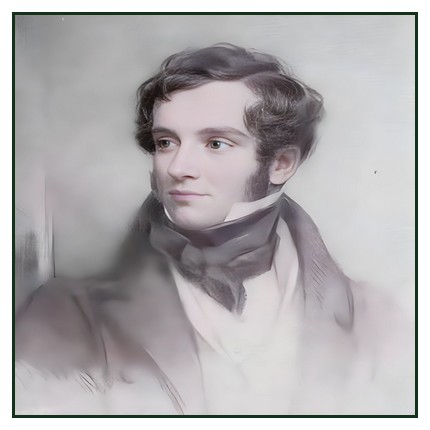
At the age of 14, Griffin embarked on his scholastic journey under the tutelage of Mr Donovan, a tutor from Kerry, who instilled in him a solid foundation in classical education. As time unfolded, Griffin’s path meandered through various landscapes, eventually leading him to the City of Limerick, where he had the opportunity to contribute to a publication known as the “Advertiser.” Yet, the tide of events soon carried him away to London in pursuit of a career as a dramatic writer.
Life in the bustling metropolis proved to be a challenging and transformative experience for Griffin. His early attempts at drama met rejection, an experience that exposed him to the bitter realities of the literary world. Yet, undaunted by adversity, he persisted and penned works like “Gisippus” and “Bawn, the Moor of Mulloy.” It was also during this time that his remarkable historical novel, “The Collegians,” found its way into the literary realm.
Amid his literary endeavours, Griffin’s spiritual journey remained a powerful undercurrent. Driven by his deep-seated devotion, he joined the Christian Brothers in September 1838, a move that marked a profound shift in his life’s trajectory. His literary pursuits transitioned into a higher calling, where his spiritual pursuits and artistic endeavours converged.
As the landscape of his life transformed, Griffin’s literary legacy remained. Works like “The Invasion” and “Gisippus” continued to captivate readers with their themes of love, patriotism, and historical insight. His writings, infused with vivid descriptions of landscapes and the human condition, offered a glimpse into the heart and soul of a poet who found solace and inspiration in his Irish roots.
Gerald Griffin’s life and literary journey were a testament to the power of personal transformation and artistic dedication. The sweet melodies of his verses echoed the natural beauty and complex emotions of Ireland, while his unwavering faith added a spiritual dimension to his work. The mark he left on Irish literature remains an invitation to explore the world through his words—a journey that traverses landscapes of both the external and internal realms.
Kerry News – Wednesday 31 January 1906

