

In the maritime annals of Great Britain, the name Seymour has become synonymous with a legacy of unwavering dedication and valour at sea. Originating from the lush landscapes of County Limerick, the Seymours have, for four consecutive generations spanning over 120 years, contributed their services to the Royal Navy without a single hiatus. Among their illustrious ranks emerges Sir Edward Seymour, a name indelibly etched in the maritime history of both Britain and China.

SIR MICHAEL SEYMOUR, R.N. (1768-1834) GRANDFATHER OF SIR EDWARD SEYMOUR.
The Seymours trace their roots to a younger branch of the ducal house of Somerset, which took root in Ireland during the reign of Queen Elizabeth I. The nautical lineage of this remarkable family began in 1768 when the Reverend John Seymour, a parson from Limerick, welcomed a son into the world. This son, in turn, laid the foundation for a maritime saga that would unfold over the decades.
Sir Michael Seymour, the first in this naval lineage, embarked on his seafaring journey as a midshipman on H.M.S. Merlin at the tender age of twelve in 1800. His baptism by fire occurred in 1794 during the legendary Battle of June 1, where he lost an arm while serving under Admiral Howe. His distinguished career continued, marked by notable victories, including the heroic engagement with the French frigate Thetis in 1808. This triumph earned him a gold medal, a sword of honour, and the admiration of Limerick and Cork.
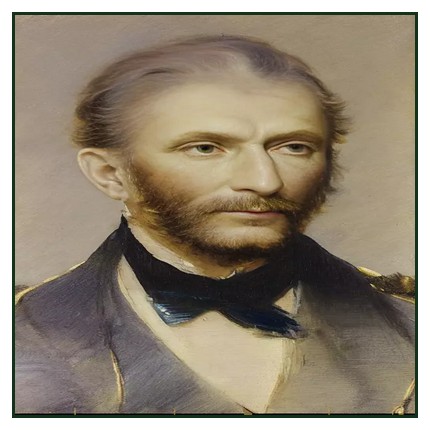
SIR MICHAEL SEYMOUR, R.N. (1802-18887) HIS THIRD SON: FOUGHT IN THE CHINA WAR, 1858
The mantle of maritime service passed seamlessly from one generation to the next, with Sir Michael Seymour’s son, also named Michael, continuing the family’s legacy. His exploits included commanding the Baltic fleet in 1854 and playing a pivotal role in the China War of 1858. The capture of Taku forts, the destruction of the junk fleet at Fatshan creek, and the signing of the Tientsin treaty in 1858 underscored his strategic prowess and earned him the esteemed title of G.C.B. in 1859.
The narrative takes a unique turn with Sir Michael Culme-Seymour, the third in line. Born in 1836, he entered the navy as a boy fresh from Harrow in 1850. His service included the Burmese War of 1852, the Baltic Campaign of 1854, and active participation in the China War of 1858. His remarkable journey exemplifies the Seymours’ commitment to both Church and sea, as his father adopted the name Culme in 1842, a tradition continued in his nomenclature.

SIR MICHAEL CULME-SEYMOUR, R.N. (B.1836) HIS GRANDSON: FOUGHT IN THE CHINA WAR, 1858
At the forefront of the Seymour naval saga stands Sir Edward Seymour, the present Commander-in-Chief on the China station. His entry into the navy at the age of twelve in 1852 marked the initiation of a storied career. Serving during the Crimean War, the China War of 1858, and various conflicts, Sir Edward has navigated the turbulent waters of international diplomacy and warfare.
The Seymours’ connection with China deepened during the China War of 1858, where Sir Michael Seymour, the second in line, was the Commander-in-Chief on the China station. The family’s indomitable spirit was evident in the historic attack on the Taku forts in 1858, a feat immortalized in sketches by Commander A. T. Thrupp.
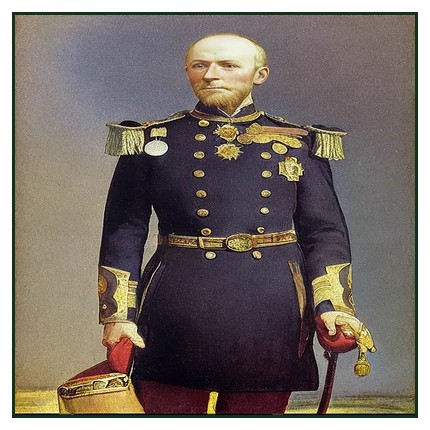
SIR EDWARD HOBART SEYMOUR, THE PRESENT COMMANDER IN CHIEF ON THE CHINA STATION. HIS UNCLE AND COUSIN AND HIMSELF ALL FOUGHT IN THE CHINA WAR OF 1858.
Sir Edward Seymour’s current role as Commander-in-Chief on the China station, a post he assumed in December 1897, underscores the family’s enduring commitment to naval service. His leadership in navigating the complexities of the region reflects the Seymours’ tradition of excellence and adaptability in the face of changing geopolitical landscapes.
This extraordinary naval legacy, spanning continents and centuries, highlights the Seymours as stalwart contributors to Britannia’s maritime supremacy. From the quaint shores of County Limerick to the distant waters of China, the Seymours’ saga continues to echo through the maritime corridors, a testament to their enduring commitment to the call of the sea.
The Sphere – Saturday 07 July 1900

