
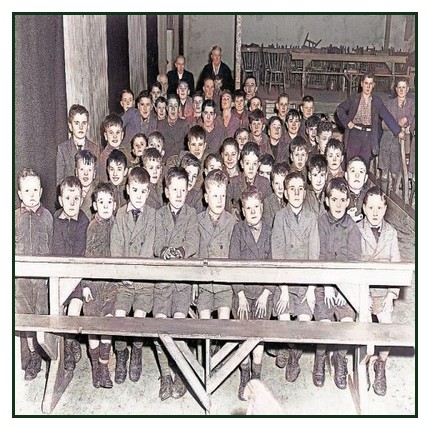
In the heart of Ireland, where the River Shannon weaves its stories through the lush landscapes, one city stands out not just for its natural beauty but for its commitment to reforming young lives. Limerick, often celebrated for its poetry, has a silent hero in the form of St. Joseph’s Reformatory School, making a profound impact on juvenile offenders in the region.
The recently released report by the Inspector of the Reformatory and Industrial Schools of Ireland sheds light on the persistent issue of juvenile offenders. However, amidst the statistics and numbers, the beacon of hope emanates from St. Joseph’s in Limerick, standing tall as a testament to the transformative power of education and rehabilitation.
As of December 31, 1907, St. Joseph’s Reformatory School housed 98 Roman Catholic girls, contributing significantly to the total number of juvenile offenders under detention. While the report outlines a marginal increase in the overall number of offenders, it underscores the pressing need for effective reformative measures.
The report further delves into the types of offences committed by these young individuals. In the majority of cases, the offences were categorized as some form of larceny, reflecting a systemic issue that requires a multifaceted approach. St. Joseph’s, with its dedicated staff and progressive methods, emerges as a haven for these young souls, offering not just punishment but, more importantly, a path to redemption.
What sets St. Joseph’s apart is not just its commitment to discipline but its emphasis on education and skill development. The annual cost per head for those detained in 1907 varied across institutions, and St. Joseph’s, with its focus on holistic development, played a crucial role in shaping the future of these young offenders. It’s noteworthy that the cost, while an essential factor, pales in comparison to the invaluable impact on the lives of these adolescents.

In the broader context of Ireland, the report also sheds light on the Industrial Schools, where St. Joseph’s is a shining example. Industrial Schools play a pivotal role in the rehabilitation process, providing not just education but also equipping the youth with skills essential for their integration into society.
The significance of Limerick in this narrative extends beyond the statistics. It’s a city that refuses to let its youth succumb to the pitfalls of a challenging environment. St. Joseph’s becomes a symbol of resilience, hope, and the unwavering belief in the transformative power of education.
The numbers presented in the report, while concerning, also highlight the success stories of those who have passed through the doors of St. Joseph’s. Of the boys and girls reported as discharged during the three years leading up to 1906, a substantial majority were reported to be doing well. This not only speaks to the effectiveness of the reformatory system but also underscores the potential for positive change when the right resources and approach are employed.
St. Joseph’s is not merely a correctional facility; it’s a sanctuary that believes in the inherent goodness of every individual, irrespective of their past mistakes. The efforts invested in these young lives go beyond institutional obligations; they are a reflection of a community that understands the importance of investing in its future.
Limerick’s commitment to the welfare of its youth is further highlighted by the financial contributions from local rates towards the upkeep of the Reformatory Schools. The community’s involvement in the rehabilitation process speaks volumes about the collective responsibility felt towards the next generation.
As the report paints a detailed picture of juvenile offenders and the challenges they face, St. Joseph’s in Limerick stands out as a beacon of hope. It is a place where the spirit of the city’s namesake poetry is not just recited but lived — a limerick of redemption, compassion, and resilience.
In conclusion, amidst the sobering statistics and the challenges posed by juvenile offenders in Ireland, Limerick’s St. Joseph’s Reformatory School emerges as a symbol of hope and positive transformation. The city’s commitment to the welfare of its youth, as reflected in the report, highlights the importance of investing in education, rehabilitation, and community involvement. St. Joseph’s, with its emphasis on holistic development, stands as a testament to the power of compassion and resilience in shaping the future of young lives.
Morning Post – Tuesday 01 September 1908

