
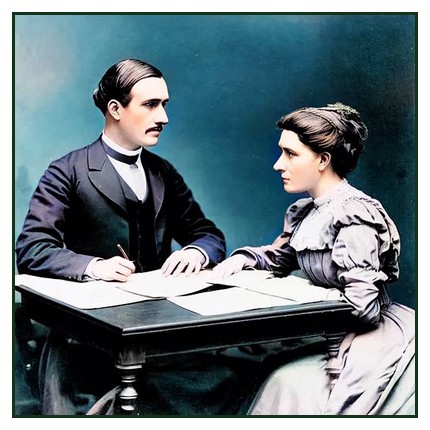
When the court resumed in Limerick, a jury was sworn, and Mr J. H. Campbell, K.C., MP.., took center stage to open the case on behalf of Mr Bishop. In a tale that unfolded like a gripping legal drama, the courtroom was drawn into the intricacies of a marriage that had turned tumultuous.
Mr and Mrs. Bishop, the focal point of this legal spectacle, had been married in 1891, and their union bore witness to the birth of a daughter, now eight years old. Campbell painted a picture of a marriage that, for 17 years, walked the tightrope between happiness and discord. He described Mrs. Bishop as a lady of intense temper and strong will, determined to have her way, even if it meant alienating herself from every relation she had.
The courtroom listened intently as Campbell detailed Mrs. Bishop’s descent into a world of card-playing and gambling that extended into the early morning hours. The dichotomy of Mr Bishop attending to his business while his wife reveled in nocturnal card parties set the stage for a marriage strained by divergent interests.
A Love Unveiled: Mr McArdle and Mrs. Bishop
The plot thickened as Campbell introduced a character named Mr McArdle, a presence at Mrs. Bishop’s card parties for whom she had developed a deep affection. The courtroom held its breath as Campbell revealed the contents of a letter, written by Mrs. Bishop to Mr McArdle on October 22. The letter, infused with passion and despair, spoke of unfulfilled promises and hinted at a love that dared not speak its name.
Campbell contended that this letter, penned by a woman of mature years who had been married for 17 years, was damning evidence of an illicit affair. He painted Mr McArdle as a character of questionable morals, especially considering Mrs. McArdle’s recent death on September 21. The timeline suggested an alarming quickness in the development of affection between Mrs. Bishop and Mr McArdle.
The First Hint: Margaret Cusack’s Vigilance
The courtroom journeyed through the chronicles of surveillance as Margaret Cusack, acting as a vigilant informant, provided the first hint to Mr Bishop. The narrative unfolded on October 2, when Cusack observed Mrs. Bishop’s clandestine visit to Surgeon McArdle’s residence while purportedly en route to a dressmaker.
Suspicion grew as Mr Bishop received intelligence from Cusack about Mrs. Bishop’s visits to Dr McArdle’s house. The courtroom heard of late-night escapades, leaving Mr Bishop to let his wife into their home in the wee hours. The climax came when Mrs. Bishop, caught in the act, had to knock on her husband’s door due to the absence of her latchkey, a key detail in this sordid affair.
Confessions and Cautionary Tales
Further revelations unfolded as Mrs. Bishop, in a burst of confidence, shared with Cusack that Dr McArdle had cautioned them about being watched. A mysterious Catholic clergyman’s warning added an element of intrigue to the narrative, emphasizing the clandestine nature of the relationship.
The courtroom hung on every word as Campbell presented letters from Mrs. Bishop to Mr McArdle, revealing a level of familiarity and intimacy that exceeded the bounds of a conventional friendship. The drama concluded for the day, leaving the audience eager for the next act in Limerick’s legal spectacle.
The courtroom, like the county itself, braced for the unveiling of more secrets, lies, and the complexities that lay beneath the seemingly idyllic surface of this 17-year marriage. As the case continued, Limerick held its collective breath, wondering how this tale of love, betrayal, and courtroom theatrics would ultimately unfold.
Morning Leader – Tuesday 09 February 1909

