
Dear Mr Editor,
It is often said that Limerick is renowned for its “lace,” but I daresay, if one were to substitute the word “lace” with “mud,” it would paint a more accurate picture of our beloved city. While Paris recently grappled with flooding, the “City of the Violated Treaty” contends with a perennial challenge every winter – not water but the ever-present and much-favored “mud.”
Who bears responsibility for the annual inundation of our city with mud in winter and the subsequent clouds of dust in summer? Certainly, not the Board of Guardians, for if they presided over Limerick, it is presumed they would allocate resources to clean our streets weekly, given their current lack of pressing matters to discuss.
The blame falls upon the shoulders of a seemingly sensible yet lethargic entity – the “Corporation of Limerick.” While they hold a pivotal role in political affairs, their inertia becomes evident when it comes to organizing even a modest procession in honour of St. Patrick.
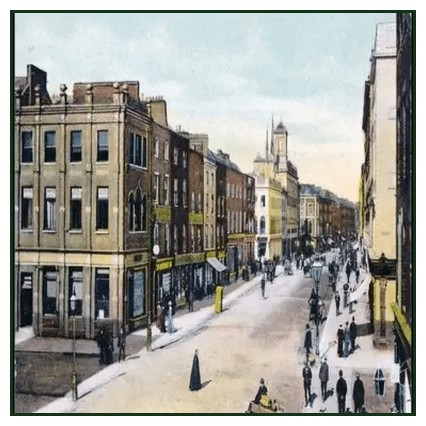
Allow me to provide a succinct portrayal of Limerick’s winter landscape. The mud, akin to a dormant serpent, comfortably envelops every road, transforming our city into a terrain reminiscent of a slumbering reptile. Suddenly, the unmistakable hum of passing cars disrupts the mud’s tranquillity. Naturally, our dear mud, recognizing itself as a venerable denizen, takes offence at the vehicular intrusion, with cars unceremoniously splashing it in every conceivable direction.
And how does the hapless pedestrian navigate this muddy minefield? One might assume they recently participated in an impromptu mud marathon, given their inevitably mud-splattered appearance.
The annual plight of Limerick’s streets is not a novel tale, but a recurring one that begs the question: Can we not strive for a cleaner, more pedestrian-friendly city? While the Corporation of Limerick may have its hands full of weighty political matters, it is time for them to address the mundane yet crucial issue of our city’s cleanliness.
As an engaged citizen, I implore the Corporation to muster the resolve needed to tackle this perennial problem head-on. It is not just about aesthetics but the well-being of our community. Clean and accessible streets are essential for the prosperity of any city, fostering a sense of pride among residents and attracting visitors.
The Leader sheds light on the pervasive issue plaguing Limerick – a city struggling under the weight of mud. Returning from Paris with the latest fashion trends, residents find themselves wading through mud so deep that in certain areas, the need for boats to traverse from one side of the street to the other becomes pressing. The lamentable state of the streets has even led some individuals to call for assistance when attempting to cross side streets, earning the city the moniker of “dirty Limerick.”
As we transition to summer, the situation appears marginally improved, though still far from ideal. While one might risk being temporarily blinded by dust during the warmer months, winter poses a more ominous threat – the peril of losing one’s life. A stroll in summer, particularly for those donned in black suits, becomes an unintended transformation as the vibrant cityscape paints one’s attire white and fills their mouth with unwanted dust.
Despite the acknowledged awareness of the Corporation members regarding the origins of the mud and dust predicament, a peculiar sight unfolds – a massive steam-roller diligently laying down stones on the road, stones that inevitably resurface as mud. The question then arises: How can this perpetual cycle be rectified?
The answer, it seems, lies in the quality of the stone. The earnest hope is that the newly appointed Mayor will take decisive action to address this longstanding issue and pave the way for a cleaner Limerick. The solution, as straightforward as it may seem, demands a strategic and committed approach to sourcing better quality stone for road construction.
The plea for cleanliness is not merely an aesthetic one; it resonates with the very essence of civic pride and the well-being of Limerick’s residents. A city perpetually mired in mud and dust not only tarnishes its image but poses tangible risks to the safety and health of its inhabitants.
As this report resurfaces from over a century ago, it serves as a poignant reminder that the struggle for a clean and accessible city is not a new one. The call to action echoes through time, urging those in positions of authority to prioritize the fundamental necessity of clean streets. It is a collective hope that, in the face of mud and dust, Limerick will rise to the occasion, embracing change, and ushering in an era of renewed civic pride and cleanliness.
Cleanliness, after all, is not just a virtue; it is a commitment to the well-being and prosperity of a community. May Limerick’s new Mayor is the harbinger of this much-needed transformation.
Let this be a call to action, a rallying cry for the Corporation to prioritize the cleanliness of our streets, ensuring that Limerick, instead of being synonymous with mud, becomes a beacon of civic responsibility and cleanliness.
Sincerely,
A Concerned Citizen
Dublin Leader – Saturday 02 April 1910

