
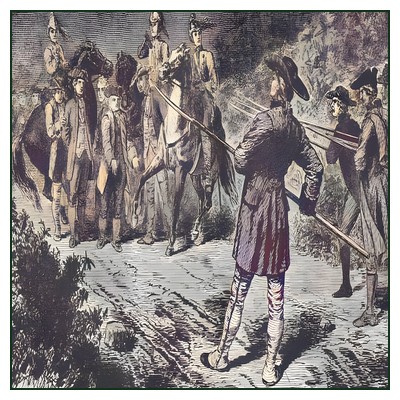
In the annals of Irish balladry, one name that resonates through the ages is that of Eamonn an Chnuic, also known as Edmond O’Ryan, a charismatic figure from the hills of County Tipperary. Nearly two centuries have passed since the haunting strains of a song celebrated his exploits, immortalizing the tale of a man who defied the odds and became a legendary figure in Irish folklore.
The ballad, sung in praise of the outlawed gentleman of County Tipperary, Edmond O’Ryan, nicknamed Eamonn an Chnuic, lingers in the air of Munster. Its origins trace back to a bygone era when the O’Ryan family, loyal to James II during the tumultuous times of the Williamite War, faced dispossession after the Treaty of Limerick. Eamonn an Chnuic, forced into the life of a Rapparee, roamed the mountains, his family patrimony lost to the winds of political change.
Born in Shanbohy, in the modern parish of Drumbane, Tipperary, Eamonn an Chnuic was destined for the priesthood. Hailing from a historical lineage that included the O’Ryan and O’Dwyer families, he received an education for the sacred ministry but veered away, embracing the life of a gentleman farmer. When the tides of history turned against his family for supporting James II, Eamonn an Chnuic transformed into a Rapparee, leading a life marked by excitement, danger, and a touch of tragic romance.
During the years 1653-1765, Eamonn an Chnuic navigated the Irish landscape, evading capture by those who sought the reward on his head. The ballad tells of a plundered man, his home destroyed, who lived a life of constant danger. In a fateful turn of events, he met his end near the Well of Coon, betrayed by someone who sought to claim the bounty on his head. The ballad vividly captures the drama of his life, from his outlaw exploits to a tragic love affair.

The origins of the ballad can be traced to the closing years of the 16th century, but its popularity soared in the early 18th century. Despite being associated with Edmond O’Ryan, the song eventually became better known by the name of its hero, Eamonn an Chnuic. Various versions of the ballad, both in Irish and English, have been passed down through the generations, each adding nuances to the tale of this Irish Robin Hood.
The song’s melody, with roots in the traditional music of Tipperary, gained widespread popularity. It found its way into “Ryan’s Opera” in 1729 and was published under the title “Vernon O Nock” in London. The air became a cherished piece, transcending borders and even making its way into Scottish collections, albeit under the misrepresentation of “Yemen O Nock.” The enduring appeal of the melody is a testament to the timelessness of Eamonn an Chnuic’s tale.
Notably, the song’s lyrics reflect the heavy snowfall on the mountains, providing a historical anchor to the events described. This aligns with the severe and prolonged frost of 1715, chronicled in historical records, further solidifying the ballad’s connection to a specific period in Irish history.
As the years passed, the tale of Eamonn an Chnuic continued to captivate audiences, transcending the boundaries of time and geography. Today, the echoes of his story can still be heard in the hills of Tipperary, a testament to the enduring power of Irish balladry in preserving the legends of the past. Eamonn an Chnuic, the outlawed hero of Tipperary, lives on in the haunting strains of a melody that refuses to fade away.
Weekly Freeman’s Journal – Saturday 10 December 1910

