
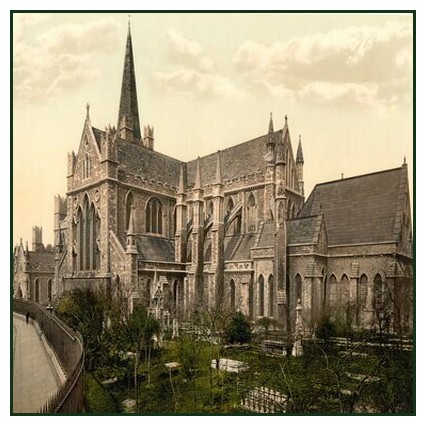
Dublin’s iconic St. Patrick’s Cathedral, a testament to Ireland’s rich cultural and religious heritage, is poised to welcome a new Canon into its ranks. The recent gathering of the Protestant Synod of Limerick marked a crucial step in the process of electing a representative for Limerick, Ardfert, and Aghadoe to fill the position left vacant by the passing of the esteemed Dean Gregz. The decision, though made at this local level, awaits ratification by the greater ecclesiastical community, reflecting the intricate processes that guide appointments within the Church.
The Synod of Limerick, convened specially for this purpose, convened to elect a successor who will stand as the face of the Limerick, Ardfert, and Aghadoe region within the hallowed halls of St. Patrick’s Cathedral. The role of a Canon holds significance beyond the confines of individual dioceses—it carries with it the honour of representing not only a geographical area but also the broader Protestant community that is an integral part of the Cathedral’s history and congregation.
The election process, by nature, reflects the democratic underpinnings of the Church’s governance. This particular election pitted two candidates—Chancellor Hackett and Canon Vance—against each other. The outcome, determined by a vote count, saw Chancellor Hackett securing a resounding victory with 46 votes in his favor compared to 14 for Canon Vance. The declaration of Chancellor Hackett’s election marks a significant milestone in the process, yet its finality remains contingent upon further steps.
The intricacies of the ecclesiastical process require that such appointments undergo rigorous scrutiny and validation. The decision rendered by the Synod of Limerick will undergo a critical ratification phase, as it is presented to the Ardfert and Aghadoe diocesan Synod. This Synod, scheduled to convene in the picturesque town of Tralee on the 6th of the next month, holds the power to endorse or reject the election of Chancellor Hackett.
The outcome of this impending Synod in Tralee holds the key to the Canon appointment. Should the Synod of Kerry confirm the decision reached by the Synod of Limerick, Chancellor Hackett will take his place as the new Canon representing the Cathedral Church of St. Patrick, Dublin. However, if the Kerry Synod does not validate this decision, the resolution will be passed on to the joint Synods for further deliberation.
The prospect of a joint Synod decision introduces a layer of complexity to the process. In the event of a non-confirmation by the Synod of Kerry, the decision will rest in the hands of the conjoined Synods, which will cast votes through the use of voting papers. This mechanism underscores the commitment to ensuring a thorough and considered decision-making process, even when faced with challenges or divergent perspectives.
The appointment of a Canon to a revered institution like St. Patrick’s Cathedral carries weight beyond the individual selected. It reflects the broader dynamics of church governance, regional representation, and ecclesiastical unity. While the names of the candidates and the outcome of the election may take center stage, it is the intricate dance of synodal ratification and joint decision-making that encapsulates the essence of the Church’s commitment to collective judgment and participatory democracy.
As Chancellor Hackett stands on the brink of assuming his role as a representative of the Limerick, Ardfert, and Aghadoe communities in St. Patrick’s Cathedral, Dublin, the Church’s process of appointment shines a light on the mechanisms that uphold its values and traditions. The journey from local Synod to joint deliberation paints a picture of dedication to due process and a commitment to ensuring that the voices of various dioceses are heard and respected—a testament to the enduring strength and resilience of the ecclesiastical community.
Kerry News – Monday 04 December 1905

