
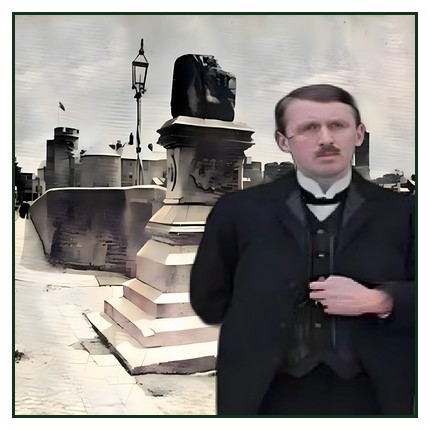
In the heart of East Limerick, the political landscape stirred with anticipation and dissent as the United Irish League’s Executive convened to address the parliamentary vacancy looming over the division. The meeting, held yesterday, unfolded as a theatrical display of conflicting interests, with the Chairman, Mr William Gleason, at the center of a tumultuous debate.
The focal point of contention revolved around the nomination of Mr Thomas London, the son of the late member, as a candidate for the upcoming parliamentary election. As the resolution proposing Mr London’s candidacy reached the Chairman’s desk, Mr Gleason, embodying authority, made a decisive move—he refused to receive the resolution.
This refusal ignited a spark in the room, leading to a cacophony of voices and a surge of confusion. The Chairman’s ruling, seen by some as an infringement on the democratic process, became the catalyst for an intense exchange of opinions among the league members present. In an attempt to quell the rising unrest, Mr Gleason made a bold decision—he adjourned the meeting, leaving the fate of Mr Thomas London’s nomination hanging in the balance.
In the aftermath of the adjourned meeting, the supporters of Mr Thomas London regrouped and, undeterred by the Chairman’s decision, voiced their endorsement through a passed resolution. The move was not merely an expression of support for Mr London but also a statement against what some perceived as an attempt to stifle the democratic process within the United Irish League.
The solidarity exhibited by Mr London’s supporters underscored the complex dynamics at play, hinting at deeper tensions within the league and the constituency. The date of the upcoming Convention, an arena where these tensions are likely to find expression, remains uncertain, adding an air of suspense to the unfolding political saga.
As the dust settles from the executive meeting, the focus shifts to the active canvassing undertaken by the candidates vying for the parliamentary seat in East Limerick. Messrs. Bourke, Maloney, Bennett, and London are navigating the political terrain, engaging with constituents, and presenting their visions for the future of the division.
The canvassing efforts are not mere political rituals but strategic endeavours to win the hearts and votes of the electorate. Each candidate brings a unique narrative, a set of promises, and a vision for East Limerick that resonates with different segments of the population. The political canvass is a tapestry of aspirations, concerns, and expectations, woven by both the candidates and the constituents they seek to represent.
East Limerick finds itself at the crossroads of political uncertainty, with the United Irish League Executive meeting acting as a prologue to a larger narrative. The refusal to accept Mr Thomas London’s nomination and the subsequent rallying of his supporters highlight the intricate dynamics shaping the political landscape.
As the candidates intensify their canvassing efforts, the constituency awaits the date of the Convention, a gathering that promises to be a crucible of political discourse and decision-making. The story of East Limerick’s parliamentary vacancy is not merely about individual candidates but reflects the evolving identity and aspirations of a community navigating the currents of political change. In the days to come, East Limerick will script its political destiny, and the echoes of yesterday’s executive meeting will resonate through the corridors of democratic discourse.
Morning Post – Thursday 22 April 1909

