
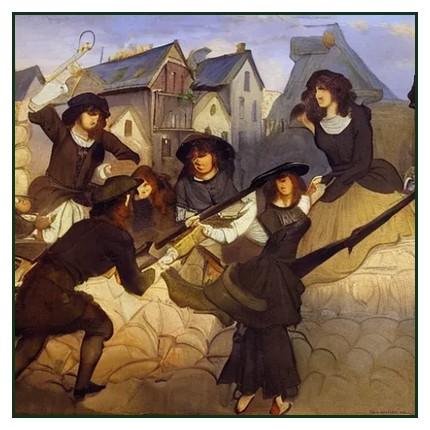
In a recent discussion about women’s political participation and their perceived fitness for such roles, Mr Kettle pointed to a historical event that took place in Limerick, Ireland—the Siege of Limerick. The reference to this significant moment in history served as a backdrop for his argument, emphasizing the resilience of women in the face of adversity.
The Siege of Limerick, a notable chapter in the town’s past, showcased the determination and courage of its inhabitants, including women, who played a pivotal role in defending their home. By drawing attention to this historical context, Mr Kettle aimed to challenge the notion that women were unfit for certain roles, particularly in situations where physical strength and combat skills were traditionally emphasized.
During the discussion, Mr Kettle not only defended the actions taken during the Siege of Limerick but also asserted the effectiveness of the Union’s tactics. While acknowledging potential disagreements about the overall goals of the Union, he highlighted the undeniable transformation of what might have been considered a dormant idea into a vibrant cause.

The use of the Siege of Limerick as a reference point underscores the historical significance of the city itself. Limerick, with its rich history and cultural heritage, becomes a focal point in discussions that reach beyond its geographical boundaries. The term “Limerick” not only refers to the city but serves as a symbol of resilience and strength, as exemplified by the events of the siege.
As discussions surrounding women’s roles in various aspects of society continue, Mr Kettle’s reference to Limerick adds a historical dimension to the argument. It suggests that historical events, such as the Siege of Limerick, can offer valuable insights into the capabilities and contributions of women, challenging stereotypes that may have been perpetuated over time.
The neutral tone maintained in Mr Kettle’s statements allows the historical reference to speak for itself. By refraining from expressing explicit opinions or drawing conclusions, the focus remains on the historical context and its relevance to the broader conversation about women’s roles in society.
In conclusion, Mr Kettle’s use of the Siege of Limerick as a reference point in the discussion about women’s political participation adds depth and historical perspective to the ongoing discourse. Limerick, with its resilient history, becomes a symbol that transcends its geographical boundaries, contributing to a nuanced understanding of the capabilities of women in various roles. As discussions on this topic evolve, the historical context provided by events like the Siege of Limerick serves as a reminder of the enduring strength and contributions of women throughout history.
Votes for Women – Friday 14 May 1909

