Published in the Ladies’ Field Supplement in May 1909, this.
Published Ladies’
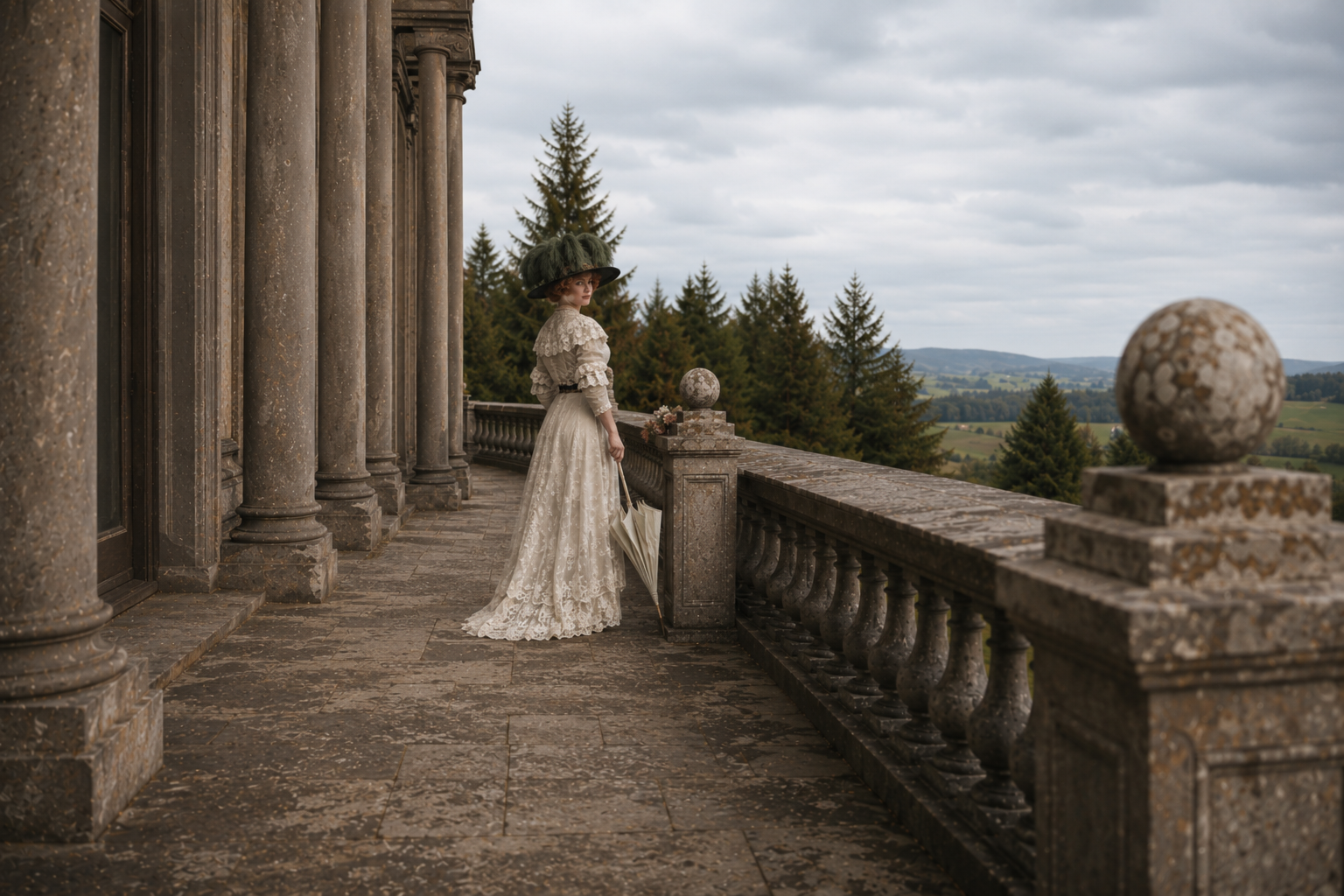
Published in the Ladies’ Field Supplement in May 1909, this elegant garden-party ensemble combines pale green crêpe météore with a flowing tunic of delicate Limerick lace. The softly draped fabric creates a graceful Edwardian silhouette, while the intricate lacework adds texture, refinement and distinctly Irish craftsmanship. A fitted waist, long skirt and trimmed bodice reflect the fashionable ideal of the period, balancing formality with lightness suitable for outdoor social occasions. Completed by an elaborate feathered hat and parasol, the gown captures the elegance, confidence and decorative luxury associated with upper-class women’s fashion in the years before the First World War.
View Record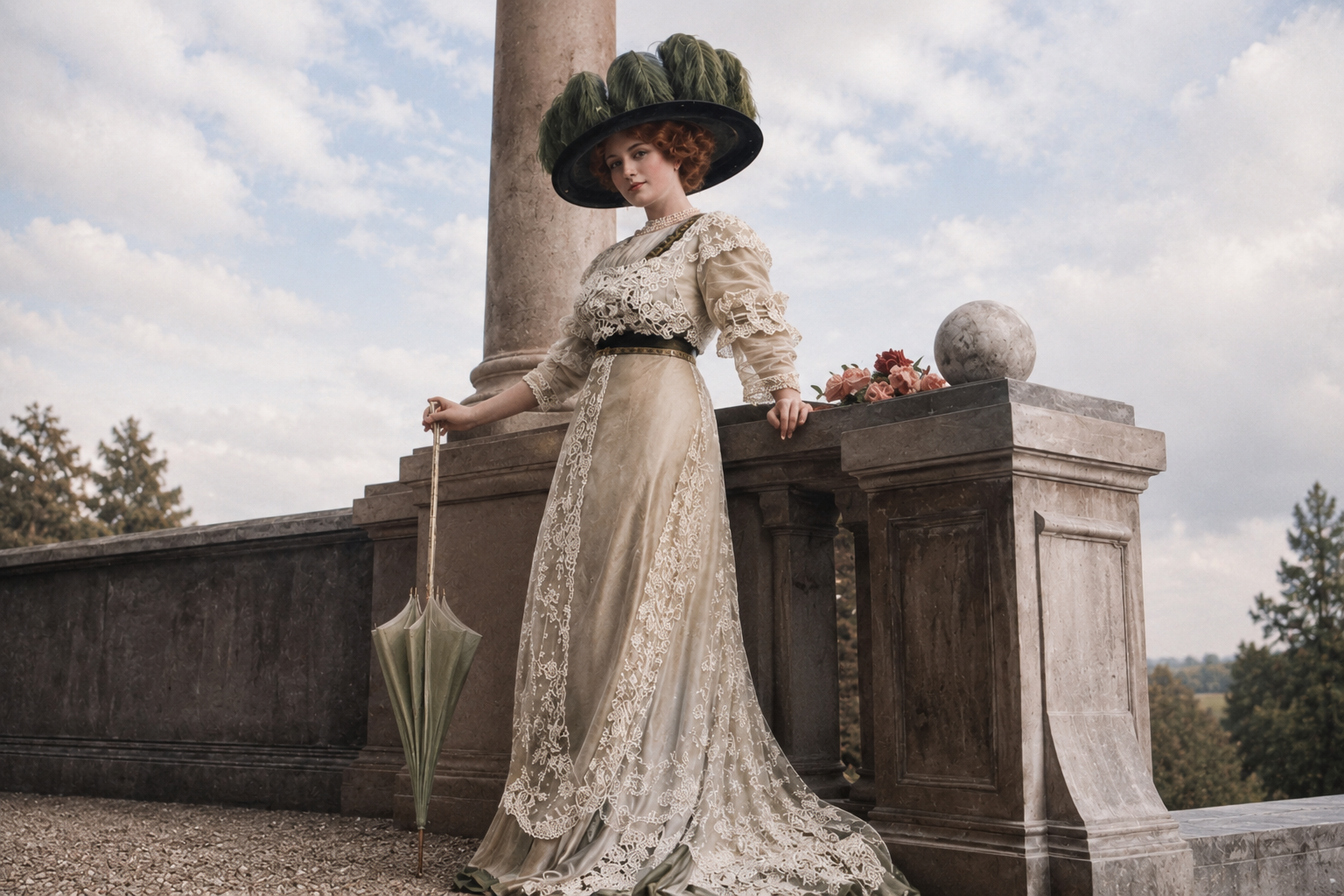
Published in the Ladies’ Field Supplement in May 1909, this.
Published Ladies’
Published in the Ladies’ Field Supplement in May 1909, this elegant garden-party ensemble combines pale green crêpe météore with a flowing tunic of delicate Limerick lace. The softly draped fabric creates a graceful Edwardian silhouette, while the intricate lacework adds texture, refinement and distinctly Irish craftsmanship. A fitted waist, long skirt and trimmed bodice reflect the fashionable ideal of the period, balancing formality with lightness suitable for outdoor social occasions. Completed by an elaborate feathered hat and parasol, the gown captures the elegance, confidence and decorative luxury associated with upper-class women’s fashion in the years before the First World War.
View Record
Published in the Ladies’ Field Supplement in May 1909, this.
Published Ladies’
Published in the Ladies’ Field Supplement in May 1909, this elegant garden-party ensemble combines pale green crêpe météore with a flowing tunic of delicate Limerick lace. The softly draped fabric creates a graceful Edwardian silhouette, while the intricate lacework adds texture, refinement and distinctly Irish craftsmanship. A fitted waist, long skirt and trimmed bodice reflect the fashionable ideal of the period, balancing formality with lightness suitable for outdoor social occasions. Completed by an elaborate feathered hat and parasol, the gown captures the elegance, confidence and decorative luxury associated with upper-class women’s fashion in the years before the First World War.
View Record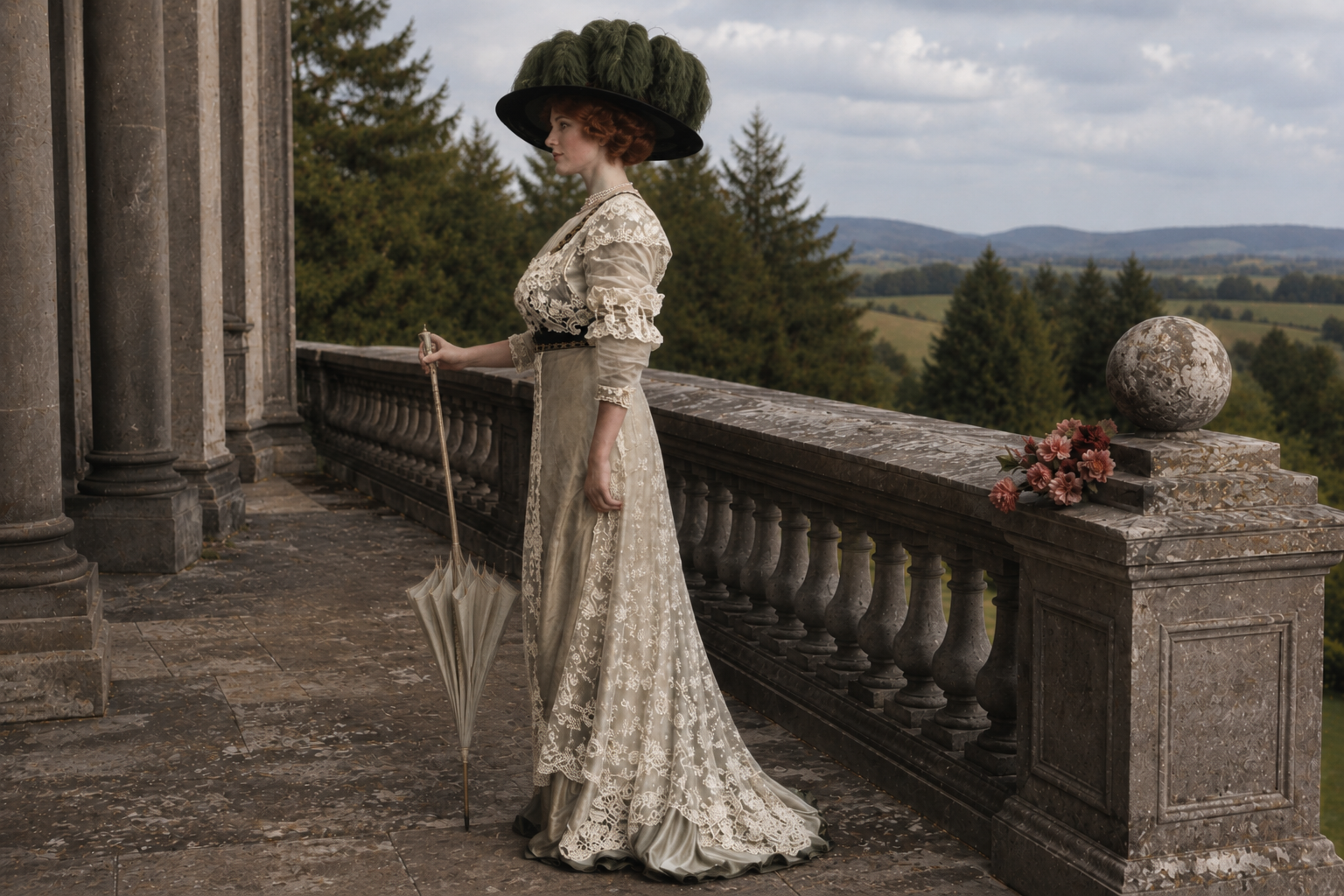
Published in the Ladies’ Field Supplement in May 1909, this.
Published Ladies’
Published in the Ladies’ Field Supplement in May 1909, this elegant garden-party ensemble combines pale green crêpe météore with a flowing tunic of delicate Limerick lace. The softly draped fabric creates a graceful Edwardian silhouette, while the intricate lacework adds texture, refinement and distinctly Irish craftsmanship. A fitted waist, long skirt and trimmed bodice reflect the fashionable ideal of the period, balancing formality with lightness suitable for outdoor social occasions. Completed by an elaborate feathered hat and parasol, the gown captures the elegance, confidence and decorative luxury associated with upper-class women’s fashion in the years before the First World War.
View Record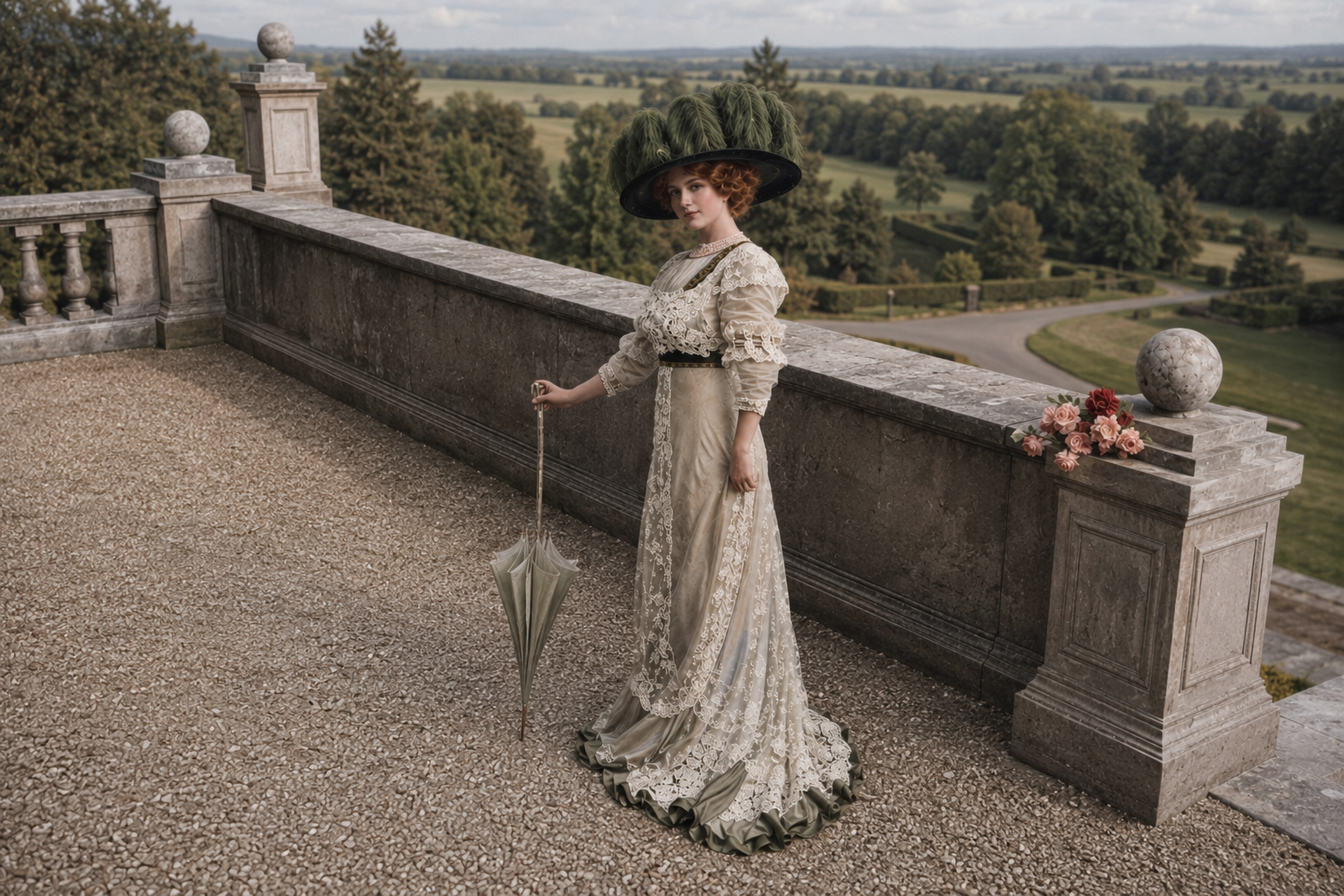
Published in the Ladies’ Field Supplement in May 1909, this.
Published Ladies’
Published in the Ladies’ Field Supplement in May 1909, this elegant garden-party ensemble combines pale green crêpe météore with a flowing tunic of delicate Limerick lace. The softly draped fabric creates a graceful Edwardian silhouette, while the intricate lacework adds texture, refinement and distinctly Irish craftsmanship. A fitted waist, long skirt and trimmed bodice reflect the fashionable ideal of the period, balancing formality with lightness suitable for outdoor social occasions. Completed by an elaborate feathered hat and parasol, the gown captures the elegance, confidence and decorative luxury associated with upper-class women’s fashion in the years before the First World War.
View Record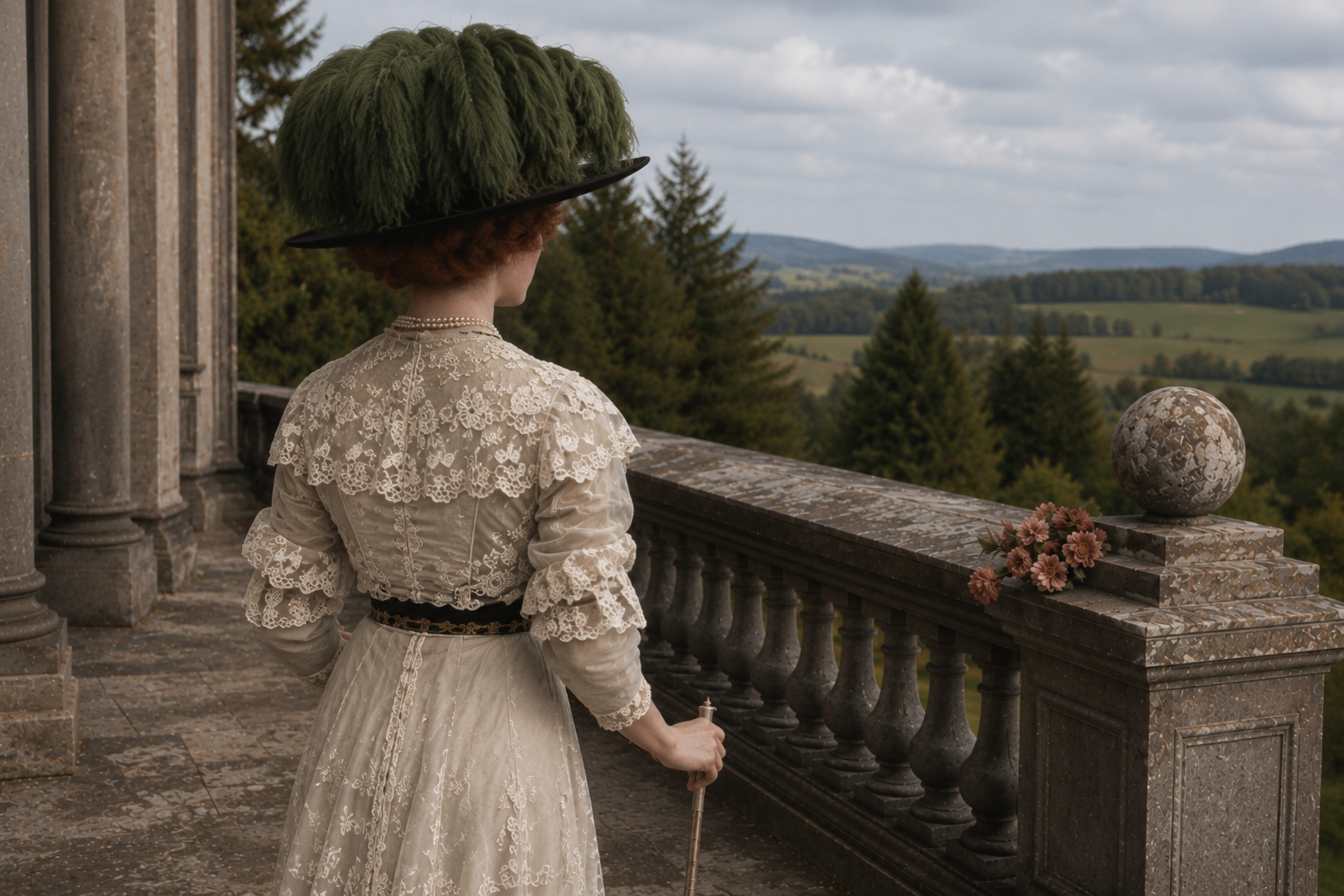
Published in the Ladies’ Field Supplement in May 1909, this.
Published Ladies’
Published in the Ladies’ Field Supplement in May 1909, this elegant garden-party ensemble combines pale green crêpe météore with a flowing tunic of delicate Limerick lace. The softly draped fabric creates a graceful Edwardian silhouette, while the intricate lacework adds texture, refinement and distinctly Irish craftsmanship. A fitted waist, long skirt and trimmed bodice reflect the fashionable ideal of the period, balancing formality with lightness suitable for outdoor social occasions. Completed by an elaborate feathered hat and parasol, the gown captures the elegance, confidence and decorative luxury associated with upper-class women’s fashion in the years before the First World War.
View Record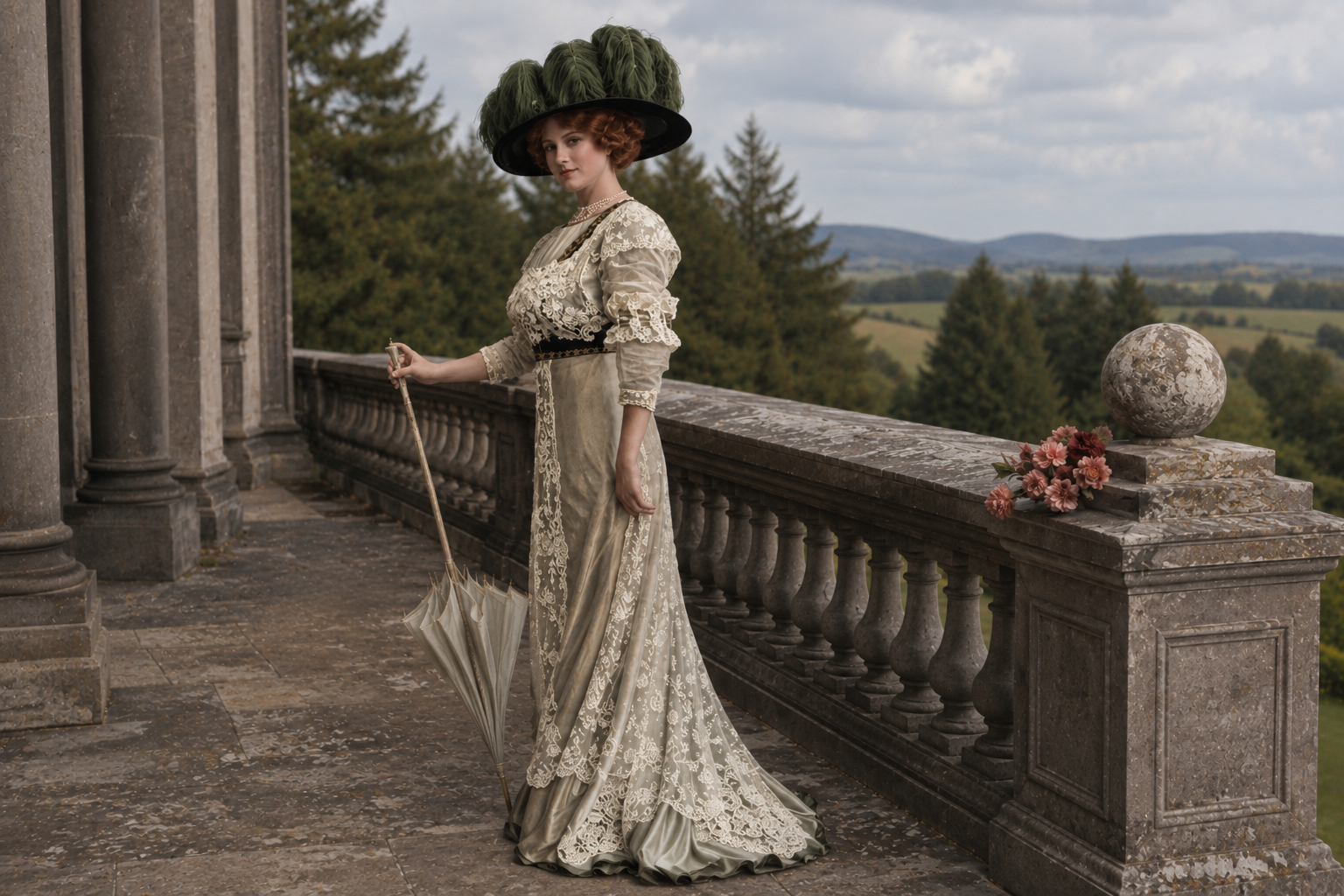
Published in the Ladies’ Field Supplement in May 1909, this.
Published Ladies’
Published in the Ladies’ Field Supplement in May 1909, this elegant garden-party ensemble combines pale green crêpe météore with a flowing tunic of delicate Limerick lace. The softly draped fabric creates a graceful Edwardian silhouette, while the intricate lacework adds texture, refinement and distinctly Irish craftsmanship. A fitted waist, long skirt and trimmed bodice reflect the fashionable ideal of the period, balancing formality with lightness suitable for outdoor social occasions. Completed by an elaborate feathered hat and parasol, the gown captures the elegance, confidence and decorative luxury associated with upper-class women’s fashion in the years before the First World War.
View Record
On 5 February 1900, postal arrangements and services at Enniscorthy.
Postal Services
On 5 February 1900, postal arrangements and services at Enniscorthy, County Wexford, were formally questioned in the British Parliament, drawing attention to the challenges facing rural and provincial communities in Ireland at the turn of the century. Enniscorthy’s residents, businesses, and civic leaders had expressed concerns about the efficiency, reliability, and accessibility of postal services, issues that had implications for communication, commerce, and social life throughout the region.
View Record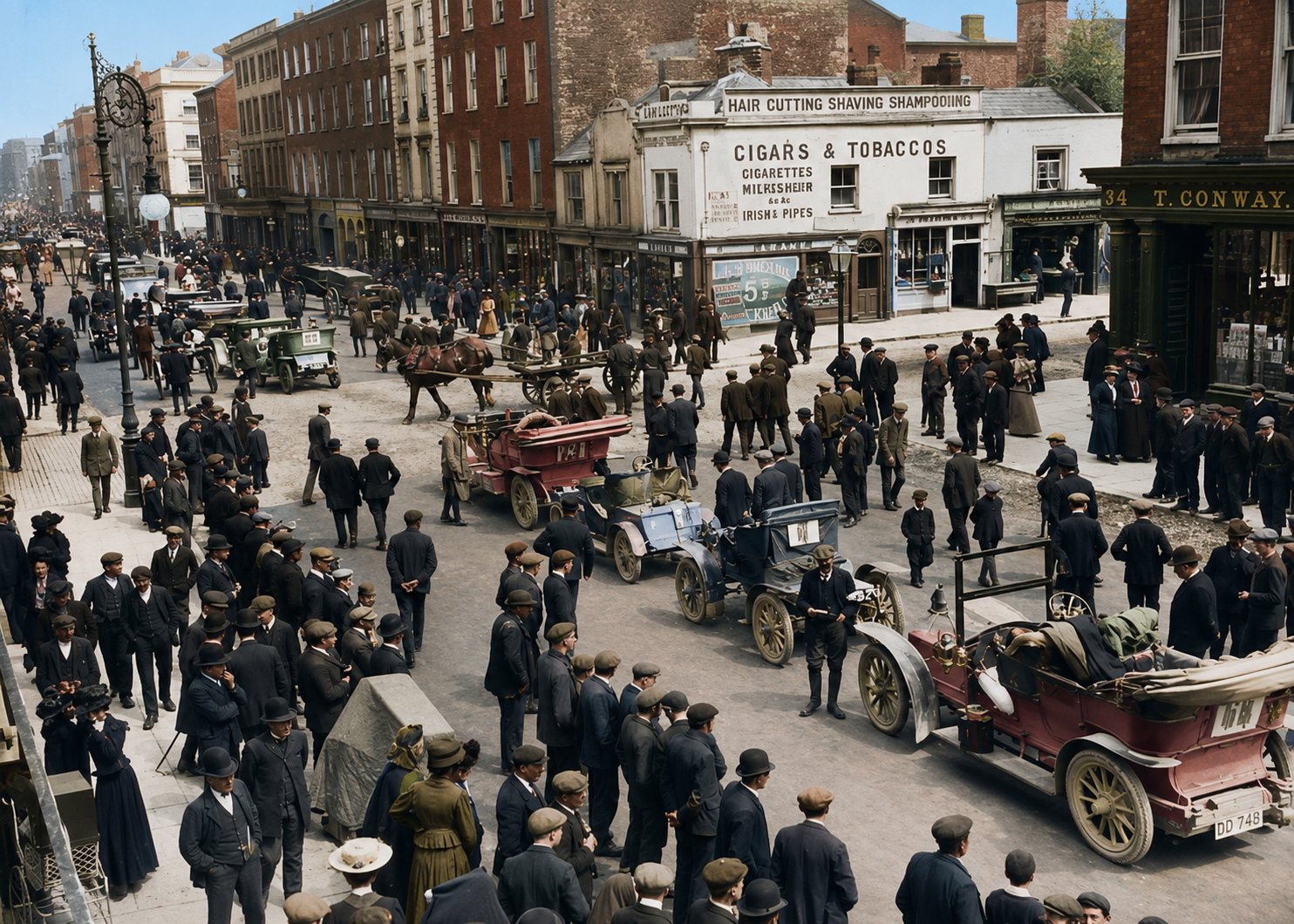
On 25 May 1908, crowds gathered at the junction of.
May Crowds
On 25 May 1908, crowds gathered at the junction of George Street and Roches Street in Limerick to watch competitors in the Irish Automobile Club Reliability Trials for touring cars. Drivers and their vehicles waited for the signal to begin a demanding hill-climb test, one of several events designed to assess mechanical endurance, reliability and road performance. The scene captures the excitement surrounding early motoring, when automobiles remained novel machines and public competitions attracted curiosity. Horse-drawn transport, pedestrians and motorcars briefly shared the city streets, marking a transitional moment in Limerick’s transport history and Ireland’s developing enthusiasm for competitive motoring.
View Record
On 25 May 1908, crowds gathered at the junction of.
May Crowds
On 25 May 1908, crowds gathered at the junction of George Street and Roches Street in Limerick to watch competitors in the Irish Automobile Club Reliability Trials for touring cars. Drivers and their vehicles waited for the signal to begin a demanding hill-climb test, one of several events designed to assess mechanical endurance, reliability and road performance. The scene captures the excitement surrounding early motoring, when automobiles remained novel machines and public competitions attracted curiosity. Horse-drawn transport, pedestrians and motorcars briefly shared the city streets, marking a transitional moment in Limerick’s transport history and Ireland’s developing enthusiasm for competitive motoring.
View Record