
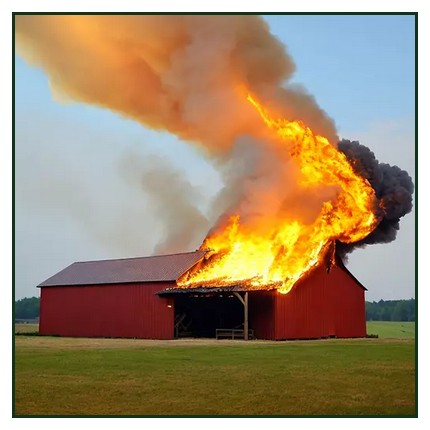
Limerick, Ireland – In a harrowing incident that unfolded at Limerick on Saturday, Christopher Bentley, a farmer residing in Cahirconlish, was granted £900 in compensation for the deliberate destruction of 300 tons of hay and a hay barn on the night of the 2nd of the previous month. The case sheds light on the escalating tensions surrounding an eviction, implicating Bentley as the secretary and treasurer of the parochial vestry of Cohirconliab, and drawing in the local rector, Mr Lynch.
Bentley, who played a role in the eviction of a sub-tenant refusing to surrender possession of the property, found himself at the center of public disdain. Villagers directed their opprobrium towards Bentley and Mr Lynch, the rector, leading to a series of alarming incidents that culminated in the malicious burning of Bentley’s hay and hay barn.
The court proceedings revealed distressing details of the events. Testimonies indicated that Bentley and his wife were subjected to verbal abuse, and their cottage was ruthlessly wrecked. Similarly, Mr Lynch and his wife experienced a similar onslaught of hostility from an enraged mob. The escalation of tensions even reached the point where the rector reported having received explicit threats of murder.
The case highlights the deep-seated animosities within the community, fueled by the contentious eviction and the villagers’ perception of Bentley and Mr Lynch’s involvement. The act of burning the hay and barn served as a drastic expression of dissent and retaliation against those associated with the eviction.
The compensation awarded to Bentley, amounting to £900, serves as a form of redress for the economic losses incurred due to the deliberate destruction of his agricultural assets. The court’s decision acknowledges the malicious nature of the act and seeks to alleviate the financial burden placed on Bentley as a result.
As the legal proceedings unfolded, the community’s unrest and the threats against the rector underscored the broader challenges faced by individuals involved in contentious local issues. The case prompts reflection on the need for dialogue and conflict resolution within communities to prevent such incidents from escalating to the point of violence and property destruction.
The repercussions of the Limerick case are likely to resonate beyond the courtroom, prompting local authorities to address the root causes of community tensions and explore avenues for reconciliation. The incident serves as a stark reminder of the fragile balance between the pursuit of justice and the potential for violence in the face of deeply rooted grievances within rural communities.
London Evening Standard – Monday 06 January 1908

