

Related Archive: George Wyndham

Wyndham’s Land Bargain

Wyndham’s Land Bargain

Archived: 9 October 2026

Abstract

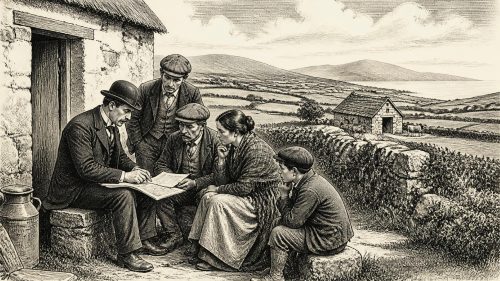
1903 in Ireland combined disruption, political ceremony and lasting reform. February storms damaged woodland, buildings and livelihoods. George Wyndham’s Land Purchase Act, following the Land Conference, used state-backed advances and landlord incentives to accelerate tenant ownership, though it neither ended poverty, congestion and labourers’ insecurity nor resolved Home Rule. It also divided nationalists over conciliation. Edward VII’s Irish tour attracted loyalist receptions but nationalist protest, revealing competing identities. Northern railway reorganisation and the Independent Orange Order reflected economic links and unionist tensions. Cultural revival, Trinity’s decision to admit women, and Dublin’s expanded electricity supply signalled uneven modernisation alongside rural inequality.


Read Article

Shawe-Taylor’s Mansion House

Shawe-Taylor’s Mansion House

Archived: 9 October 2026

Abstract

In 1902, Ireland remained under United Kingdom rule, but the land question prompted an important shift towards conciliation. Following failed proposals and public initiatives by Lindsay Talbot Crosbie and Captain John Shawe-Taylor, landlord and tenant representatives met at Dublin’s Mansion House on 20 December. Chaired by Lord Dunraven, the conference explored voluntary land transfer, without resolving matters before year’s end. Agriculture, co-operation and official improvement shaped rural change, while regional economic differences persisted. Cultural nationalism also flourished through Cathleen ni Houlihan, Gaelic League events and Arthur Griffith’s abstentionist ideas. James Joyce’s departure for Paris suggested emerging cosmopolitan new literary ambitions.

Read Article

