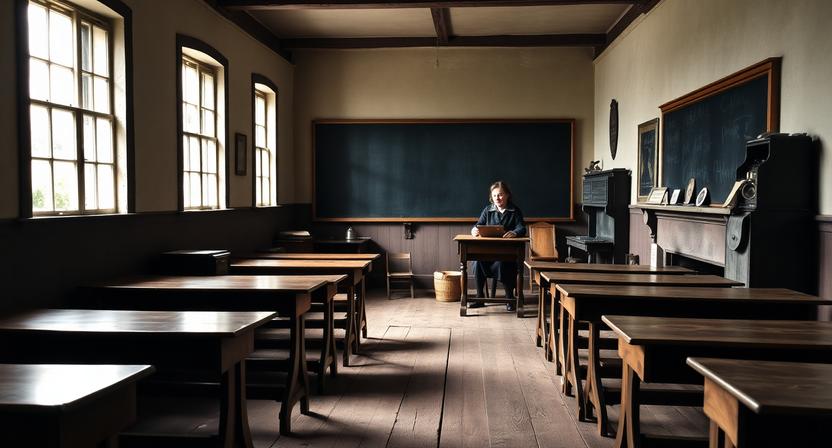
On 8 February 1900, the employment, salaries, and treatment of.
Teacher Conditions
On 8 February 1900, the employment, salaries, and treatment of Irish national-school teachers were raised in Parliament, highlighting the struggles and dedication of educators across the country. Representatives drew attention to low pay, insecure employment, and lack of adequate resources for teachers who served as the backbone of rural and urban education in Ireland.
View Record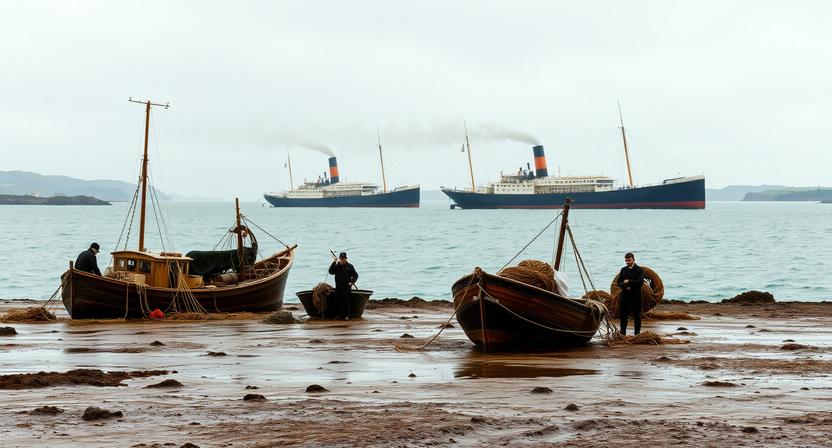
On 8 February 1900, the practice of steam trawling in.
Trawling Criticism
On 8 February 1900, the practice of steam trawling in Wexford Bay was sharply criticised in Parliament, with local fishermen and their advocates voicing concern over its damaging effects on traditional livelihoods. The introduction of steam-powered trawlers had revolutionised fishing along the Irish coast, but many small-scale fishermen complained that these vessels indiscriminately swept up fish stocks, destroyed spawning grounds, and left little for those using more sustainable methods.
View Record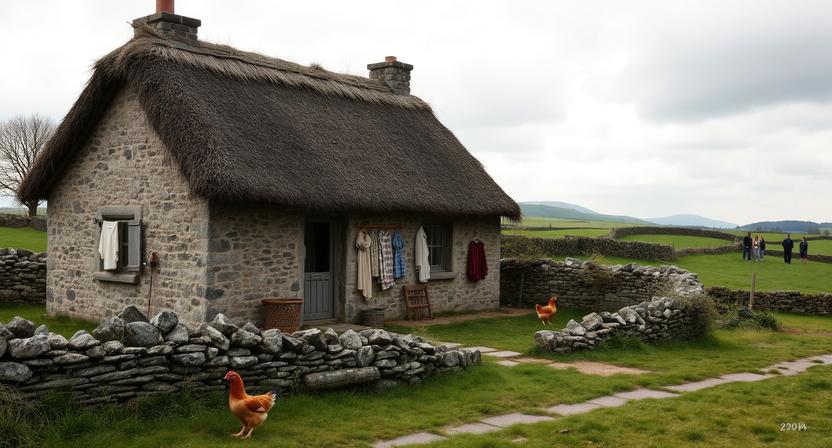
On 8 February 1900, the practice of boarding out pauper.
Child Boarding
On 8 February 1900, the practice of boarding out pauper children with foster nurses outside Irish workhouses—known as “out-nursing”—was discussed in Parliament. This issue was of critical importance to social reformers and Poor Law guardians, who debated whether the system provided a healthier, more humane alternative to institutional care, or risked exposing vulnerable children to neglect and exploitation.
View Record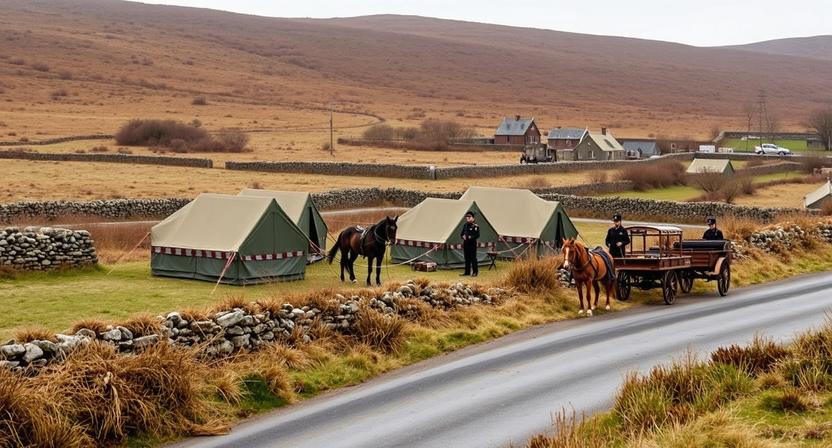
On 8 February 1900, the continued employment of additional police.
Police Presence
On 8 February 1900, the continued employment of additional police in County Kerry was challenged in Parliament, highlighting tensions between authorities and local communities in the region. The deployment of extra police—often associated with periods of agrarian agitation, rent disputes, or social unrest—was criticised by Irish representatives, who argued that such measures were expensive, disruptive, and contributed to an atmosphere of mistrust.
View Record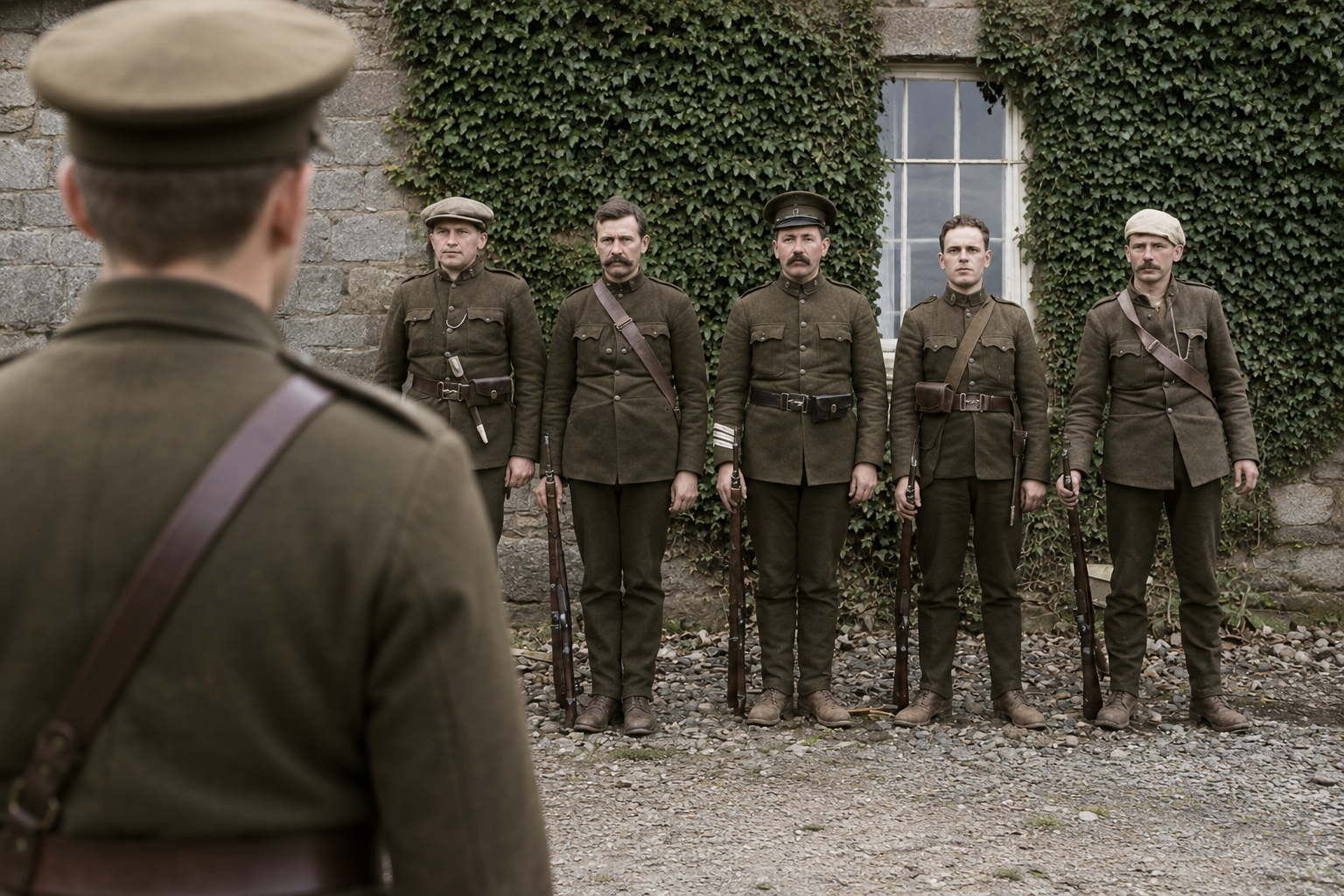
On 28 May 1920, five surviving members of the Royal.
LA-PH-000611
On 28 May 1920, five surviving members of the Royal Irish Constabulary stood together after the IRA attack on their barracks at Kilmallock, County Limerick. From left are Constables Feehy and Holmes, Sergeant O’Sullivan, and Constables Bailie and Barry. During the assault, incendiary devices set the building ablaze, killing two policemen inside. As the position became untenable, Sergeant O’Sullivan led the remaining defenders in a bayonet charge against the attacking republicans. The photograph captures the exhausted survivors in the aftermath of one of the most dramatic engagements of the Irish War of Independence in County Limerick during that turbulent year.
View Record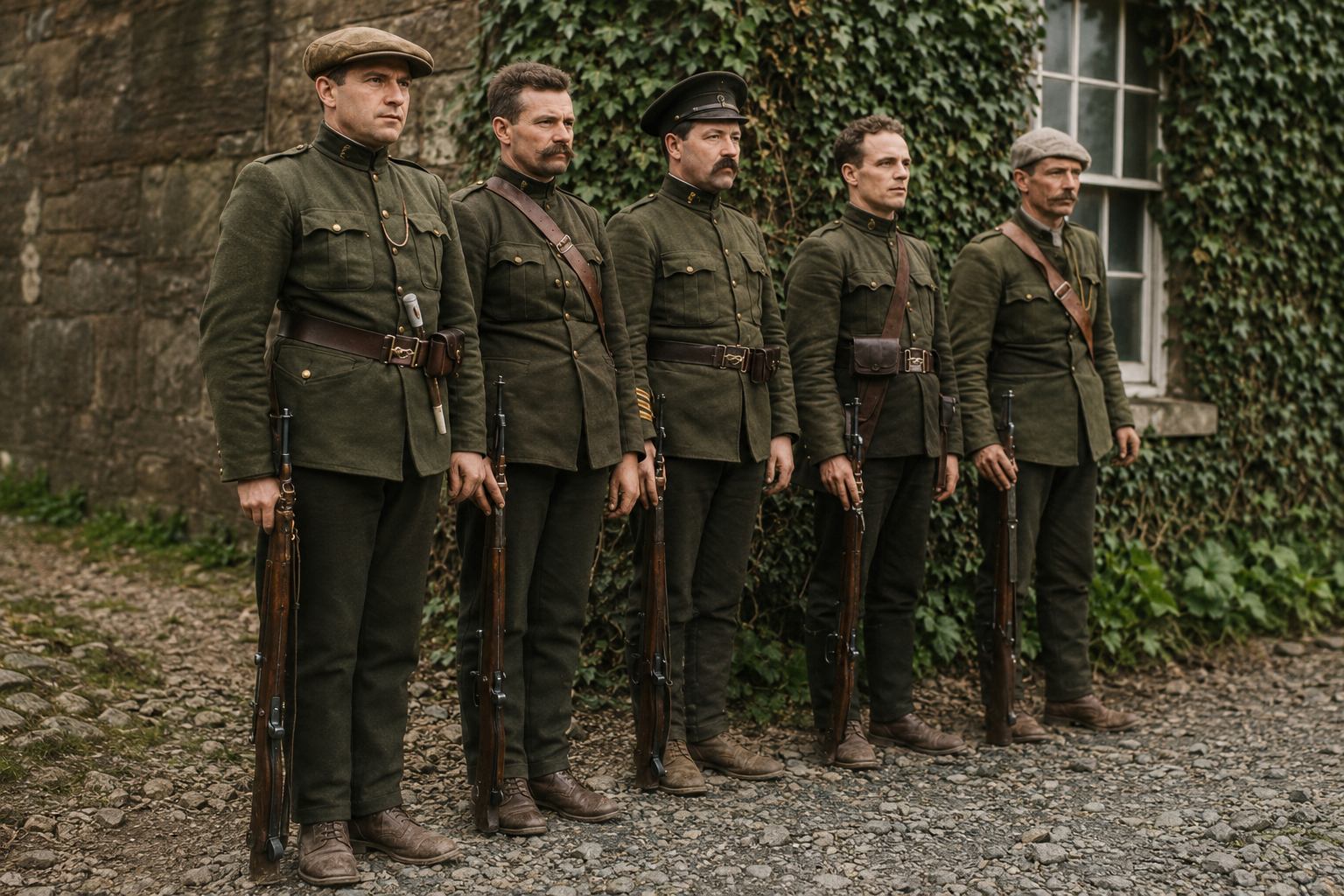
On 28 May 1920, five surviving members of the Royal.
LA-PH-000612
On 28 May 1920, five surviving members of the Royal Irish Constabulary stood together after the IRA attack on their barracks at Kilmallock, County Limerick. From left are Constables Feehy and Holmes, Sergeant O’Sullivan, and Constables Bailie and Barry. During the assault, incendiary devices set the building ablaze, killing two policemen inside. As the position became untenable, Sergeant O’Sullivan led the remaining defenders in a bayonet charge against the attacking republicans. The photograph captures the exhausted survivors in the aftermath of one of the most dramatic engagements of the Irish War of Independence in County Limerick during that turbulent year.
View Record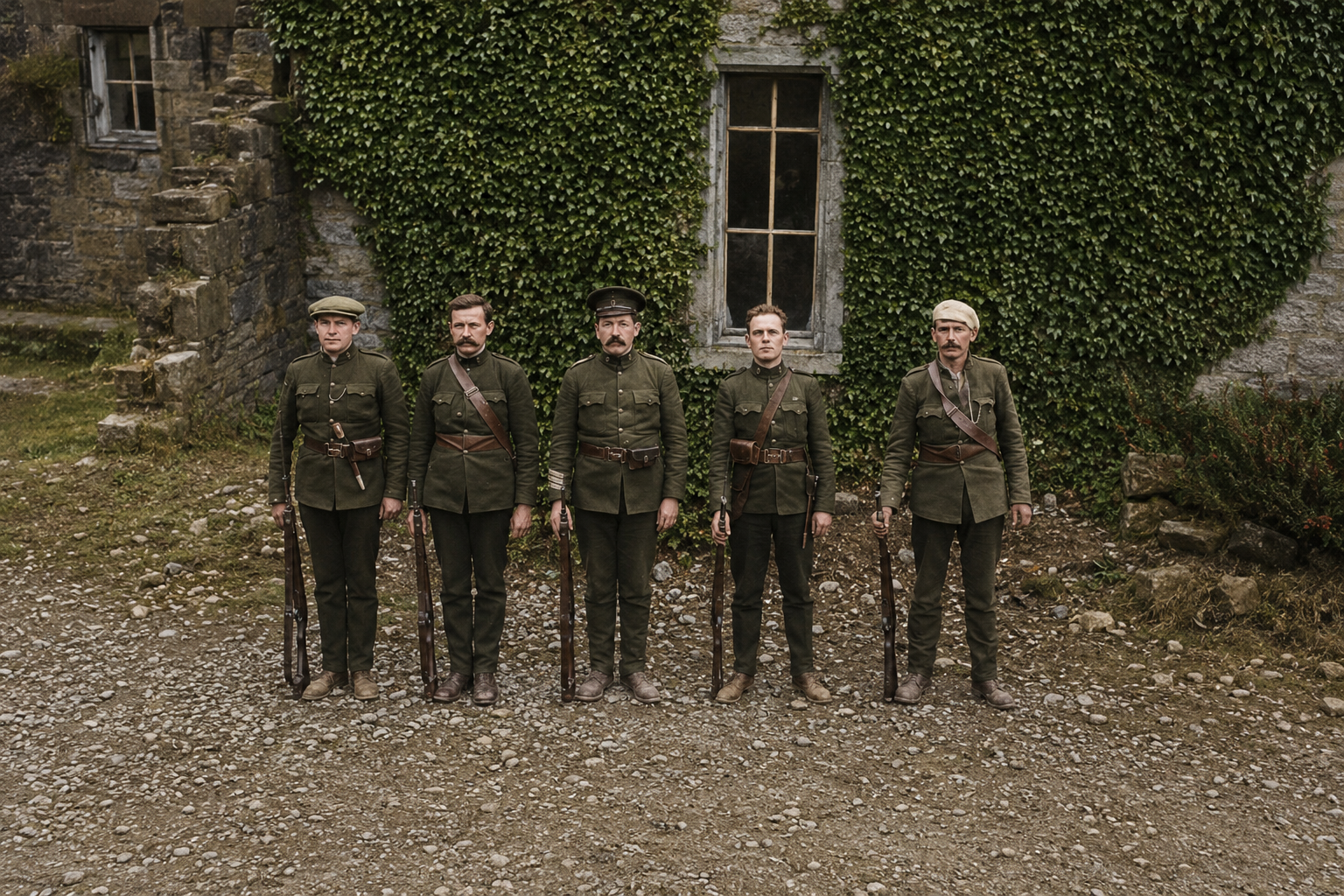
On 28 May 1920, five surviving members of the Royal.
LA-PH-000608
On 28 May 1920, five surviving members of the Royal Irish Constabulary stood together after the IRA attack on their barracks at Kilmallock, County Limerick. From left are Constables Feehy and Holmes, Sergeant O’Sullivan, and Constables Bailie and Barry. During the assault, incendiary devices set the building ablaze, killing two policemen inside. As the position became untenable, Sergeant O’Sullivan led the remaining defenders in a bayonet charge against the attacking republicans. The photograph captures the exhausted survivors in the aftermath of one of the most dramatic engagements of the Irish War of Independence in County Limerick during that turbulent year.
View Record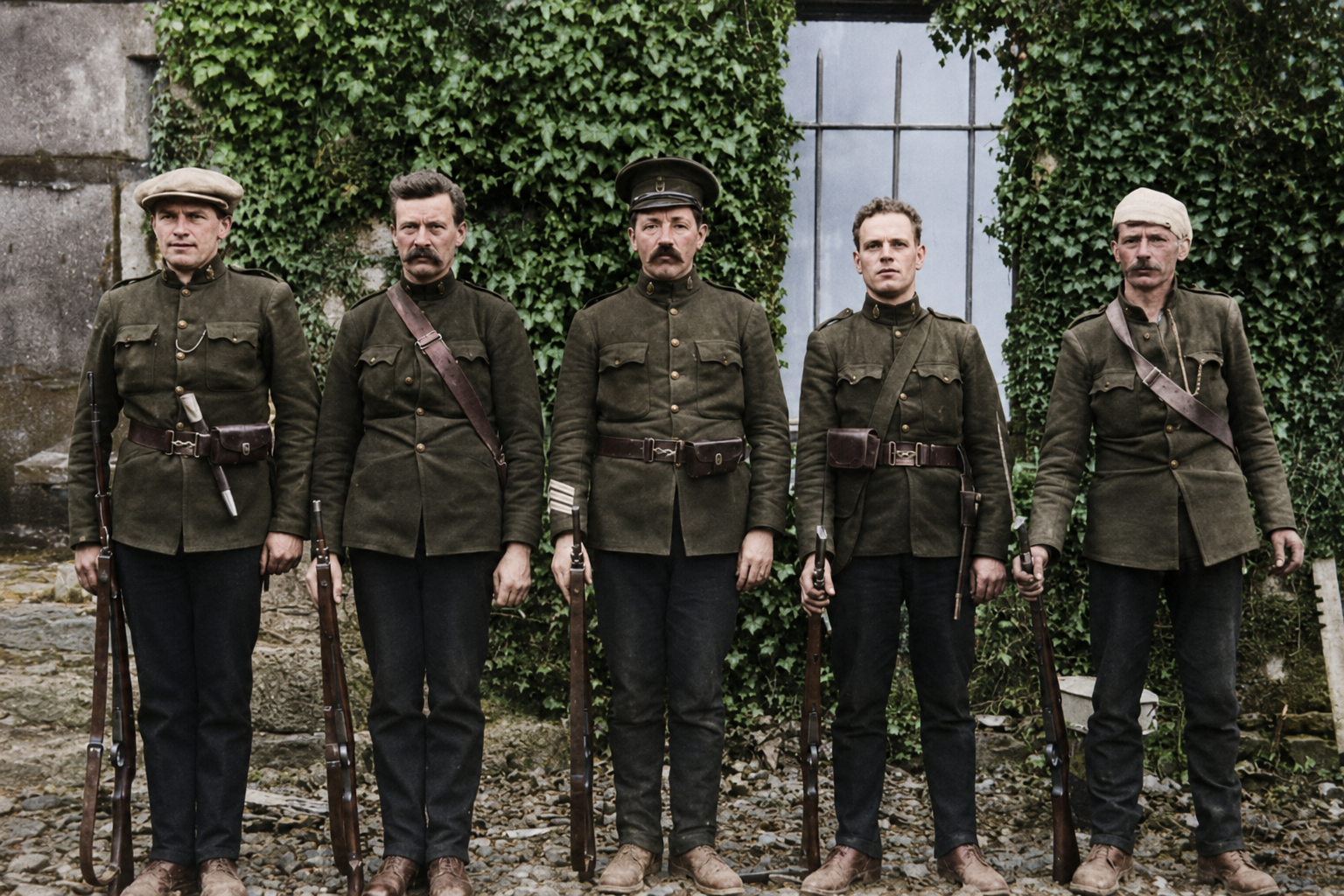
On 28 May 1920, five surviving members of the Royal.
LA-PH-000614
On 28 May 1920, five surviving members of the Royal Irish Constabulary stood together after the IRA attack on their barracks at Kilmallock, County Limerick. From left are Constables Feehy and Holmes, Sergeant O’Sullivan, and Constables Bailie and Barry. During the assault, incendiary devices set the building ablaze, killing two policemen inside. As the position became untenable, Sergeant O’Sullivan led the remaining defenders in a bayonet charge against the attacking republicans. The photograph captures the exhausted survivors in the aftermath of one of the most dramatic engagements of the Irish War of Independence in County Limerick during that turbulent year.
View Record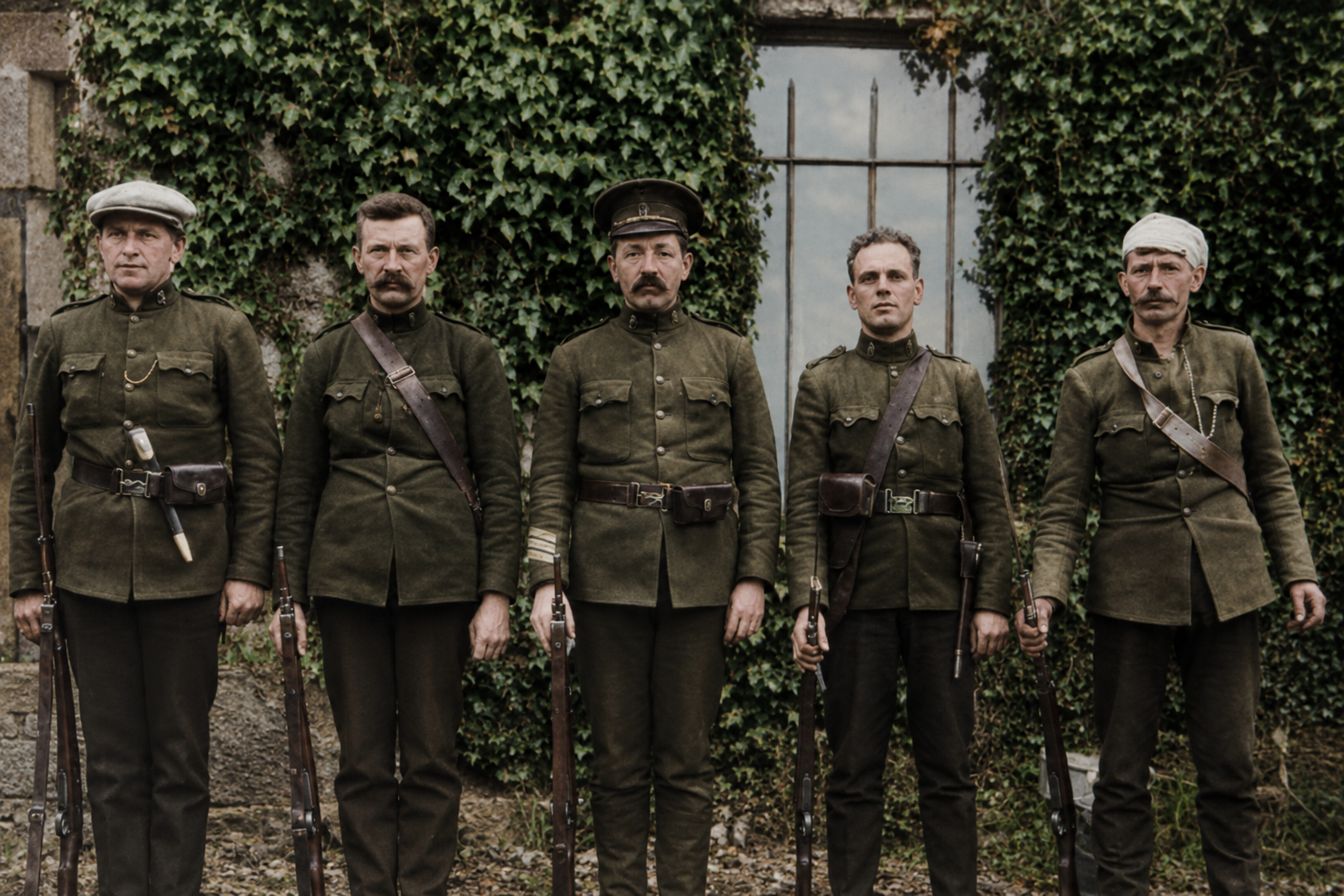
On 28 May 1920, five surviving members of the Royal.
LA-PH-000609
On 28 May 1920, five surviving members of the Royal Irish Constabulary stood together after the IRA attack on their barracks at Kilmallock, County Limerick. From left are Constables Feehy and Holmes, Sergeant O’Sullivan, and Constables Bailie and Barry. During the assault, incendiary devices set the building ablaze, killing two policemen inside. As the position became untenable, Sergeant O’Sullivan led the remaining defenders in a bayonet charge against the attacking republicans. The photograph captures the exhausted survivors in the aftermath of one of the most dramatic engagements of the Irish War of Independence in County Limerick during that turbulent year.
View Record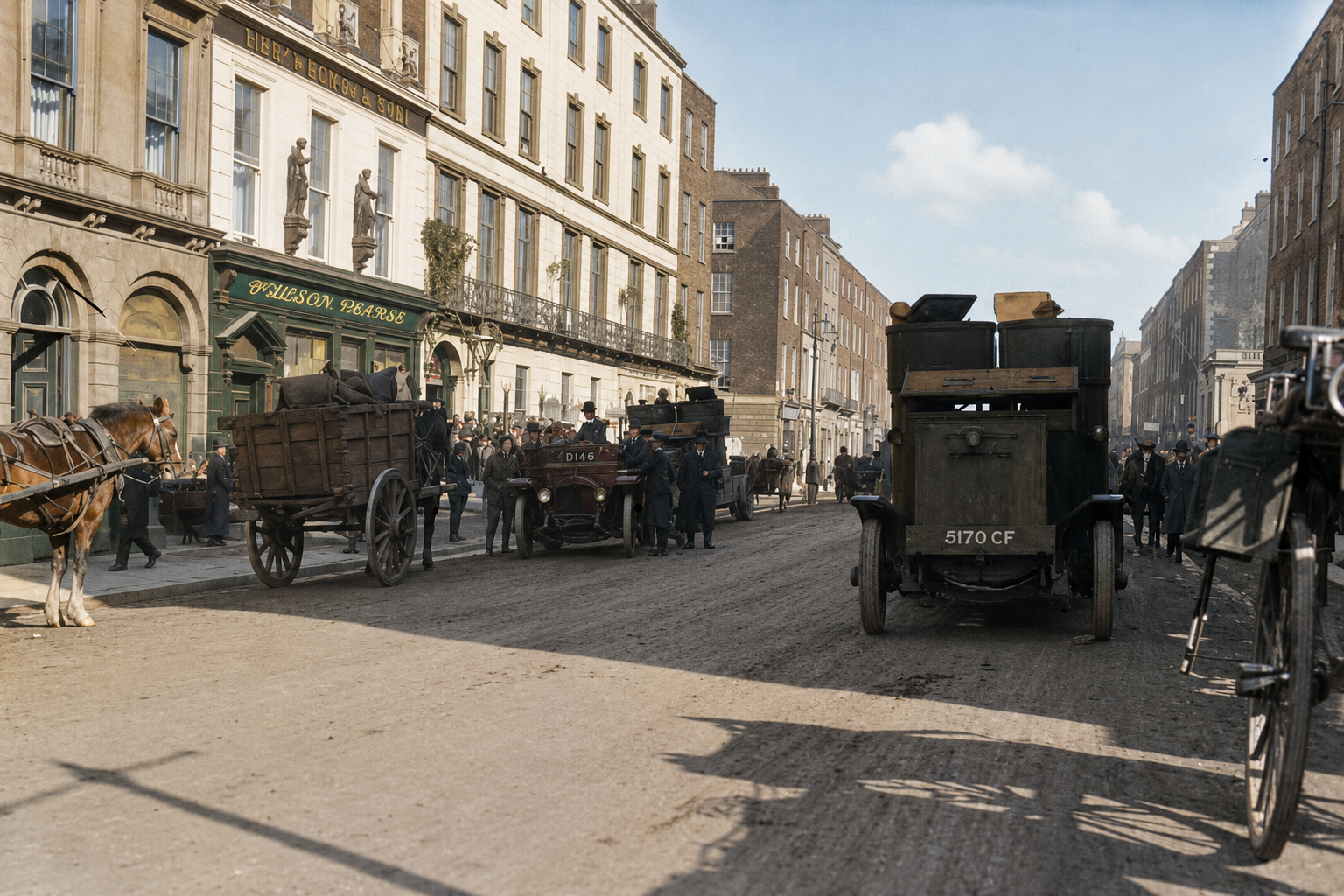
During the Irish Civil War, armoured cars operated by Republican.
LA-PH-000610
During the Irish Civil War, armoured cars operated by Republican forces patrol a Limerick street as civilians watch cautiously from the roadside. The arrival of troops has created a tense and uncertain atmosphere, with local people anxious to avoid any action that might provoke violence or heavy bloodshed. The vehicles move through the city as a visible display of military control, while horse-drawn transport and early motor traffic share the roadway. This striking scene records the growing presence of armed forces in Limerick and the apprehension felt by residents as conflict reached the streets and disrupted ordinary daily urban life.
View Record