Trawling Criticism
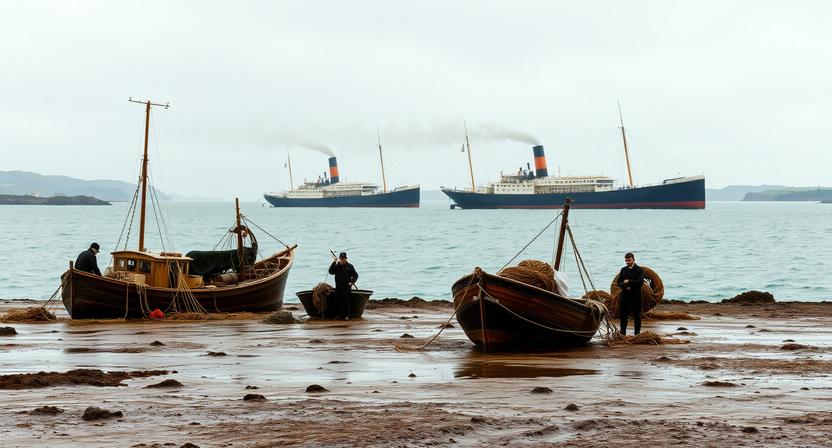
On 8 February 1900, the practice of steam trawling in Wexford Bay was sharply criticised in Parliament, with local fishermen and their advocates voicing concern over its damaging effects on traditional livelihoods. The introduction of steam-powered trawlers had revolutionised fishing along the Irish coast, but many small-scale fishermen complained that these vessels indiscriminately swept up fish stocks, destroyed spawning grounds, and left little for those using more sustainable methods.
Parliamentary debate focused on calls for tighter regulation or outright bans on steam trawling in coastal waters like Wexford Bay. MPs relayed testimony from local fishing communities about declining catches, economic hardship, and the threat to generational ways of life. Government officials acknowledged the complaints and promised to study the impact of industrial trawling while considering measures to protect local fisheries and ensure fair competition.
In Wexford and nearby fishing towns, newspapers and co-operative societies reported growing frustration and organised petitions demanding immediate action. The controversy stirred wider debate about the balance between modernisation and the protection of rural and coastal economies.
The criticism of steam trawling in February 1900 became a flashpoint in the struggle between industrial progress and the rights of local communities to sustain their traditional livelihoods.
- UK Parliament, Hansard, HC Deb 8 February 1900, “Steam Trawling in Wexford Bay.”
- Freeman’s Journal (Dublin), 9 February 1900, coverage of fishermen’s protests.
- Irish Times, 9 February 1900, reports on the impact of trawling and parliamentary debate.
- Wexford local newspapers, February 1900, accounts from fishing co-operatives and families.
