On 6 February 1900, news from Dublin that John Redmond.
United Irishmen
On 6 February 1900, news from Dublin that John Redmond had been unanimously elected chairman of the reunited Irish Parliamentary Party was greeted with particular significance in Limerick, where the effects of nearly a decade of political division had long been felt. For years, the city’s nationalist organisations, voters, and civic leaders had been split between Parnellite and anti-Parnellite factions, leading to rival meetings, divided loyalties, and weakened influence in Parliament and local affairs. The announcement of unity was seen as a turning point—a chance for Limerick to regain its voice in the national movement and pursue Home Rule with renewed purpose.
View Record
On 5 February 1900, the removal of Irish magistrates from.
Magistrates’ Removal
On 5 February 1900, the removal of Irish magistrates from office became the subject of an official question in the British Parliament—a development watched with close interest in Limerick, where the integrity and independence of the local judiciary was a constant matter of public concern. Limerick’s legal and civic communities had a strong tradition of involvement in legal affairs, and any challenge to the standing of magistrates was seen as having direct implications for the city’s governance, public confidence in the courts, and the administration of justice.
View Record
On 5 February 1900, the economic difficulties facing Ireland’s herring-fishing.
Herring Hardship
On 5 February 1900, the economic difficulties facing Ireland’s herring-fishing industry were formally examined in the British Parliament, a subject of great concern for coastal communities from Kerry to Donegal. Once a mainstay of local economies and an important export trade, the herring industry had recently experienced sharp declines due to poor catches, shifting markets, and inadequate investment in infrastructure and preservation.
View Record
On 5 February 1900, the condition and proposed development of.
Dingle Pier
On 5 February 1900, the condition and proposed development of Dingle Pier in County Kerry were formally discussed in the British Parliament, drawing attention to the challenges and opportunities facing Ireland’s coastal infrastructure. The debate was prompted by concerns from local residents and business interests about the pier’s deteriorating state and its capacity to serve the needs of fishing fleets, cargo vessels, and passenger steamers.
View Record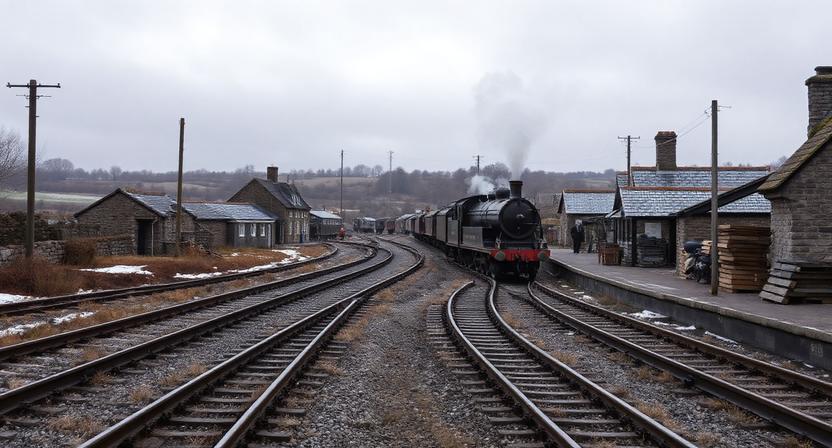
On 5 February 1900, a dispute involving the Waterford and.
Railway Dispute
On 5 February 1900, a dispute involving the Waterford and Limerick Railway was formally raised in the British Parliament, highlighting ongoing challenges in Ireland’s expanding railway network at the turn of the century. The Waterford and Limerick Railway, a vital link for trade and travel across the south and west of Ireland, had been experiencing tensions relating to management, labour relations, and service disruptions. The parliamentary intervention was reported in both local and national newspapers, drawing interest from merchants, travellers, and civic leaders in Limerick.
View Record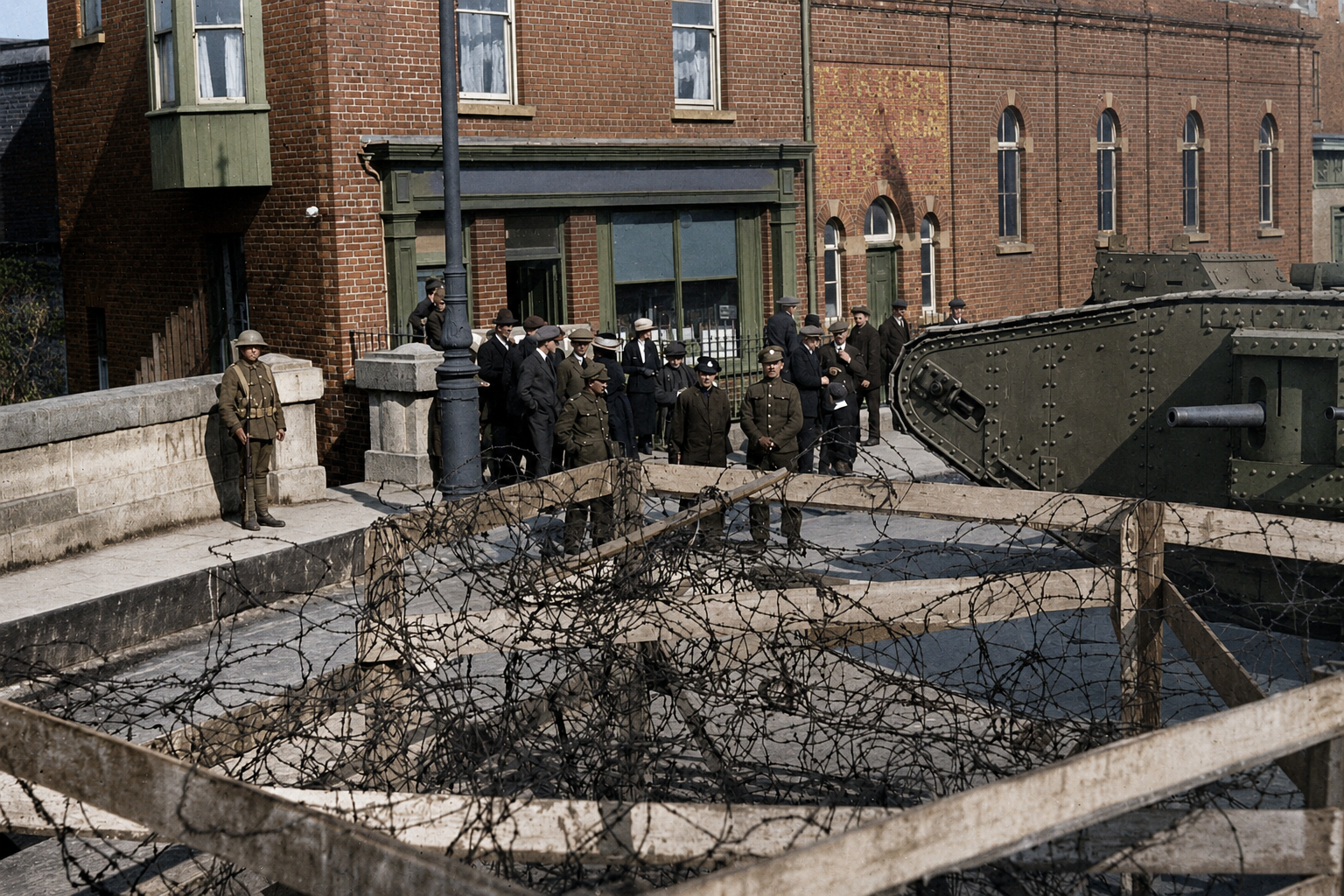
In April 1919, Limerick became the centre of one of.
April Limerick
In April 1919, Limerick became the centre of one of Ireland’s most remarkable labour protests when British authorities declared the city a special military area. Restrictions on movement, permits and military control followed the fatal shooting of trade unionist Robert Byrne. In response, the Limerick Trades and Labour Council called a general strike, effectively governing the city for nearly two weeks. Workers organised food supplies, transport and their own currency while resisting martial law. The armoured tank known as “Scotch and Soda” became a powerful symbol of military occupation, standing as a barricade amid streets controlled by soldiers and police.
View Record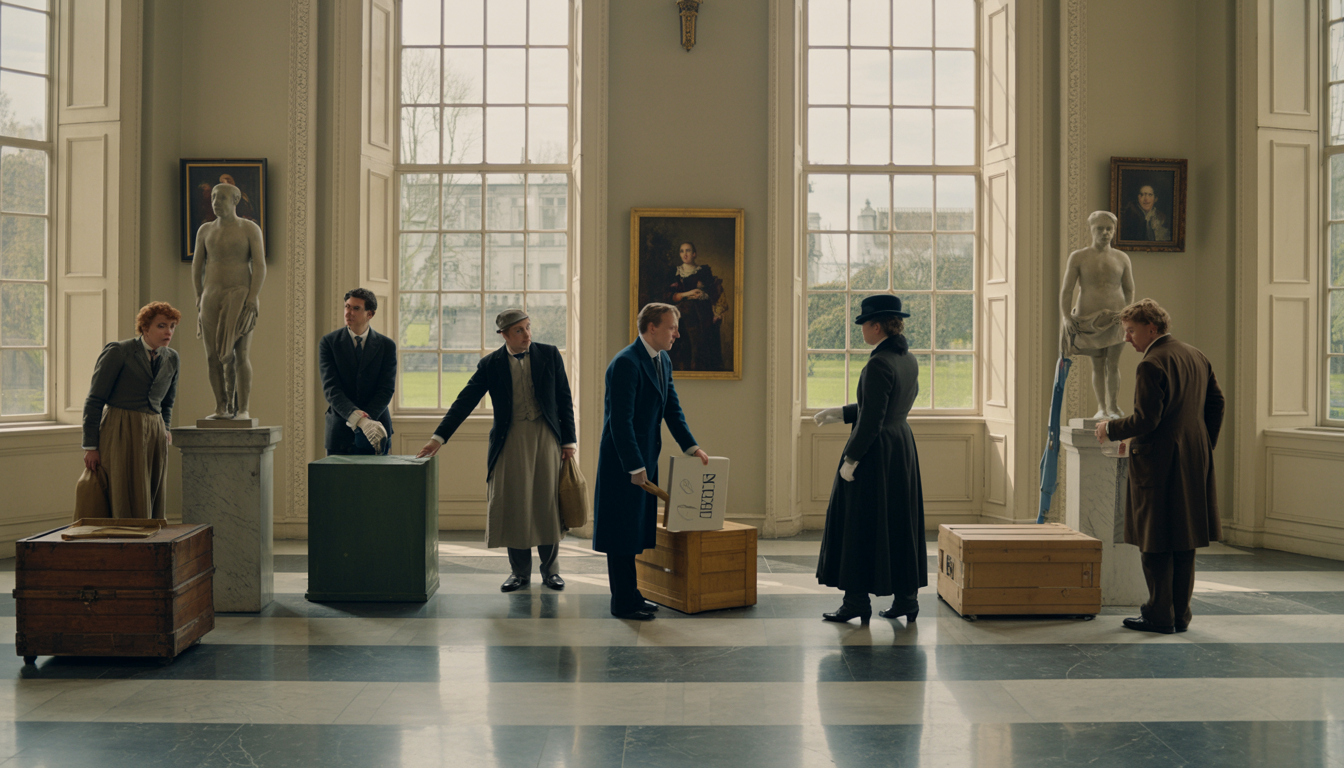
On 5 February 1900, the removal of works of art.
Museum Art
On 5 February 1900, the removal of works of art from the Dublin Museum became the subject of pointed questioning in the British Parliament, a matter that stirred debate among Ireland’s cultural and academic communities. News of the controversy was widely reported in Dublin and beyond, including in Limerick, where interest in the preservation of the nation’s heritage was strong among local antiquarians, educators, and civic leaders.
View Record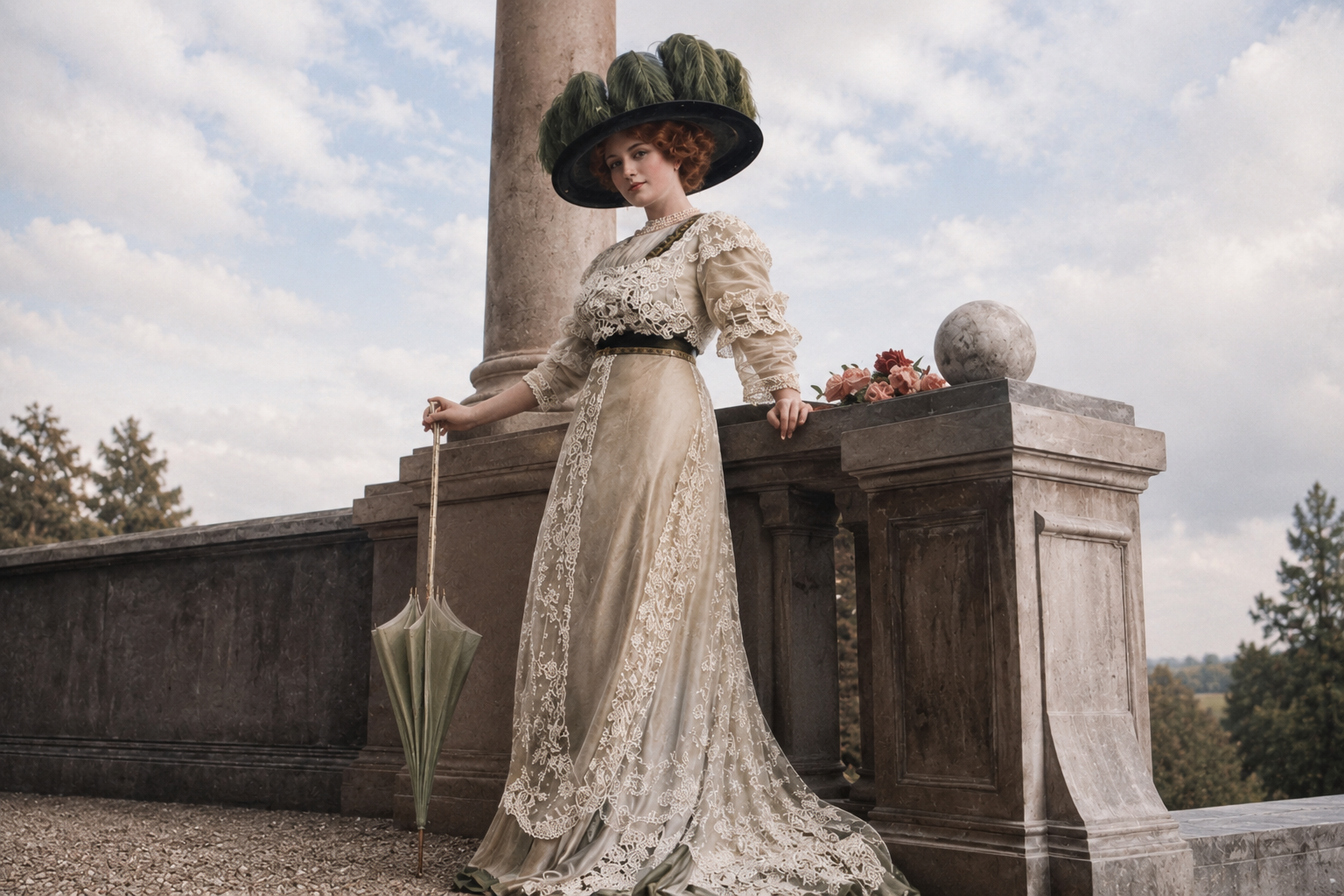
Published in the Ladies’ Field Supplement in May 1909, this.
Published Ladies’
Published in the Ladies’ Field Supplement in May 1909, this elegant garden-party ensemble combines pale green crêpe météore with a flowing tunic of delicate Limerick lace. The softly draped fabric creates a graceful Edwardian silhouette, while the intricate lacework adds texture, refinement and distinctly Irish craftsmanship. A fitted waist, long skirt and trimmed bodice reflect the fashionable ideal of the period, balancing formality with lightness suitable for outdoor social occasions. Completed by an elaborate feathered hat and parasol, the gown captures the elegance, confidence and decorative luxury associated with upper-class women’s fashion in the years before the First World War.
View Record
Published in the Ladies’ Field Supplement in May 1909, this.
Published Ladies’
Published in the Ladies’ Field Supplement in May 1909, this elegant garden-party ensemble combines pale green crêpe météore with a flowing tunic of delicate Limerick lace. The softly draped fabric creates a graceful Edwardian silhouette, while the intricate lacework adds texture, refinement and distinctly Irish craftsmanship. A fitted waist, long skirt and trimmed bodice reflect the fashionable ideal of the period, balancing formality with lightness suitable for outdoor social occasions. Completed by an elaborate feathered hat and parasol, the gown captures the elegance, confidence and decorative luxury associated with upper-class women’s fashion in the years before the First World War.
View Record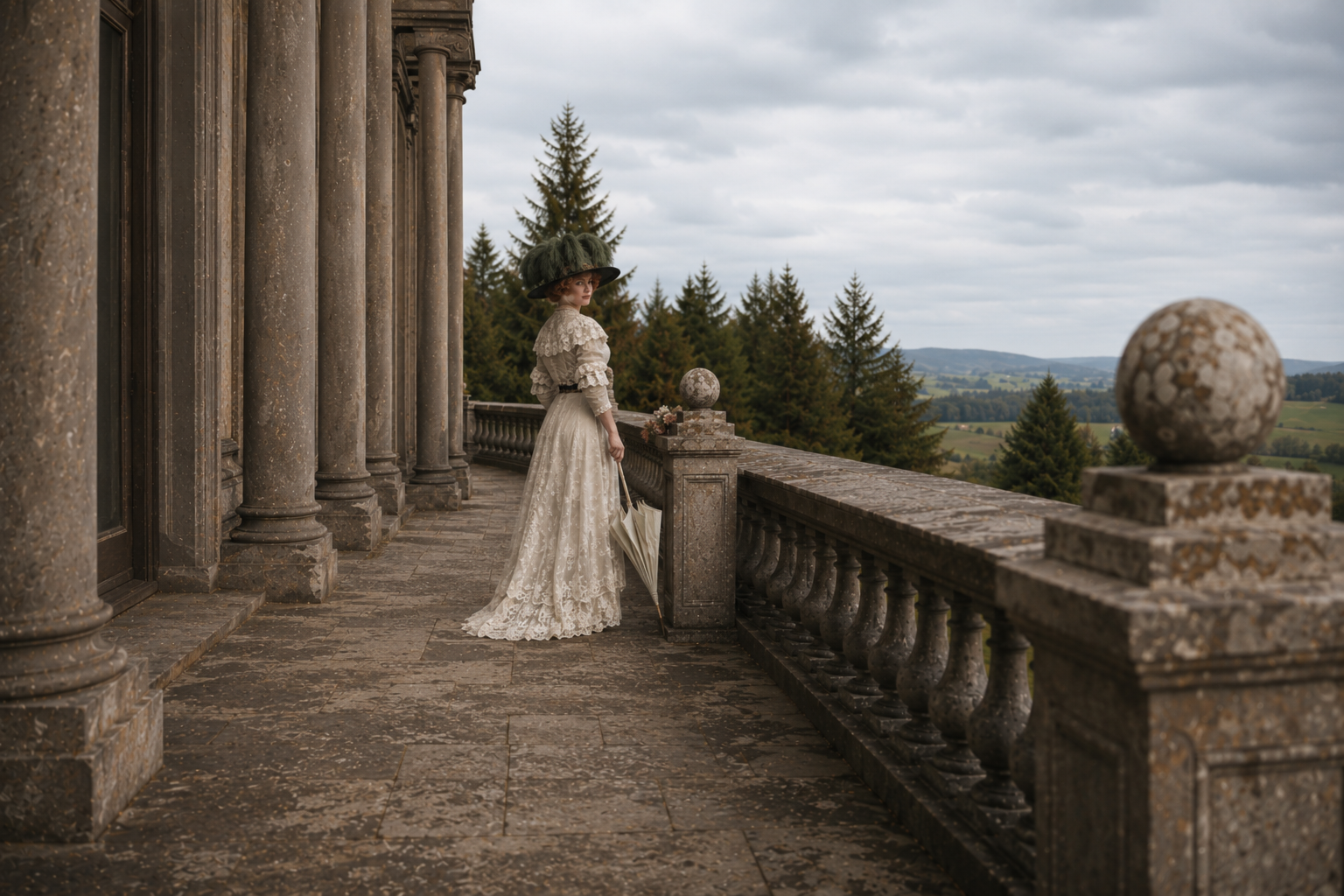
Published in the Ladies’ Field Supplement in May 1909, this.
Published Ladies’
Published in the Ladies’ Field Supplement in May 1909, this elegant garden-party ensemble combines pale green crêpe météore with a flowing tunic of delicate Limerick lace. The softly draped fabric creates a graceful Edwardian silhouette, while the intricate lacework adds texture, refinement and distinctly Irish craftsmanship. A fitted waist, long skirt and trimmed bodice reflect the fashionable ideal of the period, balancing formality with lightness suitable for outdoor social occasions. Completed by an elaborate feathered hat and parasol, the gown captures the elegance, confidence and decorative luxury associated with upper-class women’s fashion in the years before the First World War.
View Record