Bookstore
Buy Our Books. Support Our Archives. Preserve Our Past.
Gerard J. Hannan’s books explore historical fiction, Limerick humour, family life and the events that shaped modern Irish history. Through novels, comic writing and carefully researched local histories, they bring memorable characters, communities and changing times vividly to life. Each purchase also contributes directly to the preservation of Limerick’s heritage. Profits from the sale of all books help fund the independent Limerick Archives Project, supporting the restoration, protection and free public sharing of photographs, documents, newspapers, memories and historical records. By buying a book, readers enjoy an engaging story while helping preserve Limerick’s past for future generations throughout the world.
NOW AVAILABLE
Available in e-book, paperback and hardback formats.
The Ashes Trilogy
The Ashes Trilogy follows a group of Limerick children as they grow from mischievous youth into adults shaped by poverty, family duty, friendship, faith, work and emigration. Across Ashes, Gurriers and Scattered, streets, lanes and neighbourhoods become the setting for lives marked by humour, hardship, loyalty and change. The characters struggle to preserve their bonds while confronting responsibilities that gradually pull them in different directions. Limerick itself acts as witness and storyteller, remembering those who stayed, those who left and those whose sacrifices were rarely recorded. Together, the three novels form an intimate social portrait of twentieth century city life.
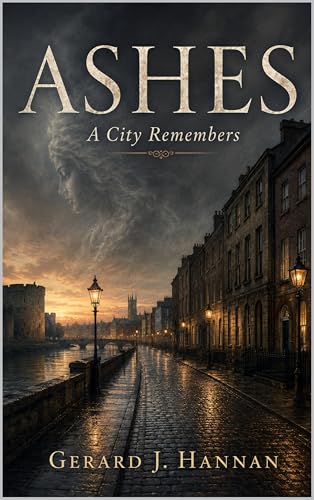
Ashes
The Ashes Trilogy, Book One
Ashes begins the story of a group of children growing up in the streets and lanes of Limerick, where poverty and hardship are balanced by humour, imagination and fierce friendship. Their city is more than a setting: it watches, remembers and gives voice to lives often absent from official history. As the children explore their neighbourhood, they encounter family pressures, faith, hunger, danger and the first signs of a changing world. Through their adventures and loyalties, the novel captures the resilience of ordinary people and introduces the characters whose lives will unfold across the three volumes of The Ashes Trilogy.
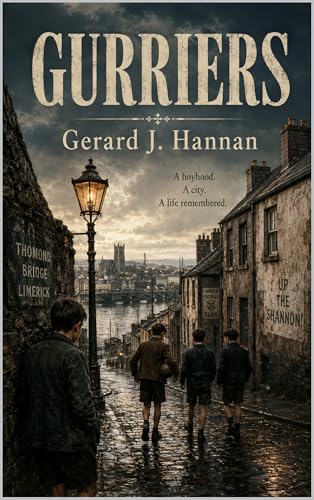
View on AmazonGurriers
The Ashes Trilogy, Book Two
Gurriers continues the lives of the Limerick children introduced in Ashes as childhood freedom begins to give way to work, responsibility and harsher choices. Their friendships remain strong, but poverty, family expectations, faith and the pressures of growing older test loyalties once taken for granted. The streets and lanes still offer humour, adventure and belonging, yet the wider world increasingly intrudes upon their lives. Through vivid dialogue, memorable characters and the watchful voice of Limerick itself, the novel explores resilience, identity and change while showing how even the closest companions can be drawn towards futures by circumstances beyond their control.
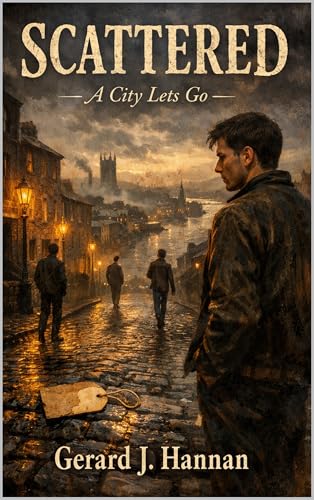
View on AmazonScattered
The Ashes Trilogy, Book Three
Scattered concludes The Ashes Trilogy as the friends who once shared Limerick’s streets and lanes face adulthood, work, hunger, faith, family duty and emigration. Time has altered their ambitions, tested their loyalties and carried some beyond the city that formed them. Yet memory continues to bind Louie, Seamus, Joe, Sean, Peter, Tony, Bardy, Maura, Eileen, Nora, Lingo and the mysterious Gleamer. Narrated through the enduring presence of Limerick itself, the novel explores separation, sacrifice and survival while recognising the humour and affection that remain. Together, their scattered lives complete a moving portrait of friendship, community and change across changing generations.
View on AmazonThe Troubles Trilogy
The Troubles Trilogy follows two Belfast families, the Catholic Devlins and Protestant Morrows, from the civil rights movement through decades of conflict, political failure and fragile hope. Across the series, public history enters kitchens, schools, workplaces and relationships, forcing ordinary people to choose between inherited loyalty and personal conscience. Marches, riots, internment, prison protests and changing political agreements shape lives already divided by religion, memory and fear. At its centre, the trilogy examines love across communal boundaries, family duty, moral courage and survival, showing how humanity endures whenever individuals refuse to see neighbours only as enemies or history as destiny.
Threshold
The Troubles Trilogy, Book One
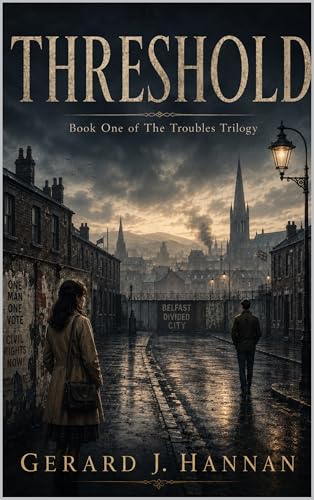
Threshold opens in Belfast in 1968, where the Catholic Devlins and Protestant Morrows confront a city divided by religion, memory and fear. Civil rights marches, police violence, riots and internment transform ordinary streets into dangerous frontiers while political conflict enters homes, workplaces and schools. At the centre are Aileen Devlin and Thomas Morrow, whose relationship challenges the boundaries their families regard as essential to survival. As loyalty hardens into suspicion, both must decide whether inherited allegiance excuses injustice. Through family arguments, upheaval and private courage, the novel explores love, conscience, division and survival during the opening years of the Troubles.
View on AmazonHunger
The Troubles Trilogy, Book Two
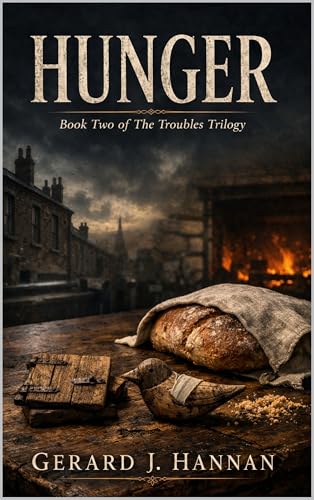
Hunger is Book Two of The Troubles Trilogy, set in Belfast during the 1980s. Aileen Devlin and Thomas Morrow have built a fragile life across the city’s sectarian divide, but the conflict threatens the home they created for their daughter, Claire. As hunger strikes, the Anglo Irish Agreement and violence reshape Northern Ireland, republican Declan and loyalist Billy exploit fear, grief and vulnerable young men. Against them stand Aileen, Kathleen and Elsie, whose quiet strength keeps their families human. This is a story of love, survival and the courage to place people before causes in a divided society under pressure.
View on AmazonCrossing
The Troubles Trilogy, Book Three
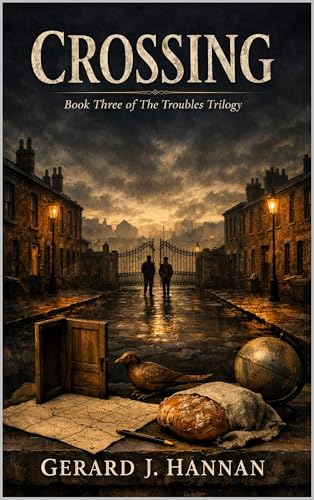
Crossing concludes The Troubles Trilogy during the decade from 1990 to 2000, as Belfast moves from violence towards negotiation, ceasefires and uncertain peace. The Devlin and Morrow families face political change alongside grief, ageing, divided loyalties and the consequences of choices made across three decades. Relationships once threatened by religious boundaries are tested by memory, mistrust and the fear that compromise may betray the dead. As the peace process gathers momentum, ordinary people must decide whether reconciliation is possible. The trilogy closes with a story of endurance, forgiveness, loss and hope beyond inherited division, proving that peace begins with courage.
View on AmazonNovels
These novels explore Irish history through ordinary people caught inside moments of political danger, social change and personal reckoning. Rather than treating major events as distant background, each story brings history into homes, streets, fields and relationships, where private choices acquire public consequences. Characters must decide what loyalty, courage, silence and responsibility mean when familiar worlds become unstable. Rooted in observed places and communities, the novels combine suspense, memory and human intimacy with historical forces. Together, they examine how individuals endure upheaval, protect one another and carry the consequences of decisions made when safety, trust and certainty begin to disappear.
Severance
Historical Novel
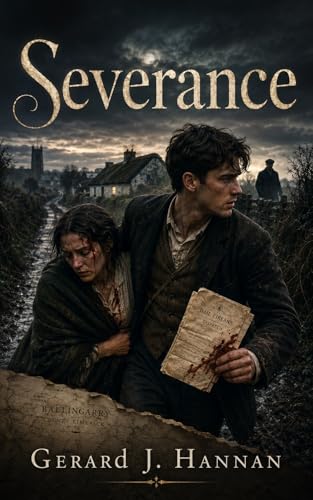
Severance is a historical novel set in Ballingarry, County Limerick, during Ireland’s struggle for independence. A torn and bloodied dispatch passes through fields, kitchens, lofts and hidden routes, placing everyone who handles it in danger. Michael Enright carries the burden of trust, while Mary, Molly and their neighbours struggle to preserve the message and protect one another. Against them, Captain Edward Harcourt studies every delay, wound and fragment for clues. As loyalty, fear and betrayal tighten around the hidden network, ordinary people must decide what they are willing to risk when history enters their homes and silence itself becomes dangerous.
View on AmazonLimerick Decalogy
Limerick Decalogy is a ten volume historical record of twentieth century Limerick, with each book devoted to one decade from 1900 to 1999. Together, the series follows the city and county through political upheaval, social change, war, independence, economic hardship, migration, modernisation and everyday community life. Local events are placed beside national and international developments, revealing how wider history shaped families, streets, workplaces and institutions. Photographs, reports and carefully researched narratives preserve the experiences of ordinary people alongside major public figures. Read in sequence, the ten books form a continuous century long portrait of Limerick, its people, memory and transformation.
Limerick Generations: 1900 to 1909
Limerick Decalogy, Book One
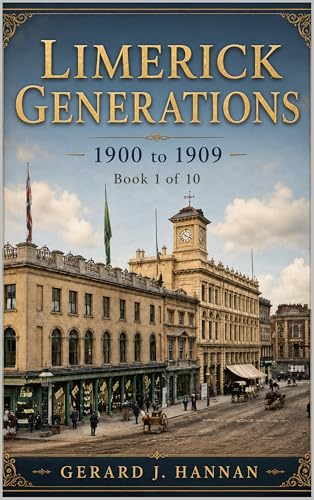
Limerick Generations: 1900 to 1909 opens the decade by documenting a city and county entering the twentieth century amid political debate, commercial activity, poverty, faith and technological change. Month by month, the book connects major Irish developments with local events, institutions, streets and communities. Public meetings, labour, transport, education, sport, business and everyday life reveal how national questions were experienced in Limerick. Historical reports and carefully reconstructed narratives bring forgotten moments and ordinary people into focus. As Book One of Limerick Decalogy, it establishes the foundation for a ten volume journey through one hundred years of local history and memory.
View on AmazonLimerick Generations: 1910 to 1919
Limerick Decalogy, Book Two
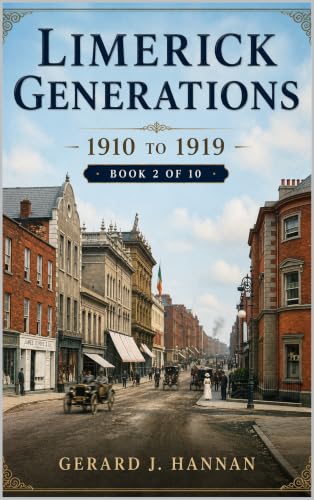
Limerick Generations: 1910 to 1919 traces a decade of political transformation, labour conflict, war, revolution and social change across Limerick city and county. Home Rule, unionist resistance, trade union organisation and the First World War entered streets, farms, schools, workplaces and family life. The Easter Rising, conscription crisis, influenza pandemic and general election altered public loyalties and expectations. The decade culminated in the Limerick Soviet of 1919, when workers challenged military restrictions through organised collective action. As Book Two of Limerick Decalogy, the volume preserves local experiences of hardship, courage, grief, endurance and change during years of intense historic upheaval.
View on AmazonFORTHCOMING
Daboyo Trilogy
The Daboyo Trilogy gathers Gerard J. Hannan’s funniest reflections on growing up, growing older and surviving life in Limerick without ever becoming entirely sensible. Loosely inspired by his own experiences, the three books follow one eventful life from childhood through adulthood and into later years. They celebrate Limerick language, neighbourhoods, family life, local characters and the city’s unrivalled talent for turning ordinary mishaps into unforgettable stories. Warm, outrageous and proudly irreverent, the trilogy treats embarrassment, hardship and confusion as material for laughter. Its guiding belief is wonderfully simple: life is serious only when taken seriously; otherwise, it is absolutely hilarious.
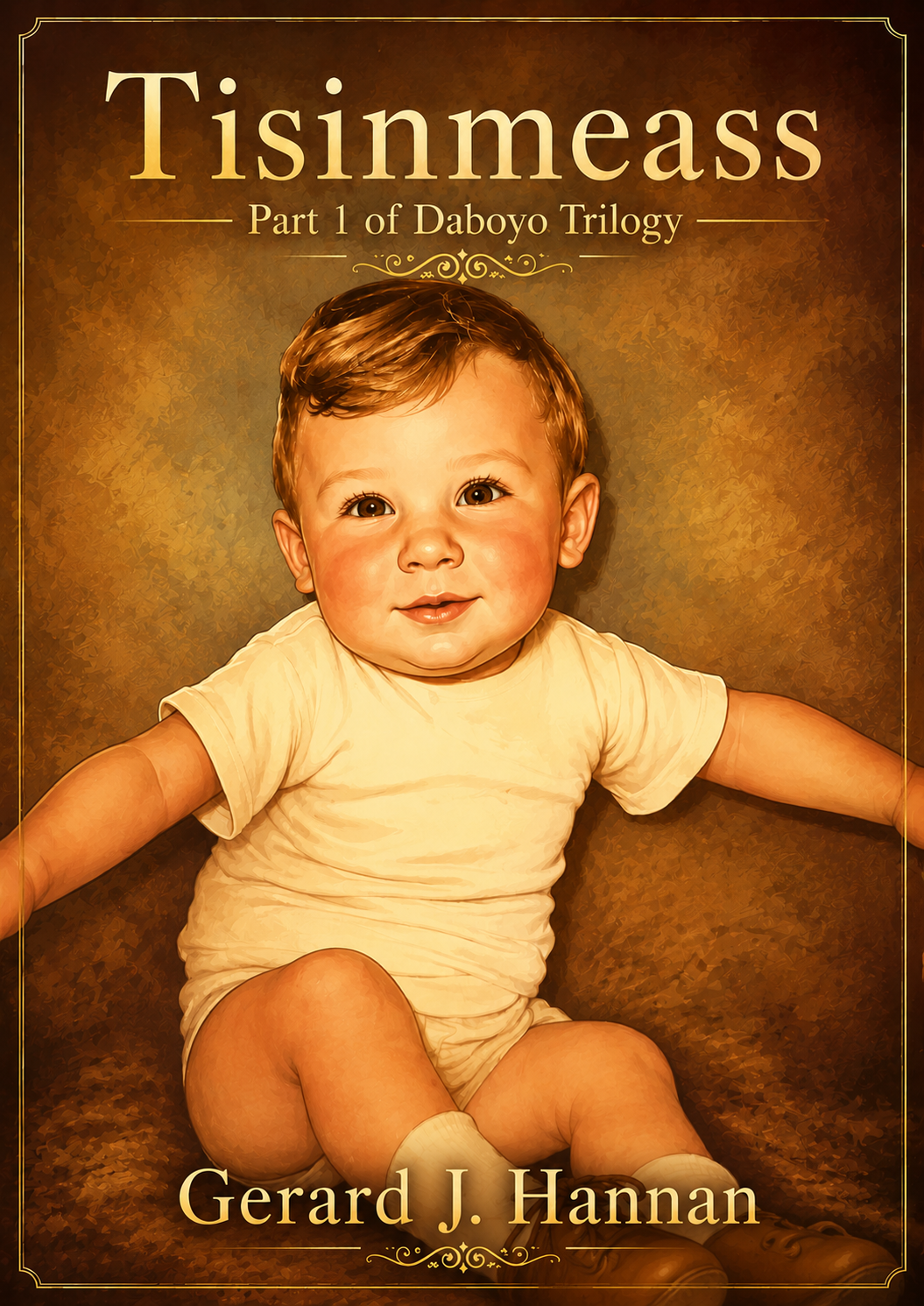
Tisinmeass
The Daboyo Trilogy, Book One
Tisinmeass opens The Daboyo Trilogy and follows Gerard’s life in Limerick from 1959 to 1981. Childhood, family life, schooldays, neighbourhood adventures and the bewildering business of growing up are recalled with humour, affection and the unreliable confidence of hindsight. In a city where everyone seemed to know your business before you did, ordinary moments became stories, disasters became entertainment and embarrassment rarely remained private. The book captures the language, characters and misunderstandings of a changing Limerick while introducing the outlook that guides the trilogy: life becomes unbearable only when treated too seriously, but viewed from another angle, it becomes hilarious.
Geshoushofish
The Daboyo Trilogy, Book Two
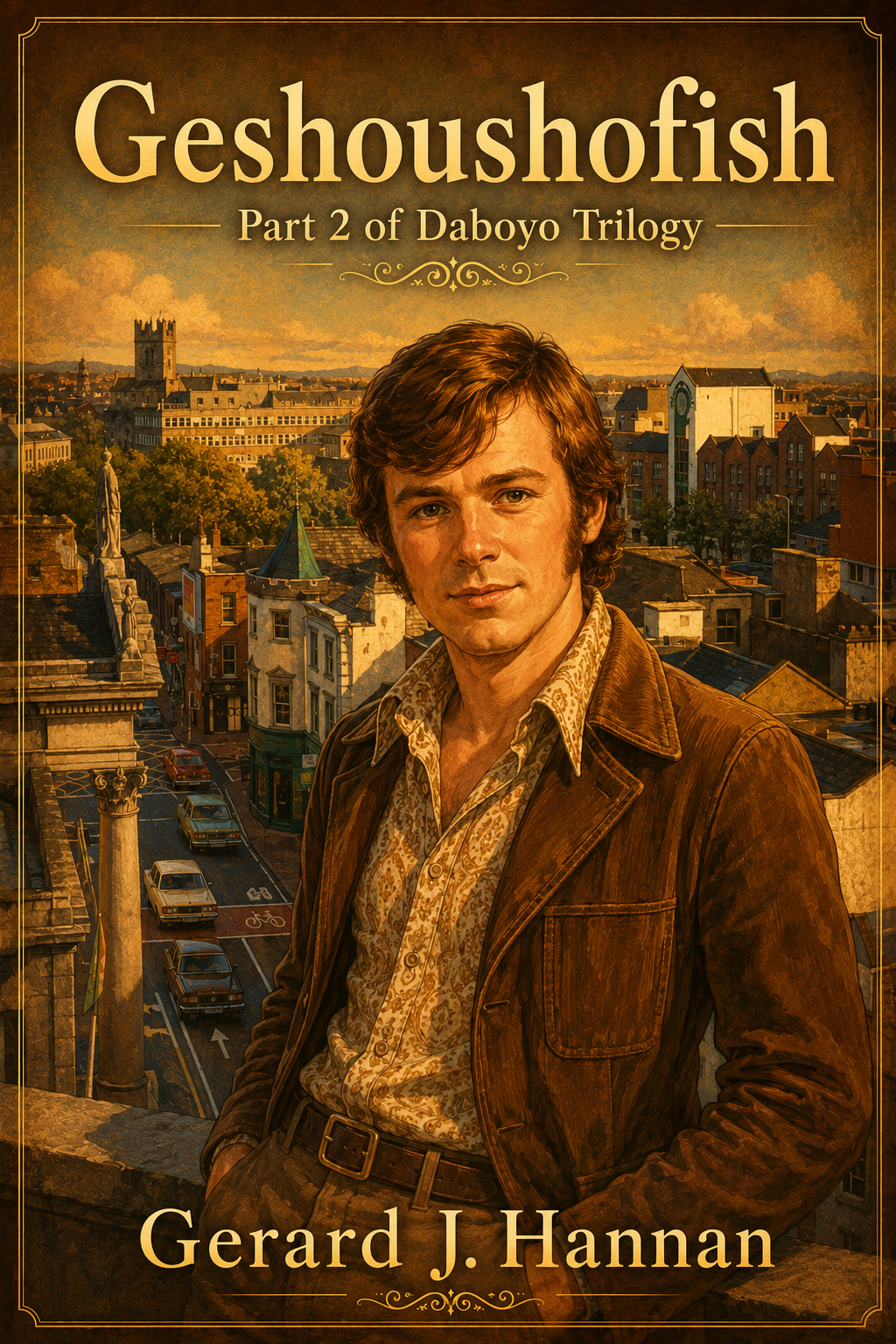
Geshoushofish continues The Daboyo Trilogy, covering Gerard’s life in Limerick from 1981 to 2003 as adulthood arrives without instructions. Work, relationships, ambitions, mistakes, unexpected opportunities and spectacular misjudgements compete for attention while everyone involved pretends to understand what they are doing. The responsibilities of grown life prove no less confusing than childhood, merely more expensive and harder to escape. Told with hindsight, affection and selective memory, the book follows changing times in Limerick while celebrating the characters, conversations and comic disasters encountered along the way. It confirms a growing suspicion: nobody else has mastered adulthood either, despite all outward appearances.
Sauceonyerburger
The Daboyo Trilogy, Book Three
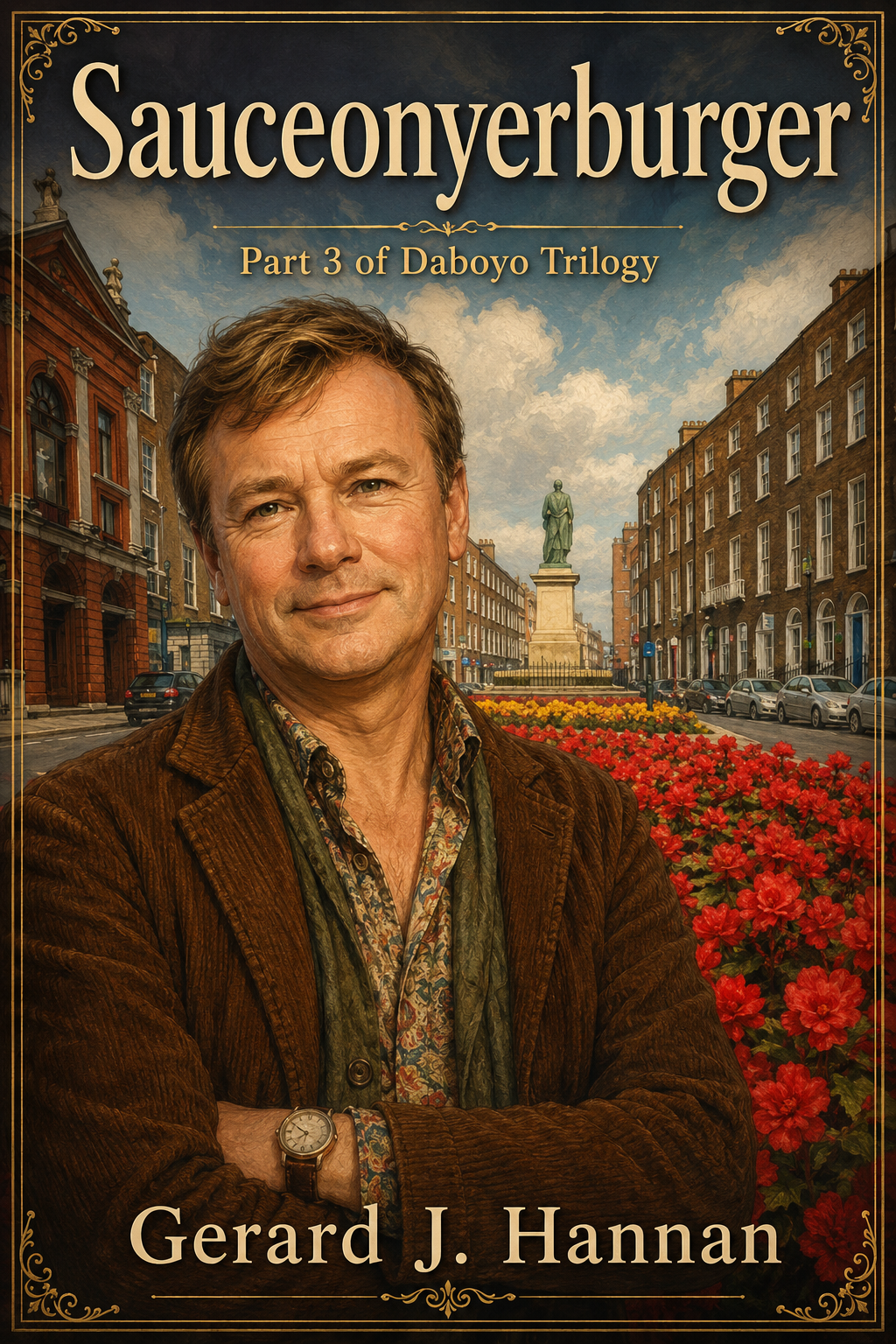
Sauceonyerburger completes The Daboyo Trilogy, following Gerard’s life from 2003 to 2025 as middle age, reinvention and changing times produce fresh opportunities for confusion. Experience is supposed to bring wisdom, but it mostly supplies better stories, stronger opinions and a longer list of mistakes that can finally be laughed at. Work, family, ambition, technology, ageing and unexpected turns are examined with affection, honesty and selective memory. Set against a rapidly changing Limerick, the book celebrates resilience, absurdity and the refusal to become sensible. It concludes one eventful life story with a simple lesson: growing older does not guarantee growing wiser.
Knuckleheads
Knuckleheads is an open ended series of humorous Limerick myths, legends, rumours and questionable local histories that have travelled through pubs, kitchens, workplaces and street corners for generations. Each story begins somewhere between truth and invention, then grows fresh arms, legs and impossible details whenever somebody retells it. The characters may appear too smart to be stupid or too stupid to be smart, but their peculiar logic often reveals more intelligence than expected. Rooted in local speech and community memory, the series celebrates Limerick’s talent for exaggeration, mischief and storytelling without pretending that every word should be believed too readily.
Knuckleheads
Knuckleheads, Book One
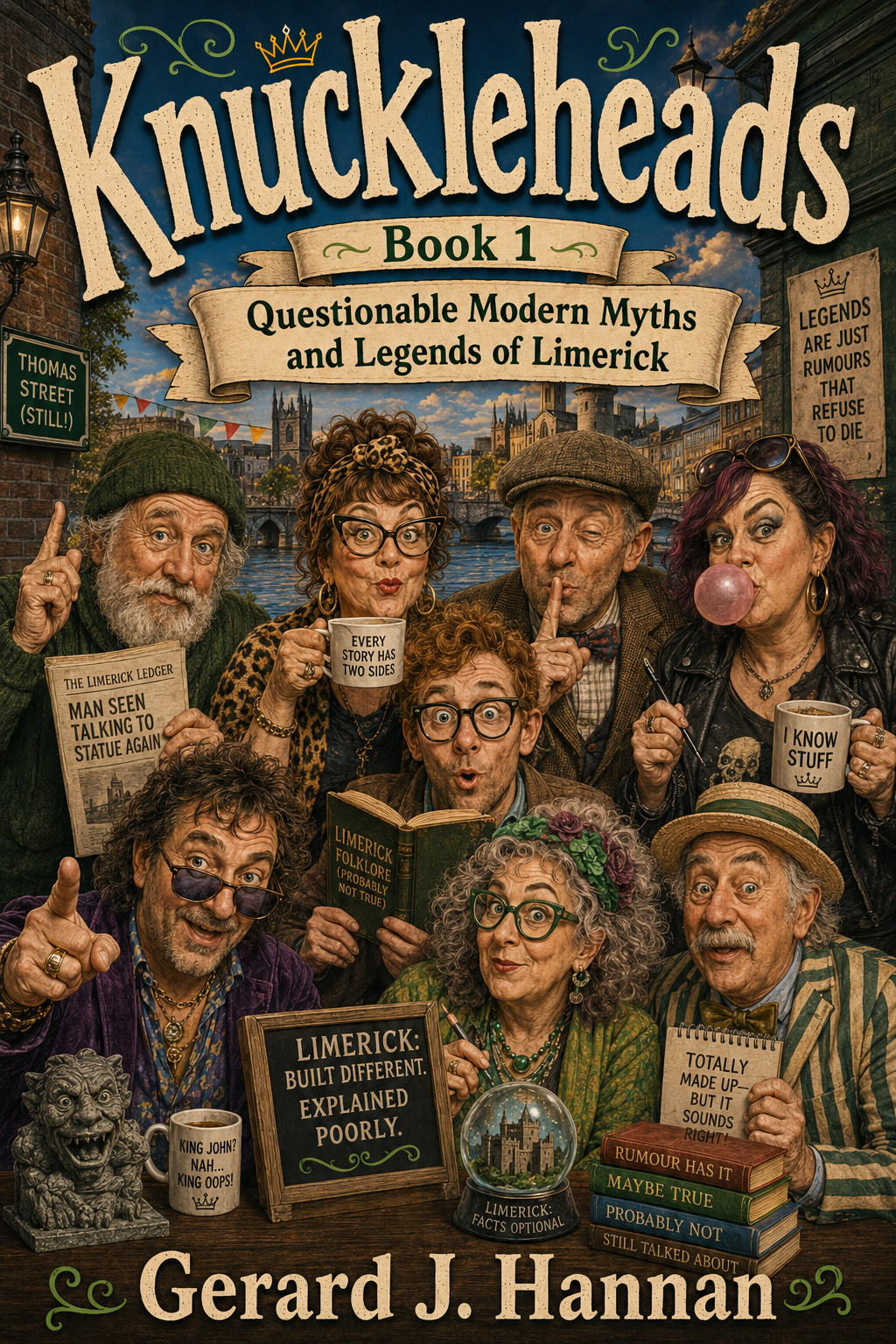
Knuckleheads opens the series with a collection of Limerick’s funniest myths, legends and stories, repeated for generations until nobody can remember where fact ended and imagination took over. These tales feature citizens who seem either too smart to be stupid or too stupid to be smart, yet somehow survive every argument, misunderstanding and impossible adventure. Each retelling adds another detail, another witness and usually another contradiction, allowing familiar stories to grow fresh arms and legs. Celebrating local language, humour and storytelling, the book preserves the questionable wisdom of Limerick people whose greatest talent may be making nonsense sound completely believable.
Knuckleheads 2
Knuckleheads, Book Two
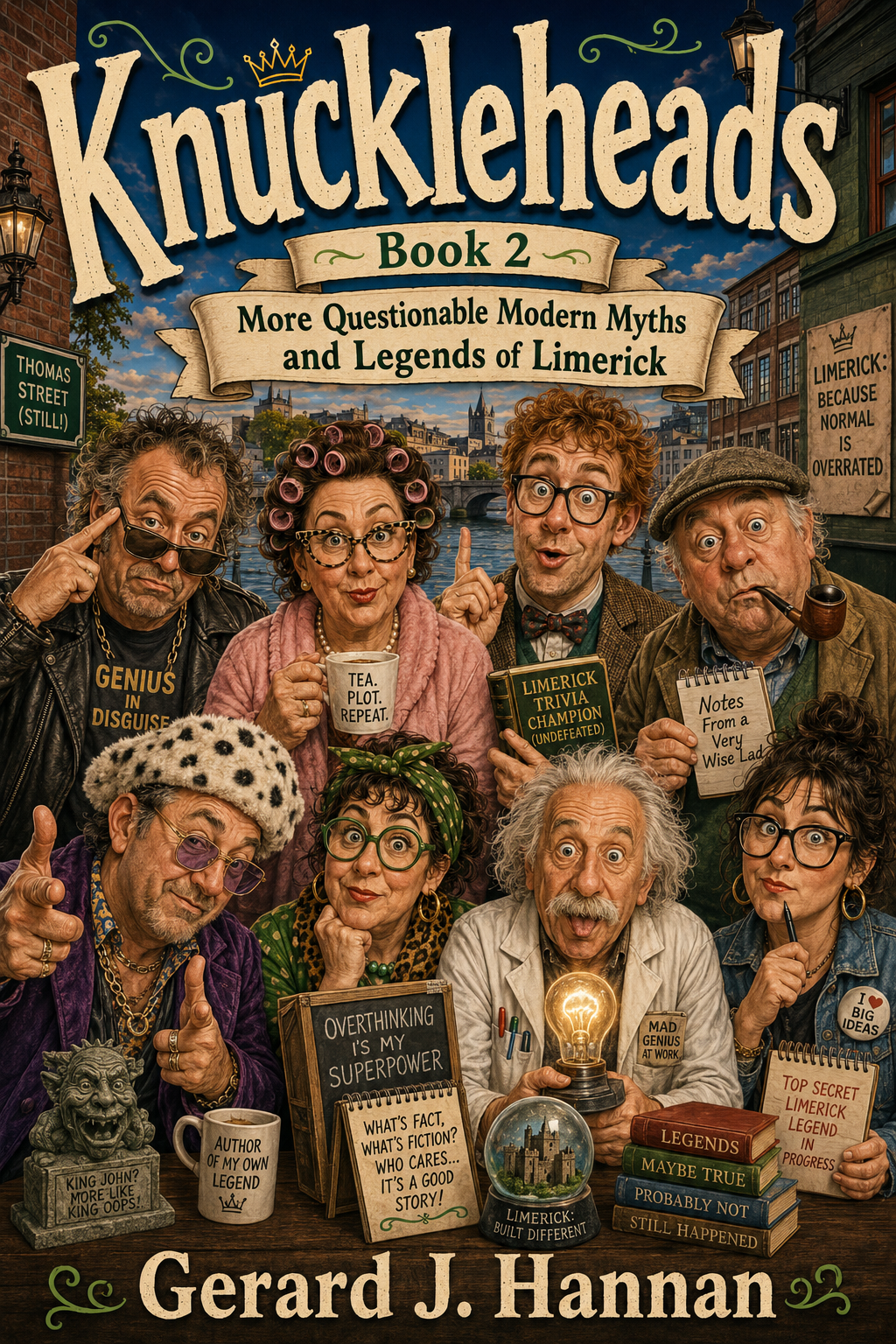
Knuckleheads 2 continues the collection of Limerick myths, legends, rumours and impossible local stories that become funnier and less reliable whenever they are repeated. New characters join familiar types: neighbours with brilliant plans, experts without evidence, heroes created by accident and citizens whose foolish decisions somehow produce clever results. Gathered from conversations, street corners, kitchens, workplaces and pub counters, each tale celebrates the city’s language, imagination and refusal to let facts spoil entertainment. Whether completely true, partly remembered or magnificently invented, these stories preserve the wit of Limerick people who can turn any ordinary incident into an enduring local legend.
Knuckleheads 3
Knuckleheads, Book Three
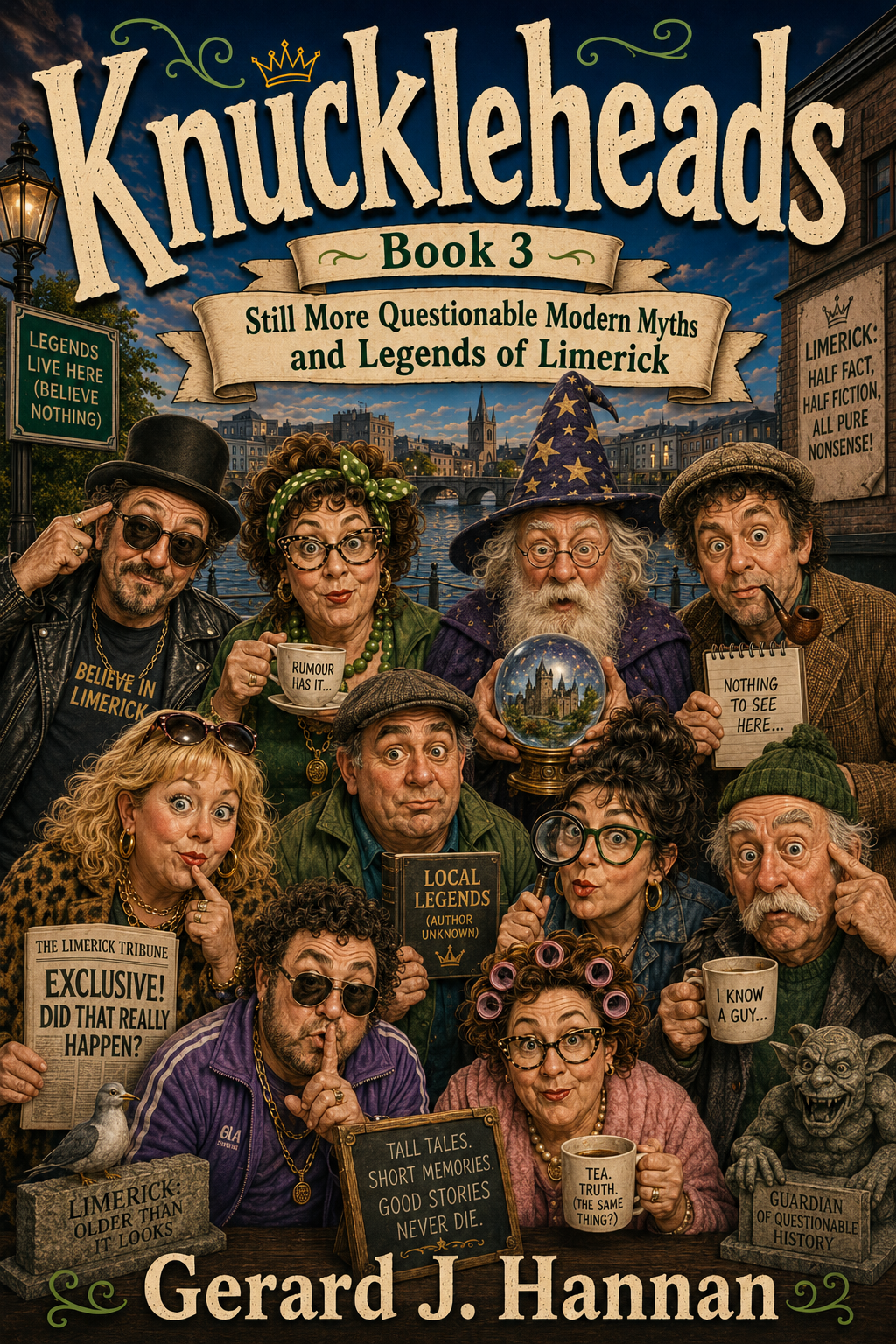
Knuckleheads 3 continues the open ended collection of Limerick myths, legends, rumours and impossible stories that improve whenever somebody forgets the original facts. This volume introduces more neighbours, schemers, accidental heroes and self appointed experts whose confidence is rarely disturbed by evidence. Their plans may begin sensibly, collapse spectacularly and somehow finish with everyone claiming success. Drawn from street corners, kitchens, workplaces, clubs and pub counters, the stories celebrate local language, comic invention and communal memory. Whether true, partly true or polished beyond recognition, each tale proves that Limerick people can turn ordinary confusion into permanent entertainment for generations afterwards.
Limerick Decalogy
Limerick Decalogy is a ten volume historical record of twentieth century Limerick, with each book devoted to one decade from 1900 to 1999. Together, the series follows the city and county through political upheaval, social change, war, independence, economic hardship, migration, modernisation and everyday community life. Local events are placed beside national and international developments, revealing how wider history shaped families, streets, workplaces and institutions. Photographs, reports and carefully researched narratives preserve the experiences of ordinary people alongside major public figures. Read in sequence, the ten books form a continuous century long portrait of Limerick, its people, memory and transformation.
Limerick Generations: 1920 to 1929
Limerick Decalogy, Book Three
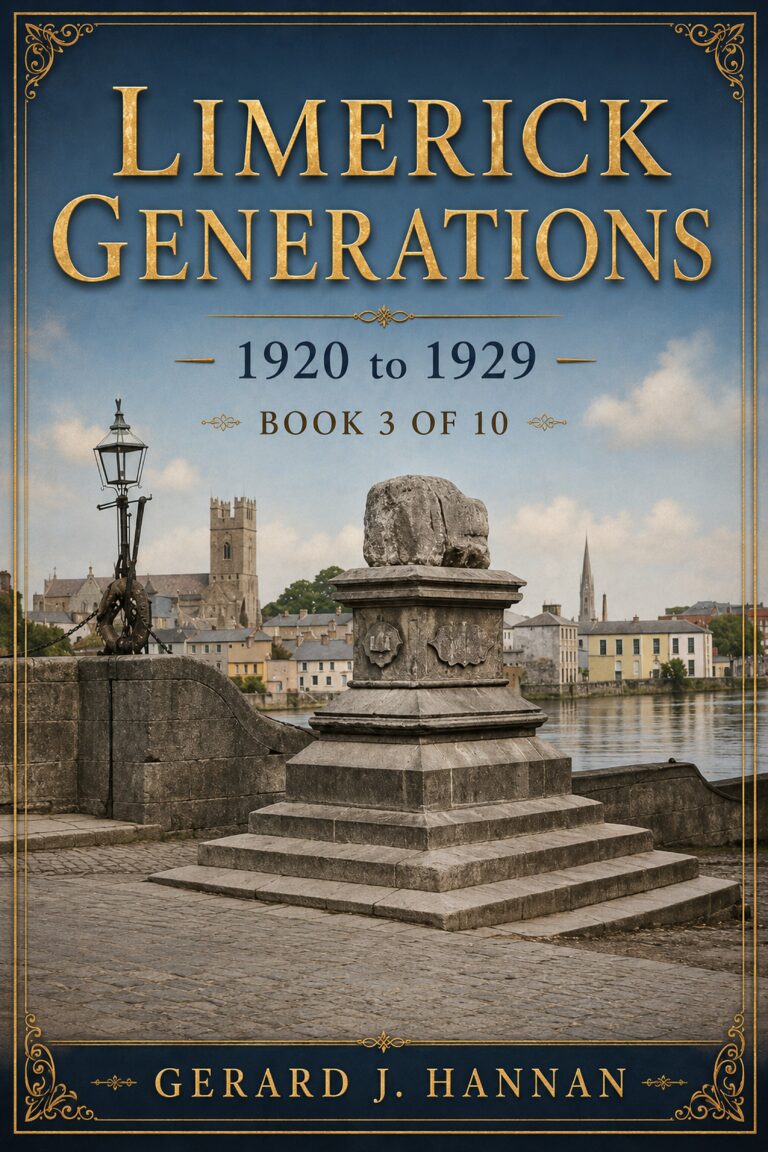
Limerick Generations: 1920 to 1929 documents a decisive decade shaped by revolution, independence, civil war and the creation of a new Irish state. Across Limerick city and county, political violence, military activity, changing institutions and economic uncertainty affected families, workplaces and communities. The volume follows local responses to national events while also recording business, education, religion, transport, sport and everyday social life. Newspapers, public records and historical narratives reveal how ordinary people experienced both upheaval and recovery. As Book Three of Limerick Decalogy, it continues the century long record of Limerick through years of conflict, reconstruction and emerging political stability.
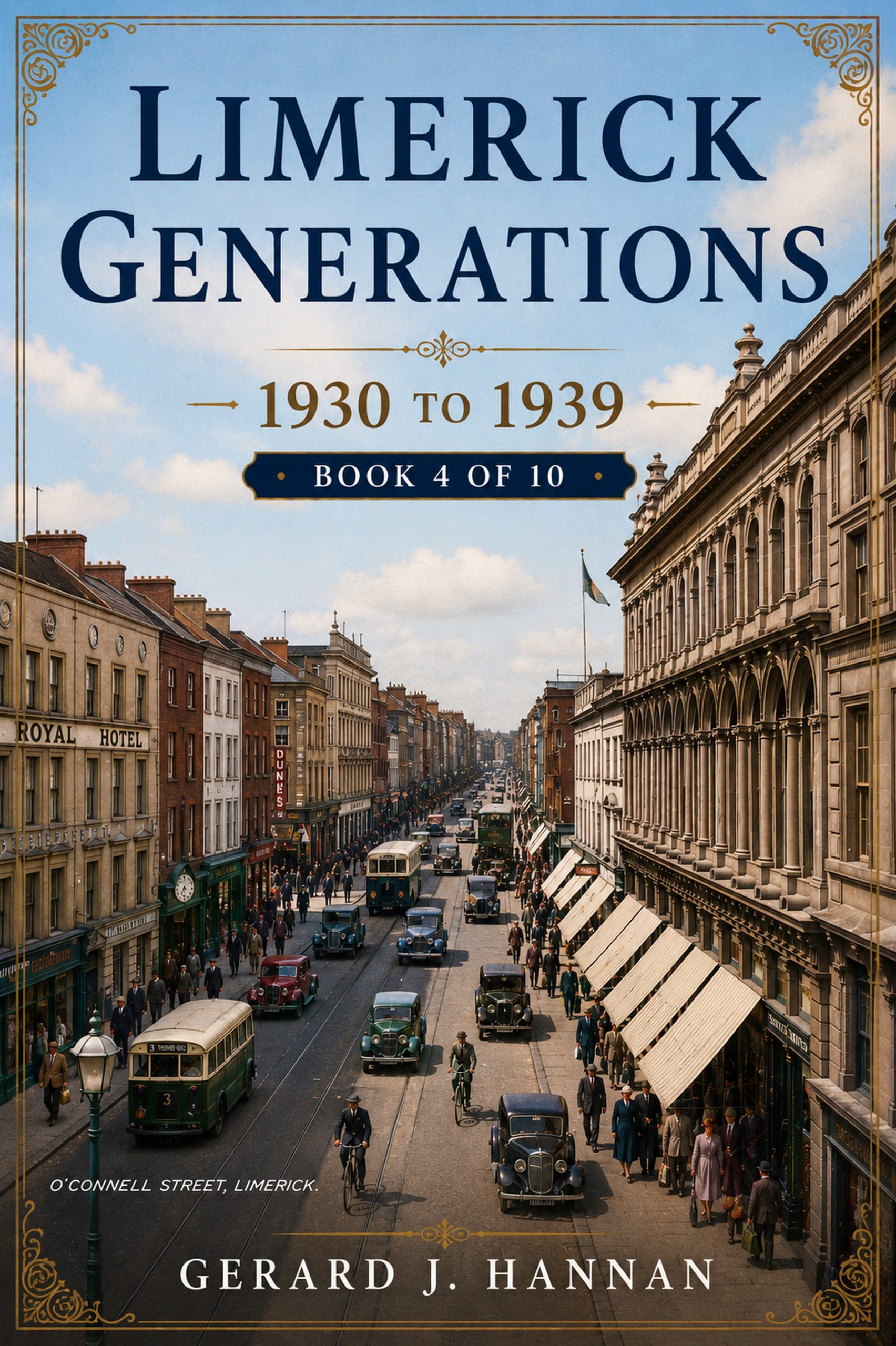
Limerick Generations: 1930 to 1939
Limerick Decalogy, Book Four
Limerick Generations: 1930 to 1939 documents a decade marked by economic hardship, political consolidation, social tradition and gradual modernisation across Limerick city and county. The effects of global depression touched employment, trade, farming and household security, while local government, education, religion, transport, sport and cultural life continued to shape everyday experience. Newspapers, public records and community stories reveal how families adapted to uncertainty and how familiar institutions responded to change. As Book Four of Limerick Decalogy, the volume preserves the people, places and events of the 1930s while extending the series through another important chapter of Limerick’s twentieth century history.
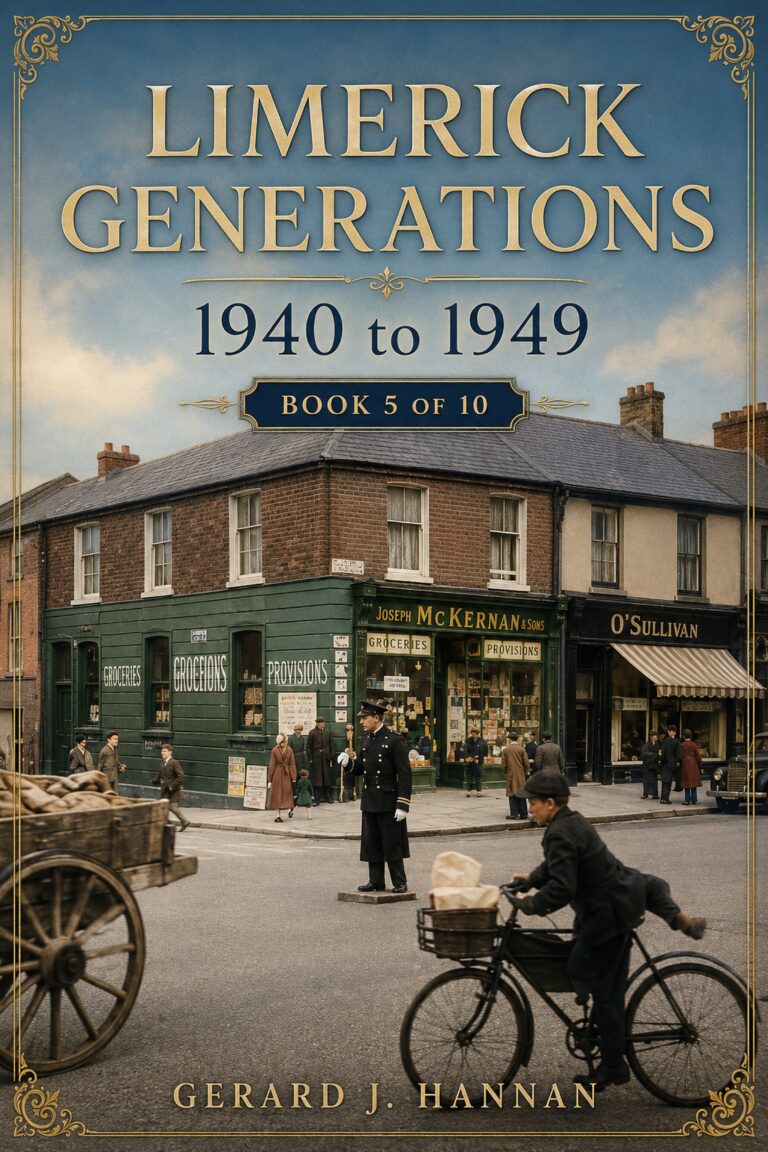
Limerick Generations: 1940 to 1949
Limerick Decalogy, Book Five
Limerick Generations: 1940 to 1949 documents a decade shaped by wartime neutrality, rationing, shortages, emigration and gradual postwar recovery across Limerick city and county. Although Ireland remained outside the Second World War, global conflict affected trade, employment, transport, food supplies and daily routines. Local communities adapted through thrift, voluntary service, farming, industry, education, religion, sport and family resilience. Newspapers, public records and personal accounts reveal how ordinary people experienced uncertainty while maintaining familiar institutions and traditions. As Book Five of Limerick Decalogy, the volume preserves Limerick’s wartime generation and the social changes that prepared the city for the 1950s ahead.
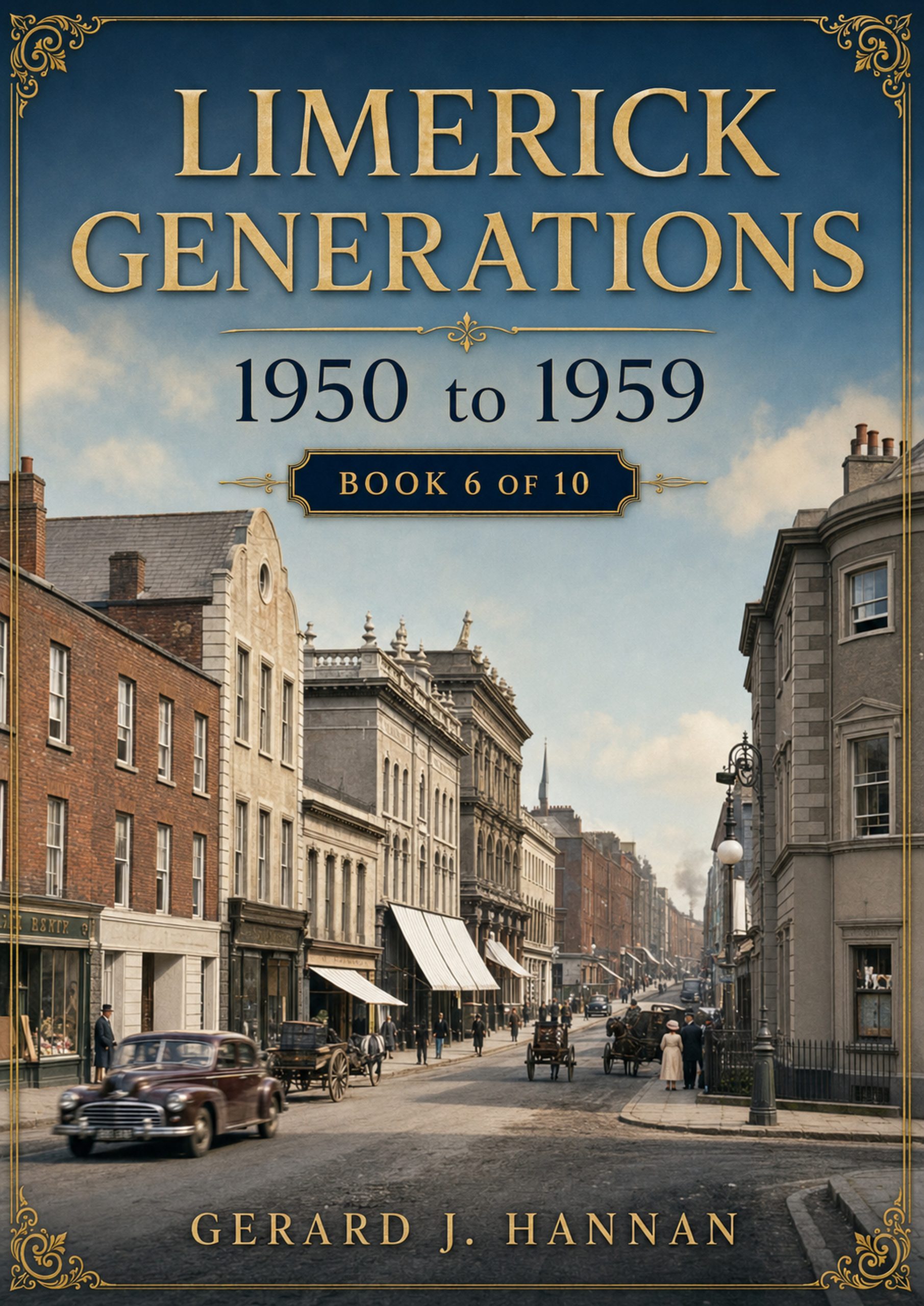
Limerick Generations: 1950 to 1959
Limerick Decalogy, Book Six
Limerick Generations: 1950 to 1959 documents a decade of rebuilding, emigration, social conservatism and gradual modernisation across Limerick city and county. New housing, expanding education, changing industries and improved transport reshaped everyday life, while unemployment and limited opportunity encouraged many young people to leave Ireland. Religion, sport, entertainment, local business and family networks remained central to community identity. Newspapers, public records and personal memories reveal a society balancing tradition with growing expectations of change. As Book Six of Limerick Decalogy, the volume preserves the people, places and experiences that defined Limerick during the uncertain but transformative 1950s for future generations.
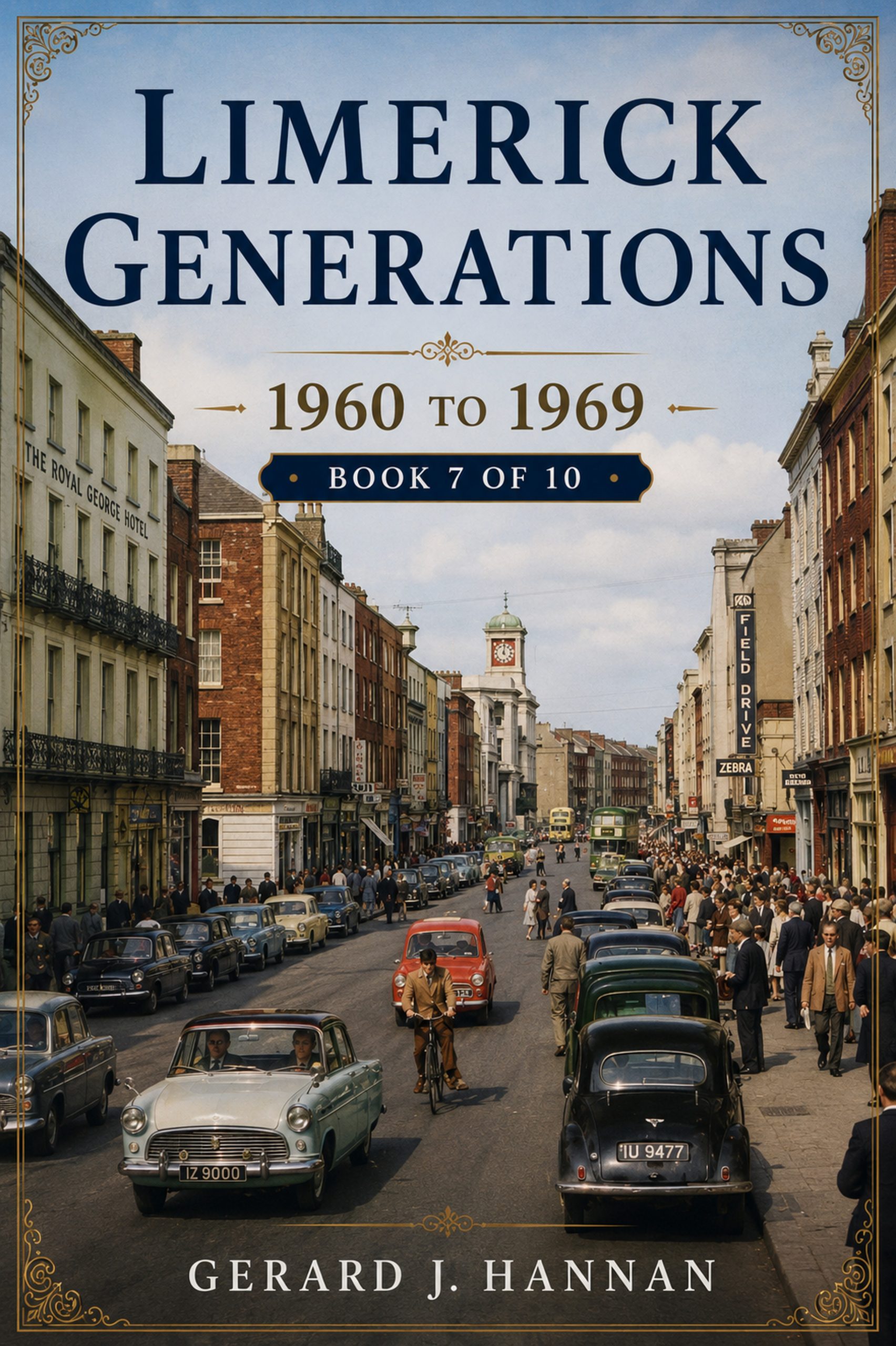
Limerick Generations: 1960 to 1969
Limerick Decalogy, Book Seven
Limerick Generations: 1960 to 1969 documents a decade of expanding education, industrial development, housing growth, emigration and cultural change across Limerick city and county. New factories, improved roads, television, popular music and changing expectations reshaped everyday life, while unemployment and outward migration continued to affect families and communities. Religion, sport, local business and neighbourhood identity remained influential as younger generations encountered a wider modern world. Newspapers, public records and personal memories reveal a society balancing tradition with new opportunity. As Book Seven of Limerick Decalogy, the volume preserves the people, places and transformations that defined Limerick throughout the eventful 1960s.
Limerick Generations: 1970 to 1979
Limerick Decalogy, Book Eight
Limerick Generations: 1970 to 1979 documents a decade of industrial change, housing expansion, economic uncertainty and evolving social attitudes across Limerick city and county. New estates, schools, factories, roads and communications reshaped daily life, while unemployment, inflation and emigration continued to influence families and communities. Music, television, sport, youth culture and changing expectations widened horizons, even as religion and established institutions remained powerful. Newspapers, public records and personal memories reveal how Limerick balanced tradition with modern pressures. As Book Eight of Limerick Decalogy, the volume preserves the people, places and experiences that defined the city throughout the transformative 1970s decade.
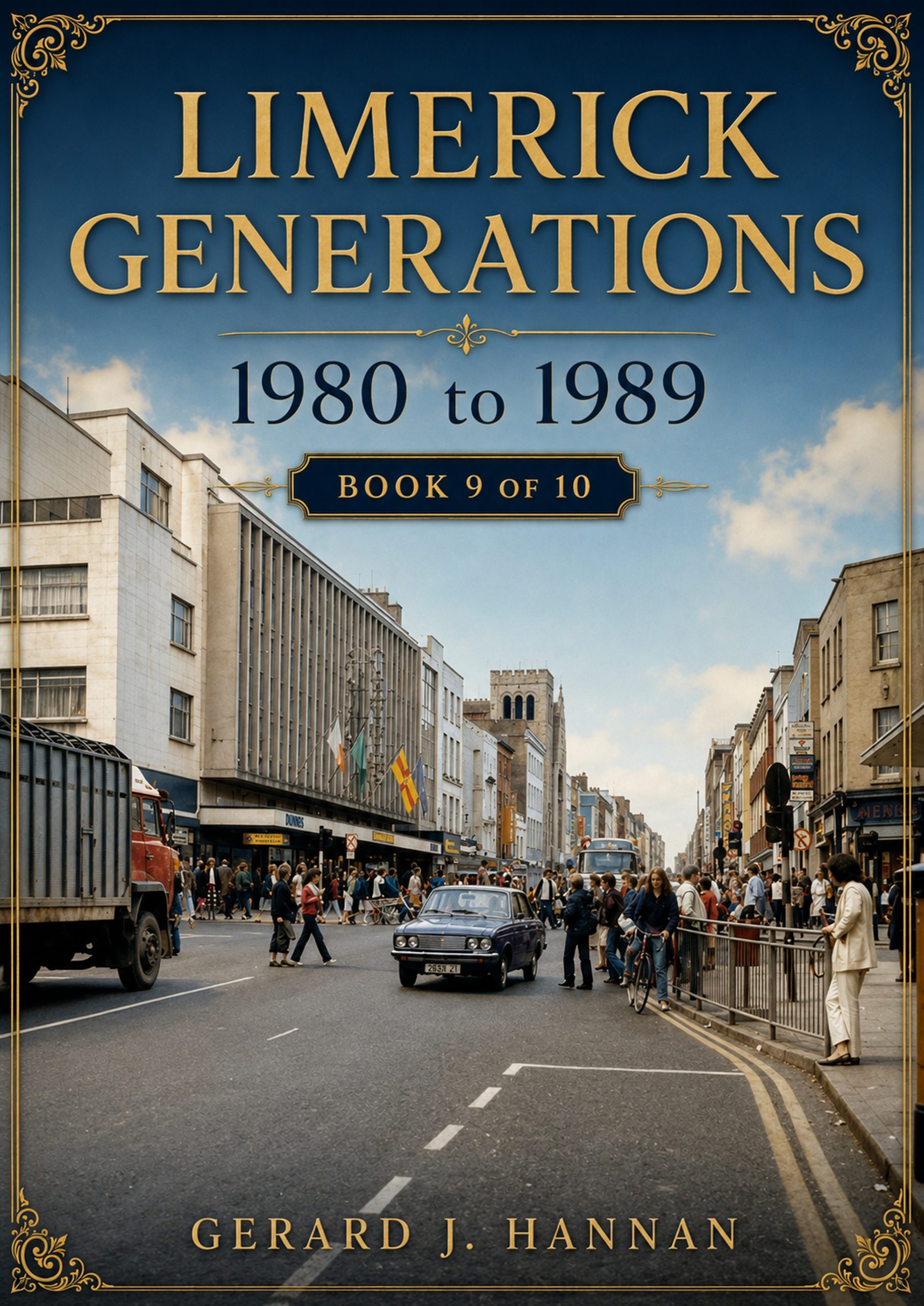
Limerick Generations: 1980 to 1989
Limerick Decalogy, Book Nine
Limerick Generations: 1980 to 1989 documents a decade of recession, unemployment, emigration, urban change and evolving social attitudes across Limerick city and county. Factory closures, economic pressure and limited opportunity affected families and neighbourhoods, while new technologies, television, music and youth culture widened everyday experience. Sport, education, religion, local business and community organisations remained important sources of identity and support. Newspapers, public records and personal memories reveal how people adapted to uncertainty while anticipating a more connected future. As Book Nine of Limerick Decalogy, the volume preserves the people, places and experiences that defined Limerick throughout the challenging 1980s decade.
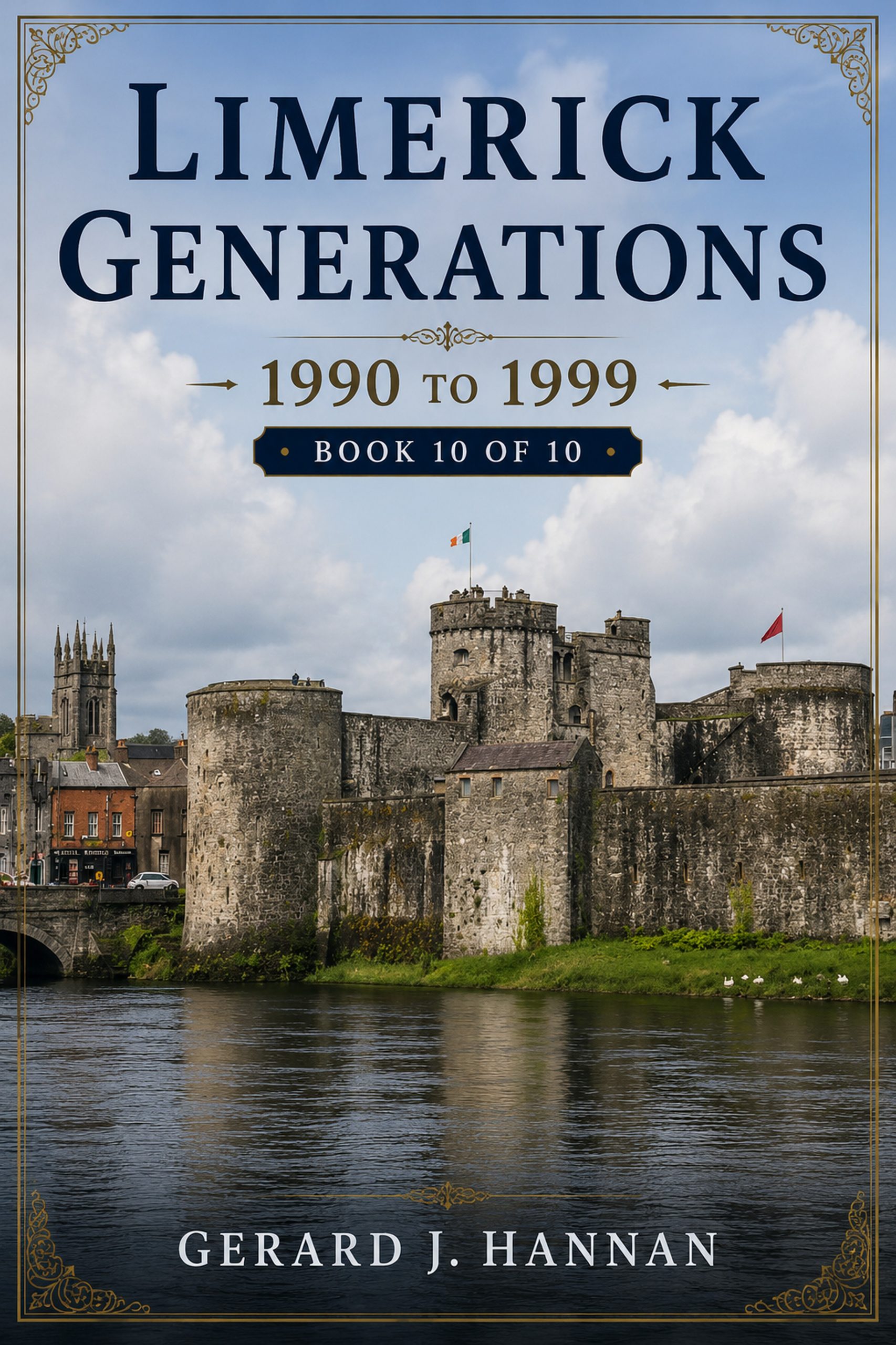
Limerick Generations: 1990 to 1999
Limerick Decalogy, Book Ten
Limerick Generations: 1990 to 1999 documents a decade of economic recovery, cultural confidence, technological change and expanding opportunity across Limerick city and county. New investment, improved communications, education and changing workplaces reshaped daily life, while unemployment, emigration and social inequality remained important concerns. Music, sport, broadcasting, community organisations and a growing international outlook influenced identity as Ireland entered a more prosperous era. Newspapers, public records and personal memories reveal how tradition met rapid modernisation. As Book Ten of Limerick Decalogy, the volume completes a century long record of the people, places and experiences that shaped twentieth century Limerick for generations.
Our Past. Our Story. Our Future.