

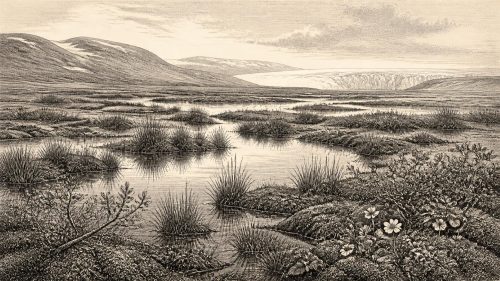
BIRM-166’s Sedge Marsh
Archived: 6 October 2026
Around 30,201 BCE, Ireland’s history is recoverable only through broad environmental evidence, not an exact annual record. At Derryvree, County Fermanagh, BIRM-166 dates an interglacial wetland deposit between glacial tills, indicating cold, treeless freshwater habitats with sedges, mosses, aquatic plants and insects. The sequence demonstrates episodic ice advance and retreat, although conditions across Ireland remain uncertain. Cave finds at Castlepook show that mammoth, reindeer, giant deer and other animals occurred in wider Ice Age ecosystems, but their local dates are insecure. No settled human community is attested. Ireland was a volatile periglacial landscape, intermittently supporting wetlands and fauna between glaciations.