


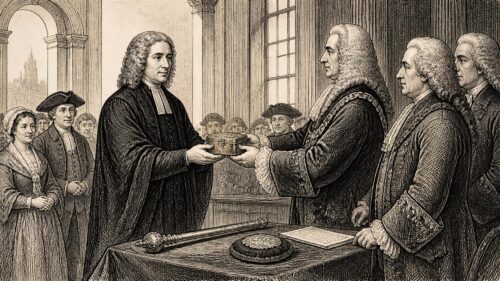
Swift's Freedom
Archived: 13 October 2026
In 1730 Dublin Corporation granted Jonathan Swift the freedom of the city in a gold civic box, recognising the dean and author’s influence after the Drapier’s Letters. The ceremony illuminated Protestant-controlled municipal power, print culture and exclusion. During transition between viceroys, resident officials dominated administration; Ireland’s Parliament remained subordinate to Britain and restricted to propertied Protestants. Legislation against workers’ combinations exposed insecure urban labour and regulation of growing Dublin. Early toll roads signalled commercial development, while agriculture, linen production, markets and weather shaped livelihoods. Established Anglican authority contrasted with the restricted but enduring Catholic majority and disadvantaged Presbyterians, revealing inequality.