


Liffey Works and Rightboys
Archived: 12 October 2026
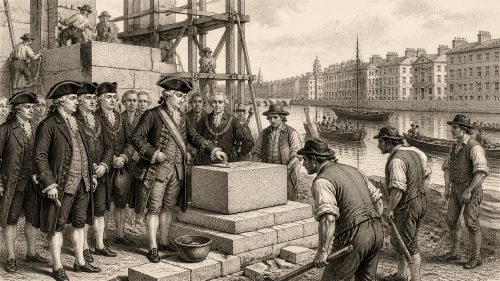
In 1786, Ireland combined constitutional autonomy with entrenched exclusion. The Dublin parliament, dominated by Protestant elites under Lord Lieutenant Rutland, operated after Pitt’s failed commercial proposals. In Dublin, Rutland laid the Four Courts foundation stone, while the Dublin Port Act created the Ballast Board to improve harbour administration and trade. These projects symbolised state infrastructure and employment. Meanwhile, Munster Rightboys protested tithes, rents and religious charges through intimidation and violence, exposing rural insecurity despite Catholic relief. The execution of George Robert FitzGerald demonstrated limits upon landed privilege. Declining Volunteers and restricted political participation underscored Ireland’s deep confessional and economic tensions.