Membership is completely free, giving members unlimited access to all available resources, services, features, and benefits without any restrictions or fees.
Welcome back. Sign in to continue enjoying unlimited access to all available resources, services, features, and member benefits at no cost.
The year began under the pressure of the Omicron wave. On 5 January, the Government described infection levels as exceptionally high, even as the booster campaign offered considerable protection against severe illness. The priority was to maintain schools, hospitals and essential services while daily routines remained constrained. That context makes the speed of the subsequent reopening more striking. From 6 a.m. on 22 January, capacity limits, early closing for hospitality, Covid passes for many venues and restrictions on nightclubs were removed. A phased return to workplaces followed. Mandatory mask rules in most remaining regulated settings ended on 28 February, although public-health advice continued to urge caution, especially around vulnerable people.
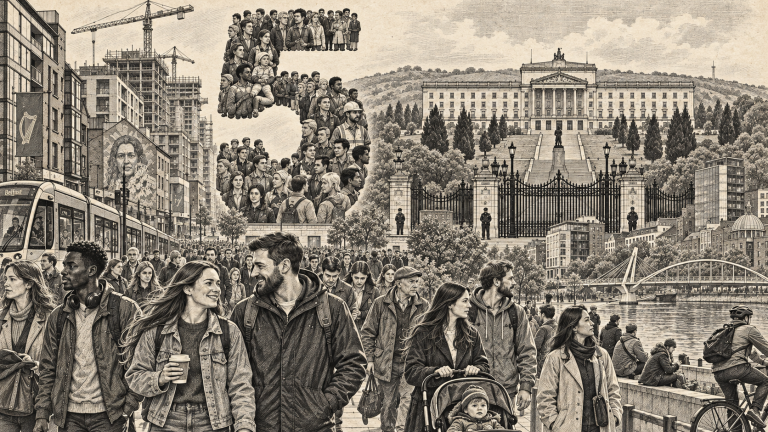
The most consequential development came at the end of the year. At midnight between 1 and 2 December, powers were devolved from Westminster to the Northern Ireland Assembly, ending the latest period of direct rule from London, which had begun in 1972. The Northern Ireland Executive then met at Stormont for the first time. It was headed by David Trimble of the Ulster Unionist Party as First Minister and Seamus Mallon of the Social Democratic and Labour Party as Deputy First Minister. Ministers from the UUP, SDLP and Sinn Féin took part; Democratic Unionist Party ministers refused to attend that inaugural meeting because of their opposition to entering government alongside Sinn Féin before IRA weapons had been decommissioned.
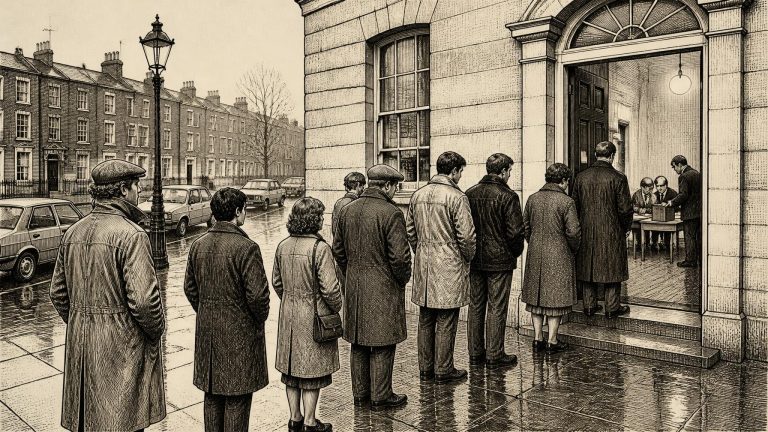
The year began with the end of Garret FitzGerald’s Fine Gael–Labour coalition. On 27 January, the Government lost its Budget vote by 82 votes to 81. The immediate controversy concerned a proposed extension of VAT to children’s shoes, but the defeat exposed a more fundamental problem: the coalition did not command a secure majority in the Dáil. President Patrick Hillery dissolved the Twenty-second Dáil that day, and the electorate returned to the polls on 18 February.
The Irish Free State general election of 16 February was a landmark in the state’s short history. Cumann na nGaedheal, led by W. T. Cosgrave, had governed since 1922 and had built the administrative machinery of the Free State amid the aftermath of revolution and civil war. Fianna Fáil, founded by de Valera only six years earlier after his break with abstentionist Sinn Féin, campaigned on a programme of constitutional revision, economic protection and resistance to payments which it argued should not continue to Britain.