Archived: 12 October 2026
Abstract
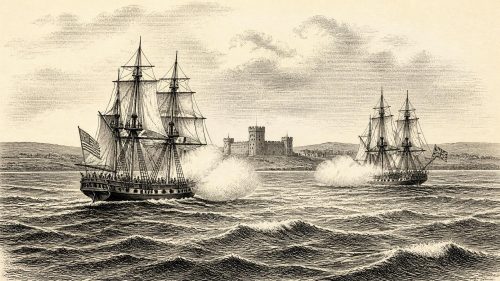
In 1778, Captain John Paul Jones’s Ranger captured HMS Drake off Carrickfergus, exposing Ireland’s weak coastal defences amid imperial war. Fear of attack encouraged Belfast’s first Volunteer company and similar locally organised Protestant corps, which later strengthened demands for political and commercial influence. Wartime disruption prompted limited trade concessions, though these fell far short of free trade and intensified Patriot dissatisfaction. Gardiner’s Catholic Relief Act improved property rights for qualifying Catholics but preserved political exclusion and most penal restrictions. Road building, cultivation, mapping and Dublin’s changing streetscape also reflected gradual improvement. Together, these developments revealed mounting pressures for Irish change.
Read Article
Archived: 12 October 2026
Abstract
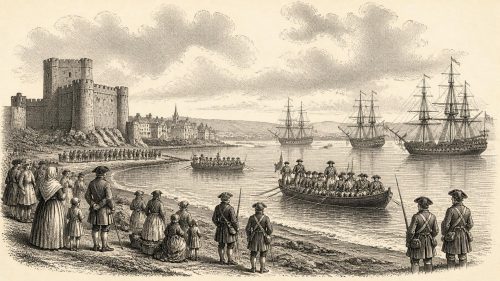
In February 1760, François Thurot’s French force of about 600 men captured Carrickfergus, requisitioned supplies and threatened Belfast, prompting local defences, negotiations and widespread mobilisation. The raiders departed on 26 February and were defeated two days later off the Isle of Man, where Thurot was killed. The episode exposed Ireland’s coastal vulnerability during the Seven Years’ War. In Dublin, Catholics established a committee to seek cautious relief from penal laws, supported by public debate. George II’s death brought George III’s accession, dissolution of parliament and electoral agitation. Rural insecurity, religious inequality and surviving Gaelic musical traditions also shaped Irish life.
Read Article
Archived: 19 October 2026
Abstract
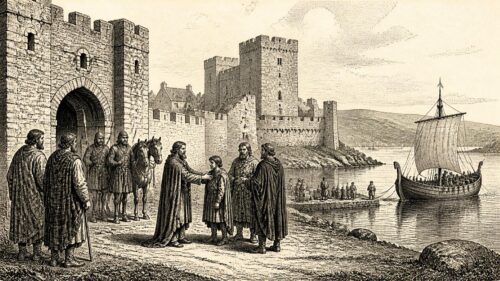
In 1507, Ireland comprised overlapping systems of royal lordship, Gaelic dynasties, churches, learned families and corporate towns. The Annals of Ulster, strongest for the north, records Henry Ó Néill’s death, an Ó Domhnaill attack on Dungannon, and conflict at Carrickfergus, where Niall Ó Néill was captured, released after sixteen hostages were demanded, then seized the castle and mayor. Clogher monastery and Achadh Beithe church burned, while clerics, a brehon and several poets died. Kildare exercised limited deputy authority, and Galway maintained civic government. These events reveal power secured through kinship, pledges, warfare, learning, patronage and institutional resilience across the island.
Read Article
Archived: 21 October 2026
Abstract
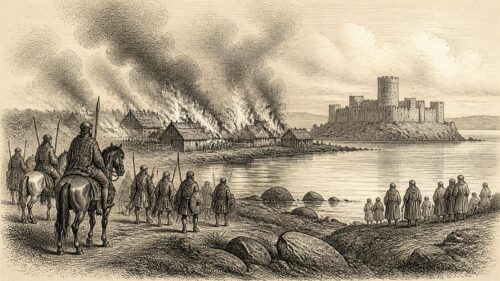
In 1384, Niall Ó Néill burned Carrickfergus, demonstrating Gaelic power against a major crown-held port and castle, though the sources do not show that the fortress fell. In Connacht, Ruaidhrí Ó Conchobair died of plague after a long reign, prompting rival inaugurations and provincial warfare, including attacks on lordly strongholds. Plague and other deaths affected leading families and rulers across Ireland, while feuds caused further killings. Annals also recorded deaths of churchmen and scholars, reflecting enduring learned institutions. Within the lordship, mediation addressed conflict between Ormond and Desmond, and Sir Philip Courtenay appointed Ormond chief governor, illustrating fragmented regional authority.
Read Article
Archived: 23 October 2026
Abstract
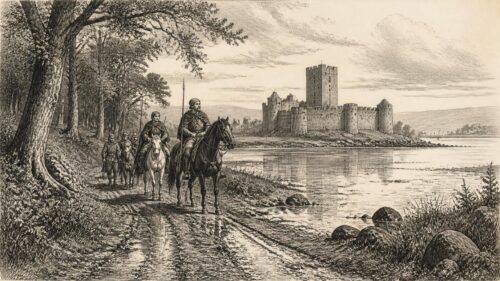
On 6 June 1333, William de Burgh, twenty-year-old earl of Ulster and lord of Connacht, was murdered near Carrickfergus by men associated with Ulster’s settler community. His death, following de Burgh family conflict, deprived vast, fragile lordships of an adult ruler. His widow fled to England with their infant heiress, while royal justice punished some killers but could not restore stability. Annals also record cattle-raiding, noble sureties, official campaigns and violence in Dublin, illustrating insecure aristocratic politics. The murder initiated divisions that later produced the Burke civil war and Mac William lordships, exposing limits of inherited power and English administration.
Read Article




