
Archived: 26 September 2026
Abstract
In 1223 Ireland remained politically fragmented, with Henry III’s lordship concentrated in towns and lowlands while Gaelic rulers retained regional power. William Marshal’s Welsh campaign and Hugh de Lacy’s return heightened uncertainty in Ulster and Meath. In Connacht, local men captured William de Lacy’s built crannog. Clonmacnoise burned, destroying churches and valuables, though church construction continued at Tech Sinche. Episcopal deaths, resignations and elections altered ecclesiastical leadership, while Connacht lost clerical and political figures. Raiding, hostage-taking and violations of sanctuary exposed local conflict. A severe September wind damaged standing oats, underlining agricultural vulnerability. Annalistic dates and accounts require cautious interpretation.
Read Article

Archived: 26 September 2026
Abstract
In 1222, Ireland remained politically divided between Gaelic lordships and the Anglo-Norman lordship, whose authority was strongest in eastern and south-eastern towns and castles. Hugh de Lacy’s return exposed fragile royal control: Henry III restored some inherited lands but retained Ulster, while annals link de Lacy’s alliance with Áed Ó Néill to raids, Culrathain’s destruction and negotiated terms at Dundalk. An exceptional great wind damaged buildings, woods, churches and ships, disrupting rural, maritime and commercial life. Annals also record ecclesiastical deaths, elite benefaction and moral judgement. Farming, trade, kinship, warfare and religious institutions bound together a connected yet uneven society.
Read Article

Archived: 26 September 2026
Abstract
In 1221, Ireland remained divided among Gaelic rulers, Anglo-Norman lords, royal officers and church institutions. Geoffrey de Marisco was removed as justiciar amid concerns over revenues, and Archbishop Henry of London returned to office, strengthening crown oversight from Dublin. Marisco nevertheless led a destructive expedition into Desmond, ruining crops and building a castle at Mag Rátha. Papal legate James visited, addressing ecclesiastical affairs and prompting resentment over clerical payments. In Connacht, Diarmait Ua Conchobair’s seaborne bid for kingship ended in his death, exposing succession tensions. The death of scholar Diarmait Ua Cú Lecháin attests to religious learning and manuscript production.
Read Article

Archived: 26 September 2026
Abstract
Ireland in 1220 comprised competing lordships, Gaelic kingdoms, ecclesiastical communities and growing towns rather than a unified polity. Walter de Lacy’s attempted castle at Áth Liag was abandoned after Cathal Crobderg Ua Conchobair intervened, demonstrating limits to frontier expansion. Connacht’s succession remained insecure as a rival claimant sought western maritime support. At Derry, the successor to St Columba’s office prompted disputes resolved through local consent and Armagh’s arbitration. Papal intervention, church consecration and episcopal death illustrate religious connections and instability. Annalistic dating differs for several events. Trade, farming, crossings and markets linked regions, while conflict shaped movement, supplies and authority.
Read Article

Archived: 26 September 2026
Abstract
In 1219, Ireland’s power remained fragmented among Gaelic kings, Anglo-Norman lordships, churches and Henry III’s wider dominions. William Marshal died, prompting a managed succession in Leinster under Isabel de Clare’s continuing inheritance, supported by officials including seneschal Walter Purcell. In Munster, Diarmait Mac Carthaig captured Henry Butler’s Timoleague castle and its hostages, exposing colonial vulnerabilities. Domnall Mór Ó Domnaill secured submissions in northern borderlands, while Cathal Crobderg Ua Conchobair exercised authority in Connacht amid Richard de Burgh’s competing claims. Ecclesiastical deaths and succession, alongside papal involvement in the Ferns dispute, underscored church influence. Events revealed shifting, contested lordships throughout Ireland.
Read Article

Archived: 26 September 2026
Abstract
In 1218, Ireland remained a patchwork of competing royal, Anglo-Norman, Gaelic and ecclesiastical powers. Under Henry III’s regency, William Marshal’s Leinster interests shaped lordship government, including regulation of shipping. His land dispute with Ailbe, bishop of Ferns, exposed conflict between royal procedure, papal intervention and Irish clerical rights. Annals recorded northern killings, a failed Meath raid into Connacht and burning at Athlone, demonstrating frontier insecurity. Deaths and successions confirmed resilient local kingships. The consecration of Boyle Abbey, church administrators’ careers, pilgrimage, and losses among poets and scholars also reveal religious patronage, learning and communal institutions amid persistent nationwide political contestation.
Read Article

Archived: 26 September 2026
Abstract
In 1216, Ireland remained divided between Gaelic lordships, the Anglo-Norman Lordship and wider Plantagenet rule. King John’s final orders concerning Walter de Lacy’s estates illustrated royal administration and cross-channel aristocratic ties. After John died, the child Henry III inherited the Lordship, governed through councillors, William Marshal and Dublin justiciar Geoffrey de Marisco. Castle-building and Robert Travers’s disputed appointment at Killaloe exposed coercive colonial expansion. Church affairs linked Ireland closely to Rome through vacancies, papal interventions and diocesan reform. Gaelic rulers maintained authority, including Cathal Crobhdearg’s Ballintubber foundation, while annals recorded killings and legal scholarship, revealing overlapping jurisdictions, allegiances and cultures.
Read Article

Archived: 26 September 2026
Abstract
Irish annals portray 1214 as a period of contested lordship rather than national unity. Anglo-Norman castles at Clonmacnoise and Durrow provoked Cormac Ó Máel Sechlainn’s raids, involving cattle seizure, burning and attacks on church resources. Ualgarg Ó Ruairc raided settler-held Carbury, while deaths among Connacht lords and churchmen marked shifting local authority. Ulster records, though chronologically disputed, describe plunder at Derry, castle-building at Coleraine, resistance to settlers and destruction at Carlingford. Ecclesiastical communities remained influential yet vulnerable. Dublin received authority for commercial infrastructure. King John’s papal settlement formally included Ireland, but did not establish uniform control over its competing regions.
Read Article
Archived: 26 September 2026
Abstract
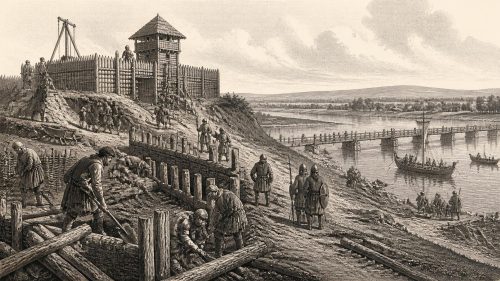
In 1213, King John’s submission of England and Ireland to Pope Innocent III altered the lordship’s international status, while Henry of London became archbishop of Dublin and justiciar. Royal and settler forces campaigned in Mide, defeating Cormac Ó Máel Sechlainn’s allies and building castles at Athlone, Birr, Durrow and Kinnitty to control crossings and routes. Cormac nevertheless recovered influence, illustrating frontier instability. Ulster saw Gaelic feuds, Anglo-Norman attacks, church plundering, Coleraine Castle’s construction and Áed Ó Néill’s raids. Clerical deaths highlighted enduring ecclesiastical centres. Ireland remained politically plural, as castles, warfare, alliances and royal administration reshaped contested regions across Ireland.
Read Article

Archived: 26 September 2026
Abstract
In 1212, royal efforts to extend King John’s Irish lordship through castles, taxation and military campaigns met persistent resistance. John de Gray’s northern offensive built Clones and Cáel Uisce castles, but forces associated with Áed Méith Ua Néill and other Gaelic leaders defeated raiders and destroyed both strongholds. Seaborne warriors from Galloway and the Isles ravaged Derry and Inishowen, aided by Cenél Conaill. In Meath, Cormac Ua Máel Sechlainn defeated English forces, while Munster and Desmond saw fort-building and dynastic conflict. Administrative records reveal expanding royal finance, yet authority remained uneven, shaped by alliances, tribute, churches, raids and regional rivalries.
Read Article

Archived: 26 September 2026
Abstract
In 1211, King John’s Irish lordship remained fragile despite his previous campaign against the de Lacys. John de Gray, royal justiciar, sought to consolidate control through castles, garrisons, revenue collection and alliances, as recorded in the Irish Pipe Roll. At Athlone, Richard de Tuit and eight others died when a new tower collapsed, highlighting frontier tensions and disputes over church land. In the north, Áed Méith Ua Néill repelled foreign forces at Narrow Water, demonstrating organised resistance. Irish rulers negotiated through hostages and temporary agreements. Royal power expanded through administration and fortification, but Ireland remained a patchwork of competing jurisdictions.
Read Article
Archived: 26 September 2026
Abstract
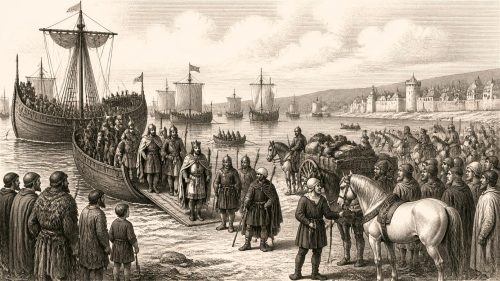
In 1210 King John launched a 63-day expedition to Ireland, asserting authority over Anglo-Norman magnates and seeking alliances with Gaelic rulers. Landing at Waterford, he received Donnchadh Ua Briain and Cathal Crobhdearg Ua Conchobair, then advanced through Dublin, Meath and Ulster. Walter and Hugh de Lacy were dispossessed; Carrickfergus fell to royal forces, while Man suffered punitive attack. John expanded administration, installed John de Grey, promoted castles and a bridge at Athlone, and supported royal coinage. Yet hostage-taking damaged relations with Connacht, Gaelic submissions remained conditional, and regional conflicts continued. The campaign strengthened royal control but left divided politics unresolved.
Read Article

Archived: 26 September 2026
Abstract
In 1209, Ireland remained politically divided between King John’s lordship, centred on Dublin and Anglo-Norman estates, and competing Gaelic dynasties. John de Grey, acting justiciar, strengthened royal administration, while Dublin’s developing castle symbolised expanding governance. The later tradition of Black Monday recalled settlers’ vulnerability beyond the city walls, though its details are uncertain. Warfare in Inishowen between Ó Néill and Ó Domnaill forces demonstrated contested northern borderlands. In Desmond, Finghin Mac Carthaigh’s killing during a booty dispute triggered succession change; Breifne likewise saw rival Ó Ruairc claimants. Ecclesiastical deaths and everyday economic obligations underscore communities affected by unstable, negotiated power.
Read Article

Archived: 26 September 2026
Abstract
In 1208, conflict within the Anglo-Norman lordship undermined royal authority in Ireland. William Marshal’s allies captured justiciar Meiler fitz Henry at Thurles, prompting King John to restore Marshal’s lands and appoint John de Grey. These settlements strengthened supervision but did not end rivalry among colonial magnates. Gaelic rulers remained independent actors: northern dynasties fought and later negotiated, while English influence shaped succession in Breifne. In Munster, dynastic disputes involved Limerick’s English community and church guarantors, despite breaches of protection. Ecclesiastical life continued amid violence and uncertainty. The year revealed a fragmented Ireland, governed through local alliances, force, charters and negotiation.
Read Article

Archived: 26 September 2026
Abstract
In 1206, Ireland remained divided among Gaelic kingdoms, Anglo-Norman lordships, church lands and towns under uneven royal influence. Bishop Simon Rochfort transferred Meath’s see to Newtown beside Trim, aligning ecclesiastical authority with a colonial centre. King John negotiated Connacht’s status with Cathal Crobderg, without settlement. A castle was built at Cork, while Desmond faced succession conflict after Domnall Mór Mac Carthaig’s death. Raids in Tyrone and Ciannachta destroyed churches, crops and cattle but failed to secure submission. Annals also record widespread human and livestock losses, clerical deaths, and Armagh’s appeal to England against settlers, revealing contested, localised power and negotiation.
Read Article

Archived: 26 September 2026
Abstract
In 1205, Ireland remained a patchwork of Gaelic kingdoms, Anglo-Norman lordships, church jurisdictions and Irish Sea alliances. Severe winter weather disrupted rural life. King John created Hugh de Lacy earl of Ulster, but John de Courcy’s Manx-backed invasion showed the region remained contested. In Connacht, William de Burgh’s disappearance reduced pressure on Cathal Crobderg, who negotiated an emerging tributary accommodation with the Crown. Theobald fitz Walter founded Woney Abbey in Limerick, while annals recorded ecclesiastical appointments, local deaths and violence. These events demonstrate that authority depended on negotiation, warfare, kinship, patronage and maritime connections, with ordinary communities bearing political disruption.
Read Article

Archived: 26 September 2026
Abstract
In 1204, Ireland remained politically fragmented, with King John’s authority strongest in Anglo-Norman towns, castles and lordships. Justiciar Meiler fitz Henry curbed William de Burgh’s Connacht ambitions, while Cathal Crobhdearg Ua Conchobair negotiated terms to preserve part of his kingdom. In Ulster, John de Courcy’s displacement enabled the de Lacys’ rise, though royal law sought to regulate the outcome. Annals record raids, church plundering, Doire’s burning and Domnall Mac Carthaig’s southern victory. Ecclesiastical disputes at Iona demonstrated clerical power. Dublin fortifications, authorised fairs, and Duiske’s foundation linked royal administration, commerce, settlement and religious patronage amid continuing local conflict across Ireland.
Read Article

Archived: 26 September 2026
Abstract
In 1203, conflict over Connacht revealed Ireland’s overlapping Gaelic, Anglo-Norman and royal authorities. William de Burgh campaigned from Munster and Meath, fortifying Mílec and ravaging western Connacht, including Clonfert and Clonmacnoise. King John curbed him by removing Limerick from his control; Meiler fitz Henry and Walter de Lacy enforced submission and mediated Connacht’s dynastic disputes. Cathal Crobderg Ua Conchobair retained his kingship despite rivalry with Toirrdelbach, son of Ruaidrí. Elsewhere, dynastic killings and warfare continued. Contemporary annals report famine, worsened by plunder, while churches remained vulnerable targets yet vital centres of learning, shelter, diplomacy and legitimacy. Connacht’s future remained unresolved.
Read Article

Archived: 26 September 2026
Abstract
In 1202 Cathal Crobhdearg Ua Conchobair regained Connacht after William de Burgh, supported by Munster Gaelic rulers, helped defeat and kill rival Cathal Carrach. Their mixed coalition soon collapsed when Crobhdearg and Connacht nobles routed de Burgh, whose troops had burdened districts and damaged Ath-da-larag monastery. Dynastic tensions persisted despite settlements with other claimants. Papal legate John of Salerno convened synods at Dublin and Athlone, linking Gaelic and settler clergy in reform, while protecting Killenny abbey’s rights. King John’s charter for St Thomas’s Priory revealed Dublin’s commercial, legal and riverine economy. Annals record clerical deaths and violence, underscoring medieval lordship.
Read Article

Archived: 26 September 2026
Abstract
In 1201, Ireland experienced interconnected struggles for kingship, lordship and ecclesiastical authority. In Connacht, Cathal Crobderg Ua Conchobair, aided by northern rulers and John de Courcy, failed to dislodge his kinsman Cathal Carrach, who received William de Burgh’s support. De Courcy’s subsequent defeat near Kilmacduagh and arrest by the de Lacys revealed rivalries among Anglo-Norman magnates. Ulster saw the killing of Ruaidhrí Mac Duinnsléibe and dynastic change in Cenél nEógain. In Munster, de Burgh campaigned with Ua Briain princes before churchmen mediated peace. King John redistributed lordships, while episcopal deaths and papal activity heightened institutional uncertainty. Conflict remained unresolved thereafter.
Read Article

Archived: 26 September 2026
Abstract
In 1200, Ireland remained politically fragmented, with Gaelic lordships, Anglo-Norman magnates and royal officials exercising overlapping authority. Connacht’s Uí Conchobair succession struggle dominated events: Cathal Carrach, backed by Munster Anglo-Normans, notably William de Burgh, expelled Cathal Crobderg and regained the kingship. Warfare devastated territories and churches, while raids in Tír Eógain and Armagh demonstrated shifting cross-cultural alliances; Áed Ó Néill defeated Ulidian raiders. King John reappointed Meiler fitz Henry as justiciar and confirmed de Burgh’s Tibberaghny holding, strengthening royal structures without establishing island-wide control. Clerical deaths and ecclesiastical records underline churches’ continuing economic, social and intellectual importance amid widespread conflict.
Read Article

Archived: 26 September 2026
Abstract
In 1199, Ireland remained a fragmented landscape of Gaelic lordships, church lands and expanding Anglo-Norman seigneuries rather than a uniform English possession. King John’s accession united the English crown with the lordship of Ireland, though power remained uneven. In Connacht, Cathal Crobhdearg and Cathal Carrach made an uneasy peace as William de Burgh pursued his grant. Northern campaigns exposed colonial limits when Áed Ua Néill defeated foreign forces. Raids damaged communities and churches, including Armagh. Richard de Tiúit built Granard’s motte-and-bailey, strengthening Meath’s frontier. Annals record famine, capture, deaths, cattle-raiding and hostages, revealing conflict’s burden on ordinary populations throughout Ireland.
Read Article

Archived: 26 September 2026
Abstract
1198 in Ireland saw contested succession, ecclesiastical change and continuing regional conflict, though annalistic sources disagree over dates. Ruaidrí Ua Conchobair died around 1198–99 after retirement, symbolising the decline of an older high-kingship amid divided Connacht and entrenched English lordship. Cathal Carrach killed a dynastic rival, while a temporary peace with Cathal Crobderg sought to restrain their struggle. Gilla-Crist Ua Cernaigh succeeded Gilla Mac Liac Ua Brenáin as comarba of Colum Cille, affirming northern church authority. A castle at Ardpatrick reflected expanding lordship. Gaelic rulers, churches and Anglo-Norman magnates retained competing power across a politically fragmented island during this period.
Read Article

Archived: 26 September 2026
Abstract
In 1197 John de Courcy extended his Ulster lordship, building Kilsanctan castle and raiding Ciannachta and the Derry region. After King Flaithbertach Ua Máeldoraid died, de Courcy defeated his successor Echmarcach Ua Dochartaig, killed many Cenél Conaill warriors and seized cattle, though north-western control remained contested. Churches were targets, protectors of authority and repositories of treasure, illustrated by Derry altar’s robbery and punishment. Dynastic warfare also afflicted Thomond and Connacht. Limerick received borough liberties under John, while Archbishop John Cumin contested ecclesiastical property with the justiciar. The year revealed fragmented power, enduring Gaelic resistance, and incomplete conquest across medieval Ireland.
Read Article

Archived: 26 September 2026
Abstract
In 1196, Ireland comprised competing regional lordships, churches and Anglo-Norman centres rather than a unified polity. Armagh’s canonry and precinct were burned, while conflict nearby saw Ruaidrí Mac Duinn Shléibhe’s mixed force defeated and Muirchertach Mac Lochlainn killed despite sacred guarantees. Sanctuary violations, retaliatory killings and dynastic successions demonstrated insecure local power. In Munster, Domnall Mac Carthaigh defeated English forces, challenged Limerick, attacked castles and negotiated over Cork, amid conflicts involving Irish and settler allies. Raids reached Louth and the midlands. Religious institutions remained politically influential, providing oaths, burial and retirement. Annalistic evidence depicts uneven disruption, not an island-wide crisis.
Read Article

Archived: 26 September 2026
Abstract
In 1195, Ireland remained divided between Anglo-Norman lordships and resilient Gaelic kingdoms, with power shaped by warfare, negotiation and local alliances. Cathal Crobderg of Connacht assembled forces at Athlone, made peace with John de Courcy and Walter de Lacy, then campaigned in Munster, destroying castles whose rebuilding demonstrated the limits of his success. Conflict also disrupted Limerick, Connacht and Ulster, while rivalries constrained kings and magnates. Royal politics across the Irish Sea influenced authority. Ecclesiastical deaths, Hugh de Lacy’s reburial, and abundant woodland mast reveal religious, political and rural dimensions. Overall, violence repeatedly altered but did not decisively settle control.
Read Article

Archived: 26 September 2026
Abstract
In 1194, Domnall Mór Ua Briain’s death destabilised Munster, where his son Muirchertach’s accession was undermined by capture and blinding, while other Ua Briain and Mac Carthaig kin suffered killings, raids and betrayal. Ecclesiastical authority featured in the death of Killaloe’s bishop and the killing at Cashel despite legatine protection. Elsewhere, resistance expelled foreigners from Uí Fhinntain, Cú Mide Ua Flainn was killed, and Gillibert Mac Goisdelb’s Erne expedition failed. Across the Irish Sea, Richard I’s defeat of John enabled Walter de Lacy to regain Meath, demonstrating how Angevin politics reshaped Irish lordships amid local conflict, rivalry and uncertain authority.
Read Article

Archived: 26 September 2026
Abstract
In 1193, Ireland’s competing Gaelic and Anglo-Norman lordships were reshaped by conflict, patronage and local alliances. Annals record killings among northern, Munster and Leinster rulers, violence by John de Courcy’s followers, and uncertain reports of a castle at Brí Uis authorised against Domhnall Mac Carthaigh. Affrica, wife of de Courcy, founded the Cistercian Grey Abbey on Strangford Lough, linking Ulster to Cumbria and the Irish Sea world. Prince John endowed Crumlin church for St Patrick’s, while Derbfhorgaill died at Mellifont. Inchcleraun was plundered, though sources disagree over the raiders, illustrating fragmented authority and contested evidence across the island's varied regions.
Read Article

Archived: 26 September 2026
Abstract
In 1192, Ireland remained politically fragmented, with Irish rulers retaining broad authority despite expanding lordship from Dublin and Leinster. John’s Dublin charter, dated 15 May, confirmed civic jurisdiction, trading privileges, guilds and burgess rights, strengthening colonial urban government. Ecclesiastical claims around Glendalough reflected contests over church revenues and authority. Leinster forces raided Thomond, built mottes at Kilfeakle and Knockgraffon, but Domnall Mór Ua Briain resisted successfully. Further castles at Horseleap and Kilbixy, and Geoffrey fitz Robert’s planned Kells settlement, advanced territorial control. Annals also record local killings, resistance, religious construction and an uncertain Dublin fire, illustrating resilient nationwide regional societies.
Read Article

Archived: 26 September 2026
Abstract
In 1191, Ireland experienced political fragmentation, local violence and severe environmental disruption. Ruaidrí Ua Conchobair, the displaced former king of Connacht, travelled north and apparently sought wider support to recover power after dynastic conflict, but gained land rather than a decisive coalition. In Munster, Muirchertach son of Cathal Odar was treacherously killed by incoming Anglo-Norman forces, illustrating unstable frontier relations. Annals also record construction of Rath-cuanartaigh castle and deaths of prominent churchmen. Most notably, a great wind destroyed churches, homes and woodland, killing people and livestock, exposing communities’ dependence on vulnerable material resources amid competing Gaelic and foreign rival lordships.
Read Article




