
Related Archive: Cúl Raithin

Coleraine Burning

Coleraine Burning

Archived: 1 November 2026

Abstract

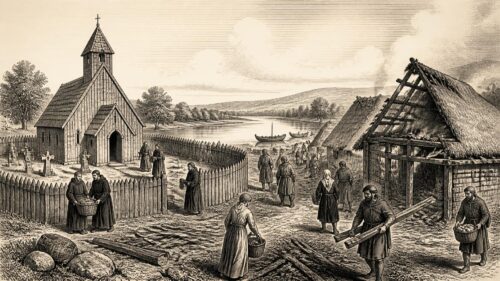
In 731, Irish annals record the burning of Cúl Raithin, generally identified with Coleraine, without naming attackers, motive or losses. As a church-centred settlement on the Bann, its destruction probably disrupted worship, learning, storage, production and lordship. Annalistic chronology supports the date but cautions against detailed reconstruction. Death notices commemorate religious figures including Colmán úa Littáin and Eochaid of Armagh, while revealing varied ecclesiastical centres and ties to dynasties. Reports of fighting in Dál Riata and Pictland, and Ceolwulf’s Northumbrian imprisonment, show a connected northern maritime world. The evidence remains selective, recording no unified Irish crisis but illuminating ordinary life.
Read Article

Cúl Raithin

Cúl Raithin

Archived: 1 November 2026

Abstract

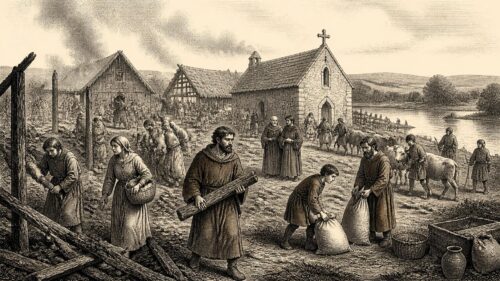
In 730, the Annals of Ulster securely records the burning of Cúl Raithin, probably later Coleraine, but supplies no perpetrators, cause or consequences. The destruction nevertheless highlights the vulnerability and importance of church settlements as religious, economic and political centres. A battle at Bealach Éle between Munster and Leinster, involving Osraige and Déisi leaders, belongs to the early 730s, although annals date it variously to 730 and 735. Heavy losses are reported, without proof of a decisive outcome. These events reveal decentralised authority, intertwined secular and ecclesiastical networks alike, and rural communities dependent upon farming, patronage and vulnerable material resources.

Read Article

Your research question is too vague

Please ask a clear question. Name the person, place or event you’re interested in, and add a date or period if you know it.

Example “What happened during the Siege of Limerick in 1691?”