

Dalkey, Bridewell and St Michan’s
Archived: 10 October 2026
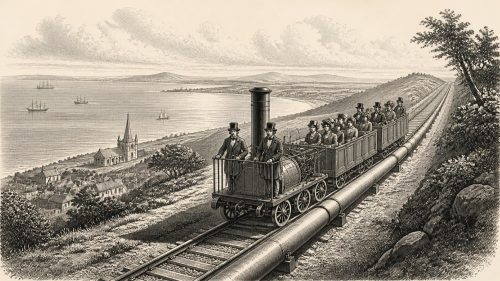
In 1844, Ireland combined political mobilisation, entrenched poverty and uneven modernisation. Daniel O’Connell’s conviction was overturned by the House of Lords, restoring him to public life but revealing limits on Repeal. Thomas Davis’s A Nation Once Again strengthened cultural nationalism within Young Ireland. Workhouses, already housing and relieving many people, exposed chronic vulnerability before the famine. The Dalkey Atmospheric Railway and Richard Turner’s engineering demonstrated technological ambition, while Belfast’s linen trade reflected industrial growth alongside insecurity. Catholic institution-building included St Malachy’s Church and Dublin’s first St Vincent de Paul conference. Francis Rynd’s hypodermic treatment illustrated Irish medical innovation amid precarity.


