
Frontiers and Fortunes
In 1199, Ireland remained a fragmented landscape of Gaelic lordships, church lands and expanding Anglo-Norman seigneuries rather than a uniform English possession. King John’s accession united the English crown with the lordship of Ireland, though power remained uneven. In Connacht, Cathal Crobhdearg and Cathal Carrach made an uneasy peace as William de Burgh pursued his grant. Northern campaigns exposed colonial limits when Áed Ua Néill defeated foreign forces. Raids damaged communities and churches, including Armagh. Richard de Tiúit built Granard’s motte-and-bailey, strengthening Meath’s frontier. Annals record famine, capture, deaths, cattle-raiding and hostages, revealing conflict’s burden on ordinary populations throughout Ireland.
View Record
A Year of Unsettled Succession
1198 in Ireland saw contested succession, ecclesiastical change and continuing regional conflict, though annalistic sources disagree over dates. Ruaidrí Ua Conchobair died around 1198–99 after retirement, symbolising the decline of an older high-kingship amid divided Connacht and entrenched English lordship. Cathal Carrach killed a dynastic rival, while a temporary peace with Cathal Crobderg sought to restrain their struggle. Gilla-Crist Ua Cernaigh succeeded Gilla Mac Liac Ua Brenáin as comarba of Colum Cille, affirming northern church authority. A castle at Ardpatrick reflected expanding lordship. Gaelic rulers, churches and Anglo-Norman magnates retained competing power across a politically fragmented island during this period.
View Record
Fortunes of the North
In 1197 John de Courcy extended his Ulster lordship, building Kilsanctan castle and raiding Ciannachta and the Derry region. After King Flaithbertach Ua Máeldoraid died, de Courcy defeated his successor Echmarcach Ua Dochartaig, killed many Cenél Conaill warriors and seized cattle, though north-western control remained contested. Churches were targets, protectors of authority and repositories of treasure, illustrated by Derry altar’s robbery and punishment. Dynastic warfare also afflicted Thomond and Connacht. Limerick received borough liberties under John, while Archbishop John Cumin contested ecclesiastical property with the justiciar. The year revealed fragmented power, enduring Gaelic resistance, and incomplete conquest across medieval Ireland.
View Record
Fractured Power
In 1196, Ireland comprised competing regional lordships, churches and Anglo-Norman centres rather than a unified polity. Armagh’s canonry and precinct were burned, while conflict nearby saw Ruaidrí Mac Duinn Shléibhe’s mixed force defeated and Muirchertach Mac Lochlainn killed despite sacred guarantees. Sanctuary violations, retaliatory killings and dynastic successions demonstrated insecure local power. In Munster, Domnall Mac Carthaigh defeated English forces, challenged Limerick, attacked castles and negotiated over Cork, amid conflicts involving Irish and settler allies. Raids reached Louth and the midlands. Religious institutions remained politically influential, providing oaths, burial and retirement. Annalistic evidence depicts uneven disruption, not an island-wide crisis.
View Record
Fragile Frontiers
In 1195, Ireland remained divided between Anglo-Norman lordships and resilient Gaelic kingdoms, with power shaped by warfare, negotiation and local alliances. Cathal Crobderg of Connacht assembled forces at Athlone, made peace with John de Courcy and Walter de Lacy, then campaigned in Munster, destroying castles whose rebuilding demonstrated the limits of his success. Conflict also disrupted Limerick, Connacht and Ulster, while rivalries constrained kings and magnates. Royal politics across the Irish Sea influenced authority. Ecclesiastical deaths, Hugh de Lacy’s reburial, and abundant woodland mast reveal religious, political and rural dimensions. Overall, violence repeatedly altered but did not decisively settle control.
View Record
Succession and Pressure
In 1194, Domnall Mór Ua Briain’s death destabilised Munster, where his son Muirchertach’s accession was undermined by capture and blinding, while other Ua Briain and Mac Carthaig kin suffered killings, raids and betrayal. Ecclesiastical authority featured in the death of Killaloe’s bishop and the killing at Cashel despite legatine protection. Elsewhere, resistance expelled foreigners from Uí Fhinntain, Cú Mide Ua Flainn was killed, and Gillibert Mac Goisdelb’s Erne expedition failed. Across the Irish Sea, Richard I’s defeat of John enabled Walter de Lacy to regain Meath, demonstrating how Angevin politics reshaped Irish lordships amid local conflict, rivalry and uncertain authority.
View Record
Affrica Founds Grey Abbey
In 1193, Ireland’s competing Gaelic and Anglo-Norman lordships were reshaped by conflict, patronage and local alliances. Annals record killings among northern, Munster and Leinster rulers, violence by John de Courcy’s followers, and uncertain reports of a castle at Brí Uis authorised against Domhnall Mac Carthaigh. Affrica, wife of de Courcy, founded the Cistercian Grey Abbey on Strangford Lough, linking Ulster to Cumbria and the Irish Sea world. Prince John endowed Crumlin church for St Patrick’s, while Derbfhorgaill died at Mellifont. Inchcleraun was plundered, though sources disagree over the raiders, illustrating fragmented authority and contested evidence across the island's varied regions.
View Record
Charters and Castles
In 1192, Ireland remained politically fragmented, with Irish rulers retaining broad authority despite expanding lordship from Dublin and Leinster. John’s Dublin charter, dated 15 May, confirmed civic jurisdiction, trading privileges, guilds and burgess rights, strengthening colonial urban government. Ecclesiastical claims around Glendalough reflected contests over church revenues and authority. Leinster forces raided Thomond, built mottes at Kilfeakle and Knockgraffon, but Domnall Mór Ua Briain resisted successfully. Further castles at Horseleap and Kilbixy, and Geoffrey fitz Robert’s planned Kells settlement, advanced territorial control. Annals also record local killings, resistance, religious construction and an uncertain Dublin fire, illustrating resilient nationwide regional societies.
View Record
Wind and Exile
In 1191, Ireland experienced political fragmentation, local violence and severe environmental disruption. Ruaidrí Ua Conchobair, the displaced former king of Connacht, travelled north and apparently sought wider support to recover power after dynastic conflict, but gained land rather than a decisive coalition. In Munster, Muirchertach son of Cathal Odar was treacherously killed by incoming Anglo-Norman forces, illustrating unstable frontier relations. Annals also record construction of Rath-cuanartaigh castle and deaths of prominent churchmen. Most notably, a great wind destroyed churches, homes and woodland, killing people and livestock, exposing communities’ dependence on vulnerable material resources amid competing Gaelic and foreign rival lordships.
View Record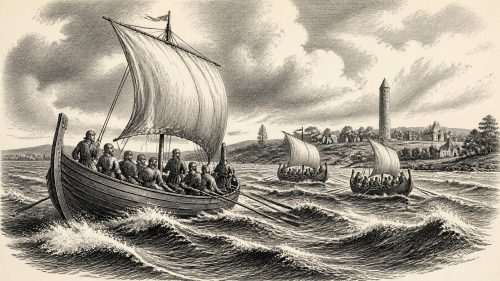
Truce and Tempest
In 1190, Ireland’s politics combined dynastic conflict, local warfare, diplomacy and religious patronage. In Connacht, Cathal Crobderg and Cathal Carrach Ua Conchobair negotiated an inconclusive truce at Clonfert, mediated by churchmen, before a storm on Lough Ree drowned Cathal Crobderg’s son and leading followers. Rival branches of the dynasty remained violent. In Desmond, Domnall mac Carthaig defeated foreign raiders, recovered their spoil and secured peace with Domnall Mór Ua Briain of Thomond. Foundations or endowments at Knockmoy and possibly Killone demonstrated rulers’ religious and political ambitions. Anglo-Norman lordships expanded, but Gaelic rulers and institutions remained decisive across much of Ireland.
View Record