Saville, Civil Partnership, Bailout
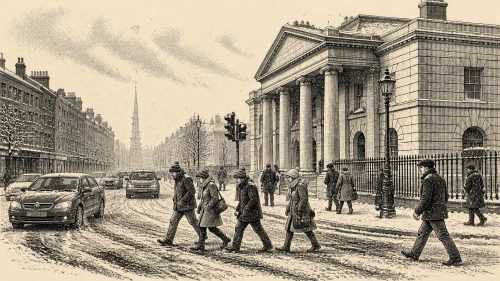
Ireland faced financial collapse as bank rescues, NAMA loan transfers, austerity and unemployment eroded confidence. In November, the Government sought an €85 billion EU–IMF assistance programme, followed by Budget 2011 cuts and taxes. Emigration rose sharply amid household insecurity. Civil partnership legislation recognised same-sex couples, while clerical-abuse revelations sustained scrutiny of Church authority. In Northern Ireland, policing and justice powers devolved, and the Saville report found Bloody Sunday killings unjustified, prompting Britain’s apology. Improving Anglo-Irish relations included plans for a royal visit. Tipperary and Cork won All-Ireland titles, while severe December cold disrupted life nationwide and severely strained public services.
View Record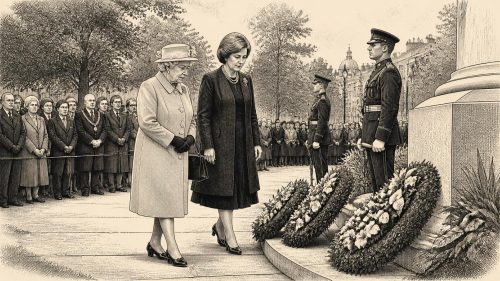
Croke Park, Cloyne, Moneygall
In 2011, Ireland underwent political, economic and social upheaval. Fine Gael and Labour replaced Fianna Fáil after an election dominated by the banking crisis, EU–IMF programme, austerity, unemployment and emigration. Census 2011 recorded a growing, increasingly diverse population. Civil partnership commenced, extending legal recognition to same-sex couples. Queen Elizabeth II’s State visit, including Croke Park, and Barack Obama’s visit to Moneygall symbolised reconciliation and international connection, although dissident violence persisted in Northern Ireland. The Cloyne report exposed grave failures over clerical abuse allegations, damaging institutional trust. Michael D. Higgins became President, promising ethical citizenship and solidarity amid continuing national hardship.
View Record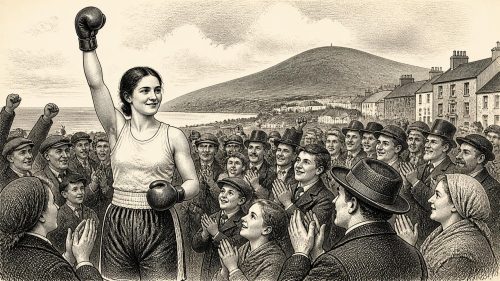
Titanic, Treaty and Savita
In 2012, Ireland pursued recovery under EU–IMF bailout conditions while households faced austerity, unemployment and renewed emigration. Voters approved the Fiscal Compact, reinforcing permanent budgetary discipline, and endorsed the Children’s Referendum, though it had not commenced by year’s end. The Government introduced the household charge, employment activation measures, constitutional convention and Gaeltacht legislation. Savita Halappanavar’s death during miscarriage complications intensified demands for abortion-law clarity and healthcare accountability. Dublin hosted the Eucharistic Congress amid diminished Church authority, while Katie Taylor’s Olympic gold lifted morale. In Northern Ireland, Titanic Belfast opened, McGuinness met the Queen, and flag protests exposed enduring identity tensions.
View Record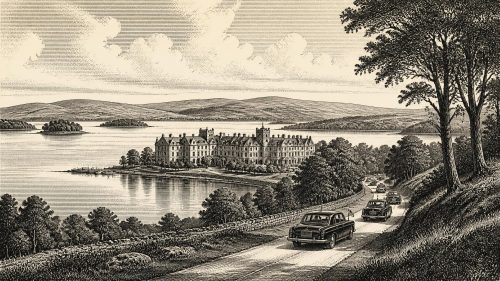
Lough Erne and the Laundries
In 2013, Ireland combined cautious economic recovery with public reckoning. The Fine Gael–Labour government restructured IBRC debt, chaired the EU Council, introduced Local Property Tax, promoted tourism through the Gathering, and exited the EU–IMF bailout. Yet unemployment, emigration and household strain persisted. Following the McAleese Report, Enda Kenny apologised to Magdalen laundry survivors and backed redress. The Protection of Life During Pregnancy Act legislated limited abortion provision. Constitutional debates included marriage equality and referendums retaining the Seanad while creating a Court of Appeal. Lough Erne hosted the G8, while Northern Ireland faced flag and parade tensions. Seamus Heaney was mourned.
View Record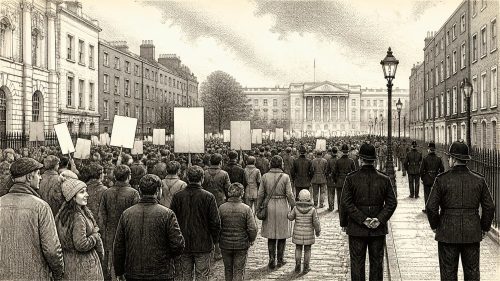
Water Meters and Stormont House
Ireland in 2014 emerged economically from crisis, but austerity and distrust fuelled protests against Irish Water’s meters and household charges. The Government delayed charges, capped bills and legislated safeguards, while electoral losses reflected wider discontent. Severe Atlantic storms caused flooding, coastal damage and power failures. Garda controversies prompted ministerial resignations and reforms including protected-disclosure, human-rights and freedom-of-information measures. Catherine Corless’s Tuam research provoked national reckoning with mother-and-baby institutions. President Higgins’s state visit to Britain affirmed improving relations. In Northern Ireland, the Stormont House Agreement addressed finances, institutions and conflict legacies. The Wild Atlantic Way promoted coastal tourism amid uneven recovery.
View Record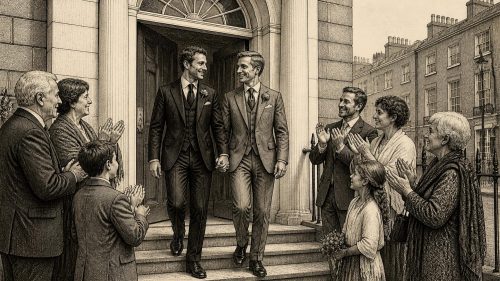
The Marriage Equality Mandate
In 2015, Ireland experienced uneven recovery from the financial crash amid water-charge protests, emigration and approaching elections. Voters overwhelmingly approved marriage equality in May, followed by legislation enabling same-sex marriage, while family-law and gender-recognition reforms broadened legal recognition. The State established an inquiry into mother-and-baby homes, confronting institutional abuses. Economic growth and falling unemployment coexisted with insecurity, outward migration and misleading GDP expansion driven by multinational restructuring. Ireland expanded Mediterranean rescue and refugee commitments, supported Northern Ireland's Fresh Start Agreement, and enacted climate-governance legislation. The year combined change with disputes over austerity, historical accountability, public services, peace and international responsibility.
View Record
The GPO and Brexit Shock
Ireland’s 2016 combined the Easter Rising centenary with political fragmentation and Brexit uncertainty. After an inconclusive election, Enda Kenny led a Fine Gael minority government sustained by Fianna Fáil confidence and supply, amid disputes over water charges, housing and public services. Inclusive commemorations at the GPO, Kilmainham and elsewhere examined 1916’s contested legacy. Britain’s EU withdrawal vote revived concerns about the border, trade, the Common Travel Area and the peace process. Economic recovery, falling unemployment and immigration coincided with homelessness and housing shortages. Ireland challenged the European Commission’s Apple tax ruling, established a Citizens’ Assembly, and joined the Paris Agreement.
View Record
The Tuam Chambers and Border
Ireland in 2017 faced political, social and constitutional uncertainty amid economic recovery. Leo Varadkar became Taoiseach, leading a fragile Fine Gael minority after Frances Fitzgerald’s resignation. Northern Ireland’s Executive collapsed, while Brexit negotiations elevated the border, producing commitments to avoid a hard border and protect the Belfast Agreement. Citizens’ Assembly and Oireachtas processes advanced debate on repealing the Eighth Amendment. Tuam excavations revealed infant and child remains, intensifying scrutiny of mother-and-baby homes. Growth coexisted with severe housing need and homelessness. Census profiles highlighted education and diversity; Storm Ophelia caused disruption and deaths; Creative Ireland promoted cultural participation across communities nationwide.
View Record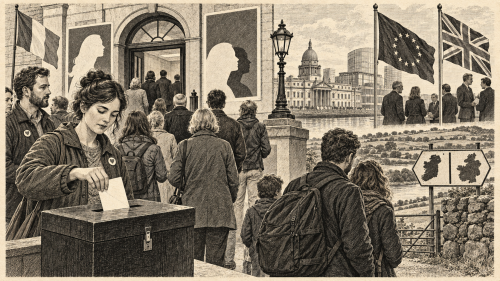
The Repeal Vote and Backstop
In 2018, Ireland experienced major constitutional, social and political change amid economic growth and persistent inequality. In May, voters repealed the Eighth Amendment by 66.4 per cent, enabling legislation for abortion services from 2019; October also removed blasphemy from the Constitution and returned Michael D. Higgins as President. Brexit negotiations centred on an Irish border backstop, while Northern Ireland remained without devolved government. Housing shortages and homelessness intensified despite Project Ireland 2040 and new development initiatives. Pope Francis’s visit highlighted abuse-related criticism of the Church. Alcohol legislation, broadband planning and severe autumn storms further shaped a consequential, unresolved national year.
View Record
Mansion House, Creggan, Backstop
In 2019, Ireland faced Brexit, social reform and uneven recovery. The Government enacted contingency legislation and pursued arrangements preventing a hard border, while the revised Northern Ireland Protocol replaced the backstop, though Brexit remained unresolved. Lyra McKee’s murder in Creggan exposed continuing dissident violence and Northern Ireland’s institutional vacuum, during which Westminster advanced abortion and marriage equality reforms. Republic voters liberalised divorce rules, and abortion services began. Employment and population grew, but homelessness and housing pressures persisted. Climate emergency measures and the National Broadband Plan signalled policy ambitions. First Dáil centenary commemorations connected democratic origins, revolutionary conflict, and constitutional uncertainty.
View Record