Archived: 11 October 2026
Abstract
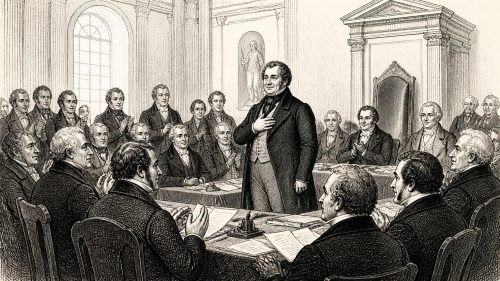
In 1841, Ireland’s census recorded 8,175,124 people, revealing a populous, unequal society where most families occupied modest cottages or single-room cabins and depended heavily on agriculture and potatoes. The general election returned Peel’s Conservatives, while Daniel O’Connell maintained repeal agitation despite restricted franchises and sectarian political division. Dublin’s reformed council elected O’Connell Lord Mayor on 1 November, the first Catholic to hold the office for over 150 years, marking expanded but limited civic participation. Poor Law workhouses embedded institutional relief, inadequately serving widespread vulnerability. Belfast combined industrial growth with confessional cooperation, while the Irish Archaeological Society published texts, reflecting recovery.
Read Article
Archived: 13 October 2026
Abstract
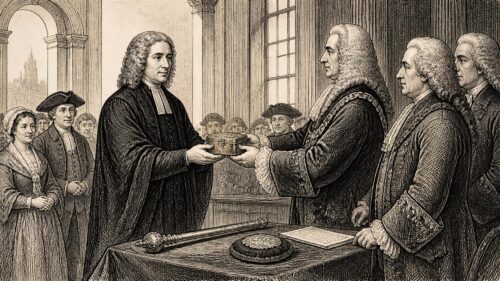
In 1730 Dublin Corporation granted Jonathan Swift the freedom of the city in a gold civic box, recognising the dean and author’s influence after the Drapier’s Letters. The ceremony illuminated Protestant-controlled municipal power, print culture and exclusion. During transition between viceroys, resident officials dominated administration; Ireland’s Parliament remained subordinate to Britain and restricted to propertied Protestants. Legislation against workers’ combinations exposed insecure urban labour and regulation of growing Dublin. Early toll roads signalled commercial development, while agriculture, linen production, markets and weather shaped livelihoods. Established Anglican authority contrasted with the restricted but enduring Catholic majority and disadvantaged Presbyterians, revealing inequality.
Read Article
Archived: 13 October 2026
Abstract
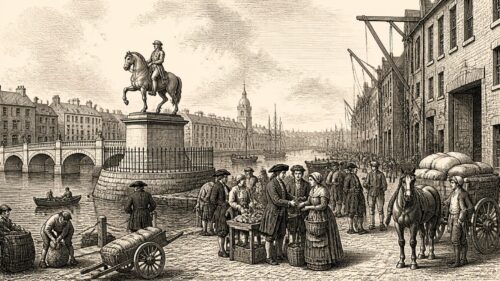
In 1722 George I authorised English ironmaster William Wood to mint up to 360 tons of copper halfpence and farthings for Ireland, initiating a controversy over currency, trade and political authority. Issued in London without Irish parliamentary consultation, the fourteen-year patent alarmed critics amid Ireland’s restricted autonomy following the 1720 Declaratory Act, although Swift’s attacks and parliamentary condemnation came later. Ireland’s rural economy, unequal imperial trade and unreliable small change formed its background. Executive government, policing proclamations and penal restrictions demonstrated state power. Dublin simultaneously celebrated Hanoverian rule with George I’s statue, while print culture widened constitutional unease more widely.
Read Article
Archived: 13 October 2026
Abstract
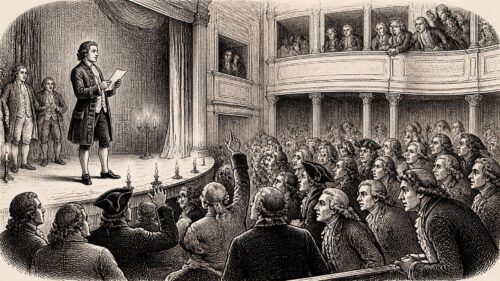
In 1712, Ireland remained tense following Williamite wars, with Tory administrators under Sir Constantine Phipps accused by Whigs of favouring Jacobitism and interests. Dublin’s conflict erupted when Dudley Moore delivered a banned Whig prologue on William III’s anniversary, provoking proceedings. Religious policy combined missionary outreach and exclusion: John Richardson published an Irish-English prayer book while penal laws constrained Catholics; Quaker pioneer William Edmundson died. Banbridge gained a bridge across the Bann, aiding communications. Livelihoods depended on agriculture and expanding linen exports, shaped by imperial restrictions, war and landholding. These events reveal authority contested through politics, religion, print, commerce and infrastructure.
Read Article




