

Related Archive: Dublin Castle

Tuam, Passes and Protocol
In 2021, Ireland emerged unevenly from COVID-19 restrictions as vaccination expanded, COVID passes enabled reopening, and Omicron prompted renewed limits. A cyberattack on the Health Service Executive exposed institutional strain and pandemic inequalities. Publication of the Mother and Baby Homes report and the State apology intensified disputes over redress, records and Tuam. Brexit’s Northern Ireland Protocol fuelled loyalist unrest and Democratic Unionist Party leadership turmoil. Housing shortages prompted Housing for All, while climate legislation, corporate-tax reform and Security Council work shaped policy. Treaty centenary commemorations highlighted partition and civil-war legacies, underscoring recovery’s social, constitutional and international dimensions across the island.
View Record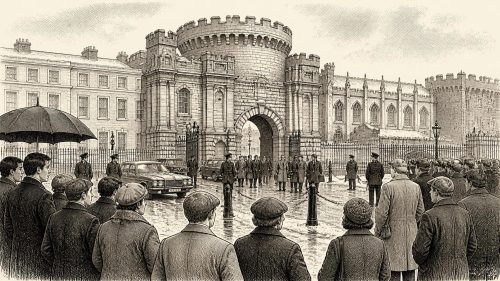
The Fifty-Three-Day Fast
Ireland in 1980 faced inflation, unemployment, heavy borrowing and industrial closures, while Haughey’s government pursued fiscal restraint and national wage agreements. Northern Ireland remained politically deadlocked and violent, as constitutional proposals failed to reconcile unionist and nationalist demands. The central event was the fifty-three-day Maze hunger strike, begun by republican prisoners seeking recognition through five prison demands. It ended without deaths or settlement, leaving conflict unresolved. Dublin and London maintained dialogue through Haughey-Thatcher meetings and the Dublin Castle summit. Restrictive family-planning provisions commenced, and NIHE Dublin opened. Strumpet City, Johnny Logan’s Eurovision victory, and Gaelic games successes provided cultural landmarks.
View Record
Dublin Castle’s European Debut
In 1975, Ireland hosted the first formal European Council meeting at Dublin Castle during its EEC presidency, signalling an expanded international role. Northern Ireland remained unstable despite IRA ceasefires: the Constitutional Convention favoured majority rule, while violence claimed 260 lives, including three Miami Showband members. Security policy proposed ending special-category prisoner status and building Maze H-Blocks. In the Republic, recession raised insured unemployment to 12 per cent, exposing dependence on British and European markets. Lasting changes included establishment of the Law Reform Commission, commencement of equal-pay legislation, and Oliver Plunkett’s canonisation. The year combined engagement, hardship, reform and national conflict.
View Record
De Valera’s Passing Torch
In 1959 Éamon de Valera left the Taoiseachship to become Ireland’s third president after defeating Seán Mac Eoin, while Seán Lemass succeeded him without an election. A simultaneous referendum to replace proportional representation was rejected. Lemass inherited emigration, unemployment and rural decline, but advanced economic expansion, industrial exports, infrastructure and skills training, including the Apprenticeship Act. Trade unions reunited as the all-island Irish Congress of Trade Unions. The IRA Border Campaign continued amid weak republican electoral support. Cultural life featured John B. Keane’s Sive and George Morrison’s Mise Éire. The year combined revolutionary memory and partition with tentative social modernisation.
View Record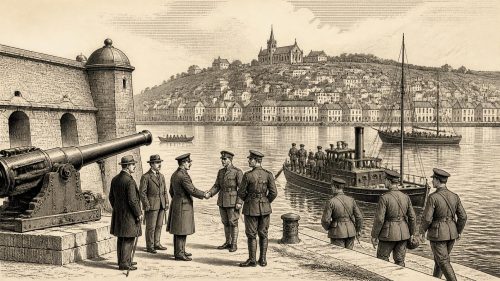
Hyde and the Returned Ports
In 1938, the new Constitution acquired practical force as Ireland developed its institutions and position. Douglas Hyde, cultural revivalist and Church of Ireland scholar, became first President, symbolising an inclusive national identity, though disputes persisted. April agreements ended the Economic War: Ireland paid £10 million, Britain removed special duties, and the Treaty Ports at Cork Harbour, Berehaven and Lough Swilly returned to Irish control. Fianna Fáil then won an overall majority. Labour legislation addressed shop workers’ conditions, but poverty, emigration and agricultural dependence continued. Partition remained unchanged despite discussions with Britain and Northern Ireland, while port recovery strengthened future neutrality.
View Record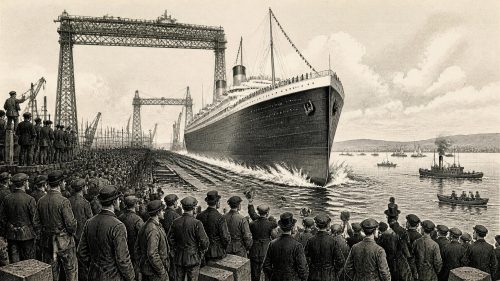
Celtic, Census and Crown
In 1901, Ireland remained within the United Kingdom, governed from Dublin Castle, while Edward VII’s accession exposed divided responses to imperial authority. Land reform continued through a limited Purchase of Land Act, amid unresolved congestion, rents and tenant demands. The census recorded 4,458,775 people, documenting demographic decline, regional contrasts, religion, literacy, occupations and 641,142 Irish speakers. Cultural nationalism expanded through Thomas O’Donnell’s parliamentary protest, the Gaelic League, GAA and Irish-language theatre. Belfast’s launch of the White Star liner Celtic demonstrated industrial and Atlantic connections. The year revealed enduring structures alongside political, social and cultural transformation at the century’s active opening.
View Record
Crumlin Road and Newgate
In 1883, Ireland remained divided by unresolved land ownership, coercive government and demands for Home Rule, while the aftermath of the Phoenix Park murders shaped prosecutions and political debate. The Labourers (Ireland) Act established a cautious framework for sanitary authorities to build rural cottages, foreshadowing later reforms. Nationalist organisation persisted through Parnell, the National League and transatlantic support. Catholic institutions expanded with Belfast’s Mater Hospital and a Jesuit University College in Dublin. Completed O’Connell monument figures, international rugby, emigration, a Tyrone tramway proposal and George Moore’s first novel reflected wider civic, economic and cultural change amid continuing uncertainty, national tensions.
View Record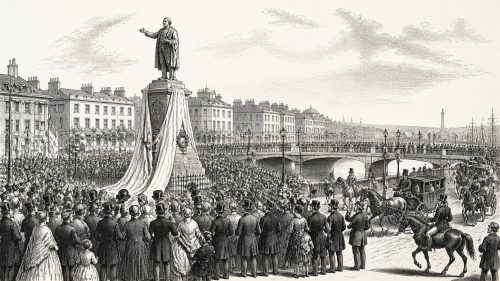
Phoenix Park, O’Connell’s Bronze
1882 in Ireland combined attempted settlement, assassination, land relief, coercion, injustice, and nationalist reorganisation. Informal negotiations between Parnell and Gladstone’s government secured nationalist releases and promised arrears relief, prompting Forster’s resignation. Days later, Irish National Invincibles murdered Chief Secretary Lord Frederick Cavendish and under-secretary Thomas Henry Burke in Phoenix Park, damaging constitutional nationalism. The government responded with the Prevention of Crime Act and the limited Arrears of Rent Act. At Maamtrasna, inadequate interpretation imperilled Irish-speaking defendants; Myles Joyce was executed and posthumously pardoned. Parnell’s supporters founded the Irish National League, while Dublin unveiled O’Connell’s monument, affirming constitutional public national aspirations.
View Record
Lichfield House Alliance
In 1835, Daniel O’Connell’s Repealers allied with Whigs and Radicals in the Lichfield House Compact, helping Lord Melbourne defeat Peel and return to office. The alliance increased Irish influence at Westminster but delivered neither repeal nor a tithe settlement; Lords blocked church reforms, although collection relief was granted. Mulgrave, Morpeth and under-secretary Thomas Drummond brought a more conciliatory Dublin Castle administration, while Michael O’Loghlen became attorney general, the first Catholic since James II. The Poor Inquiry exposed widespread rural insecurity. Public works included Limerick’s Wellesley Bridge and Eagle Island lights; Castleknock seminary opened, and Irish-language poet Antaine Ó Raiftearaí died.
View Record
O’Connell at Ennis
Daniel O’Connell’s decisive County Clare by-election victory at Ennis in 1828 exposed the contradiction of allowing Catholic freeholders to vote while barring Catholic MPs from taking Westminster oaths. Challenging ministerial supporter William Vesey Fitzgerald, O’Connell secured 2,057 votes to 982, aided by priests, organisers and disciplined popular mobilisation. Though unable to take his seat, he forced government and parliament to confront Catholic exclusion. The campaign demonstrated constitutional agitation’s power amid rural poverty, contested education, coercive criminal law, and uneven economic development. Belfast’s new Botanic Garden and expanding trade statistics reflected urban and administrative ambitions, while Clare transformed local politics nationally.
View Record
Wellesley’s Bottle Riot
In 1822, Ireland endured agrarian unrest, food scarcity and emergency government. Lord Lieutenant Richard Wellesley inherited Rockite violence, chiefly in Munster, where the Insurrection Act, habeas corpus suspension, troops and special commissions produced prosecutions, transportation and executions. Poor harvests caused severe regional distress, especially in the west and south-west. Government coordinated charity and funded public works, employing labourers on roads, piers and harbours under engineers including Alexander Nimmo and Richard Griffith. Political divisions persisted over Catholic exclusion and the established Church. A new constabulary law encouraged organised policing. December's Bottle Riot, when a jar was thrown at Wellesley, symbolised conflict.
View Record
Fever Wards and Steam Packets
Ireland in 1818 faced a contagious-fever epidemic, associated chiefly with typhus, intensified by poverty, overcrowding and post-war dislocation. Parliamentary inquiry and the Fever Hospitals Act established local bodies to provide hospitals, though funding, coverage and care remained uneven, and compulsory removal reflected social control. Dublin opened Francis Johnston’s General Post Office, symbolising communications, while pioneering steamships connected Dublin and Belfast with Scotland. Religious developments included the death of Archbishop Richard O’Reilly, an Irish-language Protestant educational society, and the Secession Synod. Official records revealed crime and distress; Anthony Gallagher was executed. Literary works by Lady Morgan and Patrick Brontë portrayed Ireland.
View Record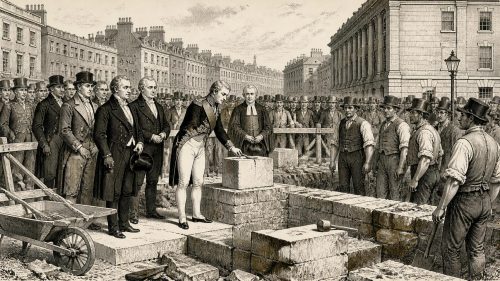
Middlethird and the New Post Office
In 1814, post-Union Ireland faced peace as Napoleon’s abdication altered wartime trade while rural poverty and land tensions persisted. Robert Peel’s government answered disturbances, notably in Tipperary’s Middlethird, with the Peace Preservation Act, creating salaried magistrates and constables and strengthened coercive powers against unlawful combinations. Catholic politics were divided over a proposed Crown veto on bishops, with Daniel O’Connell opposing state control; emancipation remained unresolved. Dublin saw Whitworth lay the General Post Office foundation stone and Chapel Royal inaugurated, while Belfast’s Academical Institution opened. Shaw Mason began his parochial survey, and the Apprentice Boys Club formed in Derry, reflecting division.
View Record
The Catholic Board Reassembles
In 1812, Catholic politics revived through the Catholic Board, which defended constitutional petitioning against Convention Act restrictions. Daniel O’Connell emerged as a forceful opponent of the proposed Crown veto over bishops’ appointments. At Westminster, Henry Grattan secured a Commons vote favouring consideration of Catholic claims, but no emancipation legislation followed. Robert Peel’s appointment as chief secretary strengthened Dublin Castle’s resistance. Wartime markets supported agricultural output and trade, yet rural households faced insecure holdings, rents and poverty. Wakefield surveyed these inequalities; Edgeworth’s The Absentee criticised distant landlordism. Sadler’s balloon attempt provided a fleeting spectacle amid unresolved political, social and economic tensions.
View Record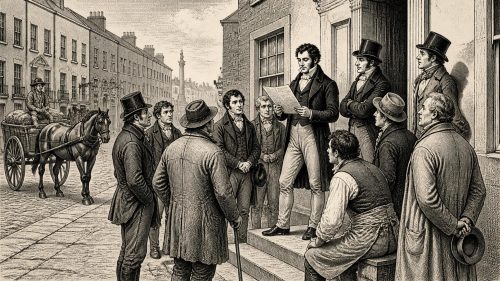
O’Connell’s County Circular
In 1810, nine years after Union, Ireland’s Catholics remained excluded from Parliament and offices despite earlier relief. Henry Grattan’s unsuccessful Westminster initiative exposed disputes over a proposed veto on episcopal appointments. Daniel O’Connell, opposing such control, issued a Dublin circular encouraging county committees to correspond with the Catholic Committee, strengthening constitutional, national organisation. Authorities nevertheless feared representative associations under the Convention Act. Parliament’s Unlawful Oaths (Ireland) Act punished coercive combinations amid rural insecurity. Meanwhile, agriculture dominated livelihoods, while Ulster linen connected production and Belfast commerce to wartime markets. Print, learned culture and Irish historical interests accompanied a contested public life.
View Record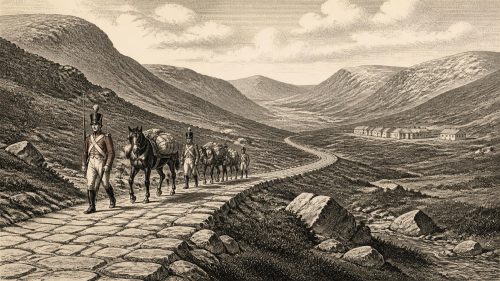
Taylor’s Mountain Road
In 1809, post-Union Ireland remained governed through Dublin Castle, Westminster and local institutions amid war and unresolved Catholic disabilities. Administrative changes followed Arthur Wellesley’s departure for Portugal. Captain Alexander Taylor’s Military Road across Wicklow, completed in October, extended state access to former insurgent terrain. Legislation supported road improvements, Dublin waterworks, Church of Ireland buildings and investigation of bog reclamation. Nelson’s Pillar opened in Dublin, celebrating imperial naval power. Belfast manufacturing collapse prompted charitable relief, while Cork’s Magdalene asylum reflected religious social discipline. Edward Bunting’s music collection preserved and reshaped Irish harp traditions through print, illustrating infrastructure, commemoration and cultural interpretation.
View Record
The Rochdale Storm
In 1807, six years after Union, Ireland remained governed from Dublin Castle and Westminster amid war, restricted representation and unresolved Catholic claims. George III's opposition defeated a limited Catholic military service measure, toppling Grenville ministry. The new lord lieutenant, Duke of Richmond, and chief secretary Arthur Wellesley pursued security, elections and renewed coercive powers, including insurrection and arms legislation. Michael Dwyer’s colonial trial illustrated repression’s imperial reach. Dublin gained a paving board amid wartime commercial pressures. In November, Rochdale and Prince of Wales were wrecked in Dublin Bay, killing about 400 and prompting later plans for a harbour at Dunleary.
View Record
Thomas Street’s Broken Rising
In 1803, amid post-Union discontent and renewed war with France, Robert Emmet organised a United Irish-inspired attempt to seize Dublin Castle and establish a provisional government. Conspirators produced pikes and explosives, while Anne Devlin carried messages, but weak coordination, limited firearms and absent regional support undermined the plan. On 23 July, the Thomas Street rising collapsed into confused violence; Lord Chief Justice Kilwarden and his nephew were murdered. Emmet was arrested, tried and executed, while Devlin and other suspects faced repression. Though militarily insignificant, the failure strengthened coercive government and preserved republican ideals of independence, popular sovereignty and inclusive citizenship.
View Record
Napper Tandy’s Reprieve
In 1801 the Act of Union abolished Ireland’s parliament and incorporated the kingdom into the United Kingdom, while Dublin Castle and local administration remained. Ireland received limited Westminster representation, dominated by property and borough influence. Catholic hopes of emancipation collapsed after George III’s opposition, strengthening the established Protestant church and prompting ministerial resignations. Lord Hardwicke became lord lieutenant amid fears after the 1798 rebellion. United Irishman James Napper Tandy, condemned for treason, was pardoned and spared execution. Food scarcity, high prices and uneven relief burdened households. Fiscal and trade integration proceeded gradually, while officials envisaged Ireland within an imperial framework.
View Record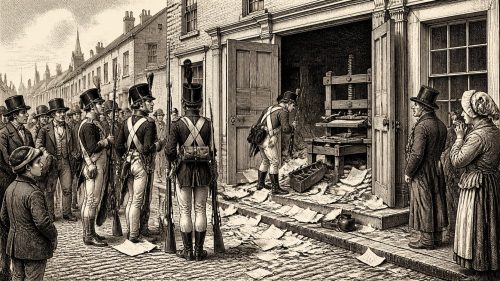
Orr and the Northern Star
In 1797, Ireland faced mounting tension between the clandestine United Irishmen and a government anticipating rebellion and French invasion. General Gerard Lake’s Ulster disarmament campaign seized weapons, intimidated communities and weakened northern radical networks. After Monaghan militiamen implicated in United Irish activity were executed at Blaris, fellow soldiers destroyed Belfast’s Northern Star, silencing a major radical newspaper. Arrests also disrupted Cork organisers, while calls for constitutional conciliation gained little ground. William Orr’s contested conviction and hanging made him a powerful martyr. Meanwhile, parliamentary limitations and bank restrictions exposed wider political and economic insecurity, foreshadowing the 1798 rebellion in Ireland itself.
View Record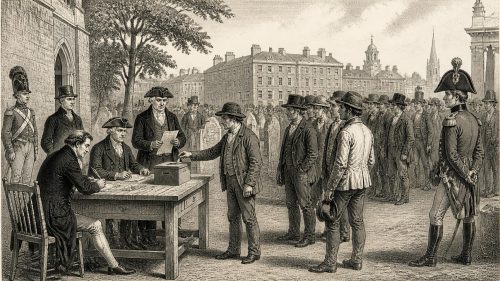
Keogh, Franchise and Ballot
In 1793, Ireland combined Catholic relief with intensified state control amid war with revolutionary France. Following John Keogh’s Catholic Convention petition, the Roman Catholic Relief Act enfranchised qualified Catholic forty-shilling freeholders and opened certain employment and educational opportunities, while retaining exclusion from parliament, senior offices and Trinity fellowships. The Gunpowder Act regulated weapons, while the Irish Militia Act introduced parish enrolment and ballots, incorporating Catholics and Presbyterians into government service. The Convention Act restricted representative political assemblies, constraining reformers and United Irishmen. Economic pressures, militia obligations and print culture shaped daily life. The year broadened participation whilst strengthening coercive administration.
View Record
Belfast Readers, Cork Stalls
In 1788, Ireland’s post-1782 settlement revealed both reforming ambition and entrenched exclusion. Parliament, dominated by Protestant property and patronage, rejected Henry Grattan’s proposal to regularise tithes, while considering compensation for clergy whose payments had been withheld amid agrarian unrest. It also supported linen, hemp, transport, courts, gaols and urban works, reflecting practical governmental intervention. Cork Corporation opened the English Market, improving organised food provisioning. Belfast tradesmen founded the subscription-based Reading Society, later Linen Hall Library, promoting shared learning. George III’s illness created a regency crisis, foreshadowing constitutional conflict between Ireland and Britain in 1789 and exposing limits of parliamentary representation.
View Record
The Rotunda’s Volunteer Parliament
In 1783, Ireland secured confirmation of legislative and judicial autonomy through the Renunciation Act, ending British appellate jurisdiction. Yet its parliament remained Protestant, property-based and controlled by patronage. Volunteers pressed for reform, convening in Dublin at the Rotunda under Lord Charlemont. Their Protestant-focused programme excluded Catholic enfranchisement and sought electoral reform, curbs on office-holders, regular parliaments and anti-corruption measures. Henry Flood’s Volunteer-backed bill was rejected by the Commons, while Grattan resisted armed pressure. The convention adjourned peacefully, exposing constitutional limits. Harvest failures caused scarcity and food prices, while the Bank of Ireland opened and Dublin’s commercial and ceremonial life continued.
View Record
Belfast’s July Address
In 1780, Irish commercial concessions eased some restrictions on trade, but their dependence on Westminster reinforced Patriot demands for legislative authority. Henry Grattan’s April motion declaring that only Ireland’s King, Lords and Commons could legislate for the kingdom was defeated. On 13 July, 2,700 Ulster Volunteers assembled at Belfast and publicly endorsed the principle, transforming a defence force into a political movement. Volunteers connected civic organisation, commerce and constitutional agitation, although they were Protestant and excluded most Catholics. War, economic uncertainty and reform shaped the year. Administrative change brought Carlisle as lord lieutenant, but Ireland entered 1781 without legislative independence.
View Record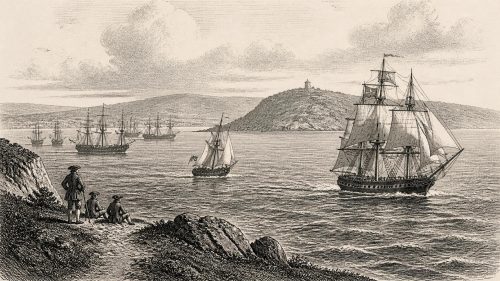
Campbell’s Southern Survey
In 1777, Ireland felt the American war through disrupted markets, privateering and insecurity in the Irish Sea. Lord Buckinghamshire’s new Dublin Castle administration sought to preserve a system constrained by Westminster, franchises and Catholic exclusion. American privateers near Howth delayed linen shipping, threatening credit, employment and trade. Loss of colonial markets and provision embargoes exposed Ireland’s narrow, regulated economy. Thomas Campbell’s published survey criticised uneven development, inadequate institutions and penal exclusions, while advocating union rather than separation. Dublin’s theatre and print culture remained active. The year foreshadowed later Volunteer and free-trade crises, but did not deliver constitutional or commercial reform.
View Record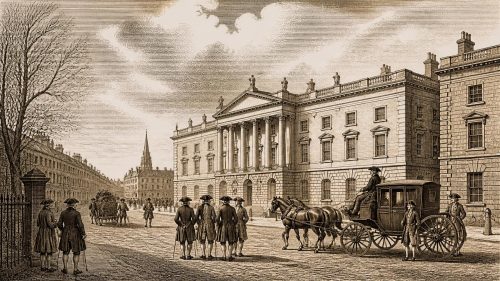
Flood’s Office, Grattan’s Entrance
In 1775, the American war exposed tensions within Ireland’s restricted Protestant political order. Troop departures depleted the garrison, while authorities pragmatically tolerated Catholic recruitment despite penal disabilities. Atlantic links encouraged both loyalism and sympathy for the colonists, expressed in Dublin and Edmund Burke’s conciliation arguments. Henry Flood accepted office, weakening the Patriot interest, while Henry Grattan entered parliament through Charlemont patronage. Parliament managed supply and revenue under strong British influence. Catholics and Presbyterians remained disadvantaged, and debate connected religion, trade and constitutional constraints. War threatened linen markets and sharpened commercial grievances. Cultural life and tower damage reflected wider uncertainty locally.
View Record
Harcourt at Dublin Castle
In 1772, George Townshend’s departure and Simon Harcourt’s arrival as Lord Lieutenant altered Dublin Castle’s leadership without changing Ireland’s dependence on British imperial authority or its patronage-based, unrepresentative parliament. Ulster’s Hearts of Steel protest exposed rural insecurity over rents, leases, taxes and evictions; government answered with troops, targeted legislation and a later pardon, rather than structural reform. Parliament granted Catholics restricted long-term leases of bog land, a limited economic concession preserving wider penal disabilities. The London-Derry Journal’s foundation and revived siege commemoration illustrated print’s growing civic role. Meanwhile, linen, improvement and institutions coexisted with inequalities in land, religion and power.
View Record
Robinson’s Library, Pery’s Chair
In 1771, Edmund Sexten Pery’s election as Speaker signalled Dublin Castle’s growing ability under Lord Lieutenant George Townshend to organise parliamentary support, though alliances remained fragile. The session beginning that autumn introduced improvement measures, including limited Catholic leases of reclaimed bog, later enacted in 1772. Belfast began building its poor-house and infirmary, later Clifton House, reflecting commercial growth, charitable discipline and medical provision. Archbishop Richard Robinson founded Armagh Public Library, extending learning beyond Dublin while expressing Church of Ireland authority. Grain imports and proposals for canals, navigation, streets, hospitals and reclamation revealed an economy dependent on trade, labour, uneven improvement.
View Record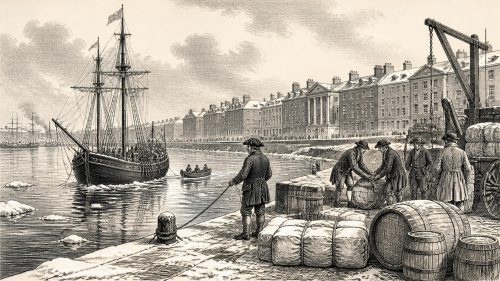
Townshend’s Provision Embargo
In 1770, Ireland was governed during Parliament’s prorogation as Lord Townshend used patronage to weaken parliamentary undertakers and strengthen Dublin Castle. Westminster sustained bounties supporting Irish linen, while the Dublin Society promoted economic improvement. Quarantine regulations monitored shipping routes and goods amid fears of plague. In December, authorities embargoed provision-laden vessels, reflecting concern over supplies without proving famine; butter received exemption in 1771. Catholic and Presbyterian exclusion, landlord power and dependence on agriculture and exports persisted. Trinity’s College Historical Society began meeting, while Burke and Goldsmith published works. The year reveals an unequal kingdom managed through law, commerce and patronage.
View Record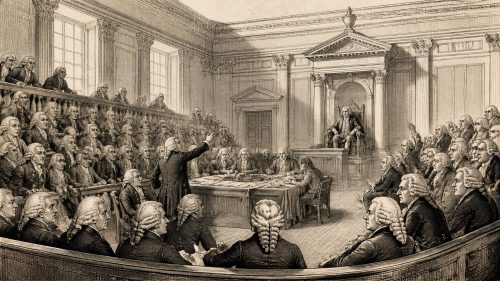
The Commons’ Rejected Supply
In 1769, Ireland’s octennial parliament confronted Dublin Castle when the Commons rejected a supply bill, 94–71, insisting that money measures must originate in the House rather than under Poynings’ Law. The dispute reflected Townshend’s effort to end dependence on undertakers Ponsonby and Shannon, while securing an enlarged army, approved in December. Catholic exclusion and borough franchises framed this Protestant contest. Elsewhere, James Agar was killed by Henry Flood in a Callan patronage feud; authorities suppressed labour combinations; Shannon navigation improvements culminated; and the Hibernian Society gained its charter. The supply vote exposed limits and prompted Castle plans to reshape administration.
View Record