Archived: 9 October 2026
Abstract
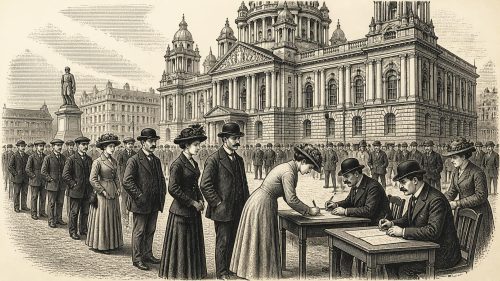
In 1912, the Third Home Rule Bill made limited Irish self-government a realistic prospect, though it remained under parliamentary debate and reserved major powers to Westminster. John Redmond’s Irish Parliamentary Party supported it, while Ulster unionists, led by Edward Carson and backed by British Conservatives, demonstrated mass resistance at Balmoral and signed the Ulster Covenant and women’s Declaration on Ulster Day. Belfast’s industrial strength, sectarian divisions and summer disturbances revealed mounting tension. Suffragists challenged women’s exclusion from reform. Titanic’s Queenstown call highlighted migration and regional connections. Cultural activity continued, but unresolved Home Rule, unionist mobilisation and social divisions foreshadowed crisis.
Read Article
Archived: 9 October 2026
Abstract
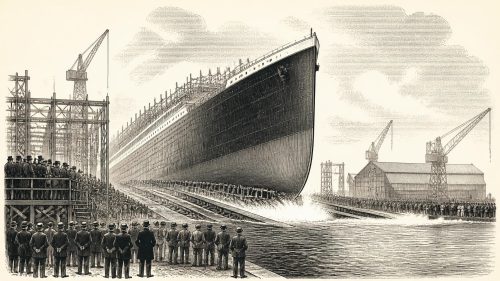
In 1911, Ireland remained under Westminster rule but faced deepening constitutional, social and economic divisions. The census documented continuing population decline through emigration, rural livelihoods, and the mixed fortunes of Irish language revival. The Parliament Act removed the Lords’ absolute veto, making Home Rule more attainable, while Carson’s Craigavon rally demonstrated organised Unionist resistance. Belfast launched Titanic, symbolising industrial strength and Unionist ties to Britain. Labour militancy emerged through Larkin’s Irish Worker and the Wexford lockout. Suffrage organisations expanded women’s public activism. Royal visits and the Parnell monument reflected competing loyalties, as Ireland’s divergent futures became increasingly visible to contemporaries.
Read Article
Archived: 9 October 2026
Abstract
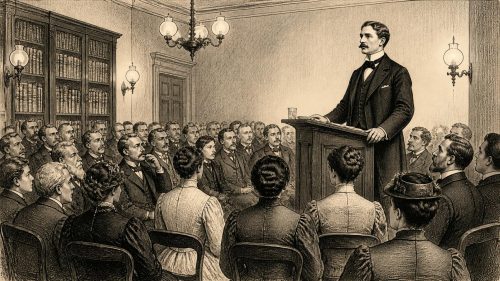
In 1892, Ireland’s general election confirmed anti-Parnellite dominance, with Justin McCarthy’s federation winning seventy-two seats against nine for John Redmond’s faction, while nationalist division persisted. Liberal victory returned Gladstone to office, making Home Rule possible but not yet enacted. Belfast’s Ulster Unionist Convention demonstrated organised resistance, and Edward Carson entered Parliament. Rural labourers founded Knights of the Plough, demanding land, wages and housing. St Macartan’s Cathedral was dedicated in Monaghan. Douglas Hyde’s Dublin address, The Necessity for De-Anglicising Ireland, urged cultural renewal through language and tradition. Census reports documented social change; Belfast also hosted Ireland’s international football match against England.
Read Article




