


Calendar Reform
Archived: 12 October 2026
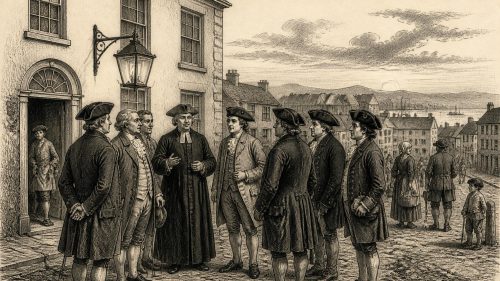
In 1752 Ireland adopted the Gregorian calendar, so Wednesday 2 September was followed by Thursday 14 September, while the civil year now began on 1 January. The reform affected administration, commerce, courts and worship, though no evidence supports later tales of calendar riots. Commissioners for inland navigation were incorporated, signalling ambitions to improve trade despite difficult travel. Dublin gained Ireland’s first purpose-built Methodist chapel; Killaloe and Kilfenora bishoprics were united. Belfast merchants founded the Charitable Society to address poverty amid commercial expansion tied to Atlantic slavery. Under Protestant political dominance, Catholics remained excluded and inequalities persisted deeply across Irish society.


