
Archived: 10 October 2026
Abstract
In 1871, Ireland experienced constitutional, demographic, agrarian and civic change. The Church of Ireland was disestablished, ending its privileged state position while preserving it as a self-governing voluntary body. The census recorded 5,412,377 people, confirming continuing post-Famine decline and emigration, alongside Belfast’s industrial growth. Land reform under the 1870 Act offered limited tenant protections, but agrarian violence prompted the coercive Westmeath Act, permitting detention without trial in proclaimed districts. Isaac Butt’s election for Limerick advanced constitutional home government. Belfast opened Ormeau Park, while expanding national education and Trinity’s academic life highlighted uneven access, religious tensions and unresolved inequalities across Ireland.
Read Article

Archived: 10 October 2026
Abstract
In 1870, Irish politics increasingly moved from Fenian insurrection towards constitutional campaigning, though prisoner amnesty remained contentious. Isaac Butt founded the Home Government Association at Bilton’s Hotel, uniting disparate interests behind a federal-style Irish legislature within the Crown and empire. Gladstone’s Landlord and Tenant (Ireland) Act recognised Ulster custom, improvements and eviction compensation, but neither secured fair rents nor ownership. Church of Ireland disestablishment, legislated in 1869, awaited implementation in 1871, while its Representative Church Body was established. Emigration, infant mortality, literacy and livestock farming highlighted pressures. The year transformed methods and principles without settling Ireland’s land or religious questions.
Read Article
Archived: 10 October 2026
Abstract
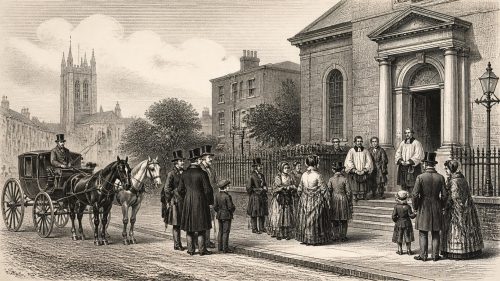
In 1869, Gladstone’s Irish Church Act reshaped Ireland’s settlement by legislating disestablishment of the Church of Ireland, effective in 1871, while protecting clergy and reorganising property. It ended grants to Maynooth and Presbyterian ministers through compensation arrangements, prompting new church financing and governance. Selective release of Fenian prisoners sustained amnesty agitation, with Isaac Butt emerging as a constitutional nationalist figure. Inquiries into tenant rights and agricultural improvements prepared the ground for land reform in 1870. Mary Ward’s death near Parsonstown in an experimental steam carriage marked Ireland’s first recorded mechanised road fatality. Master McGrath’s Waterloo Cup victory generated sporting pride.
Read Article
Archived: 10 October 2026
Abstract
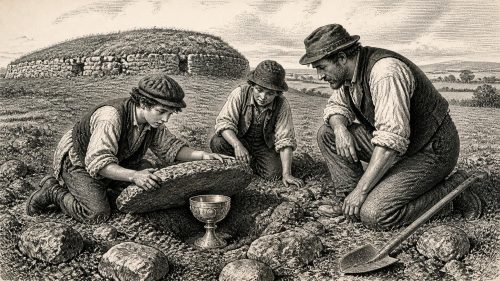
In 1868, Ireland faced a constitutional crisis over the Anglican Church of Ireland, whose privileged status conflicted with the Catholic majority and Presbyterian presence. Gladstone’s resolutions, Commons victories and Liberal election gains made disestablishment unavoidable, although legislation followed in 1869. Franchise reform enlarged, but did not democratise, the male electorate, while Gladstone’s ministry symbolised reform through Catholic lord chancellor Thomas O’Hagan. Fenian prosecutions sustained security fears. National schools expanded amid attendance, and industrial schools extended state control. Emigration, pastoral change and poverty persisted. St Colman’s Cathedral began at Queenstown, Valentia Observatory opened, and the Ardagh Chalice discovered during potato digging.
Read Article

Archived: 10 October 2026
Abstract
In 1862, Ireland saw significant infrastructural, civic and institutional development alongside enduring poverty and political frustration. Edward Harland and Gustav Wolff formed their Belfast shipbuilding partnership, while Ulster Hall opened, symbolising the city’s industrial and cultural confidence. The railway reached Sligo, and a Stranraer–Larne steam service improved connections with Scotland. Dublin gained statutory authority for a municipal fire brigade. Meanwhile, parliamentary debates highlighted severe rural distress and workhouse dependence; Poor Law changes expanded infirmary care and child boarding-out. Churches marked Archbishop Beresford’s death, republican organisation persisted covertly, and Irish communities remained connected to America, literature, and expanding national education systems.
Read Article

Archived: 10 October 2026
Abstract
In 1860, Ireland remained shaped by post-Famine population loss, insecure rural tenancies and religious division. Deasy’s Act recast landlord–tenant relations as contractual, consolidating rules while failing to secure customary tenant-right or resolve ownership of improvements. Census legislation prepared a detailed 1861 enumeration, though household returns were later destroyed. Education expanded but attendance and progression remained limited, amid denominational conflict. Sectarian disturbances in Ulster prompted restrictions on party emblems and renewal of coercive policing. Railways, coaches, ports and emigration strengthened internal and Atlantic links, while the Irish Republican Brotherhood stayed clandestine. Boucicault’s The Colleen Bawn popularised a commercial theatrical Ireland abroad.
Read Article
Archived: 11 October 2026
Abstract
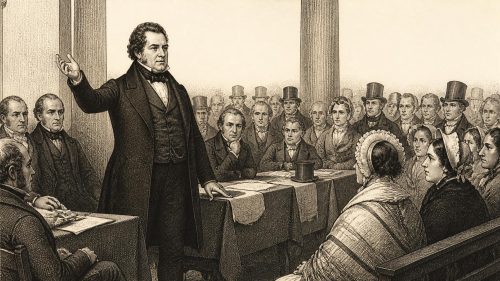
In 1840 Daniel O’Connell relaunched the constitutional campaign to repeal the Act of Union through the National, later Loyal National, Repeal Association, seeking an Irish legislature within the Crown rather than separation. Though initially modest, it established subscriptions, committees and local mobilisation. Parliament’s Municipal Corporations (Ireland) Act replaced most old corporations and reformed ten boroughs, but retained restricted franchises and limited powers. The Poor Law entered operation, with Cork’s temporary workhouse admitting inmates, signalling a restrictive institutional response to poverty. Rural inequality, population pressure and regional contrasts persisted, alongside railway plans, church reforms and Father Mathew’s temperance movement across Ireland.
Read Article
Archived: 11 October 2026
Abstract
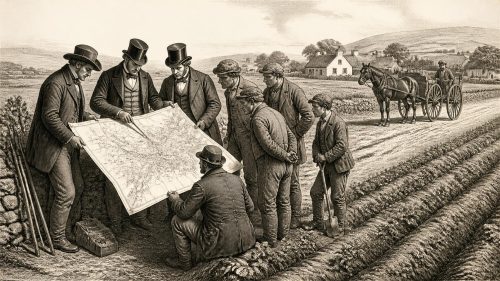
In 1838, Ireland was surveyed, classified and governed amid widespread rural insecurity. The Irish Railway Commissioners’ final report mapped population, trade and transport, advocated publicly directed railways, and warned of labourers’ heavy reliance on the nutritionally poor lumper potato, without predicting famine. The Poor Relief (Ireland) Act created poor-law unions, rates, guardians and a workhouse-centred system, reshaping local administration despite opposition. The Tithe Rentcharge Act replaced direct occupiers’ payments with a reduced landowners’ charge, easing but not ending religious grievance. Father Theobald Mathew’s Cork temperance campaign mobilised mass voluntary action. The Sirius voyage and surveys highlighted Atlantic and administrative links.
Read Article
Archived: 11 October 2026
Abstract
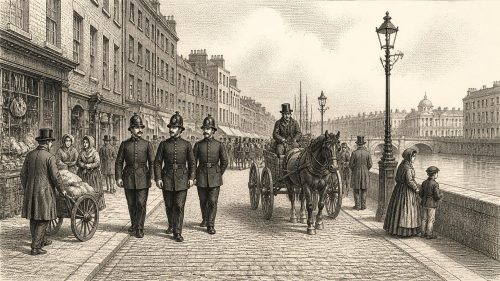
In 1836, Ireland experienced contested administrative reform rather than a decisive settlement. Westminster strengthened policing through the Constabulary and Dublin Police Acts, while licensing rules extended supervision of public houses. Tithe arrears remained unresolved: the Tithe Compositions Act merely suspended recovery proceedings, and church reforms scrutinised ecclesiastical revenues. O’Connell’s Catholic organisation demonstrated popular political strength despite a narrow franchise, notably in Longford. Municipal reform largely stalled. The Poor Inquiry documented severe, varied poverty but produced no agreed remedy; poor law followed in 1838. Crop failures heightened anxiety, while banks, newspapers and Mount Jerome cemetery reflected emerging institutional and urban change.
Read Article

Archived: 11 October 2026
Abstract
In 1835, Daniel O’Connell’s Repealers allied with Whigs and Radicals in the Lichfield House Compact, helping Lord Melbourne defeat Peel and return to office. The alliance increased Irish influence at Westminster but delivered neither repeal nor a tithe settlement; Lords blocked church reforms, although collection relief was granted. Mulgrave, Morpeth and under-secretary Thomas Drummond brought a more conciliatory Dublin Castle administration, while Michael O’Loghlen became attorney general, the first Catholic since James II. The Poor Inquiry exposed widespread rural insecurity. Public works included Limerick’s Wellesley Bridge and Eagle Island lights; Castleknock seminary opened, and Irish-language poet Antaine Ó Raiftearaí died.
Read Article
Archived: 11 October 2026
Abstract
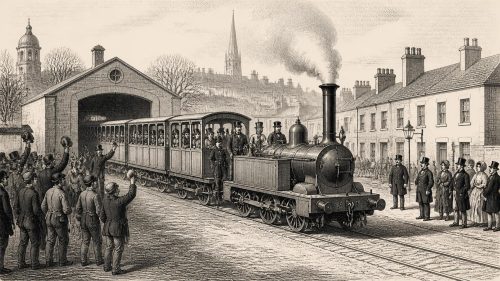
In 1834, Ireland’s contrasts were embodied by the opening of the Dublin and Kingstown Railway and the Rathcormac massacre at Gortroe, County Cork. The railway, Ireland’s first, linked Dublin’s commercial centre with its packet harbour, demonstrating private investment, engineering and growing passenger mobility. Next day, troops protecting tithe collection killed at least nine people resisting payments to the established Church of Ireland. The Tithe War exposed rural poverty, Catholic resentment and dependence on coercion. Westminster debated repeal, tithes and church reform amid ministerial instability. Population pressure, insecure labour, poor housing, disease and limited educational and health measures underscored persistent inequality.
Read Article
Archived: 11 October 2026
Abstract
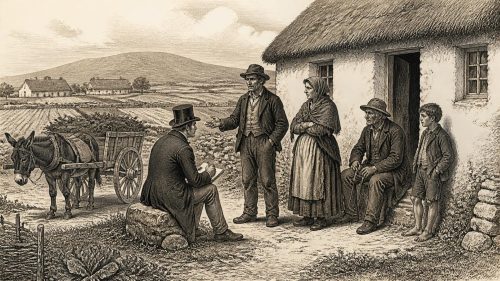
In 1833, Irish government combined coercion, church reform and social investigation amid unrest and poverty. The Suppression of Disturbances Act expanded powers over meetings, movement and suspected rural disorder, constraining constitutional mobilisation associated with Daniel O’Connell. Tithe resistance persisted despite legislation adjusting arrangements, while the Church Temporalities Act abolished levies, reorganised bishoprics and revenues, but preserved Protestant establishment and endowments. O’Connell continued to advocate repeal, tithe reform and redress. In September, Archbishop Richard Whately began a Royal Commission examining poorer classes, inaugurating systematic inquiry into labour, land, charity and deprivation. The year left Ireland’s religious, political and economic crises unresolved.
Read Article

Archived: 11 October 2026
Abstract
In 1832, Ireland experienced reform, conflict and epidemic crisis. Glasnevin Cemetery opened in February as Daniel O’Connell’s inclusive burial project, its first interment an eleven-year-old Dublin boy. Cholera soon spread from Belfast to Dublin and other towns, killing perhaps 25,000 people and exposing poor sanitation, inadequate institutions and improvised medical and burial provision. Local boards of health organised contested responses. Meanwhile, resistance to Church of Ireland tithes continued despite government relief and enforcement measures. Parliamentary reform revised constituencies and increased representation but retained a property-based franchise. Debates over national education and restrictions on partisan processions reflected religious and political tensions.
Read Article

Archived: 11 October 2026
Abstract
In 1831, Ireland experienced escalating conflict over tithes, compulsory payments supporting the established Church, despite most occupiers being Catholic. Organised resistance, including Patt Lalor’s boycott strategy, culminated at Carrickshock, County Kilkenny, where twelve constables and a process-server were killed. The census recorded approximately 7.8 million people amid poverty and land pressure. Edward Stanley established the basis for non-denominational national education. At Ralahine, County Clare, an Owenite co-operative sought security through shared labour and profits. Catholic and evangelical institutions developed, while James Hardiman’s Irish Minstrelsy promoted Irish-language poetry. The year combined coercion with reform, social experimentation, demographic observation and cultural assertion.
Read Article
Archived: 11 October 2026
Abstract
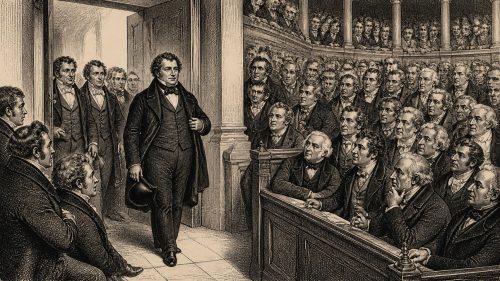
In 1830 Daniel O’Connell took his Westminster seat, embodying Catholic Emancipation after the 1829 Relief Act, while its limitations remained stark. The raised £10 franchise disfranchised many former forty-shilling freeholders, and Ireland remained governed under the Union. O’Connell’s Waterford election followed William IV’s accession and a general election, amid emerging British reform debates. Resistance to tithes supporting the Church of Ireland intensified, particularly late in the year, reflecting religious inequality and rural hardship. Distress, insecure agricultural work and market grievances sharpened tensions. Belfast’s July Orange riots exposed northern sectarian divisions. Contemporary diaries and records reveal political life extending beyond Parliament.
Read Article

Archived: 11 October 2026
Abstract
In 1829, Catholic Emancipation transformed Irish constitutional politics after Daniel O’Connell’s 1828 Clare election and the Catholic Association’s mass mobilisation forced Wellington’s government to act. The Roman Catholic Relief Act, assented to on 13 April, enabled Catholics taking a new oath to enter Parliament and many public offices, though it preserved the Protestant state settlement and excluded them from certain positions. Simultaneously, the Irish election law raised the county freehold qualification from forty shillings to £10, disfranchising many poor Catholic voters. O’Connell’s pre-Act election required a Clare by-election, which he won unopposed. Protestant opposition persisted; Gerald Griffin’s novel reflected society.
Read Article
Archived: 11 October 2026
Abstract
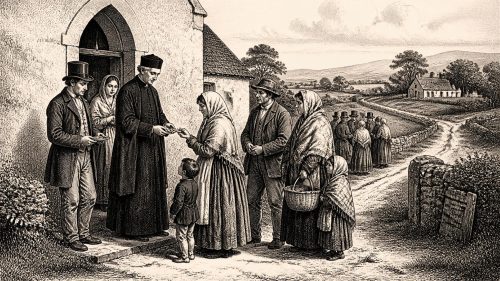
In 1824, Ireland saw organisational developments rather than decisive settlement or revolt. Daniel O’Connell’s Catholic Association introduced the penny Catholic Rent, linking parish subscriptions, clerical networks and constitutional agitation for emancipation. Tithe commutation and applotment sharpened rural grievances, amid official concern about agrarian secret societies. Parliament authorised a uniform survey and valuation, initiating the Ordnance Survey’s mapping. Economic and administrative modernisation included Belfast’s joint-stock Northern Banking Company, Donaghadee harbour planning, and standardised weights and measures. Belfast’s Academical Institution, Croker’s Irish travel and folklore publication, and Bishop Kernan’s succession illustrated expanding educational, cultural and Catholic institutional life, despite inequality and exclusion.
Read Article
Archived: 11 October 2026
Abstract
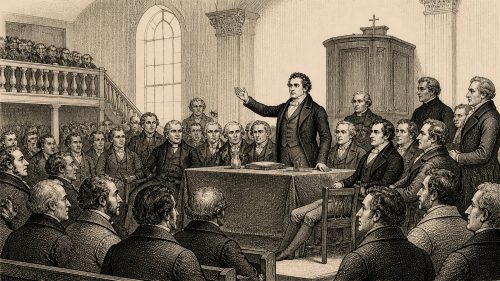
In 1823 Daniel O’Connell and fellow Catholic leaders founded the Catholic Association at Townsend Street Chapel, Dublin, creating a constitutional organisation to pursue emancipation through petitions, publicity and meetings. Initially limited to wealthier subscribers, it preceded the mass Catholic Rent of 1824. Its campaign developed amid exclusion of Catholics from Parliament and office, parliamentary debates on Irish justice, and renewed coercive legislation against rural disorder. The Composition for Tithes Act replaced payments in kind with monetary assessments but preserved an unpopular burden supporting the established church. Population pressure, poverty and potato-crop failure intensified grievances, making the Association’s political framework significant.
Read Article

Archived: 11 October 2026
Abstract
In 1812, Catholic politics revived through the Catholic Board, which defended constitutional petitioning against Convention Act restrictions. Daniel O’Connell emerged as a forceful opponent of the proposed Crown veto over bishops’ appointments. At Westminster, Henry Grattan secured a Commons vote favouring consideration of Catholic claims, but no emancipation legislation followed. Robert Peel’s appointment as chief secretary strengthened Dublin Castle’s resistance. Wartime markets supported agricultural output and trade, yet rural households faced insecure holdings, rents and poverty. Wakefield surveyed these inequalities; Edgeworth’s The Absentee criticised distant landlordism. Sadler’s balloon attempt provided a fleeting spectacle amid unresolved political, social and economic tensions.
Read Article
Archived: 11 October 2026
Abstract
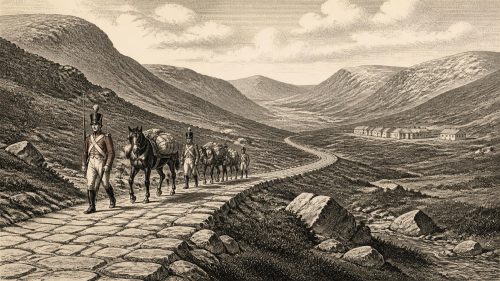
In 1809, post-Union Ireland remained governed through Dublin Castle, Westminster and local institutions amid war and unresolved Catholic disabilities. Administrative changes followed Arthur Wellesley’s departure for Portugal. Captain Alexander Taylor’s Military Road across Wicklow, completed in October, extended state access to former insurgent terrain. Legislation supported road improvements, Dublin waterworks, Church of Ireland buildings and investigation of bog reclamation. Nelson’s Pillar opened in Dublin, celebrating imperial naval power. Belfast manufacturing collapse prompted charitable relief, while Cork’s Magdalene asylum reflected religious social discipline. Edward Bunting’s music collection preserved and reshaped Irish harp traditions through print, illustrating infrastructure, commemoration and cultural interpretation.
Read Article

Archived: 11 October 2026
Abstract
In 1803, amid post-Union discontent and renewed war with France, Robert Emmet organised a United Irish-inspired attempt to seize Dublin Castle and establish a provisional government. Conspirators produced pikes and explosives, while Anne Devlin carried messages, but weak coordination, limited firearms and absent regional support undermined the plan. On 23 July, the Thomas Street rising collapsed into confused violence; Lord Chief Justice Kilwarden and his nephew were murdered. Emmet was arrested, tried and executed, while Devlin and other suspects faced repression. Though militarily insignificant, the failure strengthened coercive government and preserved republican ideals of independence, popular sovereignty and inclusive citizenship.
Read Article

Archived: 11 October 2026
Abstract
In 1801 the Act of Union abolished Ireland’s parliament and incorporated the kingdom into the United Kingdom, while Dublin Castle and local administration remained. Ireland received limited Westminster representation, dominated by property and borough influence. Catholic hopes of emancipation collapsed after George III’s opposition, strengthening the established Protestant church and prompting ministerial resignations. Lord Hardwicke became lord lieutenant amid fears after the 1798 rebellion. United Irishman James Napper Tandy, condemned for treason, was pardoned and spared execution. Food scarcity, high prices and uneven relief burdened households. Fiscal and trade integration proceeded gradually, while officials envisaged Ireland within an imperial framework.
Read Article
Archived: 11 October 2026
Abstract
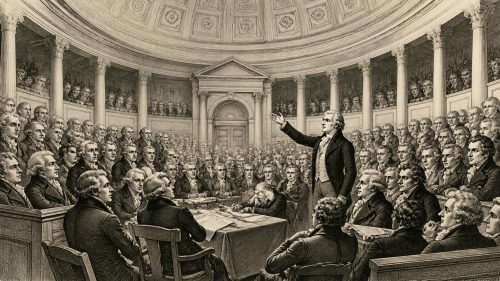
In 1800, Ireland remained a separate kingdom with its own parliament, courts and administration, but the Acts of Union passed in Dublin and London, ending its legislature from 1 January 1801. Cornwallis and Castlereagh secured support amid patronage, compensation and opposition led by Henry Grattan. The Union transferred limited Irish representation to Westminster, preserved the established Protestant church, and left Catholic emancipation unresolved. Post-rebellion repression continued, including Roddy McCorley’s execution, while food scarcity prompted controls on distilling and exports. Parliament also regulated trade, institutions and local improvements. Dublin retained political activity yet faced loss of its resident legislature and disruption.
Read Article

Archived: 12 October 2026
Abstract
In 1788, Ireland’s post-1782 settlement revealed both reforming ambition and entrenched exclusion. Parliament, dominated by Protestant property and patronage, rejected Henry Grattan’s proposal to regularise tithes, while considering compensation for clergy whose payments had been withheld amid agrarian unrest. It also supported linen, hemp, transport, courts, gaols and urban works, reflecting practical governmental intervention. Cork Corporation opened the English Market, improving organised food provisioning. Belfast tradesmen founded the subscription-based Reading Society, later Linen Hall Library, promoting shared learning. George III’s illness created a regency crisis, foreshadowing constitutional conflict between Ireland and Britain in 1789 and exposing limits of parliamentary representation.
Read Article
Archived: 12 October 2026
Abstract
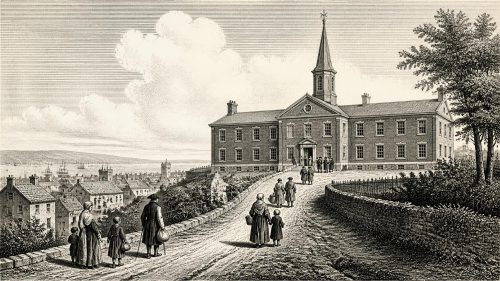
In 1774, Ireland saw developments reflecting urban growth, religious inequality and economic ambition. Belfast’s Charitable Society was incorporated, opened its Poor House and Infirmary, later Clifton House, and began admitting residents, providing elite-supervised relief amid poverty generated by commercial expansion. Parliament allowed Catholics to swear allegiance instead of supremacy, but preserved penal restrictions on property, education and political participation. In Armagh, Archbishop Richard Robinson’s infirmary and Royal School extended an Anglican institutional landscape. Legislation promoted Lagan navigation to link Belfast with inland trade, despite difficulties. Cultural landmarks included Thomas Leland’s History of Ireland, Oliver Goldsmith’s death, and Francis Beaufort’s birth.
Read Article
Archived: 12 October 2026
Abstract
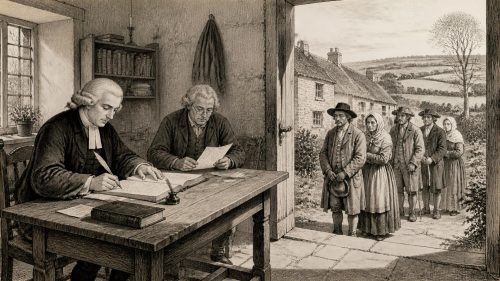
In 1766, Ireland’s Protestant authorities ordered a religious return distinguishing Protestant and Catholic householders and listing Catholic clergy. Conducted unevenly by Church of Ireland ministers, it revealed confessional inequality but survives only fragmentarily. In south Tipperary, Father Nicholas Sheehy, sympathetic to agrarian grievances associated with the Whiteboys, became a target of anxious magistrates and gentry. Acquitted of rebellion charges, he was convicted of murder despite disputed evidence and executed at Clonmel. Further executions followed. These events exposed a state classifying an excluded Catholic majority while repressing rural resistance amid commercialising agriculture, constitutional constraints, Protestant dominance, and fears of Catholic disloyalty.
Read Article
Archived: 12 October 2026
Abstract
In 1764, Ireland's Protestant-led parliament enacted wide-ranging legislation on linen, fisheries, roads, urban regulation, prisons, trade and public order. Measures promoted manufacture, navigation and turnpikes while regulating coal, food, markets, charitable gifts and civic administration. Linen exports demonstrated economic importance but also dependence on imperial constraints. Acts concerning land burning, salmon, tithes, Protestant property and riots reflected rural conflict, environmental pressures and the continuing Whiteboy movement. Government operated through Dublin Castle, Lord Lieutenant Northumberland and powerful undertakers, as George Stone and Henry Boyle died. Cultural developments included Old Moore's Almanac, William Ashford's arrival, and births of Emmet, O'Conor and Hope.
Read Article
Archived: 12 October 2026
Abstract
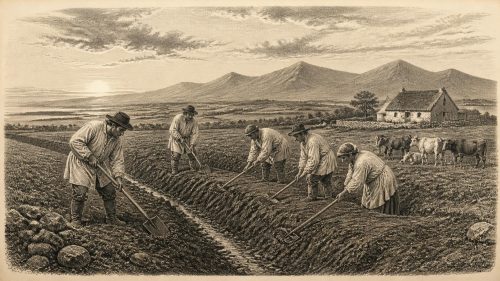
In 1762, Spain’s entry into the Seven Years’ War heightened fears of invasion, prompting Lord Lieutenant Halifax to review Irish defences amid privateering and controls on provisioning. Dublin’s Protestant parliament considered, but London rejected, septennial parliaments; legislation reinforced Protestant land titles while regulating commerce, roads and urban services. In Munster, Whiteboy protest spread against enclosure, rents, tithes and exactions, provoking troops and arrests but reflecting agrarian distress rather than a sectarian conspiracy. Dublin also saw church building, civic regulations and Macklin’s comedy. Halifax left in May; a December Anglo-Spanish armistice reduced danger without resolving Ireland’s religious, constitutional or rural inequalities.
Read Article
Archived: 12 October 2026
Abstract
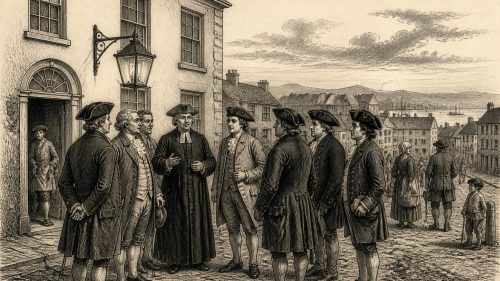
In 1752 Ireland adopted the Gregorian calendar, so Wednesday 2 September was followed by Thursday 14 September, while the civil year now began on 1 January. The reform affected administration, commerce, courts and worship, though no evidence supports later tales of calendar riots. Commissioners for inland navigation were incorporated, signalling ambitions to improve trade despite difficult travel. Dublin gained Ireland’s first purpose-built Methodist chapel; Killaloe and Kilfenora bishoprics were united. Belfast merchants founded the Charitable Society to address poverty amid commercial expansion tied to Atlantic slavery. Under Protestant political dominance, Catholics remained excluded and inequalities persisted deeply across Irish society.
Read Article

Archived: 13 October 2026
Abstract
In 1747, Ireland saw no single decisive event, but political, religious, cultural and social tensions were visible. George Stone became Church of Ireland archbishop of Armagh and a lord justice, strengthening Protestant administrative power under a restricted constitution. Catholic leadership changed through episcopal deaths and appointments, sustained by clerical and continental networks despite penal laws. John and Charles Wesley made their first Irish visits, while Edmund Burke helped found a Trinity debating club. Dublin’s Kelly riots exposed disputes over privilege and theatre authority. Proclamations addressed quarantine, rural crime, weavers’ unrest and rioting, reflecting hardship, trade and fragile order after famine.
Read Article

