Archived: 12 October 2026
Abstract
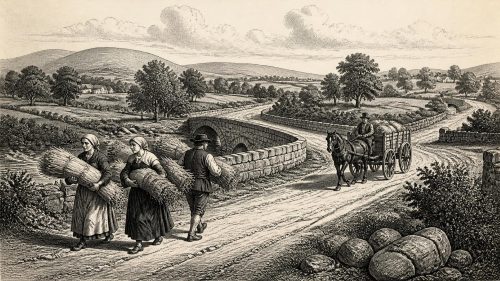
In 1764, Ireland's Protestant-led parliament enacted wide-ranging legislation on linen, fisheries, roads, urban regulation, prisons, trade and public order. Measures promoted manufacture, navigation and turnpikes while regulating coal, food, markets, charitable gifts and civic administration. Linen exports demonstrated economic importance but also dependence on imperial constraints. Acts concerning land burning, salmon, tithes, Protestant property and riots reflected rural conflict, environmental pressures and the continuing Whiteboy movement. Government operated through Dublin Castle, Lord Lieutenant Northumberland and powerful undertakers, as George Stone and Henry Boyle died. Cultural developments included Old Moore's Almanac, William Ashford's arrival, and births of Emmet, O'Conor and Hope.
Read Article

Archived: 12 October 2026
Abstract
John Rocque’s four-sheet Exact Survey of Dublin, completed in September 1756, provided an exceptionally detailed record of the capital’s streets, buildings, yards and commercial spaces. Prepared after his 1754 arrival and presented to the Lords Justices, it demonstrated Dublin’s growing administrative and economic importance. The map did not encompass Ireland or alter its entrenched inequalities. Daily life remained shaped by small-scale agriculture, unequal landholding, an expanding linen trade, Catholic disabilities and Protestant landlord power. Nevertheless, 1756 also saw political control shift in Dublin and war with France proclaimed in Ireland, exposing inherited structures to international pressure and closer governmental scrutiny.
Read Article
Archived: 12 October 2026
Abstract
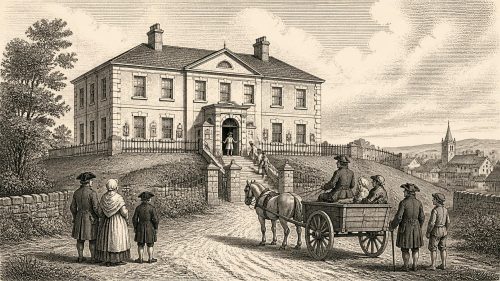
In 1754, Ireland’s unresolved dispute over public revenue sharpened conflict between the Irish Commons, Dublin Castle and Britain, despite Parliament’s restricted Protestant character. At Dublin’s Smock Alley Theatre, a performance of Mahomet provoked a political riot, damaging the theatre and forcing manager Thomas Sheridan’s departure. Days later, Dillon, Ferrall and Company failed, exposing the fragility of private banking and commercial credit. At Navan, the County of Meath Infirmary, supported by subscription, began providing modest organised care for poor patients. The year also saw notable improvement projects, historical and commercial print, and the death of Irish-language poet Seán Clárach Mac Domhnaill.
Read Article

Archived: 12 October 2026
Abstract
In 1753, Ireland’s exchequer surplus provoked a constitutional crisis when the Dublin Commons, led by Speaker Henry Boyle, rejected a debt bill returned from Britain with Crown control over expenditure. The dispute affirmed Commons resistance to executive interference but exposed the limits of parliament under Poynings’ Law, Protestant ascendancy and Westminster’s claimed supremacy; bargaining continued for years. In Dublin, the failing Essex Bridge was dismantled and replacement foundations begun, disrupting traffic while signalling Georgian engineering ambition. Authorities also addressed coal prices, begging, street cleaning and Kildare unrest. George Berkeley died in Oxford, ending an episcopate marked by practical improvement schemes.
Read Article
Archived: 13 October 2026
Abstract
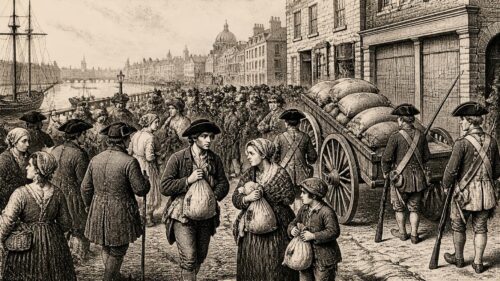
In 1740, severe frost followed by drought disrupted Ireland’s potatoes, grain, livestock and food distribution, initiating the famine 1741. Rising prices made provisions inaccessible to labourers and cottiers, while Dublin crowds rioted from 31 May to 2 June, seizing and redistributing bread, meal and beef at lower prices. Authorities banned food exports, pursued alleged market manipulators, imposed port restrictions and offered rewards, but parliament did not organise comprehensive relief. Archbishop Boulter and charities provided fragmented assistance. The crisis exposed inequalities in landholding, markets and welfare, while autumn brought no recovery before renewed winter, fever and dysentery worsened famine in 1741.
Read Article
Archived: 13 October 2026
Abstract
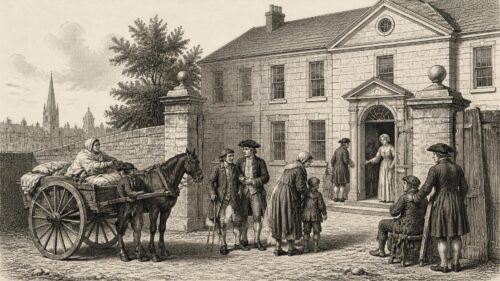
In 1733, Ireland experienced influenza, financial insecurity and institutional change centred on Dublin. Dr Steevens’ Hospital opened, providing treatment for workers while imposing rules of admission and patronage. Ben and Samuel Burton’s bank collapsed, exposing dependence on credit. Parliament returned, raised revenue duties and elected Henry Boyle Speaker, while proclamations targeted smuggling and disorder. George II chartered the Protestant charter-school society to educate and convert poor Catholic children. The Dublin Society promoted agriculture, minerals and manufactures. Cultural life included Samuel Madden’s fiction, the death of Irish-language poet Séamas Dall Mac Cuarta, Richard Kirwan’s birth, and architect Edward Lovett Pearce’s death.
Read Article




