Archived: 22 November 2026
Abstract
Ulster RecordIn the Annals of Ulster, the year 468 is marked by two brief notices: the death of Bishop Isserninus and the battle of Duma Aichir, described as a victory against Ailill Molt and linked to the Book of Cuanu. On the face of this text, 468 is an annalistic year with a named ecclesiastical death and a named battle, but no extended narrative.Parallel NoticesOther annalistic traditions attach different but related notices to the same period. The Annals of the Four Masters give 468 as the eleventh year of Oilioll Molt and record the boxing battle of Bri Ele against
Read Article
Archived: 23 November 2026
Abstract
Annal NoticesFor 467 CE, the surviving notices are brief and limited. The Annals of Ulster place in that year the repose of Benignus, successor of Patrick, and also note the Feast of Temair held by Ailill Molt; the Chronicon Scotorum likewise records the Feast of Temhair celebrated by Oilill Molt. The Annals of the Four Masters give the same year and identify it as the ninth year of Oilioll Molt, adding that the feast of Teamhair was celebrated by him.Dating VariantsThe year is also marked by variation in presentation. In the Annals of Ulster, the Temair feast appears under 467,
Read Article
Archived: 23 November 2026
Abstract
Irish NoticesFor 466 CE, the clearest dated notice in Annals of Ulster is external rather than Irish: an earthquake frightened the city of Ravenna. The same annal entry also records the death of Domangart Mac Nisi. In the Annals of the Four Masters, the corresponding year is headed as the Age of Christ 466 and includes the feast of Tara held by Oilioll Molt.The Four Masters also preserves a broader regnal frame for the same year, calling it the eighth year of Oilioll Molt, while Chronicon Scotorum gives only a short 466 notice in the retrieved excerpt and no specific
Read Article
Archived: 23 November 2026
Abstract
Year RecordFor 465 CE, the clearest recurring notice is the death of Benignus, successor of Patrick. The Annals of Ulster place that death under 465, and Chronicon Scotorum does the same. On the evidence preserved here, that is the most securely dated Irish notice for the year.The Annals of the Four Masters also assign 465 to several Irish notices: the seventh year of Oilioll Molt, the celebration of the feast of Teamhair by him, the death of Eoghan son of Niall, and the killing of Crimhthann son of Enda Censelach. These entries make 465 a clustered annal year, not a
Read Article
Archived: 23 November 2026
Abstract
Annal EntriesFor 464 CE, the Annals of Ulster record two notices under their AD 464 heading: the first battle of Ard Corann, won by the Laigin, and the coming of the Angles to England. The Annals of the Four Masters place the same year in the Age of Christ 464 and give the battle of Dumha Aichir, fought by the Leinstermen against Oilioll Molt, together with a separate notice on Conall Gulban’s death. Chronicon Scotorum’s surviving 464 notice reads: “A.D.464 Domangart Mac Nisi quievit.”In the Annals of Inisfallen, AI464.1 says that Ailill Molt reigned, and AI466.1 records the battle of
Read Article
Archived: 23 November 2026
Abstract
Year noticesFor 463 CE, the most direct notices are brief. The Annals of Ulster place the beginning of Ailill Molt’s reign under their AD 463 entry, and the Annals of the Four Masters say that the feast of Teamhair was celebrated by Oilioll Molt in that year. Chronicon Scotorum, by contrast, does not give a matching 463 notice in the excerpted material; its relevant reign notice appears under 461 and names the commencement of Oilill Molt’s rule there instead.These notices are narrow in scope. They do not describe battles, deaths, or wider political developments for 463 in the surviving lines
Read Article
Archived: 23 November 2026
Abstract
Ulster NoticeIn the Annals of Ulster, 462 CE is explicitly dated and contains a death notice for Laegaire son of Niall. The entry places his death at Grellach Dabhaill or Grellach Ghaifil in Magh Life, between two hills named Eiriu and Albu. That notice is directly tied to the year 462 in the source’s chronology table.The same source also shows that its surrounding chronology is compact and year-specific: 461 has the death of Pope Leo, while 463 begins the reign of Ailill Molt. Against that sequence, the 462 notice stands as the main securely dated Irish event in the excerpted
Read Article
Archived: 23 November 2026
Abstract
Annal EntriesThe surviving annal notices attached to 461 are brief and uneven. In the Annals of Ulster, the year heading is followed by a notice that some record the repose of Patrick, alongside a statement about Laegaire son of Niall and a separate notice that the battle of Áth Dara was won against him by the Laigin. The Annals of Inisfallen also place the battle of Áth Dara against Laegaire in a year unit that notes cross-references to other annals, showing that the date was not settled across traditions.Chronicon Scotorum gives a similar but not identical profile. Its 461 notice
Read Article
Archived: 23 November 2026
Abstract
Death NoticeThe annals preserve shifted dating for Laegaire son of Niall’s death rather than a single secure CE year. In the Annals of Ulster, the death notice appears under U462.1, with the printed AD heading 462; Chronicon Scotorum places it under CS460; and the Four Masters places it under M458.Dating ShiftsThe same period also shows shifting placement for other notices. Annals of Ulster records Pope Leo's death under 460, but then places Hilary's accession under 461 and adds a second wording that Leo died that year. Annals of Inisfallen places the repose of Pope Leo and the ordination of bishop
Read Article
Archived: 23 November 2026
Abstract
Irish EntriesFor 459 CE, the Annals of Ulster record only the repose of Bishop Auxilius in their main entry for the year, while the associated note adds that the battle of Ath Dara was placed in this year by some authorities. This makes the Ulster notice both brief and explicitly qualified.Chronicon Scotorum likewise gives a notice for 459, but it states more directly that the battle of Ath Dara was gained against Laeghaire by the Lagenians and names Crimthand as commander. The Annals of Inisfallen also place the battle under 459, calling it a Lagenian victory against Laegaire.Dating UncertainThe surviving
Read Article
Archived: 23 November 2026
Abstract
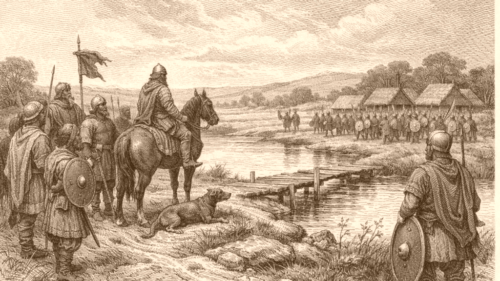
Year EntryThe Annals of Ulster place the battle of Áth Dara in 458, saying that the Laigin won and that Lóegaire was taken prisoner before being released on oath. Chronicon Scotorum also places the battle in 458 and says that he was taken prisoner and then set at liberty after swearing by the sun and wind. The Annals of the Four Masters place the battle in 457.Dating UncertainThe dating is not unanimous across the annals. The Annals of Ulster note in 459 that the battle of Áth Dara occurred according to others. Chronicon Scotorum gives a 459 entry that repeats
Read Article
Archived: 23 November 2026
Abstract
Annal EntriesThe Annals of Inisfallen have an AI457 heading and record that Victorius composed the Paschal cycle there; the excerpt does not give an explicit AD year for that label. The Annals of Ulster explicitly head 457 and record the synod of Chalcedon and the repose of the elder Patrick, with the note that some books state this.Patrick NoticesThree different annal traditions connect Patrick with this period, but not in identical ways. The Annals of Ulster place the repose of the elder Patrick under 457; the Annals of the Four Masters likewise record that Old Patrick yielded his spirit in
Read Article
Archived: 23 November 2026
Abstract
Ulster RecordFor 456 CE, the Annals of Ulster give the clearest surviving notice: they date the year and record the death of Énna son of Cathub, while adding that the birth of Saint Brigit was reported only “as some say.” The same annals also place the death of the emperor Marcian in 456, so the entry combines an Irish notice with an external imperial death notice.Other NoticesThe Annals of the Four Masters likewise attach Énna’s death to 456, but they do so in their own chronological frame, giving the age of Christ for the year and the twenty-eighth year of
Read Article
Archived: 23 November 2026
Abstract
Irish NoticesFor 455, Chronicon Scotorum gives a direct notice: the death of Enna son of Cathbadh. This is the clearest year-specific Irish entry among the excerpts, because the year is explicitly attached to the notice and no further narrative is added.Annals of Ulster also has a 455 entry, but its notice is not an Irish event: it says that Victorius the astronomer flourished. The entry is brief and does not describe a battle, death, or political act in Ireland.Dating ProblemsAnnals of Inisfallen is more complicated. Under an 455 heading, it preserves notices that refer to the destruction of the Laigin
Read Article
Archived: 23 November 2026
Abstract
Annal EntriesThe feast associated with Laegaire son of Niall is dated differently in the surviving annals: the Annals of Ulster and the Annals of the Four Masters place the Feast of Temair under A.D. 454, while Chronicon Scotorum places it under A.D. 453.The Annals of Inisfallen preserve a related entry for the Festival of Temuir by Laegaire, son of Niall, but the excerpt shown there is not itself headed with a firm 454 dating. Instead, it includes a cross-reference to AU 454, so the year is supported by comparison with the other annals rather than by an independent Inisfallen date
Read Article
Archived: 23 November 2026
Abstract
Irish RecordFor 453 CE, the clearest Irish notice is a military one. Annals of Ulster records a battle-rout on the Laigin by Laegaire son of Niall, the Annals of the Four Masters places a great defeat by Laegaire against the Leinstermen in the same year, and Chronicon Scotorum records the Feast of Temair celebrated by Laegaire son of Niall in 453.Sparse CoverageThe year is not treated uniformly across the surviving annals. Inisfallen's 453 cluster in the excerpt preserves notices about Marcian's death and Leo's reign rather than an Irish event, and the same work places the destruction of the Laigin
Read Article
Archived: 23 November 2026
Abstract
Calendar NotesFor 451, the Annals of Ulster preserves a dated entry for the year and records Easter on the eighth day before the Kalends of May. In the same year-span, it also adds a corrected notice that Theodosius the Younger died in that year.Brief EntriesChronicon Scotorum gives only a brief heading for 451 and no eventful narrative under it. Annals of Inisfallen likewise marks the year with a short chronological entry, but the notice attached to that year is the synod of Chalcedon, an external event rather than an Irish occurrence.Dating LimitsThe surviving notices do not give a single, securely
Read Article
Archived: 23 November 2026
Abstract
Ulster RecordIn the Annals of Ulster, the year 450 is marked by an explicit AD 450 heading, but the retrieved excerpt preserves no event notice under that year. On the evidence visible here, the entry exists as a chronological marker rather than a dated occurrence.Inisfallen RecordThe Annals of Inisfallen also preserve a heading for AI450, and the excerpt gives only a brief, incomplete entry after it. The surviving text is too slight to identify any event securely for 450 CE from this passage alone.Chronicon RecordChronicon Scotorum likewise has a 450 entry, but the excerpt provides only a short annal fragment
Read Article
Archived: 23 November 2026
Abstract
Ulster RecordIn the Annals of Ulster, the year 449 is explicitly headed as AD 449, and the accompanying notice records the death of the emperor Theodosius and the succession of Marcianus, both presented as information from Marcellinus. The same year also contains a further remark about Theodosius and Bologna, but the annal’s own wording makes clear that the dated notice is part of a compact chronological entry rather than a narrative account of Irish events.Masters EntryThe Annals of the Four Masters also marks 449 with a year heading and with the twenty-first year of Laeghaire. Its surviving notice for that
Read Article
Archived: 23 November 2026
Abstract
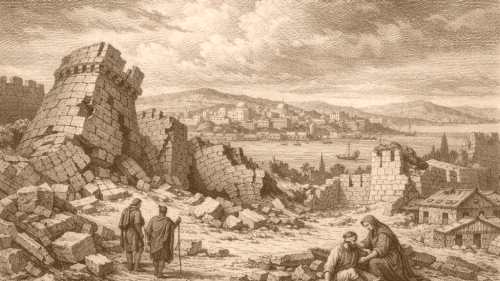
Ulster NoticeFor 448, the clearest dated item in the Irish annal tradition here is not Irish at all. The Annals of Ulster place under 448 a notice that several walls of Constantinople, recently rebuilt in masonry, and fifty-seven towers collapsed in a violent earthquake. The same annal sequence gives a dated heading for 448 before moving on to 449.Irish EntriesThe other Irish annal texts in this sample are much thinner for the same year. In the Annals of the Four Masters, 448 is marked by the age-of-Christ heading and the twentieth year of Laeghaire, followed by a long passage on
Read Article
Archived: 23 November 2026
Abstract
Ulster WitnessIn the Annals of Ulster, the year 447 is explicitly headed as AD 447, and the notice attached to that year records the repose of saint Secundinus in the seventy-fifth year of his age. The same excerpt gives no other event for 447, so the secure record here is limited to that death notice and its date heading.The Annals of the Four Masters also open with the year 447 and add a regnal framework, calling it the nineteenth year of Laeghaire. Their 447 entry likewise records Secundinus, identified as Seachnall Mac Ua Baird and Bishop of Armagh, as dying
Read Article
Archived: 23 November 2026
Abstract
Ulster NoticeIn the Annals of Ulster, the entry for 446 states that the battle of Feimen took place in that year and that Mac Cairthinn son of Caelub fell there. The same notice adds a qualification that some said he was of the Cruithin.For the same event, the surviving excerpted chronology around 446 also shows that the Annals of Ulster supplies an explicit AD heading for the year before giving the battle notice, so the entry is presented as a dated annal item rather than an undated later summary.Other WitnessesChronicon Scotorum gives A.D. 446 for the death of Secundinus, son
Read Article
Archived: 23 November 2026
Abstract
Irish RecordFor 445 CE, the annalistic record is short. Chronicon Scotorum places the battle of Feimin in that year and says that the son of Cairthind, son of Colboth, son of Niall, fell there, with a note that some regarded him as a Pict. The Annals of Ulster instead record under 445 the death of Nath Í son of Fiachra, saying he was killed at the Alps or died after being struck by a thunderbolt when he invaded their confines.Date ShiftsThe surviving notices do not agree cleanly on dating. The Annals of Inisfallen also preserve a Nath Í notice in
Read Article
Archived: 23 November 2026
Abstract
Ulster NoticeThe Annals of Ulster give an explicit 444 notice and record that Ard Macha was founded. In the same dated cluster, the text also preserves a chronological note about the building of Rome and the foundation of the city, showing that the entry combines an Irish notice with wider chronological reckoning.Masters EntryThe Annals of the Four Masters also present 444 as a chronological marker, calling it the Age of Christ, 444, and placing it in the sixteenth year of Laeghaire son of Niall in the sovereignty. This excerpt gives a year frame, but it does not add a specific
Read Article
Archived: 23 November 2026
Abstract
Ulster RecordThe Annals of Ulster are the clearest witness for 443 in the material here. Their chronology table gives an explicit AD 443 heading, and under it records Bishop Patrick flourishing in the fervour of the Faith and in the doctrine of Christ in our province.Inisfallen WitnessThe Annals of Inisfallen preserve a parallel notice for Patrick: the excerpt states that he flourished in the doctrine of Christ and also cross-references AU 443. In this excerpt, however, the entry itself is not given an explicit AD heading, so the year association rests on the cross-reference rather than on a printed date
Read Article

Archived: 24 November 2026
Abstract
Year HeadingThe clearest 442 notice in the Annals of Ulster is only a year heading: AD 442 is marked, but no event is attached in the excerpt. In the same sequence, the surrounding years carry notices for the death of Xistus in 440, the consecration of Leo and the approval of Bishop Patrick in 441, and Patrick flourishing in 443. This makes 442 a sparse point in a short run of dated entries rather than a year with a securely dated Irish event in this source.Chronicon Scotorum is similarly spare in the excerpted material. It gives a 440 notice for
Read Article
Archived: 26 November 2026
Abstract
Ulster NoticeThe Annals of Ulster places two notices under its printed heading for AD 441. U441.1 records the consecration of Leo as bishop of Rome. U441.2 records that Bishop Patrick received approval in the Catholic faith. The entry gives no details about who granted that approval, where it took place or what form it took.Inisfallen ParallelThe Annals of Inisfallen preserves a closely matching notice under AI441.1, where Patrick is called a saint. The published edition supplies a cross-reference to the Annals of Ulster. The two entries preserve the same basic tradition about Patrick, and neither supplies details of an occasion
Read Article
Archived: 24 November 2026
Abstract
Dating EvidenceFor 440 CE, the clearest securely dated Irish annal notices are brief obits. Annals of Ulster explicitly labels the year 440 and records the death of Sixtus, bishop of the Roman Church, while also noting that some books place the death of Maine son of Niall in that year. Chronicon Scotorum likewise labels A.D. 440 and records both Maine son of Niall's death and the death of Sixtus, bishop of Rome.Irish NoticesThe Four Masters places Maine son of Niall's death under 440 and adds that year as the twelfth year of Laeghaire. Annals of Inisfallen also groups a notice
Read Article
Archived: 24 November 2026
Abstract
Year NoticesThe Annals of Ulster place the sending of Secundinus, Auxilius, and Isserninus under AD 439, and Chronicon Scotorum places the same notice under A.D. 438. The Annals of Inisfallen preserve the notice under the internal label AI439, without an explicit CE heading.Dating ShiftsThe dating is not uniform across the annals. Chronicon Scotorum places the notice under A.D. 438. The Annals of Inisfallen preserve the same notice under AI439, while the Annals of the Four Masters place the Senchas Mór entry under 438.Sparse ContextIn the Annals of Ulster, the uncertainty note is attached to the alternative insertion at U438.2: 'Or
Read Article
Archived: 24 November 2026
Abstract
Year RecordIn the surviving annal entries, 438 CE is chiefly the year of the Senchas Mór. The Annals of Ulster says simply that it was written; the Chronicon Scotorum also says it was written in this year; and the Annals of the Four Masters places the Seanchus and Feinechus of Ireland in 438 and adds that the writings and old books of Ireland were collected and brought together for it.The same year is not uniformly filled in every annal tradition. In the Annals of Inisfallen, the surviving 438 entry is only a calendrical note, while the other entries in the
Read Article
