
Archived: 26 September 2026
Abstract
In 1223 Ireland remained politically fragmented, with Henry III’s lordship concentrated in towns and lowlands while Gaelic rulers retained regional power. William Marshal’s Welsh campaign and Hugh de Lacy’s return heightened uncertainty in Ulster and Meath. In Connacht, local men captured William de Lacy’s built crannog. Clonmacnoise burned, destroying churches and valuables, though church construction continued at Tech Sinche. Episcopal deaths, resignations and elections altered ecclesiastical leadership, while Connacht lost clerical and political figures. Raiding, hostage-taking and violations of sanctuary exposed local conflict. A severe September wind damaged standing oats, underlining agricultural vulnerability. Annalistic dates and accounts require cautious interpretation.
Read Article

Archived: 26 September 2026
Abstract
In 1217, Ireland was a fragile lordship governed for the child Henry III from Dublin, alongside powerful Anglo-Norman magnates and resilient Irish kingdoms. Royal orders promised liberties to loyal subjects, promoted markets, Waterford settlement, land claims, engineers, castle defence and exchequer control. Strategic tensions surrounded the Lacys, Carrickfergus and Carlingford. Government policy sought English dominance in senior church appointments, despite continuing local influence. Annals record Irish fishermen killed on Man, Anglo-Norman raiding near Armagh, retaliatory cattle seizures and a favourable harvest. Marriage, commerce, ecclesiastical links and maritime travel connected communities, but coercion, exclusion and contested authority exposed the Crown’s reach.
Read Article

Archived: 26 September 2026
Abstract
Irish annals portray 1214 as a period of contested lordship rather than national unity. Anglo-Norman castles at Clonmacnoise and Durrow provoked Cormac Ó Máel Sechlainn’s raids, involving cattle seizure, burning and attacks on church resources. Ualgarg Ó Ruairc raided settler-held Carbury, while deaths among Connacht lords and churchmen marked shifting local authority. Ulster records, though chronologically disputed, describe plunder at Derry, castle-building at Coleraine, resistance to settlers and destruction at Carlingford. Ecclesiastical communities remained influential yet vulnerable. Dublin received authority for commercial infrastructure. King John’s papal settlement formally included Ireland, but did not establish uniform control over its competing regions.
Read Article

Archived: 26 September 2026
Abstract
In 1212, royal efforts to extend King John’s Irish lordship through castles, taxation and military campaigns met persistent resistance. John de Gray’s northern offensive built Clones and Cáel Uisce castles, but forces associated with Áed Méith Ua Néill and other Gaelic leaders defeated raiders and destroyed both strongholds. Seaborne warriors from Galloway and the Isles ravaged Derry and Inishowen, aided by Cenél Conaill. In Meath, Cormac Ua Máel Sechlainn defeated English forces, while Munster and Desmond saw fort-building and dynastic conflict. Administrative records reveal expanding royal finance, yet authority remained uneven, shaped by alliances, tribute, churches, raids and regional rivalries.
Read Article

Archived: 26 September 2026
Abstract
In 1207, King John’s Irish government faced armed opposition from Anglo-Norman magnates and continuing Gaelic rivalries. Justiciar Meiler fitz Henry’s disputes with the Lacys and William Marshal escalated into warfare across Leinster and Meath. Hugh de Lacy’s allies besieged Ardnurcher for five weeks, captured Firceall and forced Meiler from Ireland. Raiding and successions reshaped northern and western lordships, while Cathal Crobhdearg redistributed Connacht territory. Churches at Lismore and Armagh suffered attack, prompting ecclesiastical appeals to England. John promoted control through coinage rules, land grants and fortification, but these measures exposed rather than resolved fragile authority, foreshadowing his later 1210 intervention.
Read Article

Archived: 26 September 2026
Abstract
In 1205, Ireland remained a patchwork of Gaelic kingdoms, Anglo-Norman lordships, church jurisdictions and Irish Sea alliances. Severe winter weather disrupted rural life. King John created Hugh de Lacy earl of Ulster, but John de Courcy’s Manx-backed invasion showed the region remained contested. In Connacht, William de Burgh’s disappearance reduced pressure on Cathal Crobderg, who negotiated an emerging tributary accommodation with the Crown. Theobald fitz Walter founded Woney Abbey in Limerick, while annals recorded ecclesiastical appointments, local deaths and violence. These events demonstrate that authority depended on negotiation, warfare, kinship, patronage and maritime connections, with ordinary communities bearing political disruption.
Read Article

Archived: 26 September 2026
Abstract
In 1204, Ireland remained politically fragmented, with King John’s authority strongest in Anglo-Norman towns, castles and lordships. Justiciar Meiler fitz Henry curbed William de Burgh’s Connacht ambitions, while Cathal Crobhdearg Ua Conchobair negotiated terms to preserve part of his kingdom. In Ulster, John de Courcy’s displacement enabled the de Lacys’ rise, though royal law sought to regulate the outcome. Annals record raids, church plundering, Doire’s burning and Domnall Mac Carthaig’s southern victory. Ecclesiastical disputes at Iona demonstrated clerical power. Dublin fortifications, authorised fairs, and Duiske’s foundation linked royal administration, commerce, settlement and religious patronage amid continuing local conflict across Ireland.
Read Article

Archived: 26 September 2026
Abstract
In 1203, conflict over Connacht revealed Ireland’s overlapping Gaelic, Anglo-Norman and royal authorities. William de Burgh campaigned from Munster and Meath, fortifying Mílec and ravaging western Connacht, including Clonfert and Clonmacnoise. King John curbed him by removing Limerick from his control; Meiler fitz Henry and Walter de Lacy enforced submission and mediated Connacht’s dynastic disputes. Cathal Crobderg Ua Conchobair retained his kingship despite rivalry with Toirrdelbach, son of Ruaidrí. Elsewhere, dynastic killings and warfare continued. Contemporary annals report famine, worsened by plunder, while churches remained vulnerable targets yet vital centres of learning, shelter, diplomacy and legitimacy. Connacht’s future remained unresolved.
Read Article

Archived: 26 September 2026
Abstract
In 1195, Ireland remained divided between Anglo-Norman lordships and resilient Gaelic kingdoms, with power shaped by warfare, negotiation and local alliances. Cathal Crobderg of Connacht assembled forces at Athlone, made peace with John de Courcy and Walter de Lacy, then campaigned in Munster, destroying castles whose rebuilding demonstrated the limits of his success. Conflict also disrupted Limerick, Connacht and Ulster, while rivalries constrained kings and magnates. Royal politics across the Irish Sea influenced authority. Ecclesiastical deaths, Hugh de Lacy’s reburial, and abundant woodland mast reveal religious, political and rural dimensions. Overall, violence repeatedly altered but did not decisively settle control.
Read Article

Archived: 26 September 2026
Abstract
In 1194, Domnall Mór Ua Briain’s death destabilised Munster, where his son Muirchertach’s accession was undermined by capture and blinding, while other Ua Briain and Mac Carthaig kin suffered killings, raids and betrayal. Ecclesiastical authority featured in the death of Killaloe’s bishop and the killing at Cashel despite legatine protection. Elsewhere, resistance expelled foreigners from Uí Fhinntain, Cú Mide Ua Flainn was killed, and Gillibert Mac Goisdelb’s Erne expedition failed. Across the Irish Sea, Richard I’s defeat of John enabled Walter de Lacy to regain Meath, demonstrating how Angevin politics reshaped Irish lordships amid local conflict, rivalry and uncertain authority.
Read Article

Archived: 26 September 2026
Abstract
In 1191, Ireland experienced political fragmentation, local violence and severe environmental disruption. Ruaidrí Ua Conchobair, the displaced former king of Connacht, travelled north and apparently sought wider support to recover power after dynastic conflict, but gained land rather than a decisive coalition. In Munster, Muirchertach son of Cathal Odar was treacherously killed by incoming Anglo-Norman forces, illustrating unstable frontier relations. Annals also record construction of Rath-cuanartaigh castle and deaths of prominent churchmen. Most notably, a great wind destroyed churches, homes and woodland, killing people and livestock, exposing communities’ dependence on vulnerable material resources amid competing Gaelic and foreign rival lordships.
Read Article
Archived: 26 September 2026
Abstract
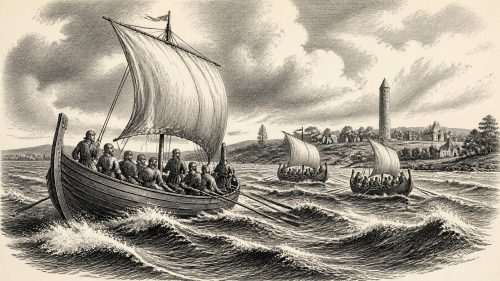
In 1190, Ireland’s politics combined dynastic conflict, local warfare, diplomacy and religious patronage. In Connacht, Cathal Crobderg and Cathal Carrach Ua Conchobair negotiated an inconclusive truce at Clonfert, mediated by churchmen, before a storm on Lough Ree drowned Cathal Crobderg’s son and leading followers. Rival branches of the dynasty remained violent. In Desmond, Domnall mac Carthaig defeated foreign raiders, recovered their spoil and secured peace with Domnall Mór Ua Briain of Thomond. Foundations or endowments at Knockmoy and possibly Killone demonstrated rulers’ religious and political ambitions. Anglo-Norman lordships expanded, but Gaelic rulers and institutions remained decisive across much of Ireland.
Read Article

Archived: 26 September 2026
Abstract
In 1160, Ruaidrí Ua Conchobair exploited the assassination of Meath’s king, installing Diarmait Ua Máel Sechlainn and securing hostages from Meath and Tethbae. His subsequent Shannon expedition compelled Thomond’s rulers to acknowledge his authority, marking Connacht’s recovery against high-king claimant Muirchertach Mac Lochlainn. Rival armies confronted one another without settlement, while Mac Lochlainn’s instigated killings and broken guarantees fostered northern instability. Dublin’s king Brodar was slain amid conflict. Clerical and scholarly deaths reflected reform and learned culture, while institutions including Jerpoint emerged. Burnings, warfare and cattle exactions burdened communities. Ireland remained divided, but rivalry centred upon Ruaidrí and Mac Lochlainn.
Read Article
Archived: 26 September 2026
Abstract
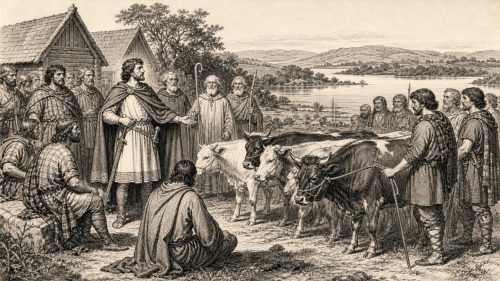
In 1144, Conchobar Ua Conchobair, Tairdelbach of Connacht’s son and king of Meath, was assassinated by Meath conspirators after six months’ rule. Tairdelbach invaded, inflicted heavy losses, accepted 400 cows in compensation, and reorganised Meath between Ua Mael Sechlainn rulers and neighbouring powers. Epidemic claimed his son Tadc and others, while clergy secured the conditional release of imprisoned Ruaidrí Ua Conchobair and mediated peace with Munster. Annals also record aristocratic deaths, kindred violence, Kells burning three times, and losses at Clonard. Events exposed high-kingship’s dependence on local dynasties, hostages, wealth, negotiation and ecclesiastical authority during a year of widespread disruption.
Read Article

Archived: 26 September 2026
Abstract
In 1136 Ireland remained divided among kings, church jurisdictions and raiding forces. Tairdelbach Ua Conchobair, pre-eminent king of Connacht, faced dynastic threats, imprisoning Ruaidrí despite clerical guarantees, while another son, Áed, was blinded and a rival claimant killed. In the north, Conchobar Ua Lochlainn’s murder enabled Muirchertach Mac Lochlainn’s accession. Conflict devastated Mide and Bréifne, where cattle raids and attacks included Clonard’s plundering. Leinster, Dublin and Munster saw disputed campaigns. Malachy of Armagh advanced church reform and relinquished office amid succession. Clerics, monasteries and men remained vulnerable yet influential. Annals reveal power founded on kinship, livestock, violence, authority and memory.
Read Article

Archived: 26 September 2026
Abstract
Ireland in 1117 remained fragmented as Muirchertach Ua Briain’s illness and family rebellion weakened Munster, while Tairdelbach Ua Conchobair of Connacht expanded his influence. Connacht forces defeated Munstermen at Lettracha Odráin after destructive reciprocal raids, and Tairdelbach took hostages from Mide’s king. Leinster and Dublin lost their shared ruler, Diarmait son of Énna, while northern kindreds continued violent rivalries. Church life was marked by numerous clerical deaths, notably reformer Máel Muire Ua Dúnáin, and the killing of Kells’ coarb and community. Following the 1116 famine, warfare intensified hardship for communities, more clearly exposing shifting overlordship, ecclesiastical vulnerability and regional interdependence.
Read Article

Archived: 26 September 2026
Abstract
In 1107 Ireland remained divided between powerful regional kings, notably Muirchertach Ua Briain of Munster and Dublin and Domnall Ua Lochlainn in the north. Cellach of Armagh negotiated a year's truce between them, demonstrating growing clerical influence, although local feuds and killings continued across Ulster, the midlands and Munster. Muirchertach imprisoned and released his nephew in Dublin and plundered Mungret. Severe snow, rain, wind and lightning killed people and livestock, ruined crops, and damaged houses and woodland. Lightning burned Kincora and Cashel. Church appointments and reform advanced, while trading towns, scholarship and rural agriculture underpinned society throughout the island alike.
Read Article

Archived: 26 September 2026
Abstract
In 1086, Toirdelbach Ua Briain, Munster’s dominant ruler and effective overlord of much of Ireland, died at Cenn Corad after illness. Munster was briefly divided among his sons Tadc, Muirchertach and Diarmait; Tadc soon died and Muirchertach expelled Diarmait, but inherited no uncontested national supremacy. Warfare continued across Leinster, Dublin’s Norse-Gaelic sphere, the midlands, Ulster and south-west, demonstrating resilient local dynasties and shifting alliances. Notable deaths included kings, bishops and Máel Ísu Ua Brolcháin, Armagh scholar and bilingual poet. The annals chiefly record elites, while broader evidence depicts a rural, cattle-based economy linked through churches, towns, trade and military obligations.
Read Article

Archived: 26 September 2026
Abstract
In 1084, Ireland remained a patchwork of kingdoms, where Tairdelbach Ua Briain of Munster maintained overlordship through alliances and warfare while northern rivals strengthened. Raids devastated Ulaid, Munster and church sites, reflecting cattle's economic and political importance. Donnchad Ua Ruairc led a multi-provincial force into Leinster but was defeated and killed by Muirchertach Ua Briain's coalition at Móin Cruinneoige, enhancing Ua Briain power. Churches at Glendalough and elsewhere suffered, though Rossory gained a foundation. Dublin's bishop Gilla Pátraic drowned, highlighting overseas connections. Reports of pestilence, urban commerce and rural disruption reveal a society shaped by conflict, religion and shifting authority.
Read Article

Archived: 26 September 2026
Abstract
In 1010 Brian Bóruma reinforced his contested supremacy by leading Munster forces north to Armagh and securing hostages from the northern Uí Néill, Ulaid and wider Leth Cuinn. The campaign demonstrated that overlordship required repeated negotiation, military display and guarantees. Connacht’s king Cathal mac Conchobair died penitently, while lesser rulers, an Ailech heir and other political figures also died or were killed. Church losses included Brian’s brother Marcán, senior cleric of Munster, Clonmacnoise bishop Conaing, and scholar-king Máel Suthain ua Cerbaill. An abbot suffered blinding. Annals also recorded a hot summer and fruitful autumn, underscoring rural resources sustaining political power.
Read Article
Archived: 26 September 2026
Abstract
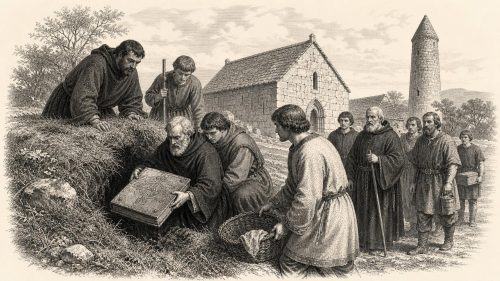
In 1007, Brian Bóruma reinforced his authority by campaigning towards Armagh, securing Ulaid hostages and involving Norse allies. Ulaid suffered rival killings, revenge and violations of church sanctuary, alongside intervention by Flaithbertach Ua Néill. In Mide, the displaced high king Máel Sechnaill revived Tailtiu’s assembly, installed a Columban successor and funded Clonmacnoise’s altar-front through local levies, asserting ceremonial kingship. At Kells, the Great Gospel of Colum Cille, probably the Book of Kells, was stolen for its precious cover but recovered. Ecclesiastical obits reveal religious networks. The annals depict Ireland as politically fragmented, wealthy, and shaped by power, sanctity and violence.
Read Article




