


Swift's Legacy
Archived: 13 October 2026
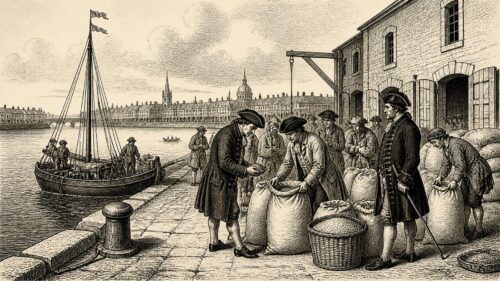
In 1745, Ireland remained peaceful during the Jacobite rising, yet was deeply implicated in the wider Stuart crisis. Lord Lieutenant Chesterfield combined surveillance and preparedness with relative restraint towards Catholics, while restricting provisions exports and proclaiming rewards, fasts and grain controls. Irish expatriates advised Charles Edward Stuart, and the French Irish Brigade distinguished itself at Fontenoy, though no Irish rebellion materialised. Food regulation, markets and linen petitions reflected wartime economic anxieties after scarcity. Dublin retained vitality: Thomas Sheridan managed Smock Alley Theatre, while Jonathan Swift died, leaving funds for St Patrick’s Hospital. Ireland’s calm concealed penal inequality and international entanglements.


