


Great Frost
Archived: 13 October 2026
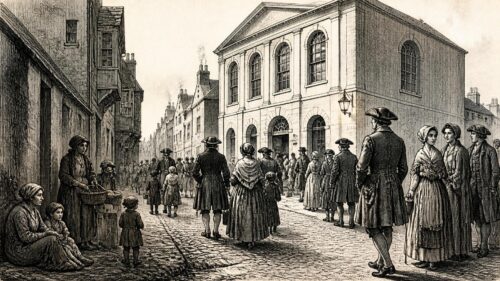
In 1741, Ireland endured the deadliest phase of the 1740–41 Great Frost famine, or Bliain an Áir. Freeze, drought, crop and livestock failures, lost employment and soaring prices caused widespread hunger, while fever and dysentery devastated weakened populations. Estimated deaths across the crisis reached 310,000–480,000, though records remain incomplete. Relief was fragmented, relying on local charity, imports, employment schemes and municipal action. An improved harvest and falling prices eased scarcity late in the year, but disease and hardship persisted. Amid extreme inequality, Dublin opened Fishamble Street’s Music Hall and welcomed Handel, while Killiney Hill relief works commemorated suffering and employment.


