Emerald Archives Gallery
Explore Ireland’s rich and fascinating past through the extraordinary photographs preserved in Emerald Archives Gallery. Our growing collection features carefully restored, enhanced and colourised historical images, bringing forgotten scenes vividly back to life. Using innovative technology, we recreate unique viewing angles, offering fresh perspectives on the Ireland our ancestors knew. We are adding more than 100 new images every day, building towards our ambition of showcasing over 1,000 historical photographs from each of Ireland’s 32 counties. Many of these remarkable images will be unfamiliar to visitors, revealing forgotten places, everyday lives and extraordinary moments from Ireland’s extraordinary photographic heritage.
Albert Memorial Clock, Belfast (c. 1900)
Emerald Archives Gallery
Image Caption
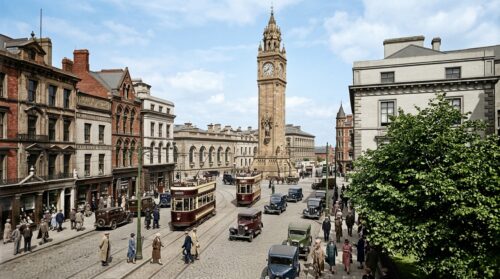
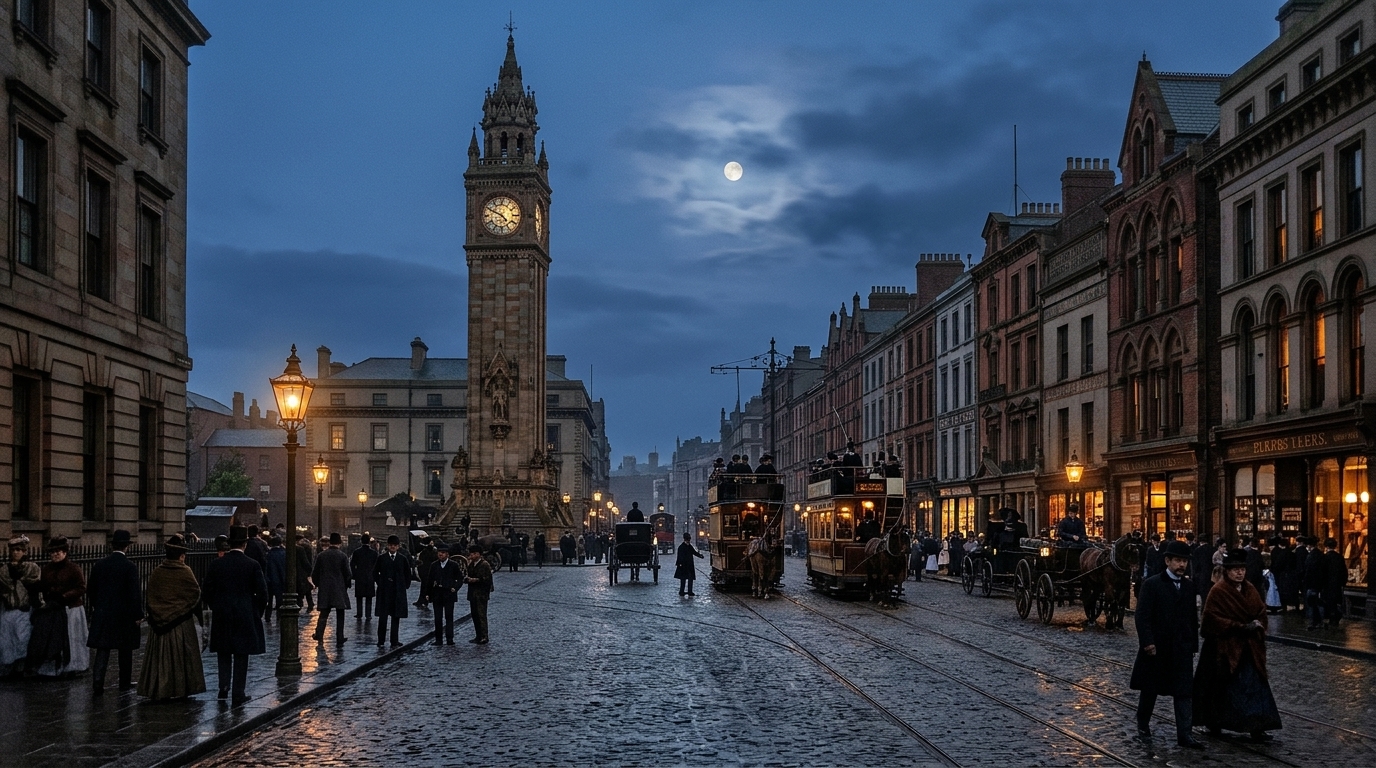
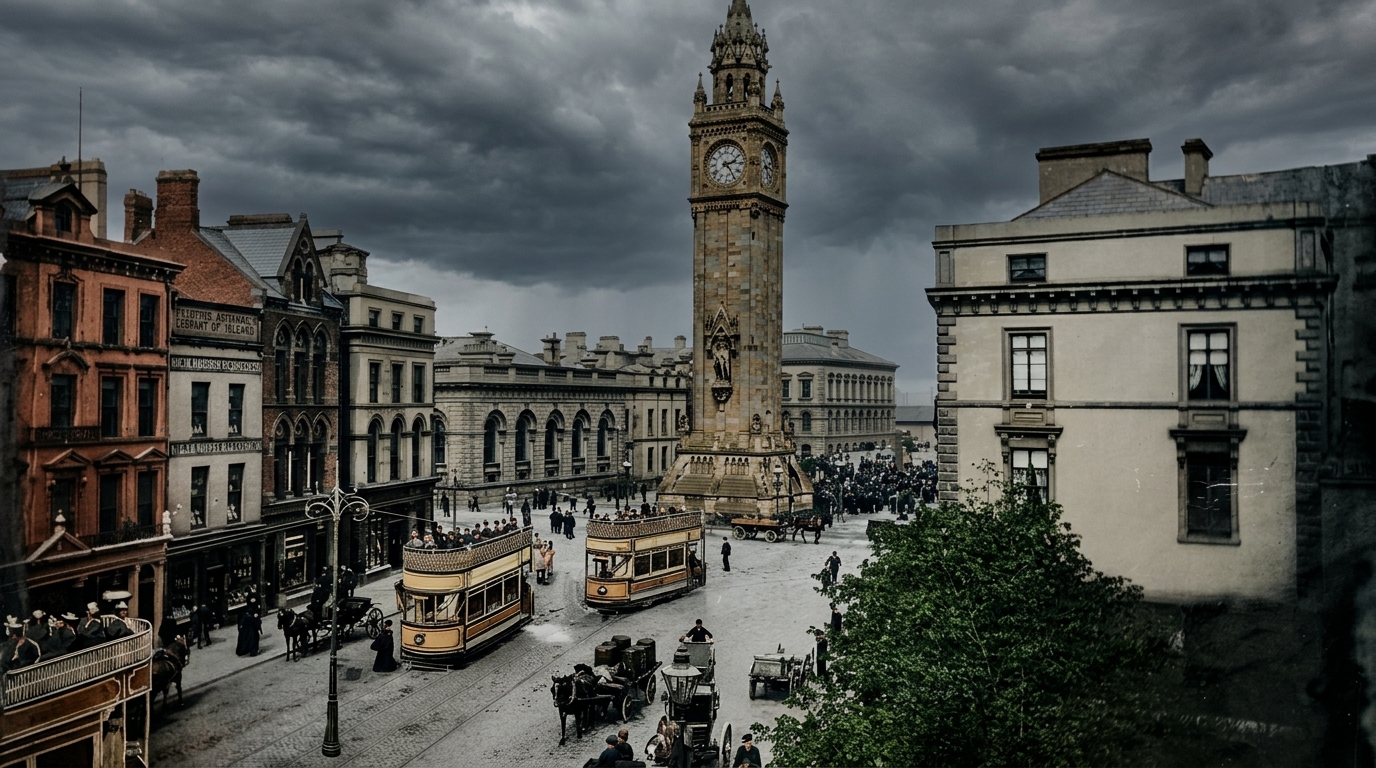
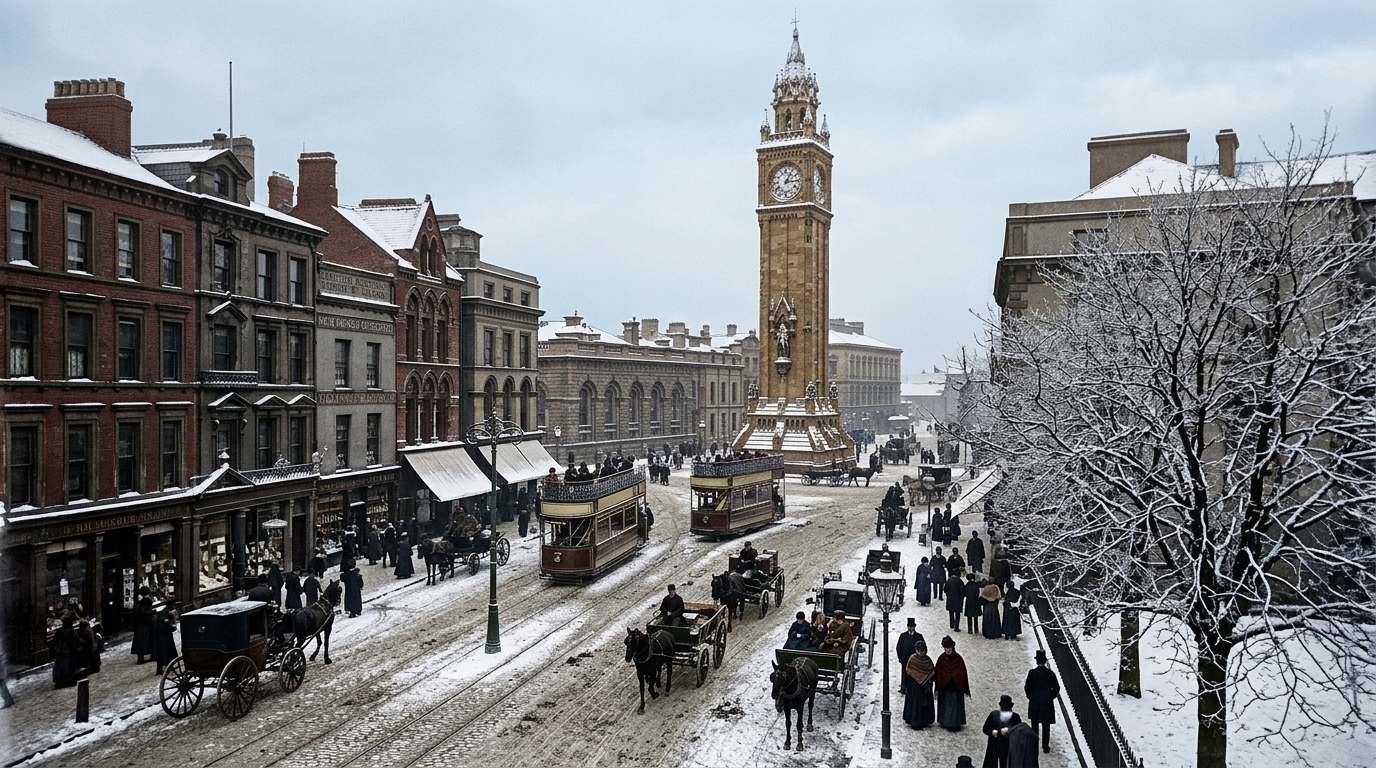
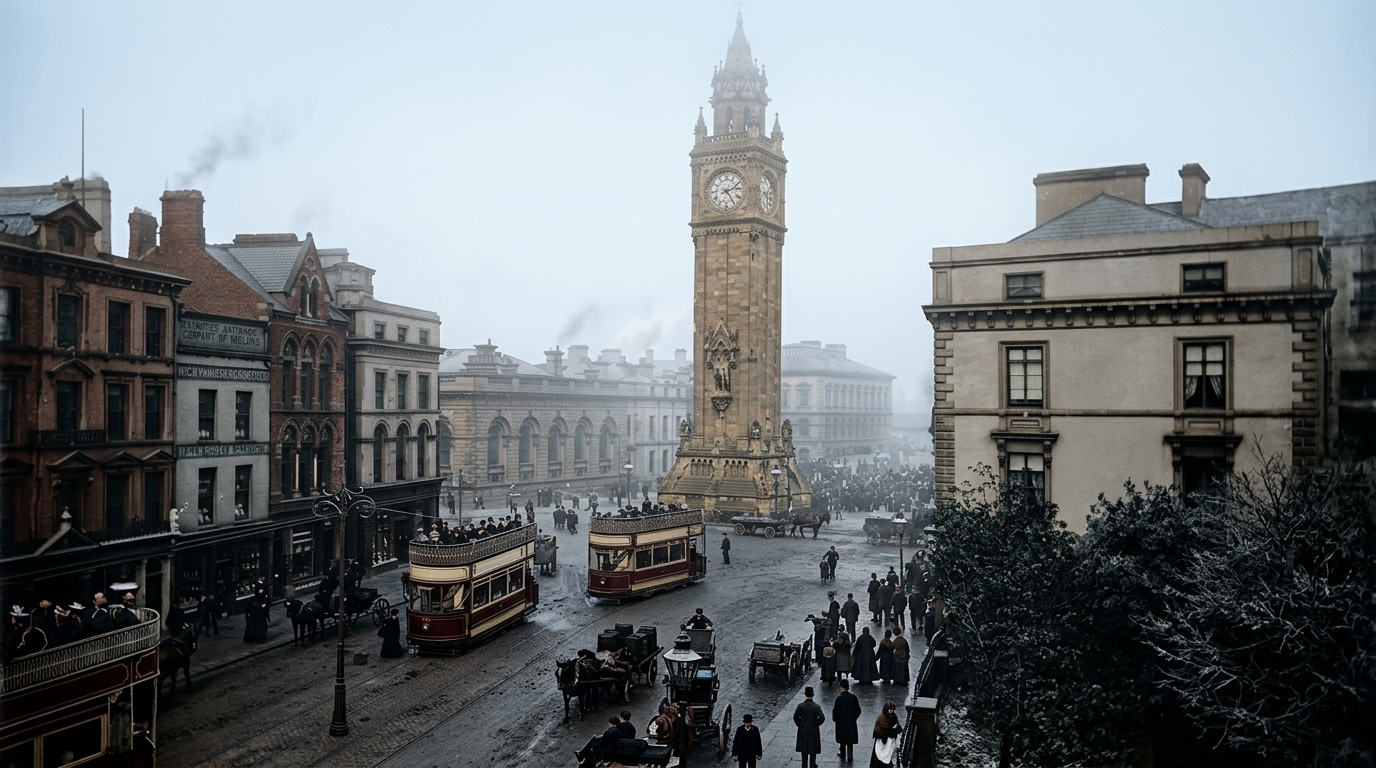
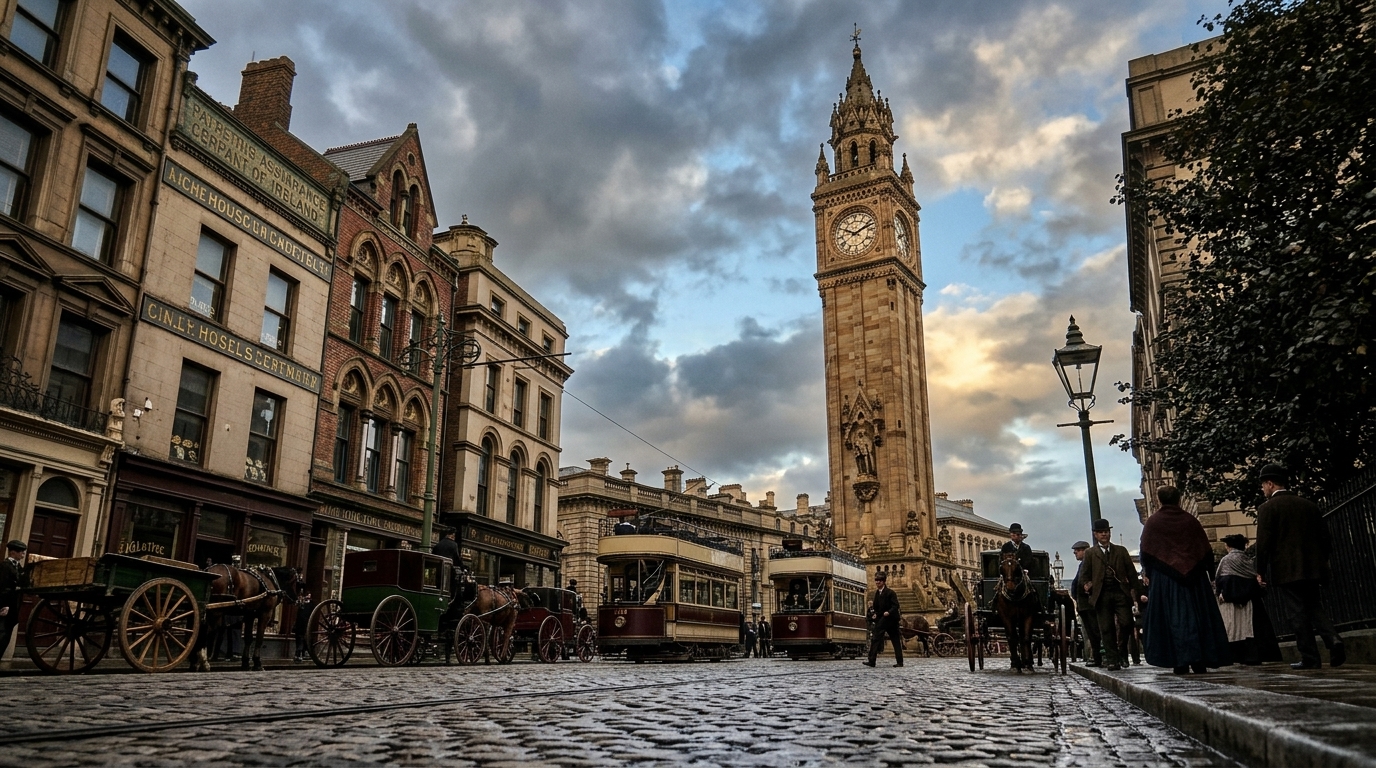
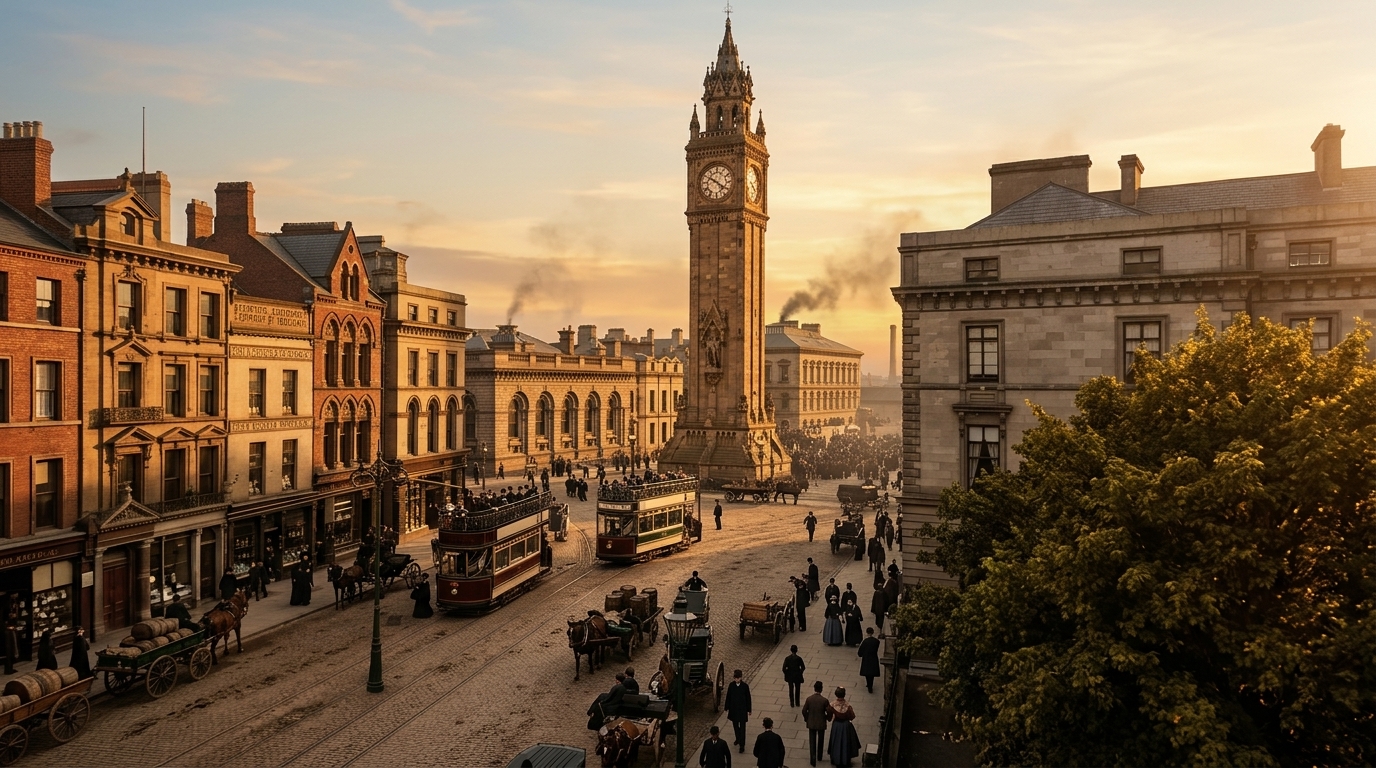
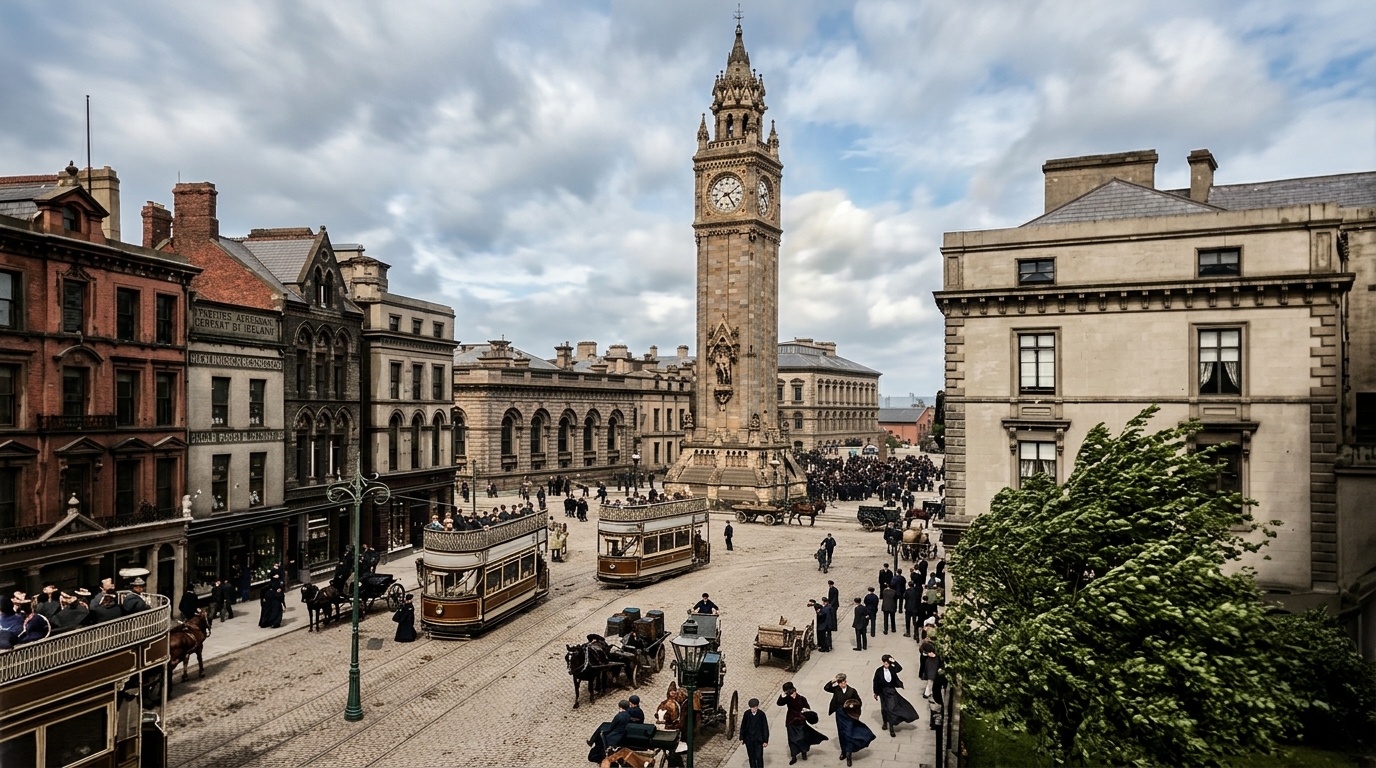
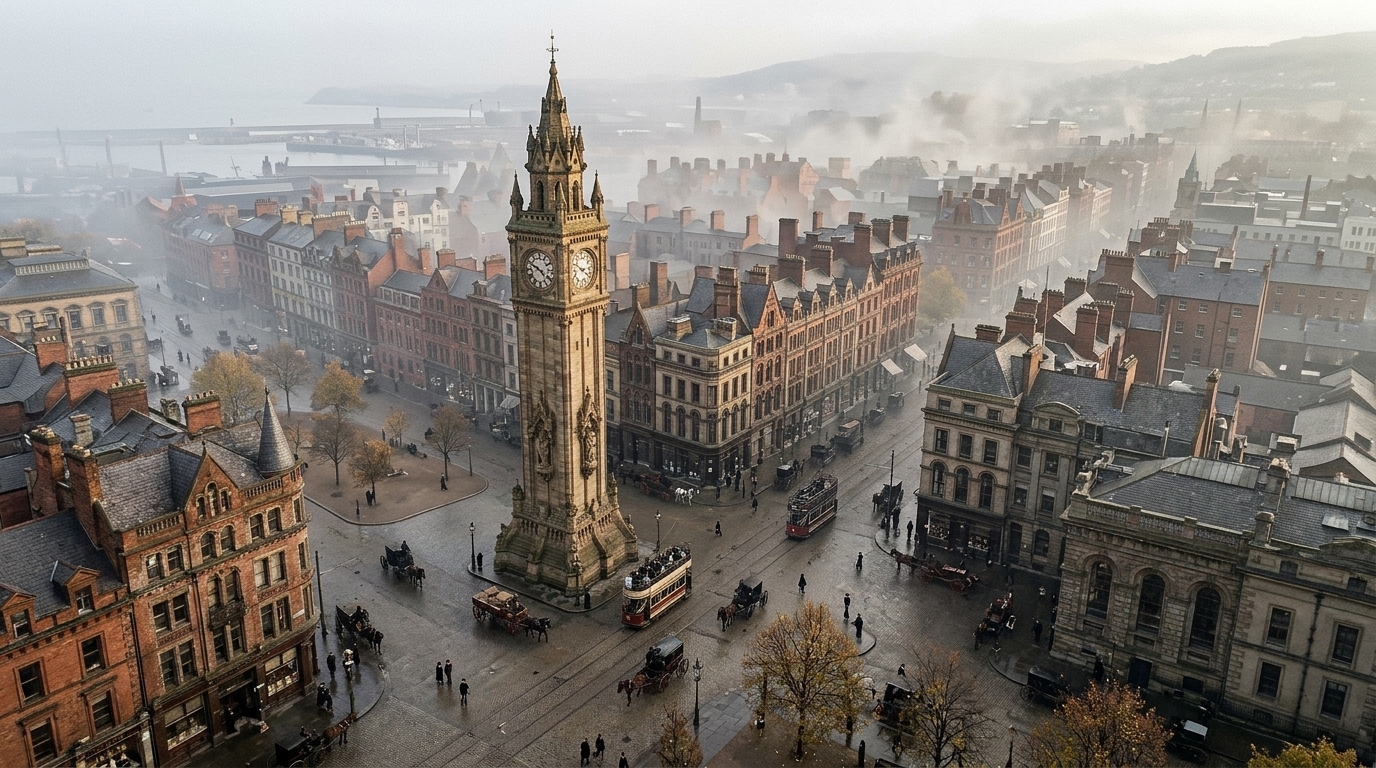
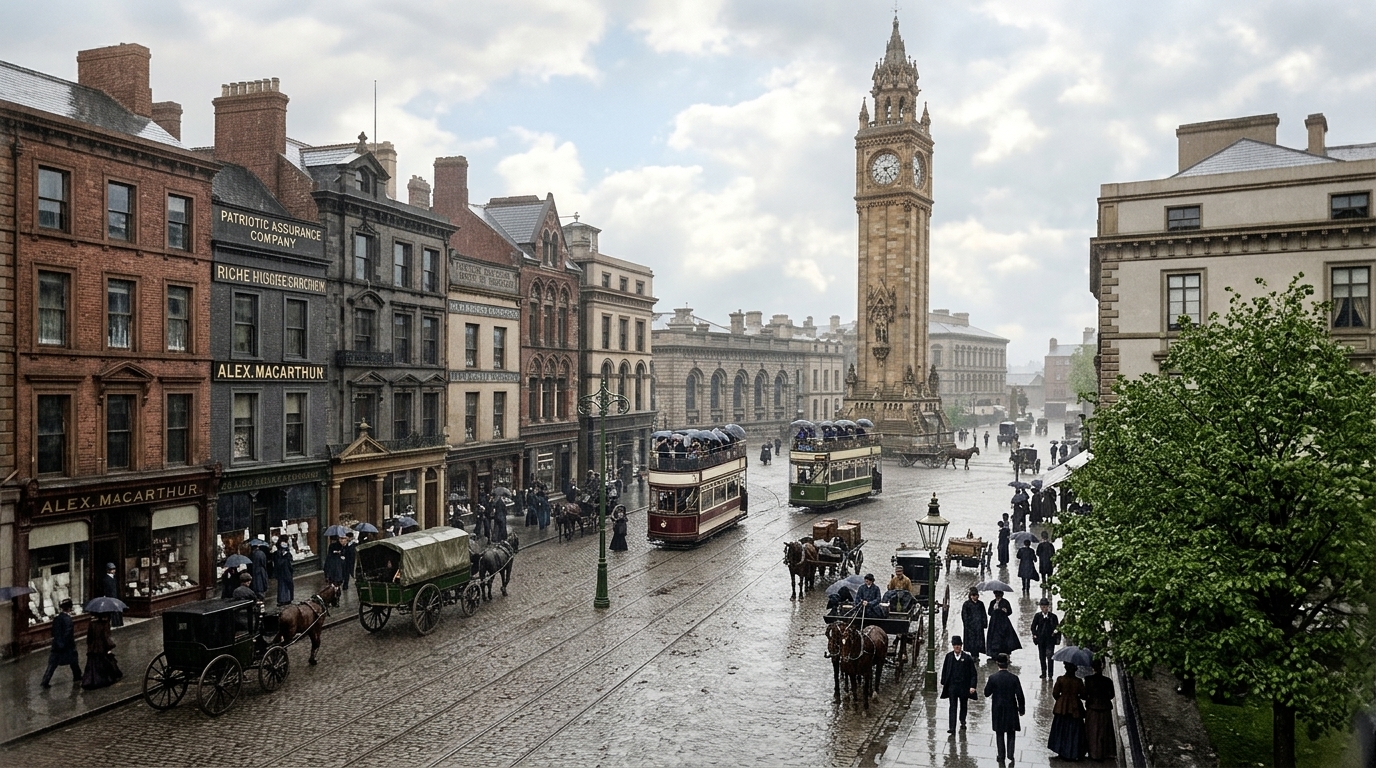
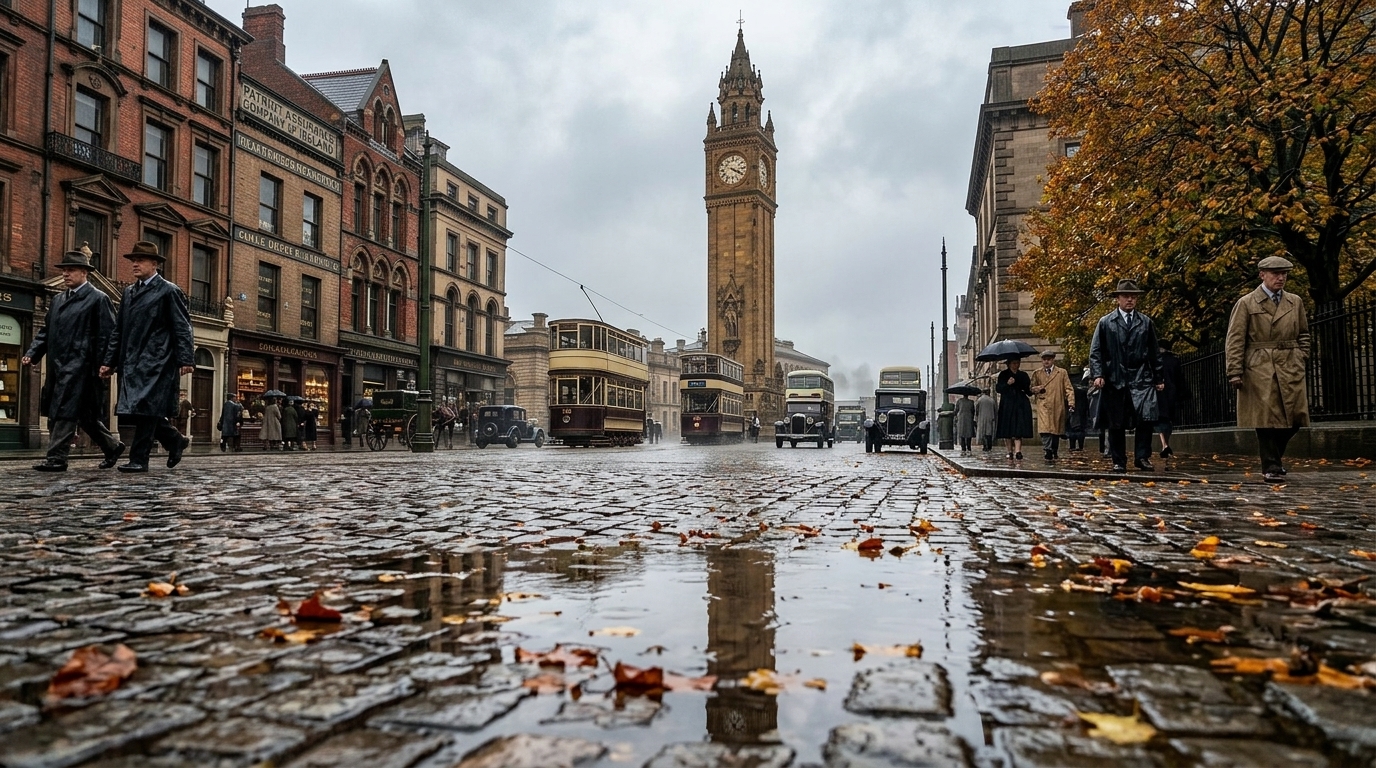
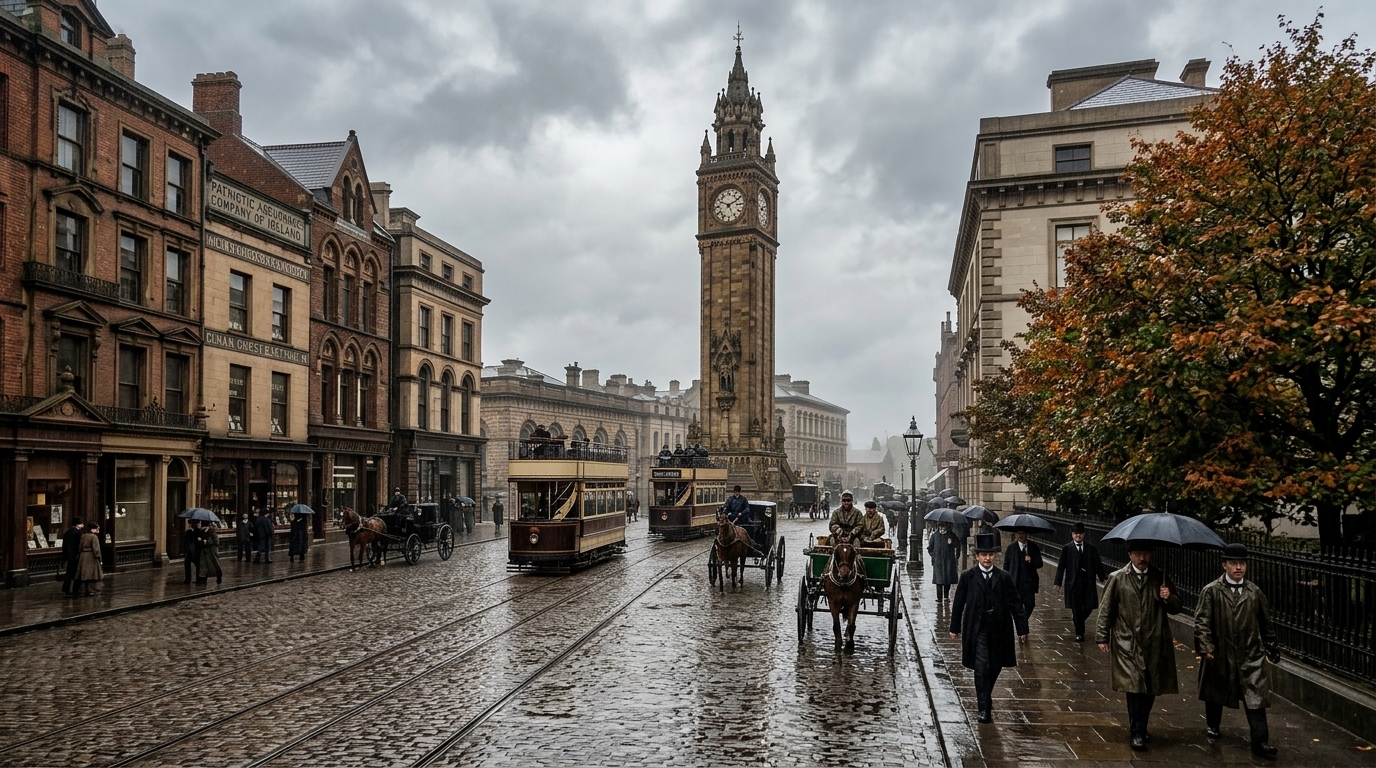
This remarkable historic photograph captures Belfast’s Albert Memorial Clock and the bustling surrounding streets at the beginning of the twentieth century. Erected in 1869 to commemorate Prince Albert, consort of Queen Victoria, the magnificent Gothic Revival clock tower became one of the city’s most recognisable landmarks. Horse-drawn trams, early electric tramcars, carriages and pedestrians fill the streets, illustrating Belfast’s remarkable commercial growth during the Edwardian era. The surrounding Victorian buildings reflect the prosperity generated by shipbuilding, linen manufacturing and maritime trade. This evocative image preserves a fascinating glimpse of Belfast’s architectural splendour, busy thoroughfares and changing urban transport.

Albert Memorial Clock, Belfast (c. 1900)
Emerald Archives Gallery
Image Caption
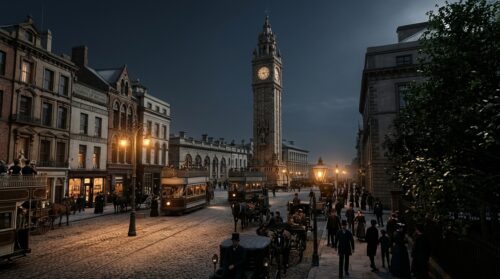
This remarkable historic photograph captures Belfast’s Albert Memorial Clock and the bustling surrounding streets at the beginning of the twentieth century. Erected in 1869 to commemorate Prince Albert, consort of Queen Victoria, the magnificent Gothic Revival clock tower became one of the city’s most recognisable landmarks. Horse-drawn trams, early electric tramcars, carriages and pedestrians fill the streets, illustrating Belfast’s remarkable commercial growth during the Edwardian era. The surrounding Victorian buildings reflect the prosperity generated by shipbuilding, linen manufacturing and maritime trade. This evocative image preserves a fascinating glimpse of Belfast’s architectural splendour, busy thoroughfares and changing urban transport.

Albert Memorial Clock, Belfast (c. 1900)
Emerald Archives Gallery
Image Caption
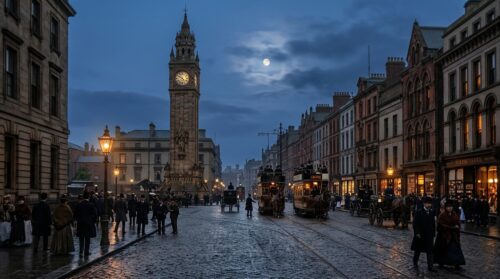
This remarkable historic photograph captures Belfast’s Albert Memorial Clock and the bustling surrounding streets at the beginning of the twentieth century. Erected in 1869 to commemorate Prince Albert, consort of Queen Victoria, the magnificent Gothic Revival clock tower became one of the city’s most recognisable landmarks. Horse-drawn trams, early electric tramcars, carriages and pedestrians fill the streets, illustrating Belfast’s remarkable commercial growth during the Edwardian era. The surrounding Victorian buildings reflect the prosperity generated by shipbuilding, linen manufacturing and maritime trade. This evocative image preserves a fascinating glimpse of Belfast’s architectural splendour, busy thoroughfares and changing urban transport.
Albert Memorial Clock, Belfast (c. 1900)
Emerald Archives Gallery
Image Caption
This remarkable historic photograph captures Belfast’s Albert Memorial Clock and the bustling surrounding streets at the beginning of the twentieth century. Erected in 1869 to commemorate Prince Albert, consort of Queen Victoria, the magnificent Gothic Revival clock tower became one of the city’s most recognisable landmarks. Horse-drawn trams, early electric tramcars, carriages and pedestrians fill the streets, illustrating Belfast’s remarkable commercial growth during the Edwardian era. The surrounding Victorian buildings reflect the prosperity generated by shipbuilding, linen manufacturing and maritime trade. This evocative image preserves a fascinating glimpse of Belfast’s architectural splendour, busy thoroughfares and changing urban transport.
Albert Memorial Clock, Belfast (c. 1900)
Emerald Archives Gallery
Image Caption
This remarkable historic photograph captures Belfast’s Albert Memorial Clock and the bustling surrounding streets at the beginning of the twentieth century. Erected in 1869 to commemorate Prince Albert, consort of Queen Victoria, the magnificent Gothic Revival clock tower became one of the city’s most recognisable landmarks. Horse-drawn trams, early electric tramcars, carriages and pedestrians fill the streets, illustrating Belfast’s remarkable commercial growth during the Edwardian era. The surrounding Victorian buildings reflect the prosperity generated by shipbuilding, linen manufacturing and maritime trade. This evocative image preserves a fascinating glimpse of Belfast’s architectural splendour, busy thoroughfares and changing urban transport.
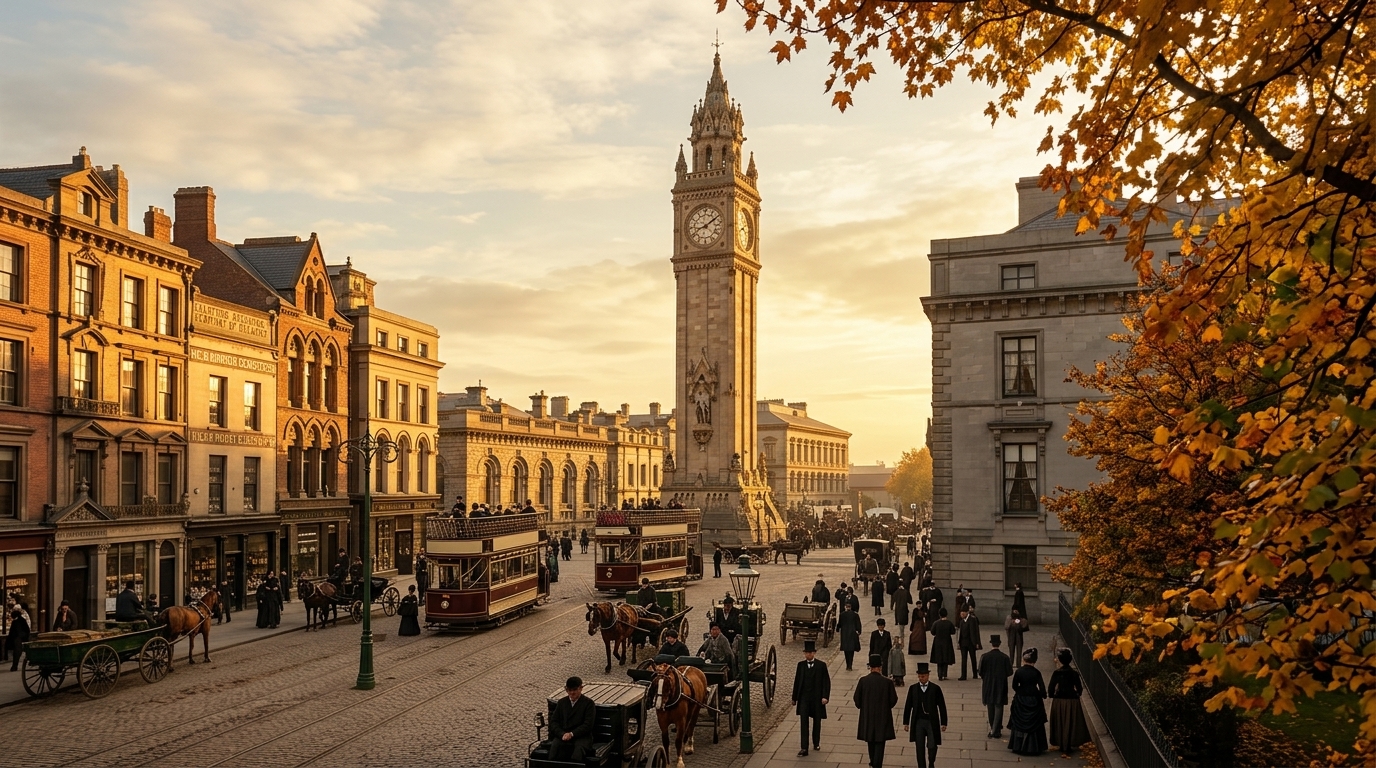
Albert Memorial Clock, Belfast (c. 1900)
Emerald Archives Gallery
Image Caption
This remarkable historic photograph captures Belfast’s Albert Memorial Clock and the bustling surrounding streets at the beginning of the twentieth century. Erected in 1869 to commemorate Prince Albert, consort of Queen Victoria, the magnificent Gothic Revival clock tower became one of the city’s most recognisable landmarks. Horse-drawn trams, early electric tramcars, carriages and pedestrians fill the streets, illustrating Belfast’s remarkable commercial growth during the Edwardian era. The surrounding Victorian buildings reflect the prosperity generated by shipbuilding, linen manufacturing and maritime trade. This evocative image preserves a fascinating glimpse of Belfast’s architectural splendour, busy thoroughfares and changing urban transport.

Albert Memorial Clock, Belfast (c. 1900)
Emerald Archives Gallery
Image Caption
This remarkable historic photograph captures Belfast’s Albert Memorial Clock and the bustling surrounding streets at the beginning of the twentieth century. Erected in 1869 to commemorate Prince Albert, consort of Queen Victoria, the magnificent Gothic Revival clock tower became one of the city’s most recognisable landmarks. Horse-drawn trams, early electric tramcars, carriages and pedestrians fill the streets, illustrating Belfast’s remarkable commercial growth during the Edwardian era. The surrounding Victorian buildings reflect the prosperity generated by shipbuilding, linen manufacturing and maritime trade. This evocative image preserves a fascinating glimpse of Belfast’s architectural splendour, busy thoroughfares and changing urban transport.

Albert Memorial Clock, Belfast (c. 1900)
Emerald Archives Gallery
Image Caption
This remarkable historic photograph captures Belfast’s Albert Memorial Clock and the bustling surrounding streets at the beginning of the twentieth century. Erected in 1869 to commemorate Prince Albert, consort of Queen Victoria, the magnificent Gothic Revival clock tower became one of the city’s most recognisable landmarks. Horse-drawn trams, early electric tramcars, carriages and pedestrians fill the streets, illustrating Belfast’s remarkable commercial growth during the Edwardian era. The surrounding Victorian buildings reflect the prosperity generated by shipbuilding, linen manufacturing and maritime trade. This evocative image preserves a fascinating glimpse of Belfast’s architectural splendour, busy thoroughfares and changing urban transport.
Albert Memorial Clock, Belfast (c. 1900)
Emerald Archives Gallery
Image Caption
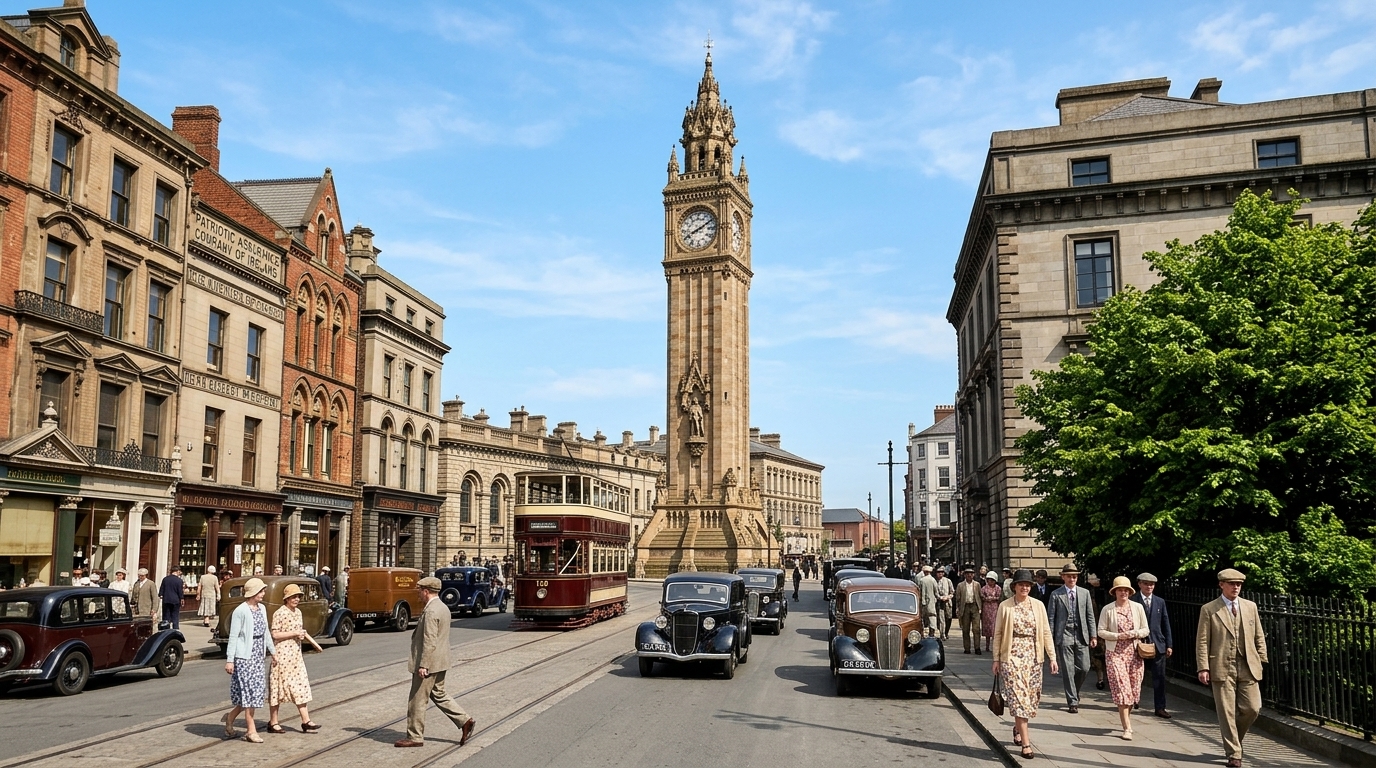
This remarkable historic photograph captures Belfast’s Albert Memorial Clock and the bustling surrounding streets at the beginning of the twentieth century. Erected in 1869 to commemorate Prince Albert, consort of Queen Victoria, the magnificent Gothic Revival clock tower became one of the city’s most recognisable landmarks. Horse-drawn trams, early electric tramcars, carriages and pedestrians fill the streets, illustrating Belfast’s remarkable commercial growth during the Edwardian era. The surrounding Victorian buildings reflect the prosperity generated by shipbuilding, linen manufacturing and maritime trade. This evocative image preserves a fascinating glimpse of Belfast’s architectural splendour, busy thoroughfares and changing urban transport.
Albert Memorial Clock, Belfast (c. 1900)
Emerald Archives Gallery
Image Caption
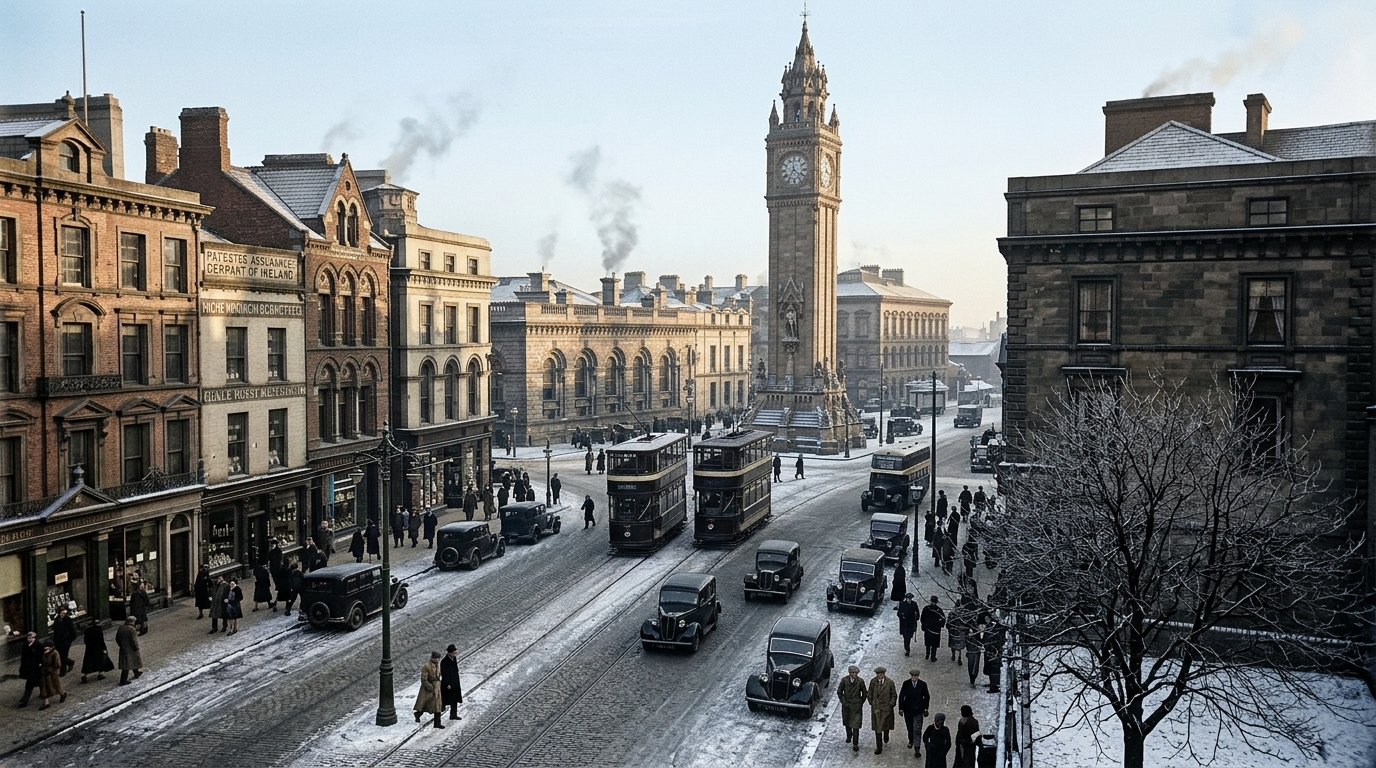
This remarkable historic photograph captures Belfast’s Albert Memorial Clock and the bustling surrounding streets at the beginning of the twentieth century. Erected in 1869 to commemorate Prince Albert, consort of Queen Victoria, the magnificent Gothic Revival clock tower became one of the city’s most recognisable landmarks. Horse-drawn trams, early electric tramcars, carriages and pedestrians fill the streets, illustrating Belfast’s remarkable commercial growth during the Edwardian era. The surrounding Victorian buildings reflect the prosperity generated by shipbuilding, linen manufacturing and maritime trade. This evocative image preserves a fascinating glimpse of Belfast’s architectural splendour, busy thoroughfares and changing urban transport.
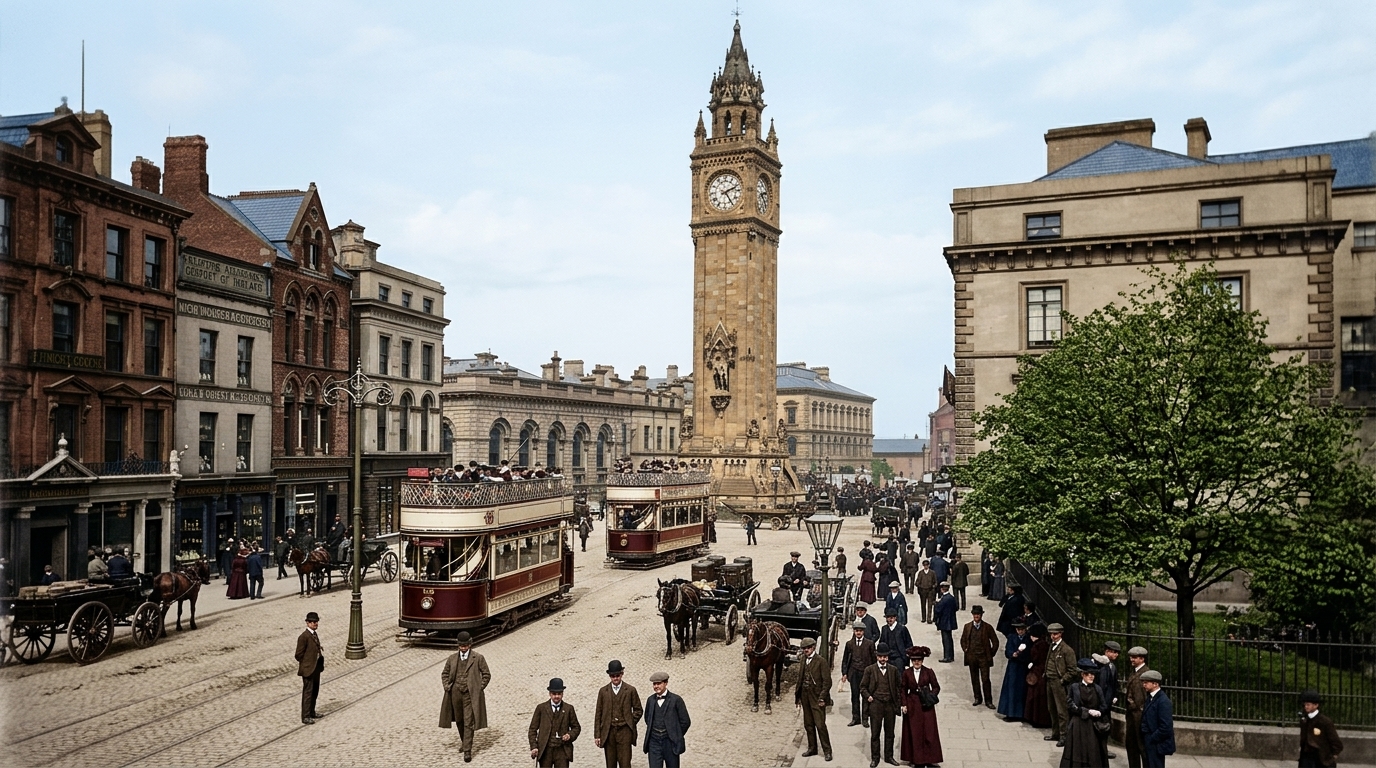
Albert Memorial Clock, Belfast (c. 1900)
Emerald Archives Gallery
Image Caption
This remarkable historic photograph captures Belfast’s Albert Memorial Clock and the bustling surrounding streets at the beginning of the twentieth century. Erected in 1869 to commemorate Prince Albert, consort of Queen Victoria, the magnificent Gothic Revival clock tower became one of the city’s most recognisable landmarks. Horse-drawn trams, early electric tramcars, carriages and pedestrians fill the streets, illustrating Belfast’s remarkable commercial growth during the Edwardian era. The surrounding Victorian buildings reflect the prosperity generated by shipbuilding, linen manufacturing and maritime trade. This evocative image preserves a fascinating glimpse of Belfast’s architectural splendour, busy thoroughfares and changing urban transport.
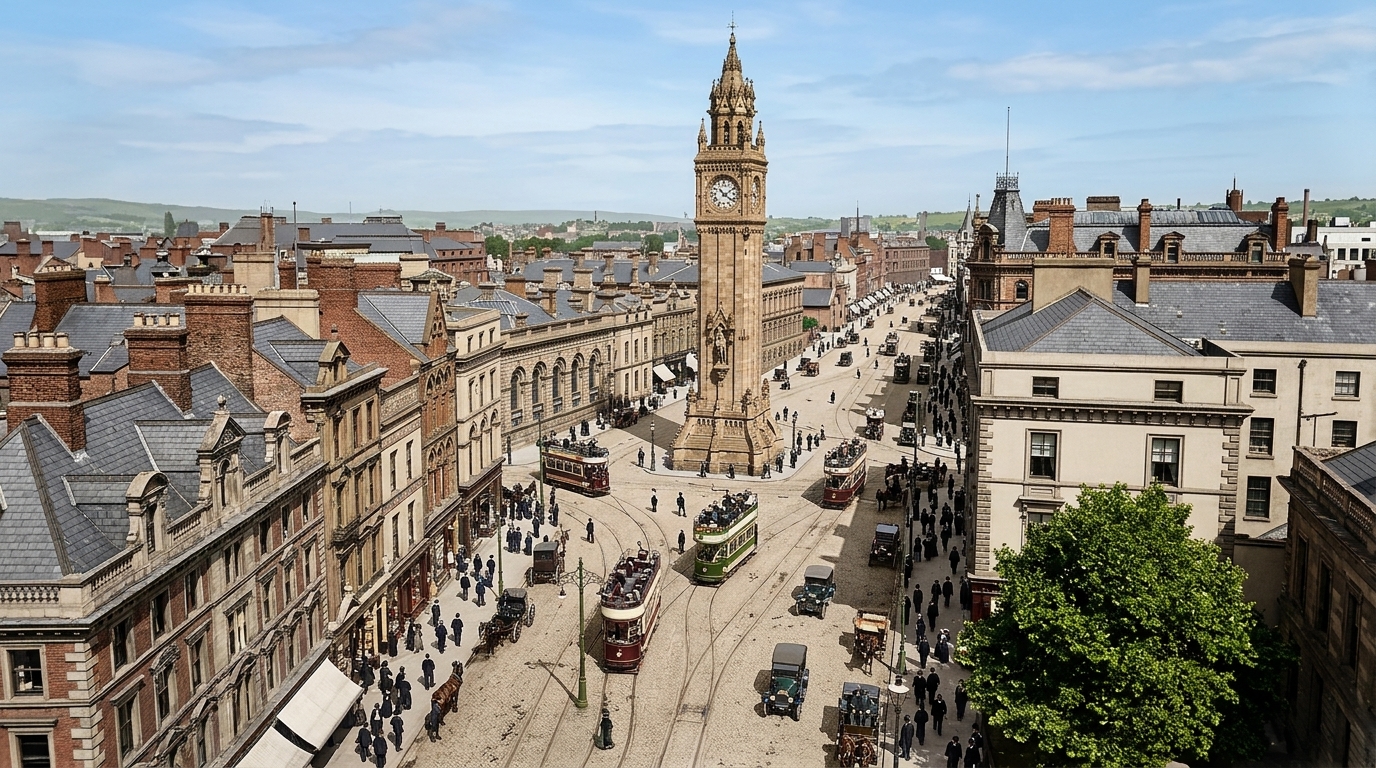
Albert Memorial Clock, Belfast (c. 1900)
Emerald Archives Gallery
Image Caption
This remarkable historic photograph captures Belfast’s Albert Memorial Clock and the bustling surrounding streets at the beginning of the twentieth century. Erected in 1869 to commemorate Prince Albert, consort of Queen Victoria, the magnificent Gothic Revival clock tower became one of the city’s most recognisable landmarks. Horse-drawn trams, early electric tramcars, carriages and pedestrians fill the streets, illustrating Belfast’s remarkable commercial growth during the Edwardian era. The surrounding Victorian buildings reflect the prosperity generated by shipbuilding, linen manufacturing and maritime trade. This evocative image preserves a fascinating glimpse of Belfast’s architectural splendour, busy thoroughfares and changing urban transport.
Albert Memorial Clock, Belfast (c. 1900)
Emerald Archives Gallery
Image Caption
This remarkable historic photograph captures Belfast’s Albert Memorial Clock and the bustling surrounding streets at the beginning of the twentieth century. Erected in 1869 to commemorate Prince Albert, consort of Queen Victoria, the magnificent Gothic Revival clock tower became one of the city’s most recognisable landmarks. Horse-drawn trams, early electric tramcars, carriages and pedestrians fill the streets, illustrating Belfast’s remarkable commercial growth during the Edwardian era. The surrounding Victorian buildings reflect the prosperity generated by shipbuilding, linen manufacturing and maritime trade. This evocative image preserves a fascinating glimpse of Belfast’s architectural splendour, busy thoroughfares and changing urban transport.
Albert Memorial Clock, Belfast (c. 1900)
Emerald Archives Gallery
Image Caption
This remarkable historic photograph captures Belfast’s Albert Memorial Clock and the bustling surrounding streets at the beginning of the twentieth century. Erected in 1869 to commemorate Prince Albert, consort of Queen Victoria, the magnificent Gothic Revival clock tower became one of the city’s most recognisable landmarks. Horse-drawn trams, early electric tramcars, carriages and pedestrians fill the streets, illustrating Belfast’s remarkable commercial growth during the Edwardian era. The surrounding Victorian buildings reflect the prosperity generated by shipbuilding, linen manufacturing and maritime trade. This evocative image preserves a fascinating glimpse of Belfast’s architectural splendour, busy thoroughfares and changing urban transport.
Albert Memorial Clock, Belfast (c. 1900)
Emerald Archives Gallery
Image Caption
This remarkable historic photograph captures Belfast’s Albert Memorial Clock and the bustling surrounding streets at the beginning of the twentieth century. Erected in 1869 to commemorate Prince Albert, consort of Queen Victoria, the magnificent Gothic Revival clock tower became one of the city’s most recognisable landmarks. Horse-drawn trams, early electric tramcars, carriages and pedestrians fill the streets, illustrating Belfast’s remarkable commercial growth during the Edwardian era. The surrounding Victorian buildings reflect the prosperity generated by shipbuilding, linen manufacturing and maritime trade. This evocative image preserves a fascinating glimpse of Belfast’s architectural splendour, busy thoroughfares and changing urban transport.
Albert Memorial Clock, Belfast (c. 1900)
Emerald Archives Gallery
Image Caption
This remarkable historic photograph captures Belfast’s Albert Memorial Clock and the bustling surrounding streets at the beginning of the twentieth century. Erected in 1869 to commemorate Prince Albert, consort of Queen Victoria, the magnificent Gothic Revival clock tower became one of the city’s most recognisable landmarks. Horse-drawn trams, early electric tramcars, carriages and pedestrians fill the streets, illustrating Belfast’s remarkable commercial growth during the Edwardian era. The surrounding Victorian buildings reflect the prosperity generated by shipbuilding, linen manufacturing and maritime trade. This evocative image preserves a fascinating glimpse of Belfast’s architectural splendour, busy thoroughfares and changing urban transport.
Albert Memorial Clock, Belfast (c. 1900)
Emerald Archives Gallery
Image Caption
This remarkable historic photograph captures Belfast’s Albert Memorial Clock and the bustling surrounding streets at the beginning of the twentieth century. Erected in 1869 to commemorate Prince Albert, consort of Queen Victoria, the magnificent Gothic Revival clock tower became one of the city’s most recognisable landmarks. Horse-drawn trams, early electric tramcars, carriages and pedestrians fill the streets, illustrating Belfast’s remarkable commercial growth during the Edwardian era. The surrounding Victorian buildings reflect the prosperity generated by shipbuilding, linen manufacturing and maritime trade. This evocative image preserves a fascinating glimpse of Belfast’s architectural splendour, busy thoroughfares and changing urban transport.
Albert Memorial Clock, Belfast (c. 1900)
Emerald Archives Gallery
Image Caption
This remarkable historic photograph captures Belfast’s Albert Memorial Clock and the bustling surrounding streets at the beginning of the twentieth century. Erected in 1869 to commemorate Prince Albert, consort of Queen Victoria, the magnificent Gothic Revival clock tower became one of the city’s most recognisable landmarks. Horse-drawn trams, early electric tramcars, carriages and pedestrians fill the streets, illustrating Belfast’s remarkable commercial growth during the Edwardian era. The surrounding Victorian buildings reflect the prosperity generated by shipbuilding, linen manufacturing and maritime trade. This evocative image preserves a fascinating glimpse of Belfast’s architectural splendour, busy thoroughfares and changing urban transport.
Albert Memorial Clock, Belfast (c. 1900)
Emerald Archives Gallery
Image Caption
This remarkable historic photograph captures Belfast’s Albert Memorial Clock and the bustling surrounding streets at the beginning of the twentieth century. Erected in 1869 to commemorate Prince Albert, consort of Queen Victoria, the magnificent Gothic Revival clock tower became one of the city’s most recognisable landmarks. Horse-drawn trams, early electric tramcars, carriages and pedestrians fill the streets, illustrating Belfast’s remarkable commercial growth during the Edwardian era. The surrounding Victorian buildings reflect the prosperity generated by shipbuilding, linen manufacturing and maritime trade. This evocative image preserves a fascinating glimpse of Belfast’s architectural splendour, busy thoroughfares and changing urban transport.
Albert Memorial Clock, Belfast (c. 1900)
Emerald Archives Gallery
Image Caption
This remarkable historic photograph captures Belfast’s Albert Memorial Clock and the bustling surrounding streets at the beginning of the twentieth century. Erected in 1869 to commemorate Prince Albert, consort of Queen Victoria, the magnificent Gothic Revival clock tower became one of the city’s most recognisable landmarks. Horse-drawn trams, early electric tramcars, carriages and pedestrians fill the streets, illustrating Belfast’s remarkable commercial growth during the Edwardian era. The surrounding Victorian buildings reflect the prosperity generated by shipbuilding, linen manufacturing and maritime trade. This evocative image preserves a fascinating glimpse of Belfast’s architectural splendour, busy thoroughfares and changing urban transport.
The Grand Opera House, Belfast (c. 1900)
Emerald Archives Gallery
Image Caption
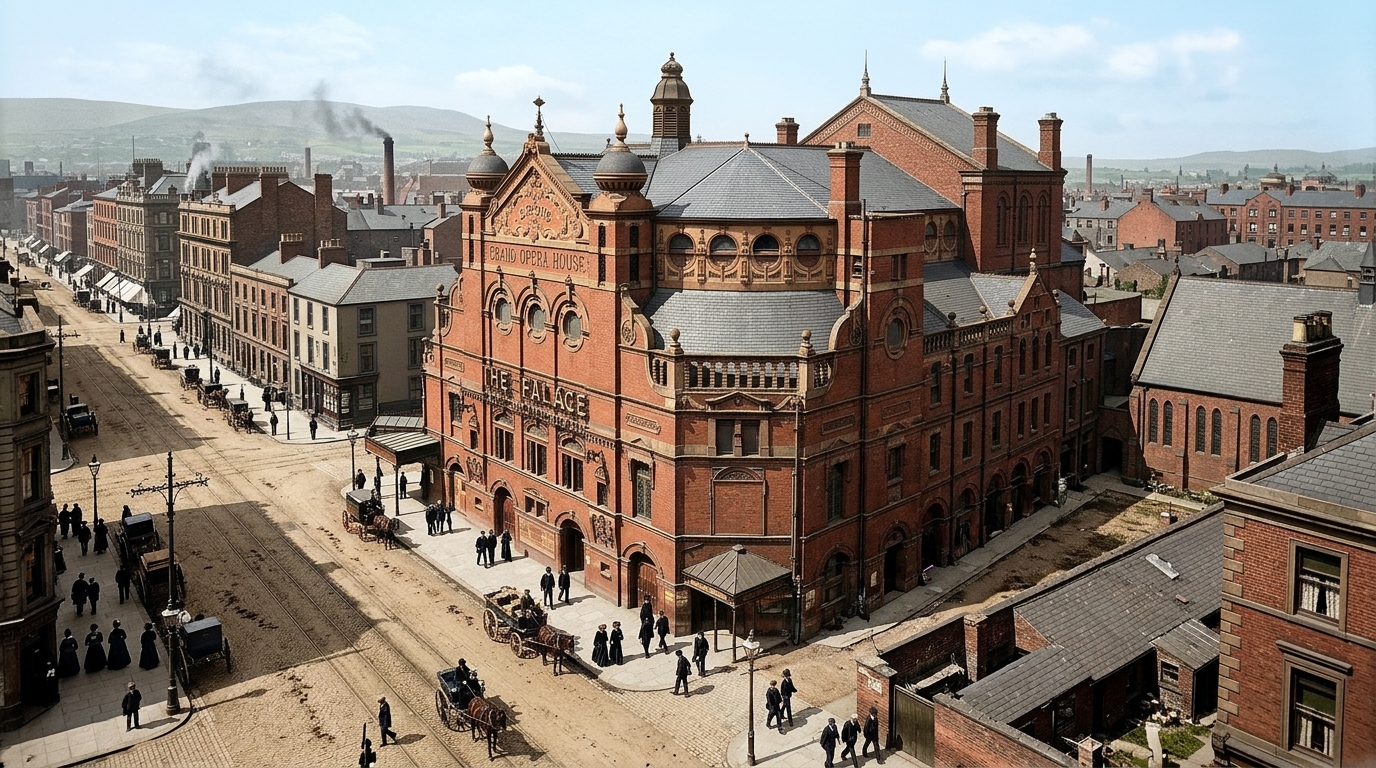
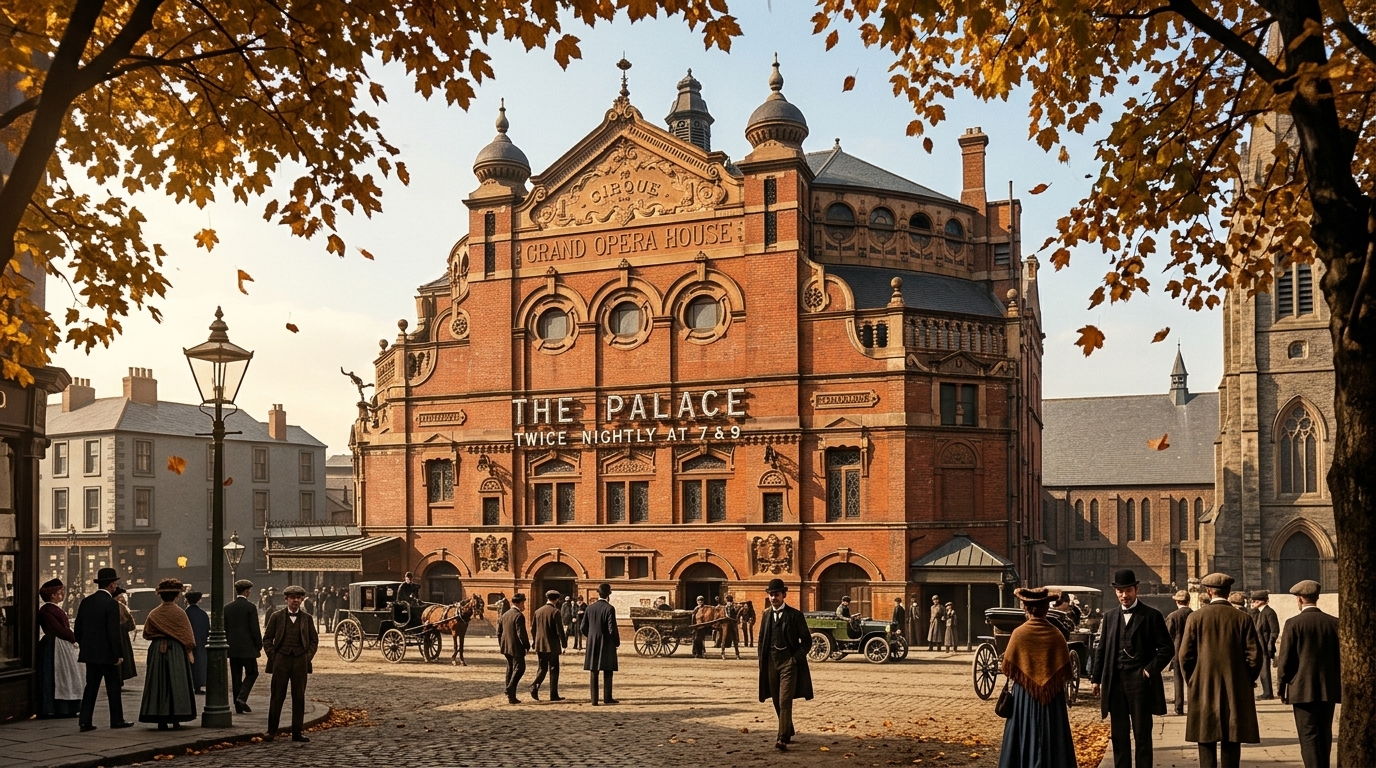
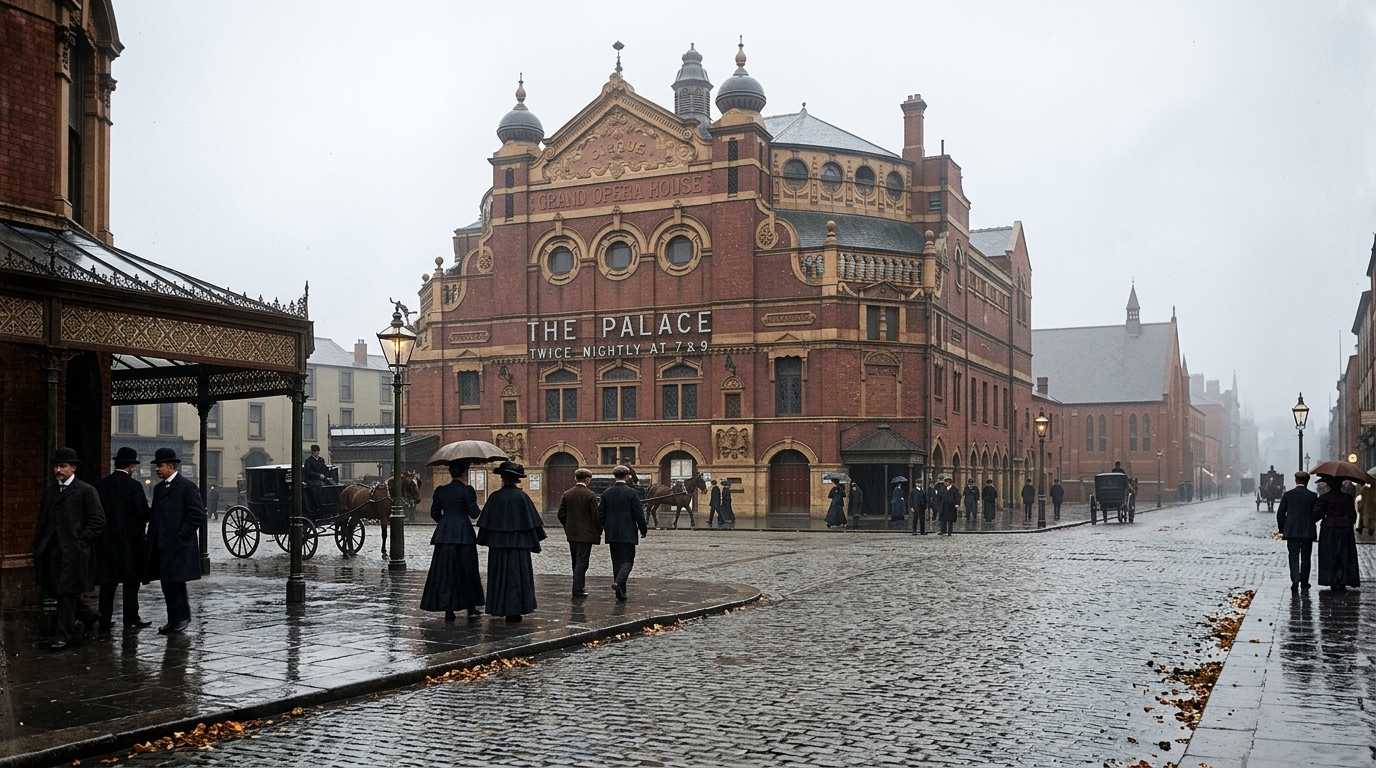
This remarkable historic photograph captures Belfast’s Grand Opera House, prominently advertising its entertainment programme as “The Palace,” with performances twice nightly at seven and nine. Opened in 1895 and designed by celebrated theatre architect Frank Matcham, the magnificent building showcases elaborate Victorian architecture, ornate brickwork and distinctive domed towers. Situated on Great Victoria Street, the theatre became an important centre of Belfast’s cultural and social life, attracting audiences for opera, variety performances and popular entertainment. A horse-drawn cart outside recalls the city’s Edwardian streetscape. This fascinating image preserves the architectural splendour and theatrical heritage of Belfast’s celebrated entertainment landmark.
The Grand Opera House, Belfast (c. 1900)
Emerald Archives Gallery
Image Caption
This remarkable historic photograph captures Belfast’s Grand Opera House, prominently advertising its entertainment programme as “The Palace,” with performances twice nightly at seven and nine. Opened in 1895 and designed by celebrated theatre architect Frank Matcham, the magnificent building showcases elaborate Victorian architecture, ornate brickwork and distinctive domed towers. Situated on Great Victoria Street, the theatre became an important centre of Belfast’s cultural and social life, attracting audiences for opera, variety performances and popular entertainment. A horse-drawn cart outside recalls the city’s Edwardian streetscape. This fascinating image preserves the architectural splendour and theatrical heritage of Belfast’s celebrated entertainment landmark.
The Grand Opera House, Belfast (c. 1900)
Emerald Archives Gallery
Image Caption
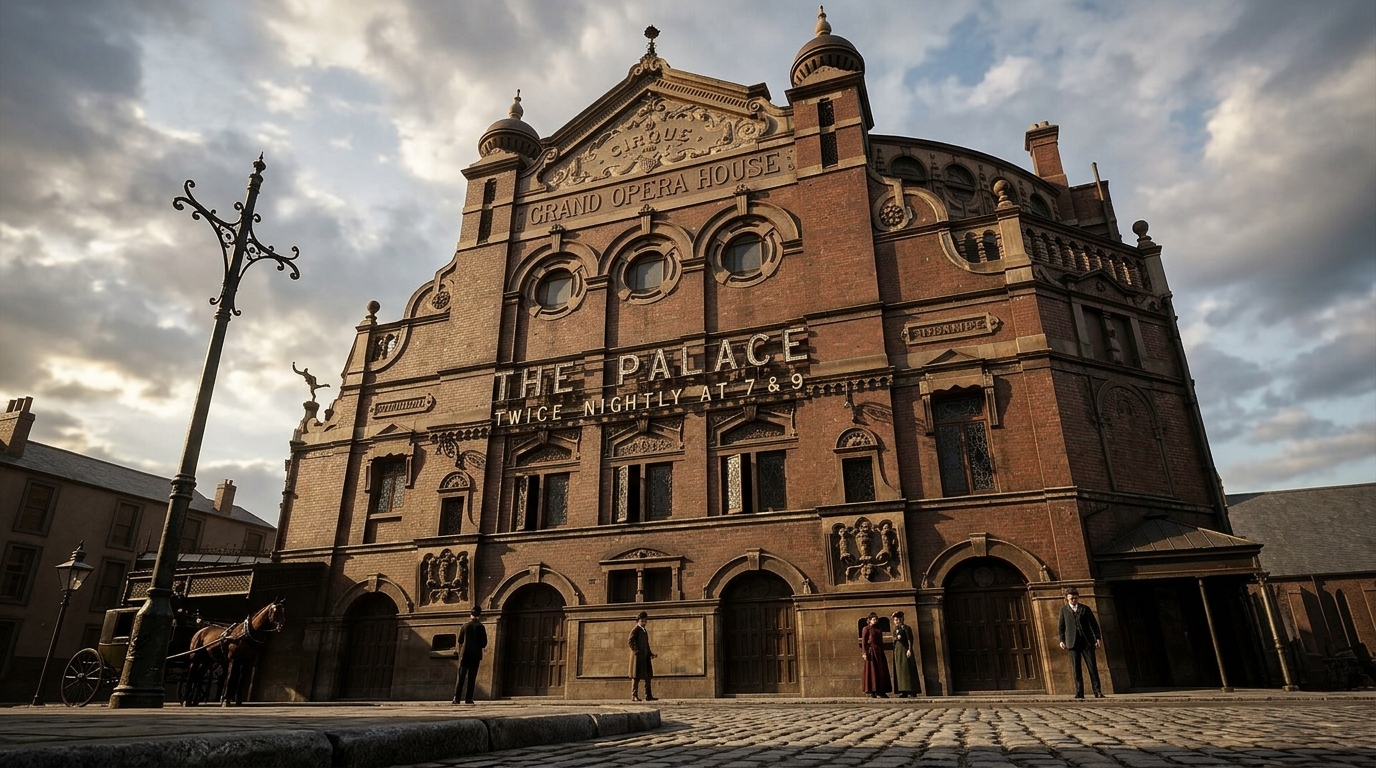
This remarkable historic photograph captures Belfast’s Grand Opera House, prominently advertising its entertainment programme as “The Palace,” with performances twice nightly at seven and nine. Opened in 1895 and designed by celebrated theatre architect Frank Matcham, the magnificent building showcases elaborate Victorian architecture, ornate brickwork and distinctive domed towers. Situated on Great Victoria Street, the theatre became an important centre of Belfast’s cultural and social life, attracting audiences for opera, variety performances and popular entertainment. A horse-drawn cart outside recalls the city’s Edwardian streetscape. This fascinating image preserves the architectural splendour and theatrical heritage of Belfast’s celebrated entertainment landmark.
The Grand Opera House, Belfast (c. 1900)
Emerald Archives Gallery
Image Caption
This remarkable historic photograph captures Belfast’s Grand Opera House, prominently advertising its entertainment programme as “The Palace,” with performances twice nightly at seven and nine. Opened in 1895 and designed by celebrated theatre architect Frank Matcham, the magnificent building showcases elaborate Victorian architecture, ornate brickwork and distinctive domed towers. Situated on Great Victoria Street, the theatre became an important centre of Belfast’s cultural and social life, attracting audiences for opera, variety performances and popular entertainment. A horse-drawn cart outside recalls the city’s Edwardian streetscape. This fascinating image preserves the architectural splendour and theatrical heritage of Belfast’s celebrated entertainment landmark.