
12 July 2026
Thatched Cottages
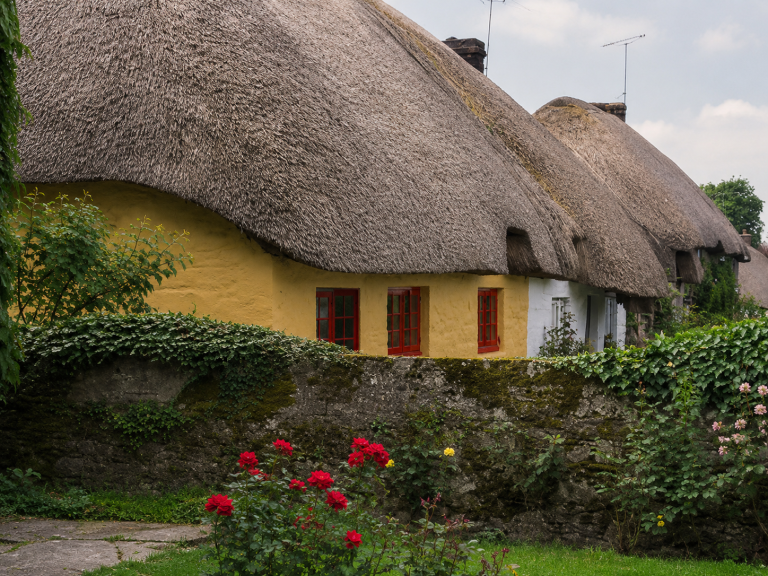
In July 1981, a row of traditional thatched cottages lends Adare its distinctive old-world character. Whitewashed walls, steep straw roofs and small windows line the roadside, reflecting a style once common throughout rural Ireland. The cottages appear carefully maintained, their simple façades softened by flowers, hedges and mature trees. Passing traffic and summer light place the scene firmly in everyday village life rather than a staged historical setting. The image preserves a familiar view of Adare at a time when its architectural heritage was becoming central to the village’s identity and appeal for visitors to County Limerick and beyond worldwide.
View Image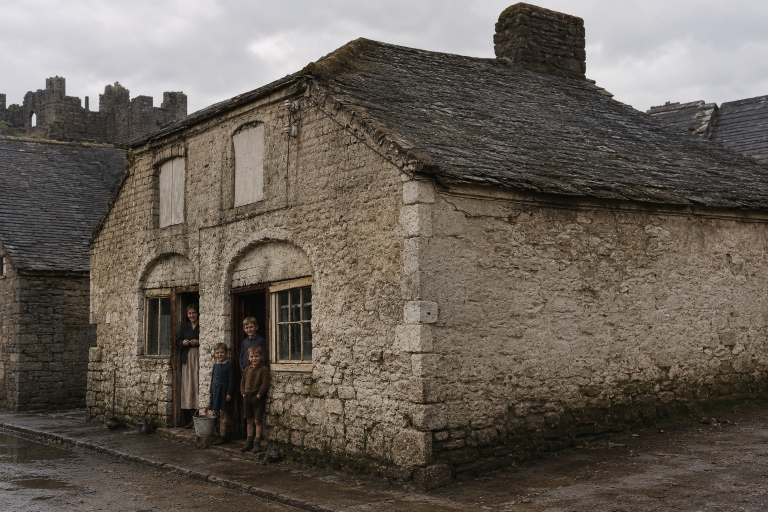
13 July 2026
Limerick Stone
This February 1937 photograph shows a weathered stone cottage in Limerick, with children gathered at its doorway and along the narrow street outside. The rough masonry, patched walls, boarded upper windows and low, sloping roof reveal the building’s age and modest condition. Electrical wires cross above the house, suggesting the gradual arrival of modern services within an older urban landscape. The children’s presence brings warmth and life to the scene, contrasting with the severe exterior and surrounding ruins. The image provides a valuable record of working-class housing, childhood and community life in pre-war Limerick during a period of social change.
View Image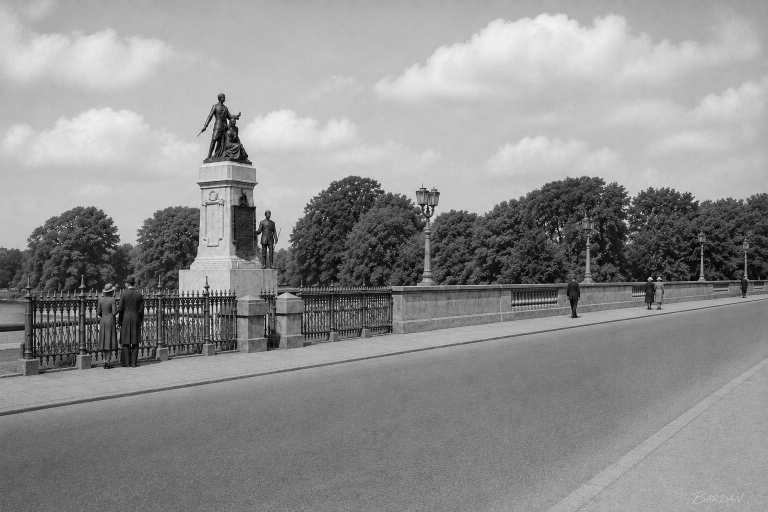
10 July 2026
Memorial 1940s
On Sarsfield Bridge in 1940s Limerick, the 1916 Memorial rises proudly beside the roadway, enclosed by green iron railings and watched over by elegant lamps. Its pale stone pedestal supports bronze figures commemorating the Rising, their solemn poses lending dignity to the riverside setting. Trees line the background, softening the urban scene and framing the monument against a bright open sky. Pedestrians in period dress walk along the bridge, suggesting ordinary city life continuing around a place of remembrance. The image captures civic pride, republican memory, and the enduring presence of national history within Limerick’s daily landscape and local identity.
View Image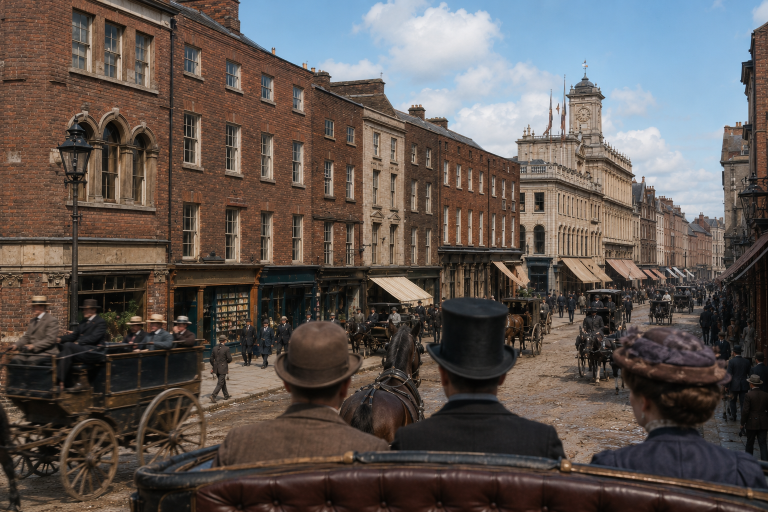
15 July 2026
Heart Edwardian
At the beginning of the twentieth century, George Street stood at the centre of commercial life in Limerick. Today known as O’Connell Street, it was bordered by impressive Georgian buildings housing hotels, shops, offices and established local businesses. Horse-drawn carts, private carriages and crowds of pedestrians moved constantly along the busy thoroughfare, while traders brought additional noise and colour to the scene. Landmarks included the Royal Hotel, MacMahon’s Temperance Hotel and firms such as O’Mahony & Company. The street’s elegant architecture and lively commerce made it one of Edwardian Limerick’s most important and recognisable urban spaces for residents and visitors.
View Image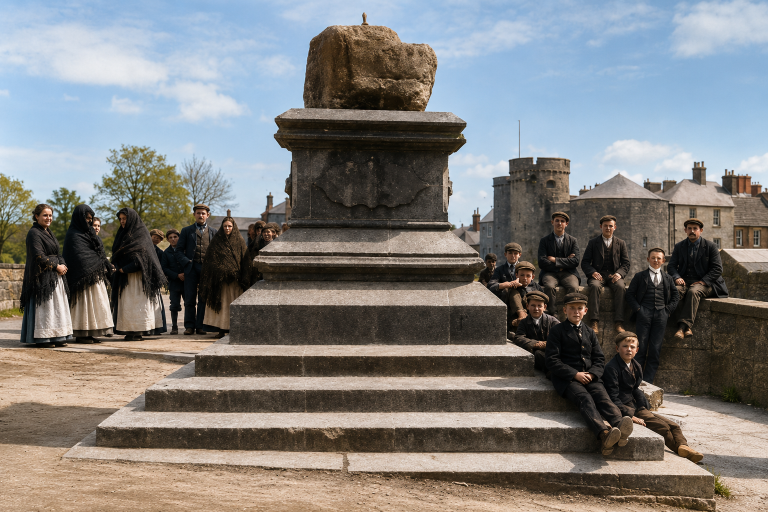
16 July 2026
Monument Gathering
This reconstructed image depicts the Treaty Stone in Limerick as it may have appeared around 1880, standing on its substantial stepped pedestal as a powerful emblem of the city’s past. Groups of townspeople, including men, women and children in period clothing, gather around the monument in a lively public setting. In the background, traditional buildings, stone walls and the nearby tower reinforce the historic atmosphere of the riverside area. Long associated with the Treaty of Limerick of 1691, the stone remained an important civic landmark, meeting place and symbol of memory, identity and local heritage in nineteenth-century Limerick.
View Image