
14 July 2026
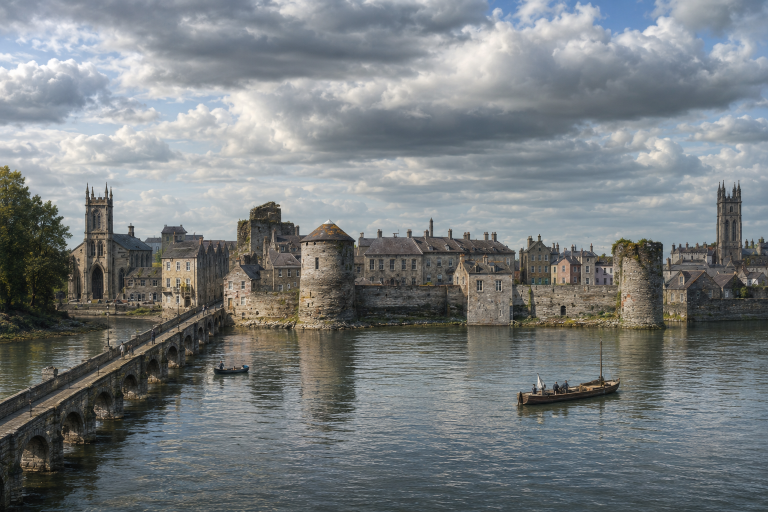
Limerick from the Shannon, c. 1850s
By the mid-nineteenth century, Limerick remained one of Ireland's most strategically significant river cities, its fortunes long tied to the Shannon as a route for trade, defence, and settlement. The medieval walls and towers still visible in this period recalled centuries of contested history, from Norman fortification to the sieges of the seventeenth century that shaped the city's identity. Alphonse Dousseau's romanticised depiction reflects a wider mid-Victorian fascination among European artists with Ireland's older townscapes, capturing Limerick at a moment when its historic core coexisted with the pressures of modernisation, emigration, and post-Famine recovery reshaping much of the country during…
View Image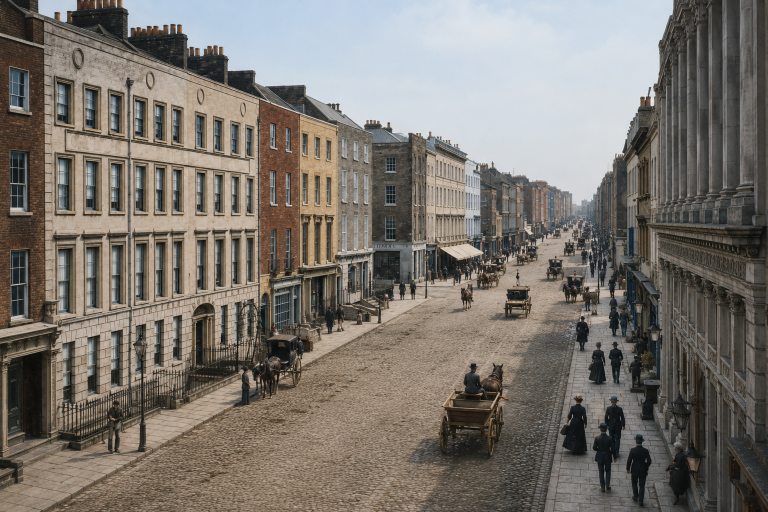
13 July 2026
A Busy Day On George Street
George Street, now O’Connell Street, formed the bustling commercial and social heart of Limerick around 1900. Elegant Georgian and Victorian façades lined the thoroughfare, their ornate shopfronts illuminated by gaslight and filled with goods for local shoppers. Horse-drawn carriages, jaunting cars and merchant carts crowded the roadway, while pedestrians in heavy coats and hats moved between businesses and hotels. The grand Cruises Royal Hotel stood among the street’s most prominent landmarks, welcoming merchants, travellers and visitors. This scene reflects the energy of late-Victorian Limerick before motor traffic transformed the city’s principal shopping street and historic urban centre during a changing…
View Image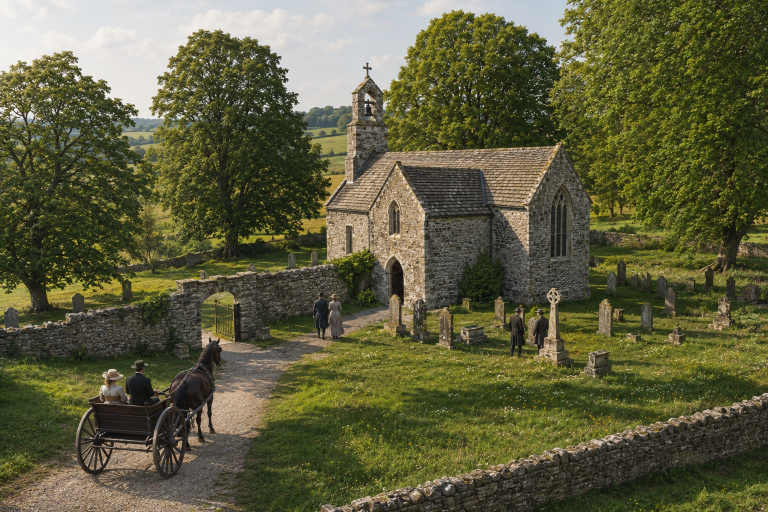
16 July 2026
Teampall Nua in Ruins
The old church near Holycross, County Limerick, was recorded as a ruin by 1642. In 1679, Rachael Bourchier, Countess of Bath, restored the building, just one year before her death. Thereafter it became known as the New Church, or Teampall Nua in Irish, and served local Church of Ireland parishioners. A belfry was added during the restoration, giving the structure a distinctive profile. Although the church later fell out of use and returned to ruin, its surviving walls, arched openings and graveyard remain important reminders of seventeenth-century religious life and the long history of worship at this historic site today.
View Image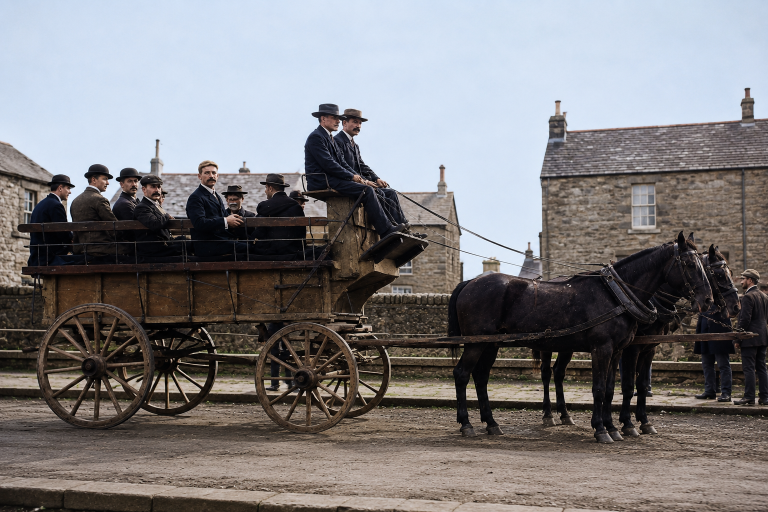
16 July 2026
Limerick Horse Brake, 1900
By 1900, Limerick’s great long-distance stagecoach era had largely disappeared, replaced by the expanding railway network. Horse-drawn vehicles nevertheless remained essential throughout the city and surrounding countryside. Large brakes and passenger wagons carried groups on local journeys, outings and transfers, while hackney cars, jaunting cars, drays and private carriages crowded the streets. Horses also transported goods from the docks, breweries, distilleries and railway station. This reconstructed scene captures a group of formally dressed men aboard a substantial horse-drawn vehicle, reflecting a transitional age when steam powered intercity travel, but horses still firmly supported Limerick’s everyday commercial, urban and social life.
View Image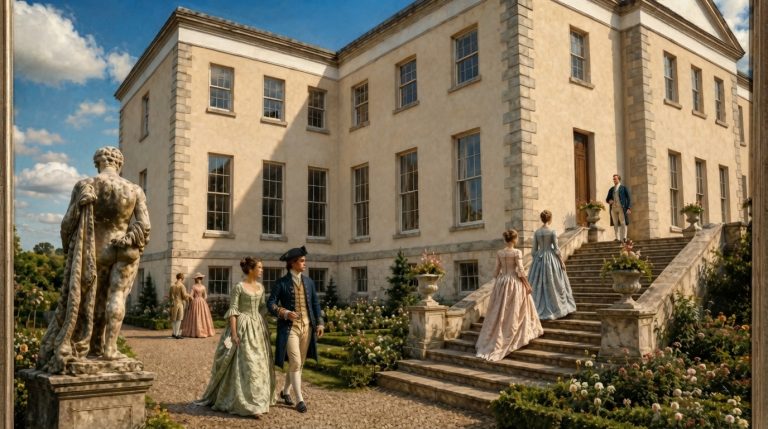
15 July 2026
I Doubt It, Says Croker
Built in 1774 for John Croker, Ballynagarde House near Ballyneety was once among County Limerick’s grand Georgian residences. The five-bay mansion stood over a raised basement, with a central breakfront, cut limestone detailing, extensive outbuildings, walled gardens and classical statues. Raised on the site of an earlier stronghold, it remained the Croker family seat for generations. Financial mismanagement during the late nineteenth century began its decline, and the estate was divided by the Land Commission in the 1930s. Now ruined, the house survives in local folklore through tales of “Doubt It Hall” and a mysterious visitor allegedly possessing cloven hooves.
View Image