Roads and Streets

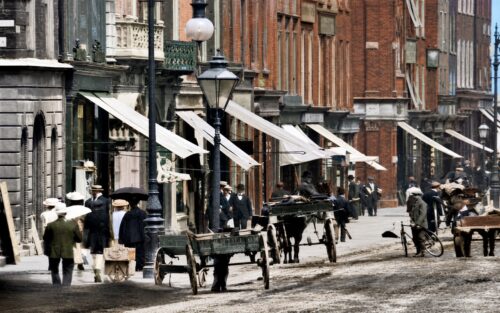
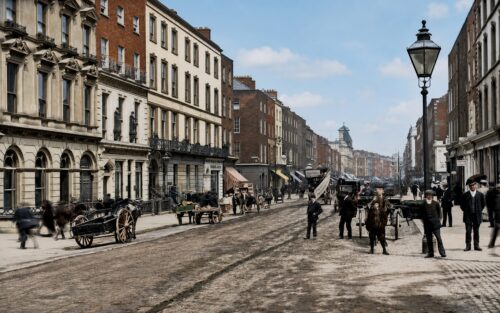
George Street Civic Street Scene, Limerick, 1900

This historic reconstruction shows George Street, Limerick, as a lively Edwardian thoroughfare around 1900, framed by tall commercial buildings, shopfronts, awnings and gas lamps. Horse-drawn carts, traps and carriages move along the worn roadway, while pedestrians gather on pavements, pause outside premises and cross between traffic. The red-brick façades, ornate stonework and active street frontage suggest a confident shopping and business district at the heart of the city. The wide perspective emphasises George Street as one of Limerick’s principal routes, where trade, transport, conversation and public movement shaped daily life before motor vehicles changed the city’s rhythm forever.
George Street Civic Street Scene, Limerick, 1900

George Street, Limerick, is shown here as a broad Edwardian city street in 1900, lined with red-brick buildings, shopfronts and awnings. Horse-drawn carts, traps and delivery wagons move steadily along the open roadway, while pedestrians gather on the pavements or cross between vehicles. The scene suggests a confident commercial centre, where shops, offices, hotels and public institutions shaped everyday movement. Tall façades, gas lamps and distant flags give the street civic formality, while the varied crowd adds energy and scale. Before motor traffic transformed the city, George Street functioned as one of Limerick’s principal arteries of trade and public life.

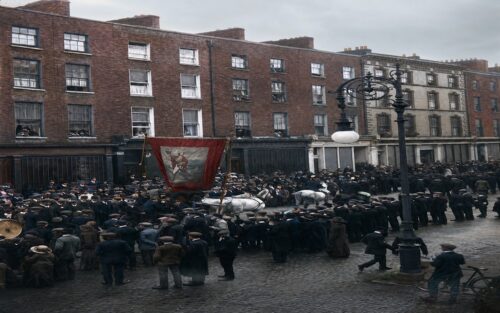
Confraterrnity Procession, George Street, Limerick, 1904

This reconstructed scene shows George Street, Limerick, crowded during the Holy Fathers Confraternity procession around 1904. A dense gathering fills the roadway beneath tall brick commercial buildings, while banners, processional emblems and clustered clergy or officials mark the religious character of the event. Horse-drawn vehicles stand among the crowd, reinforcing the street’s everyday Edwardian atmosphere. Shopfronts, upper windows and gas lamps frame the ceremony as part of ordinary city life, where faith, public display and urban commerce met in the same civic space. The image captures Limerick’s strong confraternity culture and the communal importance of organised Catholic processions in Edwardian Ireland.

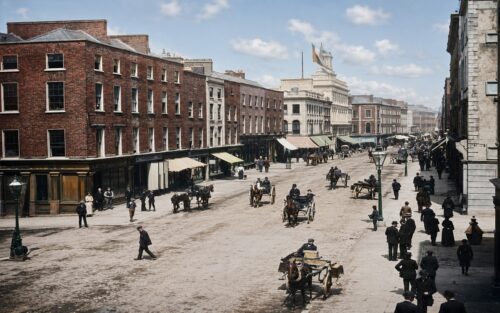
George Street Shopfronts, Limerick, 1900

George Street, Limerick, is shown as a broad, busy commercial thoroughfare in 1900, lined with red-brick Georgian buildings, shopfronts and shaded awnings. Horse-drawn carts and carriages move through the centre of the street, while pedestrians gather along the pavements in dark coats, hats and long dresses. The grand classical building in the distance gives the scene a civic dignity, contrasting with the daily movement of traders, shoppers and workers. Gas lamps, uneven road surfaces and open shopfronts evoke an Edwardian-era city still shaped by horses, local commerce and close public life, before motor traffic transformed Limerick’s central streets forever completely.

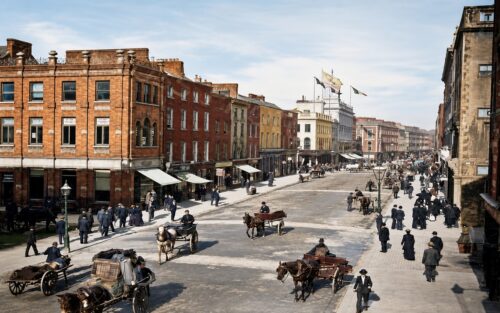
George Street Street Scene, Limerick, 1900

George Street, Limerick, appears as a lively Edwardian commercial centre around 1900, viewed from an elevated position above the roadway. Red-brick buildings, shopfronts and awnings line the left side, while a grand civic façade anchors the distance. Horse-drawn carts, traps and carriages move across the wide street, sharing space with pedestrians in dark coats and hats. Gas lamps and pale stone pavements frame the scene, reinforcing the city’s formal character. The image captures George Street as a working artery of trade, transport, conversation and public movement before motorcars reshaped Limerick’s daily rhythm and urban appearance in the early twentieth century.