
In 1916, Limerick stood amid war, rebellion and uncertainty. The First World War continued to affect local families through enlistment, casualties, shortages and anxious letters from abroad. In April, the Easter Rising transformed political feeling across Ireland, even where daily life remained centred on quays, markets, churches, schools and crowded streets. Newspapers, rumours and arrests brought national upheaval into Limerick homes and workplaces. The Shannon still shaped trade and identity, but conversations now carried sharper questions of loyalty, freedom and sacrifice. Limerick in 1916 was watchful, unsettled and resilient, holding ordinary life together while Ireland’s future changed dramatically.
-
Pension Divide
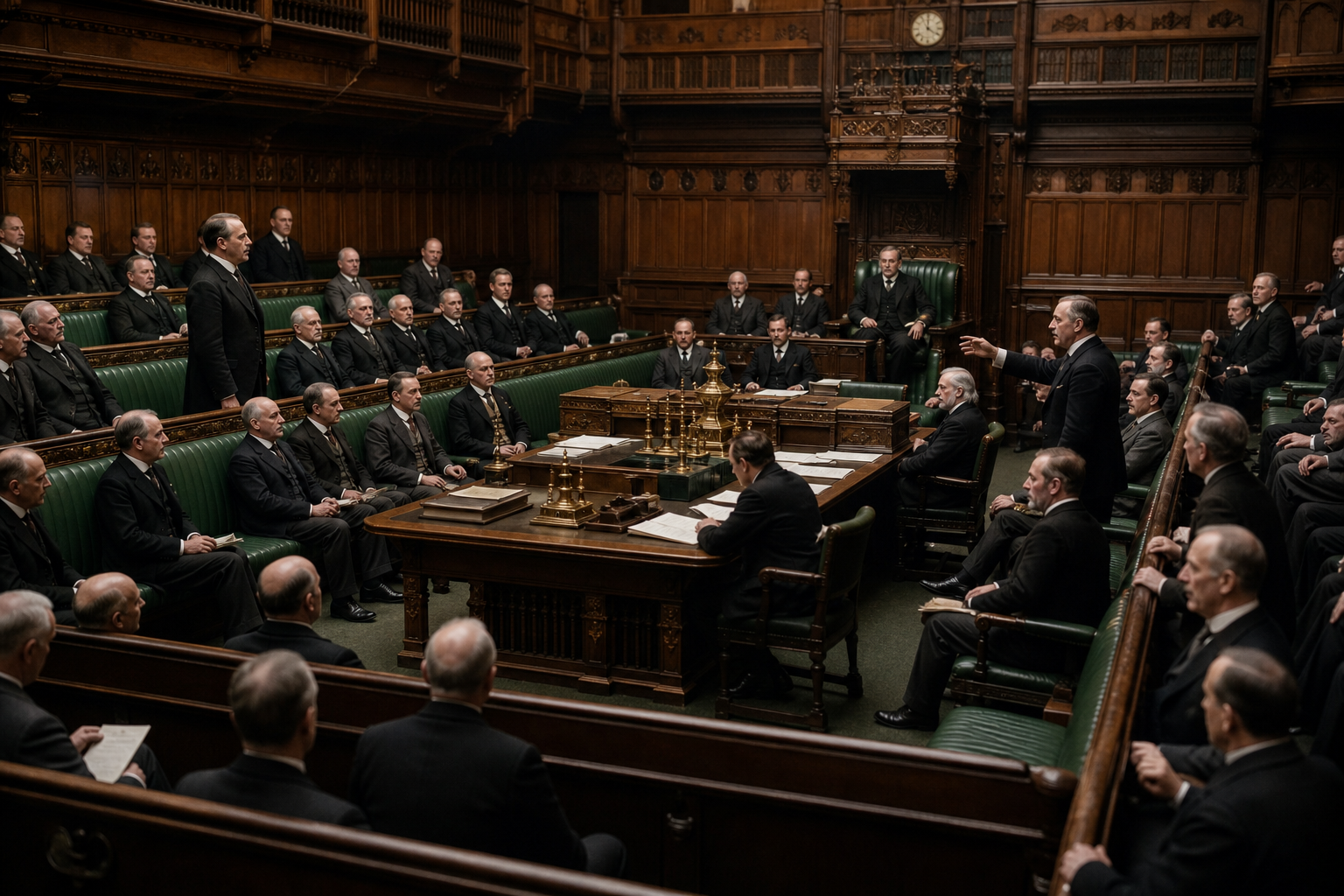
Read Article: Pension DivideRoyal Irish Constabulary pension policy came before the House of Commons on 9 November 1916 in a form that carried clear relevance for Limerick, where the centrally administered force maintained personnel and barracks across city and county. During committee consideration of the Constabulary and Police (Ireland) Bill, Alfred Byrne, Member for Dublin Harbour, moved a…