Membership is completely free, giving members unlimited access to all available resources, services, features, and benefits without any restrictions or fees.
Welcome back. Sign in to continue enjoying unlimited access to all available resources, services, features, and member benefits at no cost.
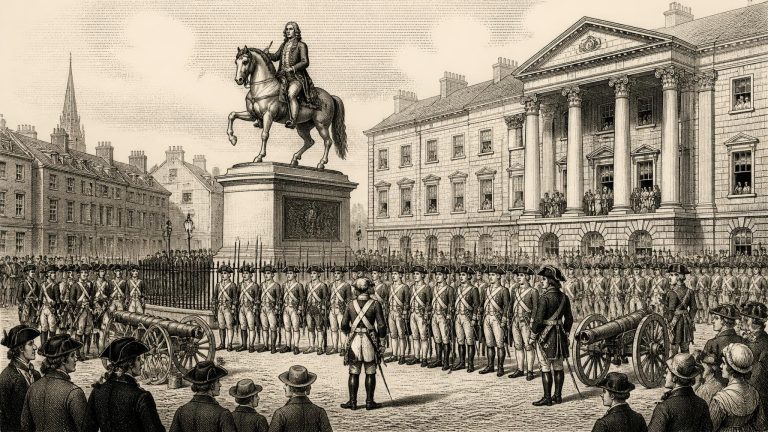
The Volunteers had begun to form in 1778, initially from Protestant property holders and middle-class townsmen concerned by the possibility of a French landing. During 1779 their numbers, geographical spread and public confidence increased sharply. They were not a national army directed by the state. Companies elected or accepted local officers, obtained arms and uniforms through local initiative, and cultivated civic prestige through reviews, dinners and ceremonies. Their character varied by district, but their public face was overwhelmingly Protestant, and the movement did not erase the political and legal divisions of eighteenth-century Ireland.
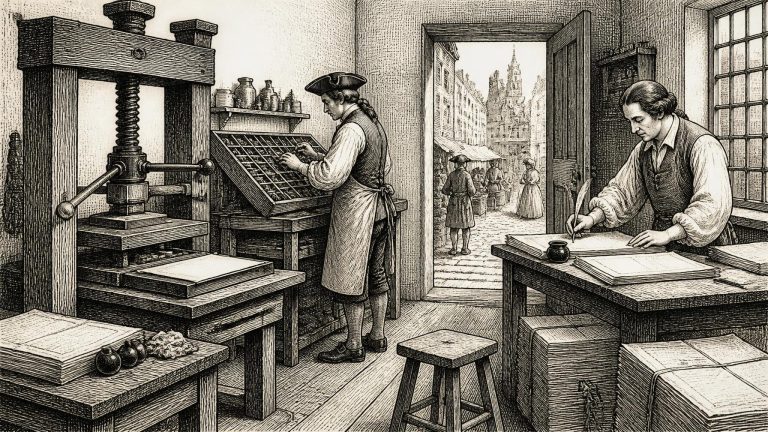
In 1776 Ireland was not a bystander to the American Revolution. It was a separate kingdom with its own parliament in Dublin, but it remained bound tightly to the British imperial system: by constitutional restraints, commercial regulations, the authority of the Crown’s Dublin Castle administration, and the sea routes that carried Irish food, linen, people and news across the Atlantic. When the war with the American colonies intensified, its consequences arrived in Ireland not chiefly as distant battle reports but as restrictions on trade, demands upon resources, political argument and anxious talk in ports, markets and print shops.