Archived: 12 October 2026
Abstract
In 1776, Ireland, though a separate kingdom, was deeply affected by Britain’s war with the American colonies. An embargo on provisions exposed dependence on imperial trade, while the Tumultuous Risings Act targeted Whiteboy rural unrest rooted in land, tithe and tenancy grievances. Newspapers expanded political debate: Finn’s Leinster Journal printed the Declaration of Independence in August, and the Hibernian Magazine cautiously reproduced Paine’s Common Sense. Arthur Young’s travels recorded ports, linen districts and farms alongside poor roads, insecure smallholders and poverty. The year intensified awareness of inequality, constitutional constraint and economic vulnerability, foreshadowing campaigns for free trade and legislative independence.
Read Article
Archived: 12 October 2026
Abstract
In 1775, the American war exposed tensions within Ireland’s restricted Protestant political order. Troop departures depleted the garrison, while authorities pragmatically tolerated Catholic recruitment despite penal disabilities. Atlantic links encouraged both loyalism and sympathy for the colonists, expressed in Dublin and Edmund Burke’s conciliation arguments. Henry Flood accepted office, weakening the Patriot interest, while Henry Grattan entered parliament through Charlemont patronage. Parliament managed supply and revenue under strong British influence. Catholics and Presbyterians remained disadvantaged, and debate connected religion, trade and constitutional constraints. War threatened linen markets and sharpened commercial grievances. Cultural life and tower damage reflected wider uncertainty locally.
Read Article
Archived: 12 October 2026
Abstract
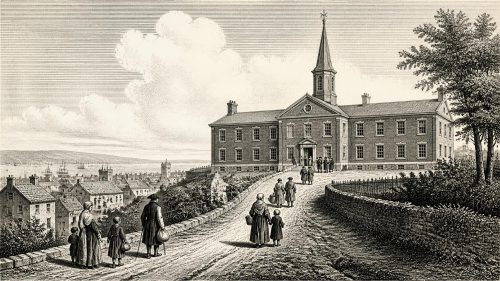
In 1774, Ireland saw developments reflecting urban growth, religious inequality and economic ambition. Belfast’s Charitable Society was incorporated, opened its Poor House and Infirmary, later Clifton House, and began admitting residents, providing elite-supervised relief amid poverty generated by commercial expansion. Parliament allowed Catholics to swear allegiance instead of supremacy, but preserved penal restrictions on property, education and political participation. In Armagh, Archbishop Richard Robinson’s infirmary and Royal School extended an Anglican institutional landscape. Legislation promoted Lagan navigation to link Belfast with inland trade, despite difficulties. Cultural landmarks included Thomas Leland’s History of Ireland, Oliver Goldsmith’s death, and Francis Beaufort’s birth.
Read Article

Archived: 12 October 2026
Abstract
In 1773, the killing of Art Ó Laoghaire near Carriganima exposed the unequal legal position of Catholics in Ireland. His feud with magistrate Abraham Morris, involving a horse and penal legislation, inspired Eibhlín Dubh Ní Chonaill’s enduring Irish-language lament. Morris’s acquittal and the disputed burial reinforced perceptions of unequal justice. Nationally, Lord Lieutenant Harcourt’s unsuccessful absentee-tax proposal revealed financial strain, landlord influence and limits on Dublin’s parliament. Linen, woollen promotion and trade sustained a diverse but dependent economy, while volunteer corps reflected Protestant local society. Goldsmith’s success and Leland’s contested history illustrated Ireland’s contribution to, and disputes within, British culture.
Read Article
Archived: 12 October 2026
Abstract
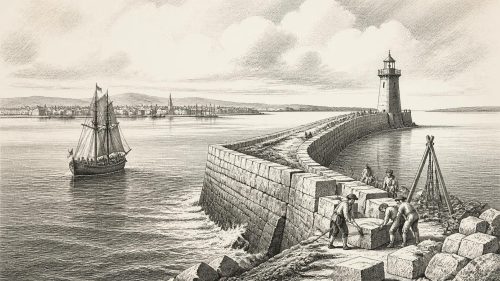
In 1768, Ireland’s Octennial Act received royal assent, limiting parliaments to eight years and prompting dissolution of the 1761 parliament and summer elections. Championed by Charles Lucas, it established regular electoral expectations but preserved Poynings’ Law, Protestant dominance and Catholic exclusion. Lord Lieutenant George Townshend’s proposed expansion of the Irish army was narrowly rejected, exposing conflict between Dublin Castle and parliamentary undertakers and encouraging his later patronage strategy. The new parliament did not sit until 1769. Elsewhere, Frederick Hervey became bishop of Derry, John O’Brien’s Irish-English dictionary appeared in Paris, and Poolbeg’s maritime works advanced Dublin’s commercial access and navigation.
Read Article
Archived: 12 October 2026
Abstract
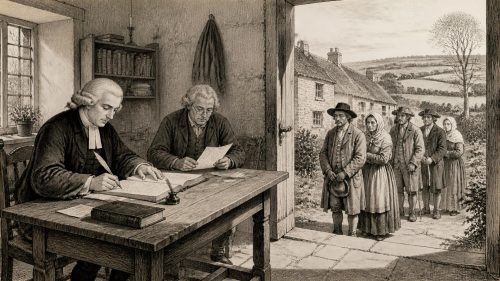
In 1766, Ireland’s Protestant authorities ordered a religious return distinguishing Protestant and Catholic householders and listing Catholic clergy. Conducted unevenly by Church of Ireland ministers, it revealed confessional inequality but survives only fragmentarily. In south Tipperary, Father Nicholas Sheehy, sympathetic to agrarian grievances associated with the Whiteboys, became a target of anxious magistrates and gentry. Acquitted of rebellion charges, he was convicted of murder despite disputed evidence and executed at Clonmel. Further executions followed. These events exposed a state classifying an excluded Catholic majority while repressing rural resistance amid commercialising agriculture, constitutional constraints, Protestant dominance, and fears of Catholic disloyalty.
Read Article
Archived: 12 October 2026
Abstract
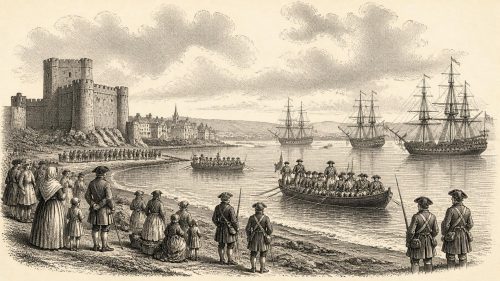
In February 1760, François Thurot’s French force of about 600 men captured Carrickfergus, requisitioned supplies and threatened Belfast, prompting local defences, negotiations and widespread mobilisation. The raiders departed on 26 February and were defeated two days later off the Isle of Man, where Thurot was killed. The episode exposed Ireland’s coastal vulnerability during the Seven Years’ War. In Dublin, Catholics established a committee to seek cautious relief from penal laws, supported by public debate. George II’s death brought George III’s accession, dissolution of parliament and electoral agitation. Rural insecurity, religious inequality and surviving Gaelic musical traditions also shaped Irish life.
Read Article
Archived: 12 October 2026
Abstract
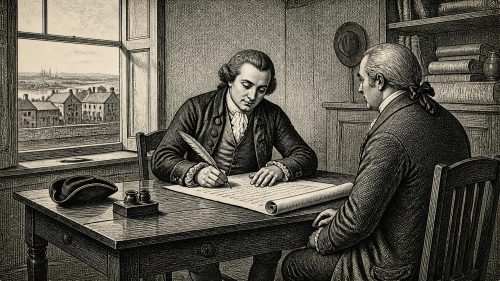
In 1759, Ireland, a separate but constitutionally restricted kingdom under George II, experienced political unrest and urban change. On 3 December, Dublin crowds invaded Parliament House over a false union rumour, demonstrating Protestant civic patriotism, economic anxiety and expanding popular political engagement. Speaker John Ponsonby helped restore calm, while Henry Flood entered Parliament. Catholics, still excluded from political power, promoted a loyal address to the Crown. Dublin's economy depended on agriculture, linen, trade and regulated industries. Arthur Guinness leased St James's Gate brewery for 9,000 years. Trinity's West Front was completed, and Bartholomew Mosse's maternity hospital survived its founder's death.
Read Article

Archived: 12 October 2026
Abstract
John Rocque’s four-sheet Exact Survey of Dublin, completed in September 1756, provided an exceptionally detailed record of the capital’s streets, buildings, yards and commercial spaces. Prepared after his 1754 arrival and presented to the Lords Justices, it demonstrated Dublin’s growing administrative and economic importance. The map did not encompass Ireland or alter its entrenched inequalities. Daily life remained shaped by small-scale agriculture, unequal landholding, an expanding linen trade, Catholic disabilities and Protestant landlord power. Nevertheless, 1756 also saw political control shift in Dublin and war with France proclaimed in Ireland, exposing inherited structures to international pressure and closer governmental scrutiny.
Read Article
Archived: 12 October 2026
Abstract
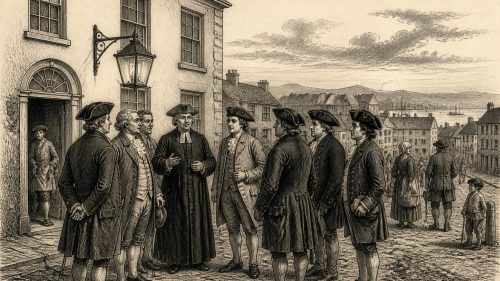
In 1752 Ireland adopted the Gregorian calendar, so Wednesday 2 September was followed by Thursday 14 September, while the civil year now began on 1 January. The reform affected administration, commerce, courts and worship, though no evidence supports later tales of calendar riots. Commissioners for inland navigation were incorporated, signalling ambitions to improve trade despite difficult travel. Dublin gained Ireland’s first purpose-built Methodist chapel; Killaloe and Kilfenora bishoprics were united. Belfast merchants founded the Charitable Society to address poverty amid commercial expansion tied to Atlantic slavery. Under Protestant political dominance, Catholics remained excluded and inequalities persisted deeply across Irish society.
Read Article

Archived: 12 October 2026
Abstract
In 1751, Nathaniel Clements became ranger of Phoenix Park and began the lodge later transformed into Áras an Uachtaráin, embodying the Palladian authority of Ireland’s Protestant elite. The shortened legal year, preceding Gregorian reform, altered timekeeping. Architect Richard Castle died, while actor Peg Woffington returned to Dublin’s Theatre Royal, illustrating cultural connections. Debate over Burton’s Bank’s 1733 collapse exposed insecurity. Parliament, dominated by Protestant interests and excluding Catholics, considered revenue, commerce, law, roads and charitable medicine, including Cork Infirmary. These developments reveal a connected Georgian Ireland whose growth, administration and institutions rested upon inequalities of religious, property and political power.
Read Article

Archived: 12 October 2026
Abstract
In 1750, George II chartered the Dublin Society for Promoting Husbandry and Other Useful Arts, formalising an elite-led body that encouraged agricultural, industrial and artistic improvement through premiums, advice and practical education. Its drawing-school association, though imprecisely dated, reflected efforts to train craftsmen. In December, the Duke of Dorset returned as lord lieutenant, reshaping political expectations before later conflicts over revenue and executive authority. Charles Lucas, writing from London, advanced civic arguments in print. Beneath these institutional developments lay restricted representation, Anglican privilege, penal disabilities, unequal commerce and rural insecurity, despite population growth, agricultural adaptation, and Ulster’s expanding linen economy.
Read Article

Archived: 13 October 2026
Abstract
In 1748, Ireland’s restricted Protestant political order was highlighted by the Newtown Act, which regularised non-resident burgesses and potentially strengthened borough patronage, while excluding Catholics and dissenters from power. Completion of James FitzGerald’s Palladian Kildare House demonstrated aristocratic wealth, influence and Dublin’s southward expansion. Wartime fasts and embargoes gave way to ceasefires and the Treaty of Aix-la-Chapelle, though rural households remained economically insecure within imperial trading constraints. Proclamations against robbery, intimidation and arson reflected official anxieties over order. Catholic organisation persisted despite Penal Laws, marked by Archbishop Ross Roe MacMahon’s death, while early Methodist preaching added to Ireland’s religious landscape.
Read Article

Archived: 13 October 2026
Abstract
In 1747, Ireland saw no single decisive event, but political, religious, cultural and social tensions were visible. George Stone became Church of Ireland archbishop of Armagh and a lord justice, strengthening Protestant administrative power under a restricted constitution. Catholic leadership changed through episcopal deaths and appointments, sustained by clerical and continental networks despite penal laws. John and Charles Wesley made their first Irish visits, while Edmund Burke helped found a Trinity debating club. Dublin’s Kelly riots exposed disputes over privilege and theatre authority. Proclamations addressed quarantine, rural crime, weavers’ unrest and rioting, reflecting hardship, trade and fragile order after famine.
Read Article
Archived: 13 October 2026
Abstract
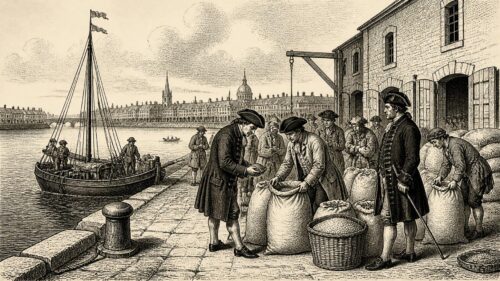
In 1745, Ireland remained peaceful during the Jacobite rising, yet was deeply implicated in the wider Stuart crisis. Lord Lieutenant Chesterfield combined surveillance and preparedness with relative restraint towards Catholics, while restricting provisions exports and proclaiming rewards, fasts and grain controls. Irish expatriates advised Charles Edward Stuart, and the French Irish Brigade distinguished itself at Fontenoy, though no Irish rebellion materialised. Food regulation, markets and linen petitions reflected wartime economic anxieties after scarcity. Dublin retained vitality: Thomas Sheridan managed Smock Alley Theatre, while Jonathan Swift died, leaving funds for St Patrick’s Hospital. Ireland’s calm concealed penal inequality and international entanglements.
Read Article

Archived: 13 October 2026
Abstract
Ireland in 1744 combined political control, social vulnerability and tentative institutional improvement. With the Anglican parliament prorogued, Dublin Castle governed through proclamations addressing foreign military recruitment, disorder, crime, war with France and maritime quarantine. In February, a house collapsed during Catholic Mass in Dublin’s Pill Lane, killing priest and nine worshippers, exposing hazards intensified by penal restrictions. Dublin also founded the Physico-Historical Society and Hospital for Incurables, while cultural life included Spranger Barry’s theatre debut and developing drawing instruction. Arthur Price became archbishop of Cashel. A wet, cold autumn damaged northern oats and potatoes, reviving fears after the 1740–41 famine.
Read Article

Archived: 13 October 2026
Abstract
In 1743, Charles Lucas challenged Dublin aldermen's control over elections, accounts and patronage, arguing that the Corporation's wider body should choose aldermen. His April Remonstrance and demands to print accounts widened the dispute through print and legal argument, although recorder Eaton Stannard ruled for the aldermen in October. The conflict promoted civic accountability but remained confined to Protestant corporate citizens, excluding Catholics and Dissenters. Arthur Jones Nevill became Surveyor General, linking public works to Castle patronage. Proclamations addressed crime, ports and quarantine, while a linen bounty integrated Irish production into British Atlantic trade. Recovery from the Great Frost remained precarious.
Read Article
Archived: 13 October 2026
Abstract
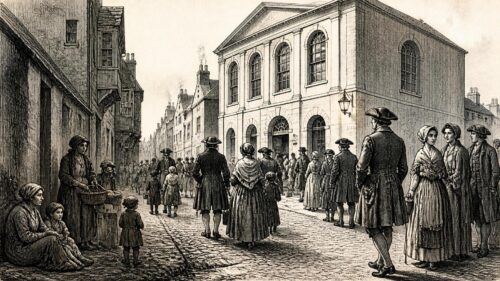
In 1741, Ireland endured the deadliest phase of the 1740–41 Great Frost famine, or Bliain an Áir. Freeze, drought, crop and livestock failures, lost employment and soaring prices caused widespread hunger, while fever and dysentery devastated weakened populations. Estimated deaths across the crisis reached 310,000–480,000, though records remain incomplete. Relief was fragmented, relying on local charity, imports, employment schemes and municipal action. An improved harvest and falling prices eased scarcity late in the year, but disease and hardship persisted. Amid extreme inequality, Dublin opened Fishamble Street’s Music Hall and welcomed Handel, while Killiney Hill relief works commemorated suffering and employment.
Read Article

Archived: 13 October 2026
Abstract
In 1736, Ireland’s Protestant ruling order was tested and displayed through disputes, legislation, commemoration and print. The Commons opposed tithe on agistment, favouring landed interests against Church of Ireland clergy; Jonathan Swift attacked legislators in The Legion Club. Cork’s new civic arrangements combined cathedral rebuilding with a workhouse providing relief, discipline and compulsory labour. Dorset founded the Boyne obelisk, affirming a Protestant interpretation of Williamite victory. Catholic bishop James Gallagher published Irish-language sermons in Dublin, demonstrating resilient Catholic culture under penal restrictions. James Hamilton’s Dublin Daily Advertiser, the city’s first daily newspaper, reflected expanding commercial communication under unequal Protestant rule.
Read Article
Archived: 13 October 2026
Abstract
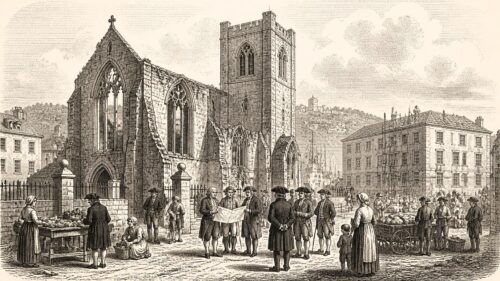
In 1735, Ireland’s Protestant governing system addressed poverty, security and economic improvement through parliamentary proposals, proclamations and print. Dublin’s parliament, constrained by Poynings’ Law and dominated by property-owning Protestants, considered measures reinforcing Catholic exclusion from juries and restricting mixed marriages. Cork advanced plans for St Fin Barre’s reconstruction and a workhouse combining relief, labour discipline, foundling care and Protestant instruction; legislation passed in 1736. Road schemes and liquor-credit regulation reflected social concerns. Proclamations pursued robbers across counties. George Berkeley’s Querist promoted debate on employment, consumption and national resources, while Protestant schooling and Ulster Scots print illustrated confessional and cultural currents.
Read Article

Archived: 13 October 2026
Abstract
In 1734, Ireland’s Protestant governing order reinforced religious exclusion while managing finance, charity and urban growth. Parliament, restricted by property, Protestant franchise and Poynings’ Law, aided creditors after the failure of Burton’s banking partnerships and barred Catholic-connected converts from magistracy. George Berkeley became bishop of Cloyne, beginning an episcopate later associated with social concerns. Dublin’s Mercer’s Hospital opened ten beds for sick poor people, supported by voluntary philanthropy and unpaid medical service. Cultural life expanded through Faulkner’s Swift edition, newspapers and the Aungier Street theatre, after damage at Smock Alley. Official proclamations against crime indicated anxieties over security and disorder.
Read Article
Archived: 13 October 2026
Abstract
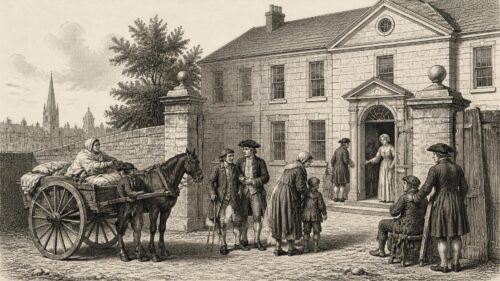
In 1733, Ireland experienced influenza, financial insecurity and institutional change centred on Dublin. Dr Steevens’ Hospital opened, providing treatment for workers while imposing rules of admission and patronage. Ben and Samuel Burton’s bank collapsed, exposing dependence on credit. Parliament returned, raised revenue duties and elected Henry Boyle Speaker, while proclamations targeted smuggling and disorder. George II chartered the Protestant charter-school society to educate and convert poor Catholic children. The Dublin Society promoted agriculture, minerals and manufactures. Cultural life included Samuel Madden’s fiction, the death of Irish-language poet Séamas Dall Mac Cuarta, Richard Kirwan’s birth, and architect Edward Lovett Pearce’s death.
Read Article

Archived: 13 October 2026
Abstract
In 1731, Dublin witnessed institutional developments that illuminated eighteenth-century Ireland’s unequal political and social order. Thomas Prior, Samuel Madden and fellow Protestant elites founded the Dublin Society to promote agriculture, manufactures and useful knowledge, creating a forum for economic improvement. In October, the Irish parliament first met in Edward Lovett Pearce’s Parliament House on College Green, a grand but constitutionally constrained home for a legislature representing Protestants alone. Its session considered regulation and transport, including roads. Meanwhile, the Lords’ hostile inquiry into popery documented enduring Catholic worship, clergy, schools and religious communities, exposing the narrow social base of Protestant rule.
Read Article
Archived: 13 October 2026
Abstract
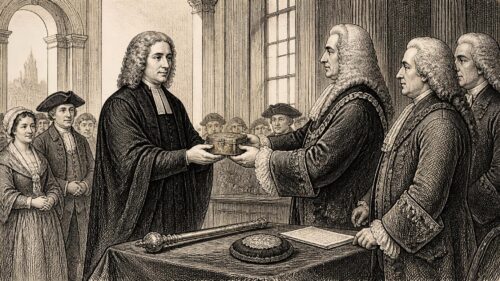
In 1730 Dublin Corporation granted Jonathan Swift the freedom of the city in a gold civic box, recognising the dean and author’s influence after the Drapier’s Letters. The ceremony illuminated Protestant-controlled municipal power, print culture and exclusion. During transition between viceroys, resident officials dominated administration; Ireland’s Parliament remained subordinate to Britain and restricted to propertied Protestants. Legislation against workers’ combinations exposed insecure urban labour and regulation of growing Dublin. Early toll roads signalled commercial development, while agriculture, linen production, markets and weather shaped livelihoods. Established Anglican authority contrasted with the restricted but enduring Catholic majority and disadvantaged Presbyterians, revealing inequality.
Read Article

Archived: 13 October 2026
Abstract
In 1728, Irish legislation disfranchised Roman Catholics, excluding the Catholic majority from parliamentary elections and legal employment while reinforcing Protestant Ascendancy within a constitutionally dependent kingdom. Parliament also contemplated replacing dilapidated Chichester House. A severe harvest failure intensified the 1727–29 subsistence crisis, raising grain prices and exposing tenants, labourers and smallholders to hunger despite local charitable relief. Efforts to promote tillage reflected tensions between grazing exports and food security. Emigration from Belfast to America signalled economic pressure. Brooking’s Dublin map portrayed civic confidence amid poverty. Esther Johnson’s death, Swift’s political writing, and Matthew Dubourg’s appointment marked cultural life that year.
Read Article

Archived: 13 October 2026
Abstract
In 1726, Ireland’s constrained Protestant polity, governed within British authority, regulated religious and private life while excluding Catholics from power. Lord Lieutenant Carteret and Archbishop Boulter represented competing Dublin and London priorities. Jonathan Swift’s anonymously published Gulliver’s Travels, shaped by Irish political experience, achieved immediate success as wide-ranging satire. The previous day, Caleb Threlkeld published the first Irish flora, cataloguing Dublin-area plants in Latin, English and Irish and linking observation, medicine and vernacular knowledge. Linen exports demonstrated commercial integration, yet rural society remained vulnerable. A failed harvest and rising prices inaugurated late-1720s scarcity, revealing prosperity’s uneven distribution across the kingdom.
Read Article

Archived: 13 October 2026
Abstract
In 1724, opposition to William Wood’s London-authorised copper coinage transformed a dispute over halfpence into a national argument about economic trust, political consent and Irish interests. Jonathan Swift’s anonymous Drapier’s Letters, printed by John Harding, encouraged householders, merchants and bankers to refuse the coins, despite official assurances of their quality. Dublin declarations, grand jury support and Harding’s prosecution threats demonstrated print’s political power, while Lord Lieutenant Carteret confronted mounting resistance. The patent remained valid until 1725, but could not circulate effectively. The year also saw Hugh Boulter’s primacy, the Neal brothers’ landmark Irish tune collection, and a total solar eclipse.
Read Article

Archived: 13 October 2026
Abstract
In 1723, Avoca in County Wicklow established a co-operative weaving mill where farmers brought wool for spinning, dyeing and weaving, alongside corn-grinding. Powered by the river and serving local households and mining communities, it illustrates rural adaptation despite restrictions on Irish woollen exports. Prolonged hot, dry weather brought relative agricultural stability, though drought posed risks. Ireland’s restricted Protestant Parliament considered revenue, manufacture, policing and trade. Wood’s English-minted copper coinage provoked anxieties over consent and commerce. Catholic Archbishop Bernard O’Gara’s appointment demonstrated institutional resilience under penal laws. Claims that Dr Steevens’ Hospital opened that year are unsupported; it opened in 1733.
Read Article
Archived: 13 October 2026
Abstract
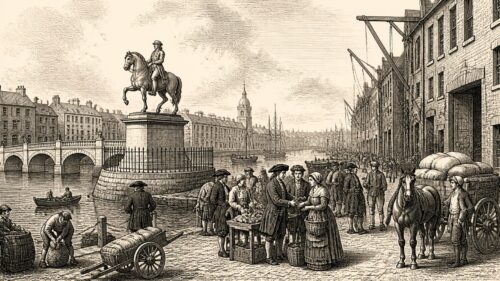
In 1722 George I authorised English ironmaster William Wood to mint up to 360 tons of copper halfpence and farthings for Ireland, initiating a controversy over currency, trade and political authority. Issued in London without Irish parliamentary consultation, the fourteen-year patent alarmed critics amid Ireland’s restricted autonomy following the 1720 Declaratory Act, although Swift’s attacks and parliamentary condemnation came later. Ireland’s rural economy, unequal imperial trade and unreliable small change formed its background. Executive government, policing proclamations and penal restrictions demonstrated state power. Dublin simultaneously celebrated Hanoverian rule with George I’s statue, while print culture widened constitutional unease more widely.
Read Article

Archived: 13 October 2026
Abstract
In 1721, Ireland’s proposed public bank collapsed amid post-South Sea Bubble distrust, disputes over credit, land, religious exclusion and dependence on Westminster, recently reinforced by the Declaratory Act. Although supporters sought cheaper loans and retained capital, the Commons rejected the scheme, first narrowly in October and decisively in December, preserving fragmented private finance. Land and influence remained central: Charles Butler regained Ormond estates under British sanction, William Ponsonby became Baron Bessborough, and Luke Gardiner acquired land developed as Henrietta Street. Linen exports linked rural households to imperial markets, while Catholic institutions endured restrictions. Government pursued disorder and imposed plague precautions.
Read Article




