Membership is completely free, giving members unlimited access to all available resources, services, features, and benefits without any restrictions or fees.
Welcome back. Sign in to continue enjoying unlimited access to all available resources, services, features, and member benefits at no cost.
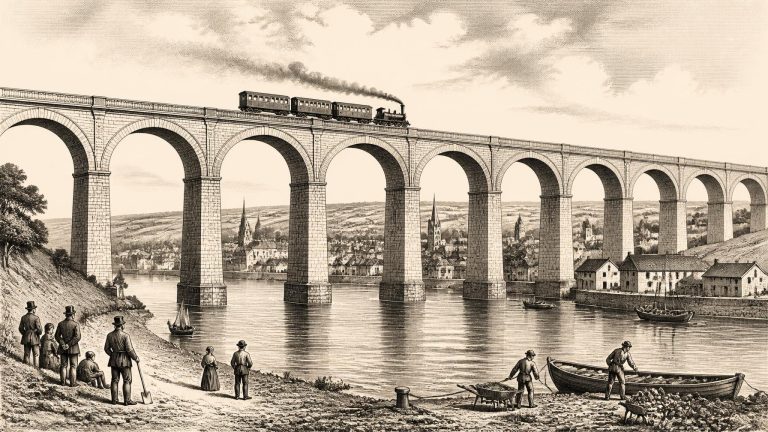
The most conspicuous firmly dated event came on 5 April, when the permanent Boyne Viaduct at Drogheda entered use. Built for the Dublin and Belfast Junction Railway, it completed an all-rail connection between Dublin and Belfast. This was more than a local bridge opening. The Boyne had long been a physical interruption in the route between the island’s two principal cities; a temporary crossing had carried traffic while the permanent metal viaduct was constructed. Once the latter opened, passengers and goods could travel continuously by rail between the capitals of Leinster and Ulster.
The immediate political issue was tenant right. In Ulster, custom often allowed a tenant to sell the goodwill of a holding and to receive recognition for improvements; elsewhere the position was much less secure and varied sharply from estate to estate. After the Famine, the question had acquired particular urgency. A farmer who had drained land, erected buildings or improved soil might lose both home and investment at the end of a tenancy. For labourers and holders of tiny plots, the wider pattern of consolidation and clearance after catastrophe made insecurity still more severe.
The potato was still the immediate measure by which many people judged their prospects. Blight had returned in 1849, prolonging distress after the worst mortality of 1846–47. In 1850 it appeared again, though far less destructively and unevenly. Contemporary reporting during the late summer registered damp weather and disease in potatoes, while an official report on the year’s crop was issued in September. It would be misleading, however, to present the harvest as either a complete failure or a clean recovery. The scale of planting had collapsed from its pre-famine level, seed supplies and household reserves were weak, and a modest disease incidence could still terrify communities whose subsistence had so recently disintegrated.