

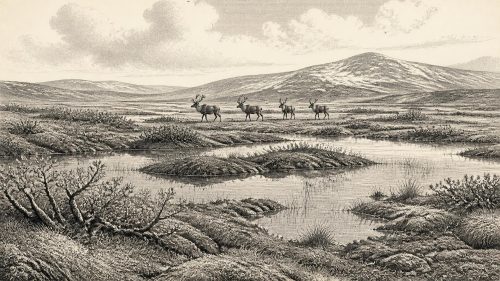
Derryvree’s Waterlogged Sedges
Archived: 6 October 2026
Abstract
Around 30,203 BCE, a modern chronological label within a broad calibrated range, Ireland lay in the climatically unstable Late Pleistocene. At Derryvree, County Fermanagh, organic freshwater sediments between glacial tills preserve evidence of a treeless, periglacial wetland with sedges, mosses, grasses and aquatic plants, later overridden by ice. Crag Cave indicates episodic liquid-water conditions in Kerry. Castlepook Cave preserves cold-stage fauna, including mammoth, reindeer and predators, plus a reindeer bone possibly cut by humans, though it proves neither settlement nor sustained occupation. Dynamic ice, sea and climate shaped access and habitats as Ireland moved towards the later Last Glacial Maximum.