

Maguirebridge’s Buried Buckbean
Archived: 5 October 2026
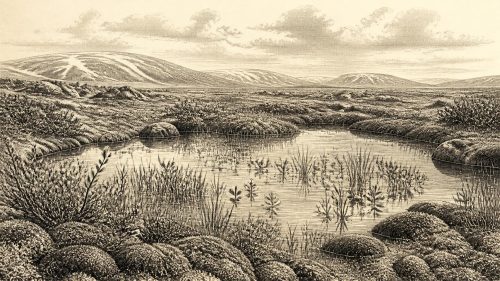
Around 30,218 BCE, Ireland’s history is reconstructed from environmental evidence rather than written records. At Derryvree near Maguiresbridge, freshwater silts preserved beneath later glacial till indicate a brief ice-free interval between glaciations. Buckbean, sedges, mosses, grasses and cold-tolerant shrubs reveal shallow wetlands within open tundra under severe periglacial conditions. Ireland was climatically uneven as ice accumulated elsewhere, not wholly frozen or forested. Southern cave finds show that cold-adapted mammals inhabited the wider region, although their dates and associations remain uncertain. A possibly cut-marked reindeer bone may indicate a transient human visit, but no evidence confirms settlement, institutions, culture or economy.